
 Worksheets
First Semester Review
Total questions: 75
Worksheet time: 1hrs 11mins
The ______ are numbers found on the lower right-hand side of an element symbol.
Coefficient
Exponent
Multiplier
Subscript
What does the subscript in a chemical formula tell you?
How many molecules are present
How many atoms are present
How many elements are present
How many neutrons are present
How many atoms are present if there is no subscript following the element symbol? (if there is no coefficient)
0
2
only 1
1 million
A ______ is a number written in front of a chemical formula.
Coefficient
Subscript
Exponent
Coordinator
What does the coefficient in a chemical formula tell you?
How many molecules are present
How many atoms are present
How many elements are present
How many neutrons are present
Is this an element or a compound? CaSO4
Element
Compound
How many Hydrogen atoms are in 4H2O?
6
8
2
4
How many Magnesium atoms are in 10MgCl2?
10
5
20
How many elements are in C6H12O6?
6
12
3
4
How many atoms are there TOTAL in H2SO4 ?
6
5
7
3
How many Nitrogen atoms are in (NH₄)₂CrO₄?
1
2
8
16
How many Oxygen atoms are in Al₂(SO₄)₃?
4
12
7
24
How many Hydrogen atoms in 3(NH₄)₂CrO₄?
4
2
8
24
How many elements are present in this compound? (Careful!)
Mg2As3COHNi2
2
4
6
10
H2SO4
H = 2, S = 4, O = 4
H = 2, S = 1, O = 4
H = 8, S = 4, O = 4
H = 2, SO = 4
4CF2Cl2
C = 4, F = 4, Cl = 2
C = 1, F = 8, Cl = 8
C = 4, F = 8, Cl = 8
C = 1, F = 4, Cl = 8
What is the atom count for the compound 4C2H8O ?
4= C=2 H=8 O=1
C=2 H=8 O=1
C=8 H=32 O=4
C=8 H=32 O=1
How many different elements are present in H2COCH2
5
4
3
2
C3H5(NO3)3
C = 3, H = 5, N = 3, O = 9
C = 3, H = 5, N = 1, O = 9
C = 9, H = 15, N = 3, O = 9
C = 9, H = 15, N = 1, O = 3
Which unit is used to measure speed?
Newtons (N)
Meters (m)
Meters per second (m/s)
Kilograms (kg)
What does Newton's first law state about an object's motion?
An object's motion can change without any force acting on it.
A force is needed to keep an object moving.
An object's motion cannot change unless a force acts on it.
Friction is the only force affecting an object's motion.
According to Newton's second law, what happens to the acceleration of an object if the force applied to it increases?
The acceleration decreases
The acceleration remains the same
The acceleration increases
The acceleration becomes negative
Newton's second law is summarized by which equation?
F=m×a
F=am
F=m+a
What does Newton's third law state about forces?
Forces act independently of each other
Forces always result in motion
Every force has an equal and opposite reaction force
Forces are directly proportional to mass
When one object exerts a force on another, what happens according to Newton's third law?
The object doesn't react
The other object applies an equal and opposite force
The other object applies a different sized force
The other object applies a force in the same direction
Which of the following is an example of Newton's third law in action?
A car stopped in the driveway
A soccer ball hitting a goal post
A book resting on a table
A bird sitting in a nest
What is the unit used to measure force?
Newtons (N)
Kilograms (kg)
Meters per second (m/s)
Joules (J)
What force is responsible for slowing down a rolling ball on the ground?
Gravity
Magnetism
Friction
Electromagnetic Force
Which law of motion describes an object's resistance to a change in its motion?
Newton's 1st Law
Newton's 2nd Law
Newton's 3rd Law
None of these
When forces acting on an object are balanced, what happens to the object's motion?
The object accelerates
The object moves in a circular path
The object slows down
The object's motion remains unchanged
Which law of motion states that the force required to accelerate an object is directly proportional to its mass?
Newton's 1st Law
Newton's 2nd Law
Newton's 3rd Law
None of these
What is the unit for measuring mass?
Newtons (N)
Kilograms (kg)
Meters per second (m/s)
Joules (J)
What type of force is needed to change an object's motion?
Balanced Forces
Frictional Forces
Gravitational Forces
Unbalanced Forces
Which law of motion describes the phenomenon where forces always occur in pairs?
Newton's 1st Law
Newton's 2nd Law
Newton's 3rd Law
None of these
Which of the following is a unit of acceleration?
Kilograms (kg)
Meters per second squared (m/s2)
Newtons (N)
Joules (J)


The formula ? = mass x acceleration or ? = m x a is used to find
Force
Velocity
Momentum
Gravity
1st
Law of Motion
2nd
Law of Motion
3rd
Law of Motion


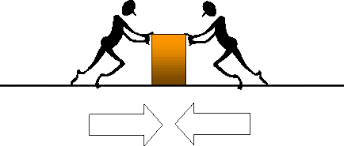
If an object is stationary (not moving), the forces acting upon it are _____________
unbalanced
weak
balanced
Hulk Smash!


What is the function of the vacuole?
Sac that stores water, nutrients, and waste products
Jelly-like substance within the plasma membrane
Sac filled with digestive chemicals
Stack of membranes that packages chemicals

Where does photosynthesis occur?
mitochondria
xylem
stomata
chloroplast

This organelle is the transportation network for the cell and moves materials around in the cell. What am I?
mitochondria
lysosomes
chloroplast
endoplasmic reticulum


It contains the genetic material of the cell (DNA)
Cytoplasm
Nucleus
Ribosome
Golgi complex

They produce energy
Vacuole
Nucleus
Lysosome
Mitochondria

They store waste, water solutes and enzymes
Vacuoles
Lysosomes
Mitochondria
Plasma membrane
What two organelles are NOT in an animal cell?
Cell Membrane and Mitochondria
Nucleus and Ribosomes
Cell Wall and Chloroplasts
Golgi Body and Lysosomes

Which number on the diagram represents the cell membrane?
11
12
5
6
Which number on the diagram represents the cytoplasm?
14
12
5
2
Which number on the diagram represents the golgi apparatus?
6
14
5
2
Which number on the diagram represents the smooth ER?
6
14
5
2
Which number on the diagram represents the rough ER?
6
14
5
2
Which number on the diagram represents the mitochondria?
6
14
5
2
Which number on the diagram represents the ribosomes?
7
12
5
2

Which number on the diagram represents the cell wall?
16
17
18
19
Which number on the diagram represents the vacuole?
16
17
18
19
Which number on the diagram represents the chloroplasts?
16
17
18
19
Which number on the diagram represents the cell membrane?
16
17
18
19
The following statements are about prokaryotic and eukaryotic cells. Select the statement that is false.
Prokaryotic cells are typically thought of as more complex than eukaryotic cells.
Eukaryotic cells have their DNA enclosed in a nucleus, prokaryotic cells do not.
Both are surrounded by a cell membrane.
Both have cytoplasm

