Wayground logo

Free Printable Worksheets

Font size

S
M
L
XL
Worksheets

6.1B Review

Total questions: 61

Worksheet time: 41mins

Name
Class
Date
1.

Solid is a state of matter with a definite

a)

Volume but no definite shape

b)

Shape and Volume

c)

Shape but no definite volume

2.

Gas is a state of matter

a)

With no definite shape or volume

b)

With a definite volume but no definite shape

c)

With definite shape and volume

3.

When a solid changes state to a liquid it is called

a)

Freezing

b)

Condensation

c)

Deionization

d)

Melting

4.

When a liquid changes state to gas it is called

a)

Condensation

b)

Feezing

c)

Melting

d)

Vaporization

5.

When a gas changes state to a liquid it is called

a)

deionization

b)

ionization

c)

condensation

d)

vaporization

6.

When liquid changes state to a solid it is called

a)

condenstation

b)

melting

c)

freezing

d)

vaporization

7.

Dry ice is an example of

a)

Condensation

b)

Freezing

c)

Sublimation

d)

Vaporization

8.

The picture is an example of which state of matter?

a)

Liquid

b)

Gas

c)

Solid

9.

This picture is an example of which state of matter?

a)

Solid

b)

Liquid

c)

Gas

10.

This picture is an example of which state of matter?

a)

Gas

b)

Solid

c)

Liquid

11.

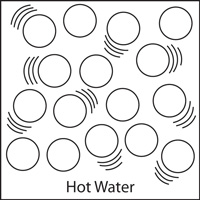
When temperature increases energy...

a)

Stays the same

b)

Increases

c)

Decreases

12.
When the temperature of matter increases the particles...
a)
speed up and move closer
b)
speed up and move farther apart
c)
slow down and move closer together
d)
slow down and move farther apart
13.
When the temperature of matter decreases the particles ...
a)
speed up and move farther apart
b)
speed up and move closer together
c)
slow down and move farther apart
d)
slow down and move closer together
14.
Which of these is an example of water changing from water vapor to liquid?
a)
moisture forming on a mirror when you breathe on it
b)
sweat forming on your body when you exercise
c)
ice cubes melting when you put them in a warm liquid
d)
rivers drying up during a very hot summer
15.
The teacher heats a pot of water. Once the water reaches 100°C, which point has the water reached?
a)
Boiling
b)
Melting
c)
Freezing
d)
Evaporating
16.
Molecules have energy and _________ stop moving
a)
rarely
b)
always
c)
never
d)
sometimes
17.
Matter changes state when...
a)
energy is added or removed
b)
energy is added
c)
energy is removed
d)
there is no energy
18.
As molecules bump into each other, they push each other ________ until they are equally spread out. 
a)
together
b)
apart
19.
As molecules gain energy, they move _____ and spread apart, and vise versa.
a)
faster
b)
slower
c)
less
d)
inside
20.
As temperature decreases, the molecules collide more, move faster, and spread out. 
a)
true
b)
false
21.
 If a gas is cooled to just below its boiling point, it will:
a)
freeze
b)
melt
c)
evaporate
d)
condense
22.
Suppose you pour a glass of ice water and set it on the kitchen table. After a few minutes, the outside of the glass will be covered with drops of water. Why did this happen?
a)
Oxygen in the air cooled and condensed onto the cold glass.
b)
Water vapor in the air cooled and condensed onto the cold glass.
c)
Water vapor in the air cooled and evaporated onto the cold glass.
d)
Water seeped through pores in the glass.
23.
What happens to a substance when it changes from a liquid to a solid?
a)
it gains mass
b)
it gains energy
c)
it loses mass
d)
it loses energy
24.
Alex noticed that a metal door that sticks on hot days does not stick when it cools off at night. This is because the metal contracts as it cools. The reason for this is that, as the metal cools, the atoms:
a)
become smaller and take up less space
b)
 slow down and move closer together
c)
merge together to form fewer atoms
d)
speed up and move farther apart
25.
 Rachel placed an alcohol thermometer in a beaker of hot water and noticed that the alcohol level in the thermometer rose. This happened because the molecules of alcohol:
a)
tried to move away from the heat
b)
 became larger
c)
changed state
d)
moved apart
26.
In order to turn liquid water into water vapor, you must:
a)
add chemicals
b)
increase the pressure on it
c)
add energy
d)
take away energy
27.
The particles in water move fastest in water that is _______________.
a)
boiling
b)
frozen
c)
liquid
d)
melting
28.
If a substance is heated, what happens to its molecules?
a)
 they slow down and move closer together
b)
the speed up and move closer together
c)
they slow down and move farther apart
d)
they speed up and move farther apart
29.
How do the atoms behave in a solid?
a)
Atoms slide against each other to fill a bottle.
b)
Atoms are far apart and fly around the room.
c)
Atoms are close together and shake.
30.
Anna is holding an ice cube. Why does the ice cube melt in her hand?
a)
Heat moves from her hand to the ice cube.
b)
Cold moves from her hand to the ice cube.
c)
Heat moves from the ice cube to her hand.
d)
Cold moves from the ice cube to her hand. 
31.
The speed of the molecules determines the _____.
a)
volume
b)
density
c)
pressure
d)
temperature
32.
Thermal energy is...
a)
heat energy.
b)
the energy of motion
c)
energy of nuclear processes.
d)
an indication of physical change.
33.
The atoms and molecules in each state of matter
a)
are attracted to one another
b)
are constantly moving
c)
move faster at higher temperatures
d)
All of these answers are correct
34.
Why does a liquid take the shape of the container it is poured in but an ice cube does not?
a)
Because the molecules of liquid water are softer than the molecules of a solid
b)
Because the molecules of a liquid are smaller than the particles of a solid
c)
Because the molecules of the liquid are moving but the molecules of the solid are not
d)
Because the molecules of the liquid can easily slide past each other but the particles of a solid cannot 
35.
How do the particles of matter move as the matter changes state in the diagram?
a)
The particles released energy and move as matter changed state?
b)
The particles released energy and moved more quickly.
c)
The particles gained energy and moved more slowly.
d)
The particles gained energy and moved more quickly.
36.
What causes matter to change states?
a)
shaking it
b)
watching it
c)
moving it
d)
adding heat
37.
Examine following sequence of phase changes:  Solid --> Liquid -->  Gas -->.  Would we need to ADD or TAKE AWAY thermal energy?
a)
Add thermal energy
b)
Add and take away thermal energy.
c)
Take away thermal energy.
d)
More information is needed to answer the question.
38.
The diagram shows the change of state of water.  What process is represented by Y?
a)
Melting
b)
Freezing
c)
Condensation
d)
Evaporation
39.
Which conclusion could be drawn by observing the change from ice to water to water vapor?
a)
The kinetic energy of the particles increase as thermal energy is taken away.
b)
The kinetic energy of the particles increase as thermal energy is added.
c)
The kinetic energy of the particles decreases as thermal energy is added.
d)
The kinetic energy of the particles never decreases.
40.
What does the picture represent?
a)
solid
b)
liquid
c)
gas
d)
candy
41.
What does the picture represent?
a)
Solid
b)
Liquid
c)
Gas
d)
Mickey Mouse 
42.
What do the molecules in the picture represent?
a)
solid
b)
liquid
c)
gas
d)
which way to go
43.
The drops of water that appear on the outside of a glass of cold juice on a warm day are an example of?
a)
sublimation
b)
condensation
c)
evaporation
44.
Conduction is heat transfer by -
a)
Touch
b)
Circles
c)
Waves
45.
Convection is heat transfer by-
a)
Touch an object
b)
The heating and cooling of a fluid
c)
Electromagnetic Waves
46.
Warm air rises and the cool air sinks demonstrates this type of heat transfer. 
a)
conduction
b)
convection
c)
radiation
d)
Insolation 
47.
The heat from a hot burner to a pot is transferred by ______.
a)
convection
b)
insulation
c)
radiation
d)
conduction
48.
When the 2nd story of a house is warmer than the 1st floor of a house is heat transfer through 
a)
conduction
b)
convection
c)
radiation
d)
thermal equilibrium
49.
The sun warming your skin is an example of heat transfer through 
a)
conduction
b)
convection
c)
radiation
d)
thermal electricity
50.
Heat transfer through electromagnetic waves is called 
a)
conduction
b)
convection
c)
radiaton
d)
thermal
51.
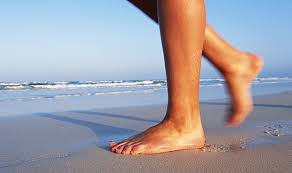
Walking on the warm sand sand with your bare feet demonstrates this type of heat transfer. 
a)
conduction
b)
convection
c)
radiation
52.
A group of friends gather around a fire to stay warm.
a)
conduction
b)
convection
c)
radiation
53.
Hot coffee is stirred with a spoon; the spoon gets hot due to
a)
conduction
b)
convection
c)
radiation
54.
Heat transfer always goes from-
a)
Cold to Hot
b)
Hot to Cold
c)
Heat doesn't transfer
d)
Freezing to Cold
55.
Conduction, Convection and Radiation are three types of...
a)
Electrical energy
b)
Thermal Energy
c)
Chemical Energy
d)
Sound Energy
56.
Two objects at different temperatures are in contact. Which of the following happens to their thermal energy?
a)
Their thermal energies remain the same.
b)
Thermal energy passes from the cooler object to the warmer object
c)
Thermal energy passes from the warmer object to the cooler object.
d)
Thermal energy passes back and forth equally between the two objects.
57.
_________________________ is a measure of the average kinetic energy of the particles in a material.
a)
thermal
b)
friction
c)
temperature
d)
expansion
58.
The movement of thermal energy from an object at a higher temperature to an object at a lower temperature is called ____________.
a)
thermal
b)
expansion
c)
temperature
d)
heat
59.
Thermal energy always moves from ____________ objects to ______________ objects.
a)
cooler, warmer
b)
warmer, cooler
c)
faster, slower
d)
slower, faster
60.
Hot objects begin to cool as-
a)
cooler air is transferred to the hot object.
b)
thermal energy in the object is transferred to the surrounding air.
c)
atoms in the object react with the oxygen in the air.
d)
thermal energy in the object cancels out energy in the air
61.

The ___________ of an object is the energy contained in the motion and vibration of its molecule

a)

heat

b)

thermal energy

c)

temperature