NEW
Font size
 Worksheets
Natural Selection & Selective Breeding
Total questions: 24
Worksheet time: 6hrs 46mins
How is natural variation used in artificial selection?
Humans chose to breed animals with little or no natural variation.
Nature provides the variation among different organisms and humans select traits based on those differences.
Nature only produces the most fit species.
Natural variation is not used in selective breeding.
Which of the following is an example of selective breeding?
A. Letting dogs choose their own mate.
B. Crossing a Labrador with a Poodle to create a Labradoodle.
C. Creating larger ears of corn.
Both B and C
Sean is studying the advantages of selective breeding in plants. He made the following list of possible advantages:
1) Can produce corn that attracts grasshoppers
2) Can develop grass that can grow with less water
3) Can develop wheat that can grow in different types of soil
4) Can produce oranges that are not affected by freezing temperatures
Which items on the list provide logical arguments in favor of selective breeding?
1, 2, 3
2, 4
2, 3, 4
3, 4
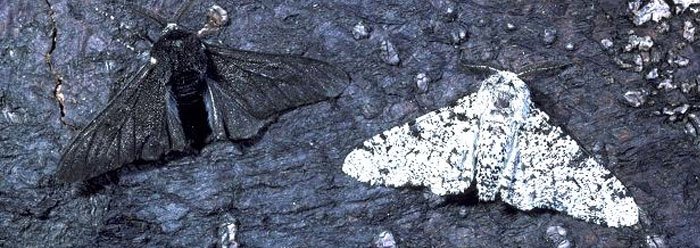
During the industrial revolution in England, great forests of Aspen trees were polluted. The typically white trunks of the trees started to darken and turn black due to the soot produced by burning coal. Over time it was observed that the numbers of white moth offspring decreased while the number of darker moth offspring greatly increased. Which statement gives the best explanation for changes in the moth population?
The white moths also turned black because they were covered in smog, so they were able to camouflage themselves against the dark trunks.
The white moths increased in number because their predators were blinded by the stark contrast to the tree trunks.
The white moths were unaffected by the change in tree trunk color because they have no predators.
The dark moth population began to increase because only the darkest of the species could camouflage themselves against the dark tree trunks.
Suppose a certain species of insect lives in the lush GREEN forest. Some of the insects are bright green in color, and some are bright yellow. Assume the birds in the forest like to eat insects. What do you expect to happen to the populations of the green and the yellow insects over time?
The green insect population will increase and the yellow insect population will decrease.
The green insect population will decrease and the yellow insect population will increase.
Both insect populations will remain constant over time.
Both insect populations will increase over time.
Which answer choice best describes natural selection (survival of the fittest)?
The process of organisms mating, having many offspring, and living happily.
The process by which favorable (good) traits tend to increase over time.
The process by which unfavorable (not so good) traits tends to increase over time.
The process of classifying unknown organisms.
Charles Darwin studies natural selection in the Galapagos Islands. He found that the finches on each island had different types of beaks. How did all the finches on each different island come to have different types of beaks?
They are different types of birds that have no relation.
The finches cannot fly to the other islands.
The different beaks have adapted to the different types of food on each island.
The different beaks have changed overtime due to a mutation experiment by scientists.
What word describes a trait that helps an organism survive in its environment?
natural selection
mutation
camouflage
adaptation