

wayground logo

Free Printable Worksheets

Font size

S
M
L
XL
Worksheets

Ancient Egypt

Total questions: 88

Worksheet time: 59mins

Name
Class
Date
1.

What answer choice is not true about the physical features being good for settlement in Egypt?

a)

The Nile River for farming

b)

Desert for protection

c)

The mountain for protection

2.

Which is not a factor that made the Nile River Valley a good place to settle?

a)

Flat land

b)

Forests for building material

c)

Predictable flooding

d)

Fertile Soil

3.

What was the benefit of the river flooding?

a)

killed pests

b)

created a calendar

c)

Fertile soil

d)

washed away weeds

4.

What is a benefit to being surrounded by a desert?

a)

growing crops

b)

animals for hunting

c)

natural resources for building houses

d)

Protection from enemies

5.

How did the invention of irrigation help Egypt?

a)

It allowed farming to spread beyond the river valley

b)

It caused the Egyptians to create a calendar

c)

It allowed the Egyptians to travel to trade

6.

What best describes the religious belief of the Ancient Egyptians?

a)

Monotheistic

b)

Polytheistic

c)

non religious

d)

undecided

7.

How do we know Ancient Egyptians believed in an afterlife?

a)

They created a myths

b)

They created a calendar

c)

They mummified the dead

d)

It was recorded in the Torah

8.

Who is not below a scribe in the social class pyramid?

a)

farmer

b)

priest

c)

craftspeople

d)

Slave

9.

What was the name of the Egyptian writing system

a)

Sanskrit

b)

cuneiform

c)

hieroglyphics

d)

pictographs

10.

Who had the most amount of power in Egypt?

a)

farmer

b)

Pharaoh

c)

Scribe

d)

Crafts people

11.

Who had no power in Egypt?

a)

Pharaoh

b)

Slaves

c)

Farmer

d)

scribe

12.

Why was Kush wealthy?

a)

Kush had a supply of gold

b)

Kush was centrally located

c)

Kush was good at trading

d)

Kush had a powerful military

13.

What happens to the cost of goods when there is a high demand?

a)

Cost stays the same

b)

Cost goes down

c)

Cost goes up

14.

What word means what you need or want when trading?

a)

supply

b)

demand

c)

natural resource

d)

capital resource

15.

Dangerous animals in an area would be what kind of factor

a)

A pull factor

b)

A push factor

c)

No factor

d)

All are correct

16.

A teacher would be what kind of resource

a)

capital resource

b)

human resource

c)

natural resource

d)

energy resource

17.

What kind of resource is found in nature used to make a product or provide a service?

a)

capital resource

b)

human resource

c)

natural resource

d)

energy resource

18.

What happens to the cost of goods that are in low supply?

a)

Cost goes up

b)

Cost goes down

c)

Cost stays the same

19.

What were pyramids used for?

a)

to honor the gods

b)

to bury the pharaoh

c)

a palace for the pharaoh to live

d)

A museum for artifacts

20.

What were pyramids used for?

a)

to honor the gods

b)

to bury the pharaoh

c)

a palace for the pharaoh to live

d)

A museum for artifacts

21.

What is barter?

a)

Creating a tax on goods

b)

Trading a good for another before money was created

c)

The amount of a good one has

d)

The amount of a good one wants

22.

Which person was in charge of record keeping?

a)

Merchant

b)

Pharaoh

c)

Scribe

d)

Artisan

23.

“Under Hatshepsut’s capable rule, the Egyptian economy grew significantly. She is noted for organizing several trading expeditions to foreign lands, particularly to the land of Punt, an African kingdom southeast of the Egyptian Empire.” (Teachers’ Curriculum Institute.)


Which statement below represents a claim?

a)

Under Hatshepsut’s capable rule, the Egyptian economy grew significantly.

b)

According to the text, "She is noted for organizing several trading expeditions to foreign lands, particularly to the land of Punt, an African kingdom southeast of the Egyptian Empire."

c)

This shows Hatshepsut caused the economy to grow because she increased trade.

24.

“Under Hatshepsut’s capable rule, the Egyptian economy grew significantly. She is noted for organizing several trading expeditions to foreign lands, particularly to the land of Punt, an African kingdom southeast of the Egyptian Empire.” (Teachers’ Curriculum Institute.)


Which statement below represents evidence to support a claim?

a)

Under Hatshepsut’s capable rule, the Egyptian economy grew significantly.

b)

According to the text, "She is noted for organizing several trading expeditions to foreign lands, particularly to the land of Punt, an African kingdom southeast of the Egyptian Empire."

c)

This shows Hatshepsut caused the economy to grow because she increased trade.

25.

“Under Hatshepsut’s capable rule, the Egyptian economy grew significantly. She is noted for organizing several trading expeditions to foreign lands, particularly to the land of Punt, an African kingdom southeast of the Egyptian Empire.” (Teachers’ Curriculum Institute.)


Which statement below represents a clarify to support a claim?

a)

Under Hatshepsut’s capable rule, the Egyptian economy grew significantly.

b)

According to the text, "She is noted for organizing several trading expeditions to foreign lands, particularly to the land of Punt, an African kingdom southeast of the Egyptian Empire."

c)

This shows Hatshepsut caused the economy to grow because she increased trade.

26.
The Nile River flows through two important regions in Egypt called
a)
Mesopotamia
b)
Upper and Lower Egypt
c)
Eastern and Western Egypt
d)
Nubia and Cairo
27.
Besides providing a stable food diet, what other advantage did Egypt's location provide for early Egyptians?
a)
Temples to worship in
b)
Sumerian artwork
c)
Natural barriers to protect them
d)
2 dynasties to celebrate religious tradtion
28.
Which of the following beliefs was  central to Egyptian religion?
a)
the afterlife
b)
the pyramids
c)
the pharaohs
d)
the heavens
29.
Describe the burial practices of Egyptians?
a)
They used a funeral pyre for the dead.
b)
They carried the dead to a nearby country.
c)
They preserved bodies as mummies.
d)
They were buried in the river.
30.
Why were tombs filled with art, jewelry, etc.....?
a)
Tombs were museums.
b)
Tombs were private storage for the pharaoh.
c)
Tombs were the safest place in the kingdom.
d)
They believed the dead enjoyed their materials in the afterlife.
31.
The first pharaoh and rulers after him wore a double crown to symbolize
a)
their rule of the queens
b)
their rule over upper and lower Egypt
c)
the Nile flowed 2 ways
d)
both farming and herding were important
32.
Whose tomb was discovered in 1922?
a)
King Tutankhamen
b)
Ahmose
c)
Ramese
d)
Queen Hatsheput
33.
Where is the most fertile soil in Egypt?
a)
Nile Delta
b)
desert
c)
far south
d)
cataracts
34.
What is papyrus?
a)
mud used in building
b)
plant from which paper is made
c)
rock used to make tools
d)
animal skin
35.
Why was the Rosetta Stone so important?
a)
It helped archaeologists decipher Egyptian writing?
b)
It gave clues about building.
c)
It was a book of the dead.
d)
It told how pharaoh's rules.
36.
Who is at the top of the Egyptian social hierarchy?
a)
slaves
b)
pharaoh
c)
scribe
d)
merchant
37.

Which of the following is not true of the Nile River?

a)

It flows south to north.

b)

It contains cataracts.

c)

Few farmers benefited from it.

d)

It is the longest river in the world.

38.
Steep river rapids, almost impossible to sail by boat
a)
delta
b)
canal
c)
dam
d)
cataracts
39.

Who would the people of Egypt blame if crops did not grow or if disease struck?

a)

The farmers whose villages were unclean

b)

The mummies whose ka was disturbed

c)

The pharaoh who was both ruler and god

d)

The dynasty that was in power

40.
who was the youngest Egyptian king
a)
hatshepsut
b)
king tut
c)
randy
d)
khfu
41.
What the major river that was in Ancient Egypt?
a)
Amazon
b)
Mississippi
c)
Nile
d)
Tiber
42.
Egyptians had a written language using pictures. It was called ____________.
a)
cuneiform
b)
English
c)
hieroglyphics
d)
Cursive
43.
What was a MAJOR purpose for building the pyramids?
a)
temples for religious worship
b)
storehouses for reserves of grain
c)
homes for the pharaohs' servants
d)
tombs for pharaohs when they died
44.
How did the yearly flooding of the Nile River affect the people of Egypt and Kush?
a)
It isolated the settlements.
b)
It left silt that improved the soil.
c)
It spread diseases that destroyed whole empires.
d)
It attracted hunters and gatherers looking for wildlife.
45.
How did most people in Egypt earn a living?
a)
trade
b)
fishing 
c)
farming
d)
metal working
46.
What was an effect of increased farming and trade in early Egypt?
a)
A complex writing system was formed
b)
An organized government developed
c)
Geometry was developed
d)
The deserts became populated
47.
In what two ways are Mesopotamia and Egypt the same?
a)
Farming surpluses meant people could become artisans and traders.  Both economies grew as a result.
b)
Both civilizations had the same religion and government
c)
Both had the same natural defense and flooding schedules
d)
Both had major rivers and dependable floods
48.

Who was the first pharaoh who unified Upper and Lower Egypt?

a)

King Tut

b)

Cleopatra

c)

King Menes

d)

Ramses

49.
On which continent can ancient Egypt be found?
a)
Asia
b)
Africa
c)
South America
d)
Eurpoe
50.
The process of preserving a body for the afterlife
a)
Cremation
b)
Mummification
c)
Autopsy
d)
Surgery
51.

Both the Egyptians and the Mesopotamians were__________.

a)

Monotheistic

b)

Polytheistic

c)

Jewish

d)

Christians

52.

This geographic feature made settlement possible in Ancient Egypt. Egypt is considered "The gift of the _________".

a)

Amazon

b)

Nile

c)

Tigris

d)

Euphrates

53.
What is the triangular green location on the map?
a)
Nile river
b)
Nile delta
c)
Mediterranean Sea 
d)
Nile valley
54.

Which word below matches this definition: steep rapids (also known as Waterfalls) along a river that are created with large boulders

a)

papyrus

b)

stream

c)

cataracts

d)

dynasty

55.

Egypt has rich deposits of silt, creating an excellent farming environment. These deposits were created by

a)

Offerings to the gods

b)

Flooding of the Nile River

c)

Abundance of fertilizer

d)

Slash and burn farming

56.

Egyptian pharaohs (god-kings) have what type of control over their people?

a)

Limited

b)

Complete

c)

Absolute

d)

None

57.

The Nile River delta is located in:

a)

Canaan

b)

Lower Egypt

c)

Nubia

d)

Upper Egypt

58.

The ancient Egyptians built pyramids along the west bank of the Nile River. These pyramids were built as:

a)

a. Palaces for the kings

b)

Tourist attractions

c)

Temples for the gods

d)

Tombs for the pharaohs

59.

In the Egyptian social class, which group made up the largest group?

a)

Peasants/Farmers

b)

Pharaoh

c)

Slaves

d)

Pharaoh's Advisers/Landowners

60.

The Nile river flows _________ into Egypt.

a)

North

b)

South

c)

East

d)

West

61.

Egyptians built _________ canals to TRANSPORT water to their crops.

a)

Calendar

b)

Dams

c)

Irrigation

d)

Cataracts

62.

This Pharaoh's tomb was the only one not robbed in the Valley of the Kings.

a)

King Tutankhamen

b)

King Menes

c)

Cleopatra

d)

Hatshepsut

63.

This Queen proclaimed herself to be Pharaoh.

a)

Cleopatra

b)

Nefertiti

c)

Hatshepsut

64.

During mummification, internal organs (except the heart) were placed into what?

a)

Canopic Jars

b)

Mason Jars

c)

Nothing, they were thrown away

d)

Nothing, they were placed back into the mummified body
65.
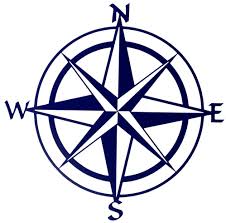
Which way did the Nile flow?
a)
North to South
b)
South to North
c)
East to West
d)
West to East
66.
How did the desert help the people of Egypt and Kush?
a)
It had fertile land for crops.
b)
It made trade and travel easier.
c)
It was grassy for grazing sheep.
d)
It gave protection from invaders.
67.
Hatshepsut was the FIRST pharaoh was was
a)
a god.
b)
a child.
c)
a priest.
d)
a woman.
68.
The Nile River is the _____________ river in the world.
a)
widest
b)
shortest
c)
fastest
d)
longest
69.
What was an effect of increased farming and trade in early Egypt?
a)
A complex writing system was formed
b)
An organized government developed
c)
Geometry was developed
d)
The deserts became populated
70.
What is papyrus?
a)
mud used in building
b)
plant from which paper is made
c)
rock used to make tools
d)
animal skin
71.
This device helped lift water from the river
a)
ladle
b)
scoop
c)
shaduf
d)
jar
72.

Why was the Nile so important?

a)

because it is the longest river in the world

b)

because it is by the Red Sea

c)

because it allowed people to farm and trade

d)

because the Nile empties into the Mediterranean Sea

73.
How often did the Nile River flood?
a)
Every now and then
b)
Every 3 months
c)
Every year at some time
d)
Every year at about the same time
74.
 What effect did a surplus of food have on the people of the Nile River valley?
a)
Egyptians could specialize in jobs other than farming.
b)
Egyptian trade decreased.
c)
The population of Egypt decreased.
d)
Egyptian specialization in jobs other than farming decreased.
75.
 Given that the Nile generally flows in a northward direction, which statement is MOST accurate?
a)
It flows into the Red Sea.
b)
It flows into Lake Victoria.
c)
It flows into the Suez Canal.
d)
It flows into the Mediterranean Sea.
76.
What did the Egyptians build around the floods?
a)
New Life
b)
Calendar
c)
Pyramids
d)
Deserts
77.

Nubia is a

a)

part of Egypt

b)

a kingdom south of Egypt

c)

a kingdom north of Egypt

d)

a place

78.

Why was mummification important?

a)

it prepared the body for the afterlife

b)

it was part of their religion

c)

it was meant to honor the pharaohs

d)

it was a regular practice

79.

What was the delta

a)

a desert

b)

a river

c)

a city

d)

an area at the mouth of a river

80.
Millions of blocks of this basic building material were used to construct the pyramids.
a)
Gypsum
b)
Casing stone
c)
Limestone
d)
Tufla
81.
Egyptians developed ______ to survey the land and build pyramids
a)
irrigation
b)
geometry
c)
shadoof
d)
embalming
82.
Who was the British archeologist that discovered King Tut's tomb?
a)
Howard Jones
b)
Howard Safrit
c)
Howard Carter
d)
Author Evans
83.
The pharoah was at the top of Egypt's social pyramid. Moving down the pyramid choose the correct order from highest to lowest.
a)
Government officials, soldiers, scribes, merchants, craftsmen, farmers, servants.
b)
Government officials, craftsmen, soldiers, farmers, servants then merchants.
c)
Servants, farmers, merchants, scribes, soldiers, then government officials.
d)
Soldiers, craftsmen, servants, government officials, merchants, then farmers.
84.
Which period is often called the Golden Age, a time when Egypt had reached the height of its power?
a)
the Old Kingdom
b)
the Middle Kingdom
c)
the New Kingdom
d)
after the New Kingdom
85.
Egyptian pharaohs were considered to be both ______ and ______?
a)
priests, nobles
b)
gods, kings
c)
gods, goddesses
d)
kings, queens
86.
This ancient Egyptian ruler began her rule as a substitute ruler for her son and went on to rule as a pharaoh equal in political and religious powers to other pharaohs of the New Kingdom. Which leader is described
a)
Ramses II
b)
Cleopatra VII
c)
Hatshepsut
d)
Khufu
87.
In the Egyptian social order, which class was a part of the bureaucracy which helped the pharaoh run the government and temples?
a)
nobles
b)
scribes
c)
craftspeople
d)
servants
88.
Which activity in the Old Kingdom of ancient Egypt shows both a highly organized government and a belief in a king who represented the gods?
a)
Pyramids were built for pharaohs
b)
Crops were grown in a river plain
c)
Hieroglyphic writing was done by scribes
d)
Religious ceremonies were conducted by priests.
