Wayground logo

Free Printable Worksheets

Font size

S
M
L
XL
Worksheets

REVIEW

Total questions: 64

Worksheet time: 59mins

Name
Class
Date
1.

A device that transmits or modifies force or motion.

a)

Simple Machine

b)

Inclined Plane

c)

Rise

d)

Mechanical Advantage

2.

A flat supporting surface tilted at an angle, with one end higher than the other, used as an aid to raise and lower a load. It is also referred to as a slope.

a)

Simple Machine

b)

Inclined Plane

c)

Rise

d)

Mechanical Advantage

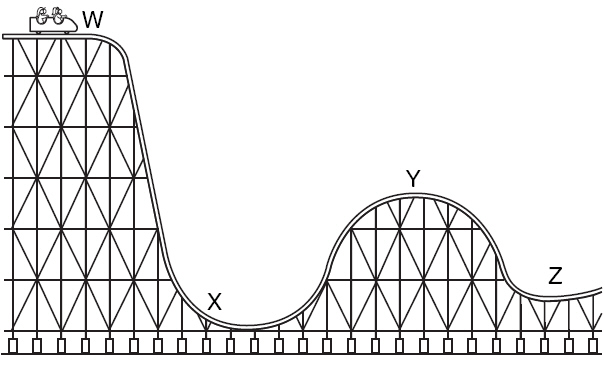
3.

A push or pull

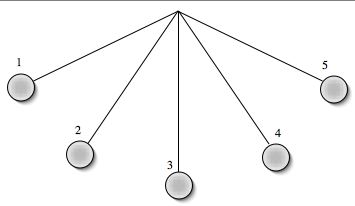
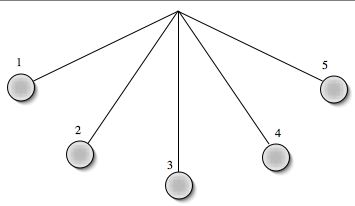
a)

Force

b)

Effort

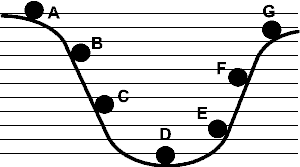
c)

Load

d)

Work

4.

Using a force to move an object a distance.

a)

Force

b)

Work

c)

Effort

d)

Load

5.

The object or weight being moved or lifted.

a)

Force

b)

Work

c)

Effort

d)

Load

6.

For a machine to create mechanical advantage, it must trade increased time or ____________________ for reduced effort.

a)

Distance

b)

Extended

c)

Work

d)

Time

7.
Students pulled the same mass up an inclined plane that was 20 cm, 30 cm, and 40 cm long. Each time, they used a spring scale to measure the force needed to pull the mass up the inclined plane. What did they conclude?
a)
Less force was needed on the 20 cm plane
b)
More force was needed on the 40 cm inclined plane.
c)
The least amount of force was needed on the 40 cm inclined plane.
d)
The least amount of force was needed on the 30 cm inclined plane.
8.
Which of the following decreases when an object is moved using an inclined plane?
a)
The distance the object moves.
b)
The pull of gravity on the object.
c)
The force needed to move the object.
d)
The amount of space the object occupies.
9.
A flat, sloped surface is called a(n)...
a)
Lever
b)
Screw
c)
Fulcrum
d)
Inclined Plane
10.
The threads of a screw act like a(n)...
a)
Lever
b)
Wedge
c)
Inclined Plane
d)
Fulcrum
11.
What is an example of an inclined plane?
a)
ramp
b)
box
c)
wheel
d)
all of the above
12.

On what amusement park ride might you see an inclined plane?

a)
b)
c)
d)
13.

Which of these activities would require the least effort?

a)

Walking up a short ramp with a steep incline

b)

Walking up a long ramp with a steep incline

c)

Walking up a long ramp with a slight incline

d)

Bypassing the ramp and jumping directly onto a platform

14.

Incline plane that cuts, splits or divides

a)

Ramp

b)

Wedge

c)

Screw

15.
The inclined plane makes work easier by _____ the amount of effort that must be applied to raise or lower a load.
a)
increasing
b)
accelerating
c)
reducing
d)
softening
16.

An inclined plane is

a)

simple machine

b)

flat, sloped area

c)

a wedge

d)

thick as inclined plane

17.

simple machine

a)

your input force over the longer distance

b)

that moves

c)

is the most basic device for making work easier

d)

a rigid bar that is free to pivot or rotate on a fixed point

18.

Force

a)

act like the mechanical advantage

b)

that moves

c)

The capacity to do work or cause physical change

d)

a simple machine

19.

Work

a)

9 to 5

b)

sleeping at home

c)

Physical or mental effort or activity directed toward the production or accomplishment of something

d)

employment place

20.

Spring scale

a)

a scale that is measured in the spring

b)

a balance that measures height by the tension on a helical spring

c)

a scale that measures your shoe size

d)

a balance that measure weight by the tension on a helical spring

21.

Energy

a)

A push or pull on an object.

b)

the ability to do work

c)

Something put into a system, such as resources, in order to achieve a result.

d)

May the force be with you

22.
____________ is the ability to cause change. 
a)
Energy 
b)
Force 
c)
Friction
d)
Motion
23.
Energy due to motion is ____________ energy. 
a)
Potential 
b)
Energy
c)
Kinetic
d)
Friction
24.
The faster an object moves, the ________ kinetic energy it has. 
a)
more
b)
less
c)
none of the above
d)
all of the above 
25.
__________ is stored energy. 
a)
Potential
b)
Kinetic
c)
None of the above 
d)
All of the above 
26.
Gravitational potential energy depends on the ________ and ________ of the object. 
a)
Height and mass
b)
Friction and movement
c)
Mass and Movement
d)
Height and Friction 
27.
The gravitational potential energy stored between an object and Earth depends on 
a)
The object's speed and height. 
b)
The object's mass and speed. 
c)
the object's size and weight. 
d)
The object's height and weight. 
28.
What kind of energy is in a rock at the edge of a cliff?
a)
Potential
b)
Kinetic
29.
What kind of energy is in a moving skateboard?
a)
Potential
b)
Kinetic
30.
What kind of energy is in a person climbing a ladder?
a)
Potential
b)
Kinetic
c)
Both
31.
What kind of energy is in a waving hand?
a)
Potential
b)
Kinetic
32.
What kind of energy is in a stretched rubber band?
a)
Potential
b)
Kinetic
33.
Energy can not be created or destroyed, only converted from one form to another.
a)
true
b)
false
34.
At which point is potential energy greatest?
a)
W
b)
X
c)
Y
d)
Z
35.
At which point is kinetic energy greatest? 
a)
W
b)
X
c)
Y
d)
Z
36.
When a pendulum swings, at which point is kinetic energy highest?
a)
1
b)
2
c)
3
d)
4
37.
When a pendulum swings, at which point is potential energy at its greatest?
a)
1
b)
2
c)
3
d)
4
38.
A rubber band has been pulled backward but hasn’t been let go yet.
a)
Potential
b)
Kinetic
39.
A basketball is being held in the hands of a player.
a)
Potential
b)
Kinetic
40.
Which point has the most potential energy?
a)
G
b)
f
c)
b
d)
a
41.
What is the speed of a car that travels 400 m in 20 minutes?
a)
20 miles/hr
b)
20 m/min
c)
800 m/min
d)
200 miles/hr
42.
What is the speed of a man who runs 10 miles in 1 hr?
a)
20 miles
b)
10 m/min
c)
10 miles/hr
d)
20 hrs
43.
What is the equation to calculate speed?
a)
speed = distance/time
b)
speed = time/distance
c)
speed = time x distance 
d)
speed = speed/time 
44.
Which of the following is a unit of speed?
a)
km/hr
b)
hr
c)
km
d)
s
45.
Which of the following is a unit of time?
a)
km/hr
b)
hr
c)
km
d)
mi
46.
Which of the following is a unit of distance ?
a)
miles/hr
b)
hr
c)
km
d)
min
47.
Which of the following is a unit of distance ?
a)
miles/hr
b)
mi
c)
s
d)
min
48.
Which of the following is a unit of time?
a)
sec
b)
mi
c)
m/s
d)
km
49.
Which of the following is a unit of speed ?
a)
sec
b)
mi
c)
m/s
d)
min
50.
Mr. Rudman speed walked 2 miles in 10 minutes, what is his speed?
a)
0.2 miles/min
b)
2 miles/min
c)
20 miles/min
d)
40 miles/min
51.
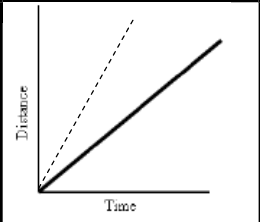
What does this graph represent?
a)
Constant Speed
b)
Acceleration
c)
Not moving
52.
What two measurements are necessary for calculating speed?
a)
Mass and time
b)
Temperature and mass
c)
Mass and distance
d)
Distance and time
53.
What is the speed of an object that travels 60 meters in 4 seconds?
a)
240 m/s
b)
15 m/s
c)
0.067 m/s
d)
15 mph
54.
Calculate the average speed (in meter/sec) if a cheetah runs 180 meters in 10 seconds.
a)
198 m/sec
b)
170 m/sec
c)
12 m/sec
d)
18 m/sec
55.
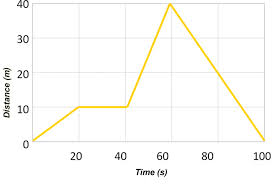
How long did it take this object to travel 10 m?
a)
0 s
b)
10 s
c)
15 s
d)
20 s
56.
How long did it take this object to travel back to its reference/starting point?
a)
20 s
b)
30 s
c)
60 s
d)
100 s
57.
What does this graph represent?
a)
Constant speed
b)
Acceleration
c)
Not moving
58.
What is this graph showing?
a)
Constant Speed
b)
Acceleration (speeding up)
c)
Deceleration (slowing down)
d)
No motion
59.
A measurement of how fast an object is moving
a)
Velocity
b)
Speed
c)
Vector
d)
Acceleration
60.
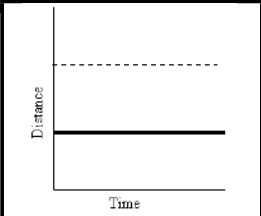
What does this graph represent?
a)
Constant speed
b)
Acceleration
c)
Not moving
61.

What is happening in this graph from point A to B?

a)

The object is accelerating.

b)

The object is not moving.

c)

The object is decelerating.

d)

The object is moving at a constant speed.

62.

What is happening in this graph from point B to C?

a)

The object is going down a hill.

b)

The object is returning to its starting location.

c)

The object is slowing down.

d)

The object is staying still.

63.
If you travel 10 miles in 5 minutes, what is your speed?
a)
10 mi/min
b)
15 mi/min
c)
50 mi/min
d)
2 mi/min
64.
Which of the following is NOT a correct unit for speed?
a)
miles per hour
b)
km/min
c)
seconds per hour
d)
cm/s