wayground logo

Free Printable Worksheets

NEW

Font size

S
M
L
XL
Worksheets

Final Exam

Total questions: 65

Worksheet time: 1hrs 19mins

Name
Class
Date
1.

Why do we see phases of the moon?

a)

The tilt of Earth's axis as it rotates.

b)

The moon lights different portions of its surface throughout the month.

c)

As the moon revolves around the Earth, we see different portions of the lit side.

d)

The moon revolves and rotates at the same rate.

2.

Where does the moon get its light?

a)

Sun's reflection

b)

Earth's reflection

c)

The moon produces its own light

d)

from saturn's rings

3.
Our Galaxy is called the
a)
M38
b)
Milky Way Galaxy
c)
Andromeda Galaxy
d)
Pinwheel Galaxy
4.

How are galaxies held together.

a)

gas

b)

dust

c)

stars

d)

gravitational attraction

5.
What type of galaxy is this?
a)
Spiral
b)
Elliptical
c)
Irregular 
d)
Irrational
6.

The tide that is created in the above diagram will be ________

a)

high

b)

low

c)

medium

d)

happy

7.

The tide that is created in the diagram will be a ____________

a)

low tide

b)

medium size tide

c)

high tide

d)

happy tide

8.

The ________________ has the strongest gravitational pull on Earth, that's why it is responsible for Earth's tides.

a)

sun

b)

stars

c)

milky way galaxy

d)

moon

9.

Tides are caused by the interaction of the _______________, ________________ ,and the _________.

a)

sun, moon, and earth

b)

stars, galaxies, and sun

c)

ocean, sky, and atmosphere

d)

solar system, north pole, and south pole

10.

For a solar eclipse to occur, what has to happen?

a)

The sun must be directly between Earth and the moon.

b)

The moon must be directly between Earth and the Sun.

c)

Earth must be directly between the Sun and the moon.

d)

the planets must align

11.
What is the source that causes a wave to start?
a)
the moon
b)
vibration
c)
splash
d)
motion
12.
A wave that moves the medium parallel to the direction of the energy is a:
a)
electromagnetic
b)
standing
c)
transverse
d)
longitudinal
13.
When the particles of a medium are vibrating perpendicular to the direction of the wave,  this is a __________wave.
a)
sound
b)
water
c)
transverse
d)
longitudinal
14.

The material through which a wave transfers energy. It may be a solid, liquid and/or gas. An electromagnetic wave does not need it to transfer energy, i.e. light, radio waves, x-rays, etc.

a)

medium

b)

Frequency

c)

Refraction

d)

Reflection

15.

Explain what phenomenon is occurring the picture above.

a)

Light is being refracted as it passes from the air into the water. Therefore, the pencil looks broken

b)

Sunlight is being reflected as it passes from the air into the water. Therefore, the pencil looks broken

c)

waves is being refracted as it passes from the air into the water. Therefore, the pencil looks fixed

d)

None of the above

16.
What is a wave?
a)
A repeated disturbance that moves energy.
b)
A repeated disturbance that moves a substance.
c)
A repeated back-and-forth or up-and-down motion.
d)
The way that light and sound transfer through space.
17.
Waves move _____ as they travel.
a)
objects
b)
matter
c)
energy
d)
medium
18.
"When a wave moves through a different medium it will speed up or slow down. This causes the wave to bend."
What is this a description of?
a)
transmission
b)
refraction
c)
rarefaction
d)
reflection
19.
When a bat uses echolocation it bounces a sound wave off of an object to find them.
 What behavior of waves do bats use to learn about their environment?
a)
compression
b)
transmission
c)
reflection
d)
refraction
20.
This image is representing what wave interaction?
a)
Refraction
b)
Diffraction
c)
Reflection
d)
Interference
21.
Which section of the spectrum is the ONLY one we can see?
a)
X-rays
b)
Visible Light
c)
Gamma Rays
d)
Ultraviolet Rays
22.

Which of the following is not in the electromagnetic spectrum?

a)

Light waves

b)

Sound waves

c)

Radio Waves

d)

X-rays

23.

In which list are forms of electromagnetic energy arranged in order from longest to shortest wavelength?

a)

Microwave -> Radio wave -> Infrared rays

b)

Visible light -> x-ray -> radio wave

c)

Microwave -> infrared -> visibile light

d)

Infrared -> radio wave -> ultraviolet

24.

A combination of all the wavelengths with in the visible light portion of the electromagnetic spectrum will result in which of the following colors?

a)

White

b)

Red

c)

Ultraviolet

d)

Black

25.
Light is a kind of.....
a)
reflection
b)
energy
c)
heat
d)
matter
26.

What color is seen when all of the visible light waves are absorbed and no color is reflected

a)

white

b)

red

c)

violet

d)

black

27.
Band of color in a rainbow, or from a light passing through a prism.
a)
Spectrum
b)
Space
c)
Prism
d)
Refraction
28.

Which of the following is true about EM waves?

a)

Light is the only wave that humans can perceive.

b)

Radio waves are used in television broadcast.

c)

Gamma rays have the shortest wavelength.

d)

All of the above.

29.
Which has the LONGEST wavelength and, therefore, the lowest frequency/energy
a)
Gamma Rays
b)
Radio Waves
c)
Visible Light
d)
Infrared rays
30.
Which has the SHORTEST wavelength and, therefore, the highest frequency/most energy
a)
Radio waves
b)
Ultraviolet Rays
c)
Gamma Rays
d)
X-rays
31.

Many mutations...

a)

Occur randomly

b)

Occur because of bad eating habits

c)

Occur because of lack of exercise

d)

are selected

32.

When do genetic mutations get passed from parent to offspring?

a)

When the Gametes (sex cells) are mutated

b)

When the mutation changes the order of DNA

c)

When the mutation occurs randomly

d)

when you genotype match your siblings

33.

Mutations can be...

a)

Harmful

b)

Beneficial

c)

Neutral

d)

All of the Above

34.

Mutations are...

a)

Changes in the sequence of DNA

b)

Broken chromosomes

c)

Bad genes

d)

changes in your environment

35.

Mutations can be a result of...

a)

Environmental Exposure

b)

Lack of sleep

c)

Not enough exercise

d)

changes to your appearance

36.

Genetic Engineering is...

a)

The manipulation of an organism's genes

b)

The manipulation of an organism's chromosomes

37.

What are GMO's

a)

Genetically Modified Organisms

b)

Genotype Melody Ocelot

c)

Gilly Married Oswald

d)

Rick Harrison owns a pawn shop :)

38.

Physical appearance of a trait

a)

gene

b)

allele

c)

genotype

d)

phenotype

39.

The two alleles that control the phenotype

a)

phenotype

b)

genotype

c)

allele

d)

gene

40.
The carrier of genetic information
a)
DNA
b)
RNA
c)
phenotype
d)
nucleus
41.
Threadlike structures that carry DNA
a)
allele
b)
genotype
c)
chromosome
d)
phenotype
42.
What is a gene?
a)
An entire chromosome that  codes for a trait
b)
a piece of clothing
c)
a piece of a DNA on chromosome that codes for a trait
d)
Chemical messengers in your brain that code for a trait
43.

Changes to a genetic code

a)

mutations

b)

traits

c)

asexual reproduction

d)

DNA

44.
Heredity is the passing of traits from _____________________ to _____________________
a)
predators to prey
b)
water to rain
c)
parents to offspring
d)
fungi to protists
45.

when you have two different genes

a)

heterozygous

b)

dominant

c)

homozygous

d)

recessive

46.

when you have two of the same genes

a)

heterozygous

b)

recessive

c)

homozygous

d)

dominant

47.
Why is DNA important?
a)
it is very small and very complicated
b)
it's in everything
c)
it serves as the blueprint for traits of all living things
d)
because we eat it every day for energy
48.
What are the 4 nitrogen bases in DNA?
a)
adenine, thymine, cytoplasm, and guanine
b)
adenine, thymine cytosine, and guanine
c)
adenine, thymine, cytosine, and gylcerol
d)
adenine, thymine, cytosine, and glucose
49.
What does DNA stand for?
a)
Deoxyribonucleic acid
b)
Denitrogenous acid
c)
Deribonucleic acid
d)
Diribonucleic acid
50.
Change over time describes.....
a)
Speciation 
b)
Selective Breeding 
c)
Evolution 
d)
Adaptation 
51.
This is an example of....
a)
Dieting 
b)
Evolution 
c)
Selective Breeding 
d)
Adaptation 
52.
What is a characteristic that helps an organism survive and reproduce in its environment? 
a)
Selective Breeding 
b)
Adaptation 
c)
Evolution 
d)
Fossils 
53.
What does this image suggest? 
a)
Law of Superposition 
b)
Specations 
c)
Common Descent 
d)
Five Finger Discount 
54.
The process by which organisms with favorable traits survive and reproduce at a higher rate
a)
Natural Selection 
b)
Adaptation 
c)
Evolution 
d)
Speciation 
55.
Fossils can only be the bones from dead animals
a)
True 
b)
False 
56.
Coloring or another physical characteristic that help an organism blend in with its environment
a)
mimicry
b)
camouflage
c)
hibernation
d)
migration
57.
When an organism copies a characteristic of something else in order to better its chances for survival and reproduction
a)
hibernation
b)
camouflage
c)
mimicry
d)
migration
58.
Organisms with the most beneficial traits will survive.  This is commonly known as ___.
a)
theory of evolution
b)
variations
c)
survival of the fittest
d)
ecosystems
59.
The differences among a species, like different bird beaks, are called
a)
genes.
b)
variations.
c)
traits.
d)
theories.
60.
Occurs when a population of organisms cannot adapt quickly enough to environmental changes.
a)
Evolution
b)
Adaptation
c)
Selective Pressure
d)
Extinction  
61.
Which is necessary for speciation to occur?
a)
adaptation
b)
mass extinction
c)
isolation
d)
acquired traits
62.
The evolution of a new species from an existing species is ____.
a)
natural selection
b)
isolation
c)
speciation
d)
genetic variation
63.

modern corn plants are the descendants of teosinte, a wild corn plant that has been selectively bred for over 1000 years.

a)

directional selection

b)

stabilizing selection

c)

disruptive selection

d)

artificial selection

64.

Severe population reduction reduces the gene pool

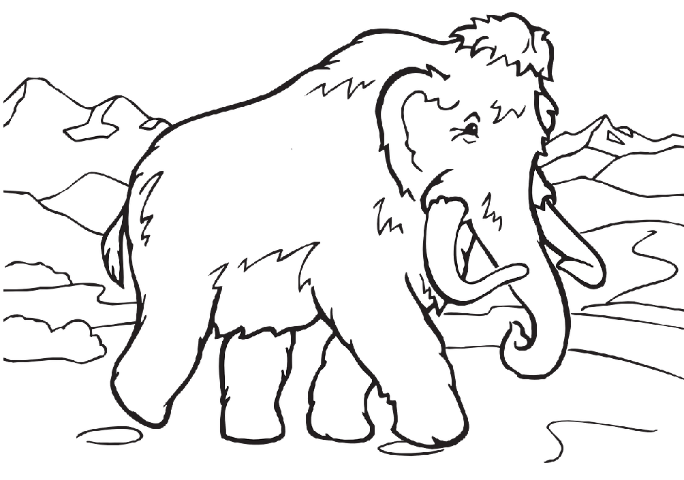
and increases the rate of genetic drift. Woolly mammoths became extinct. Elephants survived.

a)

Gene Pool

b)

Bottleneck Effect

c)

Founders Effect

d)

Gene Frequency

65.

All the possible gene combinations in a population.

a)

allele

b)

gene pool

c)

genome

d)

mitosis