wayground logo

Free Printable Worksheets

Font size

S
M
L
XL
Worksheets

SPACE QUIZ

Total questions: 44

Worksheet time: 34mins

Name
Class
Date
1.

The spinning of the Earth on its axis that causes night and day is called _________.

a)

Rotating

b)

Revolving

2.

Our sun and everything that revolves around it is called the _______________.

a)

solar system

b)

galaxy

c)

universe

d)

rotation

3.
The star at the center of our solar system.
a)
Sun
b)
moon
c)
orbit
d)
axis
4.
What causes Earth's seasons?
a)
the tilt of Earth's axis
b)
Earth's rotation
c)
the revolution of the Moon
d)
Earth's distance from the Sun
5.
Fixed patterns of stars are called _____.
a)
Constellations
b)
Nebulas
c)
orbits
d)
systems
6.
How are stars DIFFERENT from planets?
a)
Stars are solid and rocky.
b)
Stars are made of frozen gases.
c)
Stars do not move.
d)
Stars revolve around the Sun.
7.
It takes Earth _________ to make one complete rotation on its axis.
a)
24 hours
b)
365 days
c)
28 days
d)
24 days
8.
It takes about _____________ for the moon to go through all of its phases.
a)
28 days
b)
365 days
c)
24 hours
d)
24 days
9.

When the moon appears to be increasing in size or get bigger.

a)
Waxing
b)
Waning
10.

When the moon appears to be decreasing in size or getting smaller

a)
waning
b)
waxing
11.
A rocky body that orbits around a planet.
a)
moon
b)
star
c)
axis
d)
Sun
12.
When did humans first land on the moon?
a)
1989
b)
1900
c)
1969
d)
We didn't.  It's a hoax.
13.
A _______ is a burning body of matter that has entered Earth's atmosphere; "shooting star"
a)
Meteor
b)
Comet
c)
Asteroid
d)
Solar Flare
14.
Which planet has a thick atmosphere and is the hottest planet?
a)
Mercury
b)
Venus
c)
Earth
d)
Mars
15.
Which planet is covered in water?
a)
Mercury
b)
Venus
c)
Earth
d)
Mars
16.
Which planet is the smallest?
a)
Mercury
b)
Venus
c)
Earth
d)
Mars
17.
Which planet is Earth's sister planet?
a)
Mercury
b)
Venus 
c)
Earth
d)
Mars
18.
What is a common characteristic of the inner planets?
a)
Large
b)
Gaseous
c)
Rings
d)
Rocky Surface
19.
What is NOT a common characteristic of the outer planets?
a)
Gaseous
b)
Giant
c)
Rings
d)
Smaller than Earth
20.
Which planet is the largest?
a)
Jupiter
b)
Saturn
c)
Uranus
d)
Neptune
21.

Chunks of ROCK that float around in space are called...

a)

Comets and Stars

b)

Stars and Planets

c)

Meteoroids and Asteroids

d)

Planets and Comets

22.

An invisible force that pulls objects in the universe is called...

a)

Gravity

b)

Friction

c)

Motion

d)

None of the above

23.

The first astronaut to walk on the moon was a part of the mission called...

a)

Apollo 11

b)

Apollo 13

c)

The Eagle

d)

Saturn 7

24.

One of the most well known COMETS is called the ____________comet.

a)

Copernicus

b)

Thomas

c)

Streaking

d)

Halley's

25.

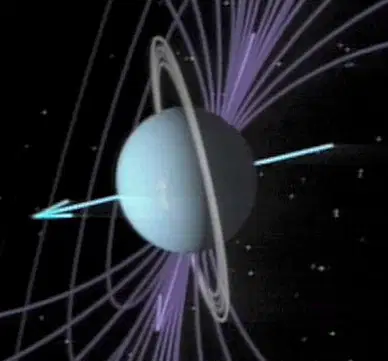
Which planet in our solar system rotates on its side?

a)

Neptune

b)

Saturn

c)

Jupiter

d)

Uranus

26.

Who was the first person to walk on the moon?

a)

Neil Armstrong

b)

Buzz Armstrong

c)

Jack Armstrong

d)

Nelly Armstrong

27.

What planet is known as the red planet?

a)

Earth

b)

Mars

c)

Venus

d)

Neptune

28.

Earth is located in which galaxy?

a)

The Dairy Milk

b)

The Milky Way

c)

The Mars Bar

d)

The Crunchie

29.

Olympus Mons is a large volcanic mountain on which planet?

a)

Mars

b)

Earth

c)

Saturn

d)

Jupiter

30.

How long does it take for the Earth to orbit the Sun?

a)

350 days

b)

365 days

c)

24 days

d)

200 days

31.

What is the name of the American space agency?

a)

NUSU

b)

NISI

c)

NASA

d)

NOSO

32.

What do we call deep holes in the moon?

a)

Boulders

b)

Craters

c)

Pits

d)

Spots

33.
Which statement best describes the size of the Sun?
a)
The Sun is medium-sized compared to other stars.
b)
The Sun is the largest and brightest star in the universe.
c)
Most of the stars in the universe would fit inside the Sun.
d)
Most of the stars in the universe are smaller than the Sun.
34.

how many planet are there in our solar system?

a)

12

b)

9

c)

7

d)

8

35.

What is the windiest planet in our solar system?

a)

Neptune

b)

Jupiter

c)

Uranus

d)

Saturn

36.

What is the brightest planet in the night sky?

a)

Venus

b)

Mercury

c)

Saturn

d)

Mars

37.

Saturn is ______.

a)

the second-largest planet

b)

bigger than ten Earths

c)

both A and B

38.

Saturn's rings are made of ______.

a)

rocks and dust

b)

ice and rock

c)

pretty colors

39.

What is Sally ride remembered for?

a)

Being the first American woman to go to space.

b)

Making the best pecan pie.

c)

Becoming a professor.

40.

A long time ago people thought that the sun travelled around the Earth.

a)

True

b)

False

41.
Why can't we see constellations during the day?
a)
They move
b)
Its not dark
c)
The sun is too bright
d)
They change shape
42.
The stars we see in each constellation are very close to us.
a)
True
b)
False
43.
Ursa Major is also called “Great Bear” and is one of the largest constellations.  
a)
True
b)
False
44.
Which constellation is best known because it contains the “big dipper,” which looks like a ladle.
a)
Ursa Major
b)
Ursa Minor
c)
Orion
d)
Polaris