wayground logo

Free Printable Worksheets

Font size

S
M
L
XL
Worksheets

Nomenclature, Formulas and VSEPR Practice

Total questions: 103

Worksheet time: 3hrs 49mins

Name
Class
Date
1.
Phosphorous trichloride
a)
PCl3
b)
P3Cl
c)
P3Cl3
d)
PCL
2.
what is the name of CCl4?
a)
carbon tetrachloride
b)
monocarbon tetrachloride
c)
tetracarbon monochloride
d)
carbon chloride
3.
What is the name of the compound HgCl2
a)
mercury (II) chloride
b)
mercury chlorite
c)
Monomercury dichloride
4.
All compounds made up of two elements must end with...
a)
-ide
b)
-ate
c)
-ite
5.
What is the charge on the calcium ion?
a)
1+
b)
2+
c)
2-
d)
1-
6.
Which is a transition metal?
a)
cesium
b)
iron
c)
helium
d)
tellurium
7.
Select the correct formula for sulfur hexachloride
a)
S2Cl6
b)
S6Cl
c)
SCl6
d)
SF6
8.
a)

Bond between a metal and nonmetal

b)

attraction between atoms

c)

Bond between a nonmetal and a nonmetal

d)

4

9.

What is the correct name for Al(NO3)3?

a)

Aluminum nitrate

b)

Aluminum(III) nitrate

c)

Aluminum nitrite

d)

Aluminum nitrogen trioxide

10.
Which is most likely to form a negative ion?
a)
an element from group 17
b)
a metal
c)
an element from group 1
d)
an element with atoms that have eight valence electrons
11.
What formula results when Ca+2 and Br- ions bond?
a)
Ca2Br2
b)
CaBr
c)
Ca(br)2
d)
CaBr2
12.
The polyatomic ion:  SO42- has the name
a)
Phosphate
b)
Sulfate
c)
Sulfite
d)
Sulfur tetra oxide
13.

Which of these is covalent?

a)

NaCl

b)

Pb(NO3)2

c)

CO2

d)

AlCl3

14.
When naming ionic compounds with transition metals you need to include roman numerals to show the _____ of the metal..
a)
atomic number
b)
mass number
c)
charge
d)
ionization energy
15.
Name this compound:
Li2SO3
a)
Lithium sulfate
b)
Lithium sulfite
c)
Lithite sulfide
d)
Sulfur lithite
16.
Ionic compounds are written with
a)
cation (+ ion) first then anion (- ion)
b)
anion (- ion) first then cation (+ ion)
c)
either way is fine
d)
polyatomic ions first
17.
When adding a subscript to a polyatomic ion, you should...
a)
multiply any subscripts on the polyatomic ion by the subscript you are adding
b)
put parentheses around the polyatomic ion before adding a subscript
c)
write the new subscript next to any subscripts on the polyatomic ion
d)
put the polyatomic ion in square brackets before adding the subscript
18.

Name this formula:

KNO3

a)

Potassium Nitrogen Oxide

b)

Potassium Nitride

c)

Potassium Nitrate

d)

Potassium (I) Nitrite

19.

Name the compound NH4OH

a)

ammonium hydroxide

b)

ammonia oxyhydride

c)

mononitrogen tetraoxihydride

d)

hydrogen nitrate

20.

Name the compound CuO

a)

copper (II) oxide

b)

copper oxide

c)

copper (I) oxide

d)

carbon uranium oxide

21.

Name the compound CuCO3

a)

cobalt carbonate

b)

copper (III) carbonate

c)

copper (II) carbonate

d)

copper carbonate

22.
What is the formula for calcium phosphide?
a)
CaP
b)
Ca2P3
c)
Ca3P2
d)
Ca2P
23.
Naming a compound that starts with a transition metal requires us to use...
a)
Prefixes
b)
Roman Numeral
c)
Nothing, just name it
24.
Naming a compound of two non-metals requires us to use..
a)
Prefixes
b)
Roman Numerals
c)
Nothing, just name it
25.
Naming a compound that starts with elements from the first two groups (columns) of the periodic table requires us to use...
a)
Prefixes
b)
Roman Numeral
c)
Nothing, just name it
26.
+  and  N-3
a)
KN
b)
KN3
c)
K3N3
d)
K3N
27.
Bromine monoflouride
a)
Br1F1
b)
BrF
c)
Br2F
d)
BrF2
28.
Name the prefix associate with:
7
a)
septa
b)
hexa
c)
octa
d)
hepta
29.
Ionic or covalent?
Na  F
a)
Ionic
b)
Covalent
30.
Which of these compounds is ionic? 
a)
Carbon dioxide
b)
Dinitrogen trioxide
c)
Silicon tetrachloride
d)
Lithium bromide
31.
Name this formula: 
Fe3PO4
a)
Iron Phosphide
b)
Iron (III) Phosphide
c)
Iron (I) Phosphate
d)
Iron Phosphate
32.
Name the following ionic compound: LiNO3
a)
lithium nitrate
b)
lithium III nitrate
c)
lithium nitride
d)
lithium oxide
33.
The proper formula for magnesium hydroxide:
a)
MgOH
b)
Mg2OH
c)
Mg(OH)2
d)
Mg2OH2
34.
When naming ionic compounds with transition metals you need to include roman numerals to show the _____ of the metal..
a)
atomic number
b)
mass number
c)
charge
d)
ionization energy
35.
What is the correct formula for barium phosphate?
a)
BaPO4
b)
Ba2(PO4)3
c)
Ba3(PO4)2
d)
BaP
36.

What is charge of ion formed by chlorine?

a)

+ 1

b)

-1

c)

0

d)

+ 3

37.

What is charge of ion formed by sulfur?

a)

+ 1

b)

-1

c)

-2

d)

+ 3

38.

What is charge of ion formed by magnesium?

a)

+ 1

b)

-1

c)

+2

d)

0

39.
Ionic Bonding involves...
a)
The transfer of protons
b)
The transfer of nuetrons 
c)
The transfer of electrons
d)
None Of the above
40.
Which of the following is an ionic compound:
a)
NH4
b)
I2
c)
RbBr
d)
CO
41.
Metals tend to 
a)
gain electrons
b)
lose electrons
42.
If my charge becomes 2+ what does that say about me?
a)
I am stealing 2 electrons
b)
I am losing 2 electrons
c)
I am in period 2
d)
I have an atomic # of 2
43.
When metals bond with non-metals they form what type of bonds
a)
covalent
b)
ionic
c)
cooperative
d)
lewis
44.
Nonmetals tend to 
a)
gain electrons
b)
lose electrons
45.
When a nonmetal gains electrons, it becomes this type of ion.
a)
Anion
b)
Cation
46.
When a metal loses electrons, it becomes this type of ion.
a)
anion
b)
cation
47.
An ion with a positive charge is a/an 
a)
anion
b)
cation
48.
When an ionic compound is formed, its charge is 
a)
negative
b)
neutral (no charge)
c)
positive
49.
What region of the periodic table contains atoms that form covalent bonds?
a)
the left side
b)
the middle
c)
the right side
d)
top left
50.
Name SO2
a)
monosulfur dioxide
b)
sulfur dioxide
c)
sulfur oxide
d)
sulfur (II) oxide
51.
What is the proper name for S2O2?
a)
Sulfur oxide
b)
Sulfur dioxide
c)
sulfur (II) oxide
d)
disulfur dioxide
52.
Nitrogen will form a ____________ with a charge of ____.
a)
Cation; 3-
b)
Cation; 3+
c)
Anion; 2-
d)
Anion; 2+
53.

What is the name of SrCl2?

a)

monostrontium dichloride

b)

strontium chlorine

c)

strontium chloride

d)

Ca2Br

54.

Which pair will most likely NOT form an ionic bond?

a)

Rb + O

b)

Be + F

c)

C + O

d)

Na + Cl

55.

All of the alkali metals have how many valence electrons?

a)

4

b)

3

c)

2

d)

1

56.
What is the correct name for N2O3?
a)
nitrogen oxide
b)
nitrogen trioxide
c)
dinitrogen trioxide
d)
dinitrogen tetraoxide
57.
What is the correct formula for the compound tetraphosphorus trisulfide?
a)
P5S4
b)
PS3
c)
P4S3
d)
P3S4
58.
What is the correct formula for the compound arsenic pentafluoride?
a)
Ar5F5
b)
ArF5
c)
AsF5
d)
AsFL5
59.
What is the correct name for B2Cl4?
a)
boron chloride
b)
boron tetrachloride
c)
diboron tetrachloride
60.
The correct formula for silver sulfide is
a)
Ag2S3
b)
Ag2S
c)
AgS
d)
Ag2S2
61.
The correct name for the compound Cu3N is:
a)
copper nitrogen
b)
copper(III) nitride
c)
copper(II) nitrate
d)
  copper(I) nitride
62.
The compound CuCl2 is named:
a)
 copper chloride
b)
copper(I) chloride
c)
copper chlorine
d)
copper(II) chloride
63.
Identify the correct formula for Iron(II) phosphide.
a)
Fe3P2
b)
Fe2P2
c)
Fe2P
d)
FeP
64.
The correct formula for magnesium fluoride is:
a)
Mg1F2
b)
Mg2F
c)
MgF2
d)
Mg2F1
65.
The correct name for the compound Na2S is:
a)
sodium sulfate
b)
sodium(II) sulfide
c)
sodium sulfide
d)
 sodium sulfur
66.
What is the VSEPR theory used to predict?
a)
Bond Strength
b)
Polarity
c)
Molecular Shape
d)
Electronegativity
67.
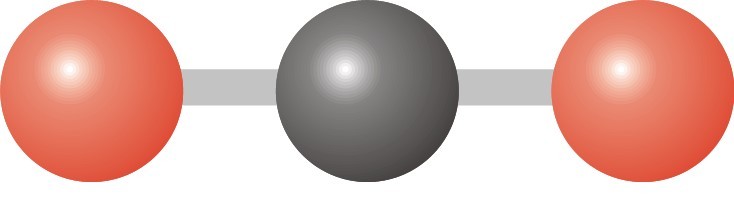
Which molecule would have this molecular geometry?
a)
BF3
b)
CH4
c)
PCl5
d)
CO2
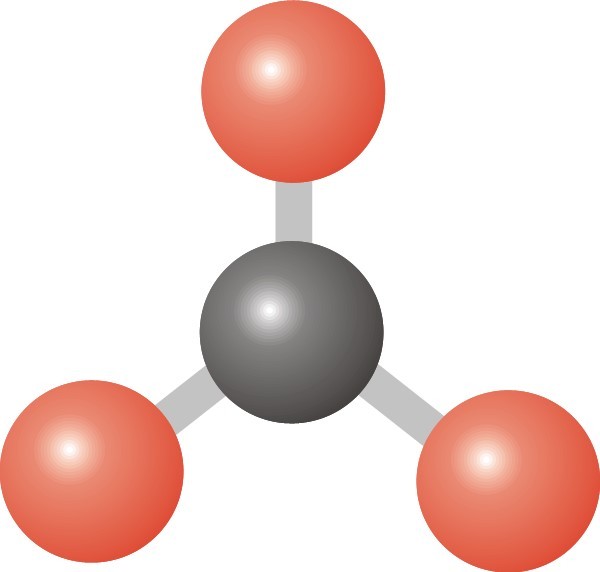
68.
What molecule could this be? 
a)
BF3
b)
CH4
c)
H2O
d)
CO2
69.

What molecular geometry would PH3 have?

a)

Trigonal Pyramidal

b)

Trigonal Bipyramidal

c)

Bent

d)

Linear

70.
A molecule with a lone pair on the central atom would have the same electron and molecular geometry
a)
True
b)
False
71.
How many lone pairs of electrons are on the P atom in PF3?
a)
1
b)
2
c)
3
d)
0
72.

Is this molecule polar?

a)

Yes

b)

No

73.

Is this molecule polar?

a)

No

b)

Yes

74.
According to VSEPR, molecules adjust their shapes to keep which of the following as far away as possible?
a)
Pairs of valence electrons
b)
Inner shell electrons
c)
Mobile Electrons
d)
Electrons closest to the nucleus
75.
What is the measure of a tetrahedral bond angle?
a)
90 Degrees
b)
109.5 Degrees
c)
120 Degrees
d)
180 Degrees
76.
The bond angle for a trigonal planar molecule is 
a)
90 Degrees
b)
109.5 Degrees
c)
120 Degrees
d)
180 Degrees
77.
Will this molecule be polar or nonpolar? CS2
a)
polar
b)
nonpolar
78.
Which of the following molecular shapes would have a bond angle of 180 Degrees?
a)
Bent
b)
Trigonal Planar
c)
Tetrahedral
d)
Linear
79.
What molecular shape is the structure shown here? (BCl3)
a)
linear
b)
trigonal planar
c)
tetrahedral
d)
trigonal pyramidal
80.
What molecular shape is the structure shown here? (NH4+)
a)
linear
b)
trigonal planar
c)
tetrahedral
d)
trigonal pyramidal
81.
What molecular shape is the structure shown here? (H2O)
a)
tetrahedral
b)
trigonal planar
c)
bent
d)
trigonal pyramidal
82.
Determine the molecular shape of carbon tetrafluoride.
a)
linear
b)
trigonal planar
c)
bent
d)
tetrahedral
83.
What is the molecular shape of a silicon dioxide molecule?
a)
linear
b)
trigonal planar
c)
bent
d)
tetrahedral
84.
Which of the following is the correct Lewis dot structure for the molecule fluorine (F2)?
a)
A
b)
B
c)
C
d)
D
85.
How many electrons can be used in the Lewis Structure for : NO3 -
a)
23
b)
20
c)
18
d)
24
86.
What is the correct structure for BF3?
a)
Option A.
b)
Option B. 
c)
Option C.
d)
Option D.
87.
How many electrons does each line indicate are shared?
a)
1
b)
2
c)
3
d)
4
88.

What is the correct Lewis Dot Structure for ammonia NH3

a)
b)
c)
d)
89.

Which is the correct molecular structure for carbon dioxide?

a)
b)
c)
d)
90.

CCl4 has how many double bonds?

a)

0

b)

1

c)

2

d)

3

91.

Which of the following elements are an exception to the octet rule and require less than 8 valence electrons?

a)

H

b)

Li

c)

Be

d)

B

e)

C

92.

How many valence electrons does Magnesium Have?

a)

1 Valence electron

b)

2 Valence electron

c)

3 Valence electron

d)

4 Valence electron

e)

5 Valence electron

93.

How many valence electrons does Nitrogen Have?

a)

1 Valence electron

b)

2 Valence electron

c)

3 Valence electron

d)

4 Valence electron

e)

5 Valence electron

94.
When writing Lewis Structures, only __________ electrons are used.
a)
Inner shell
b)
Core 
c)
Valence
d)
Stable
95.
Atoms of H only form _________ bonds.
a)
Double
b)
Single
c)
Multiple
d)
Triple
96.

Ionic bonding involves

a)

transfer of electrons

b)

sharing of electrons

c)

holding onto electrons

d)

electrons are not involved

97.

Covalent compounds

a)

contain a sea of electrons

b)

share electrons

c)

transfer electrons

d)

conduct electricity

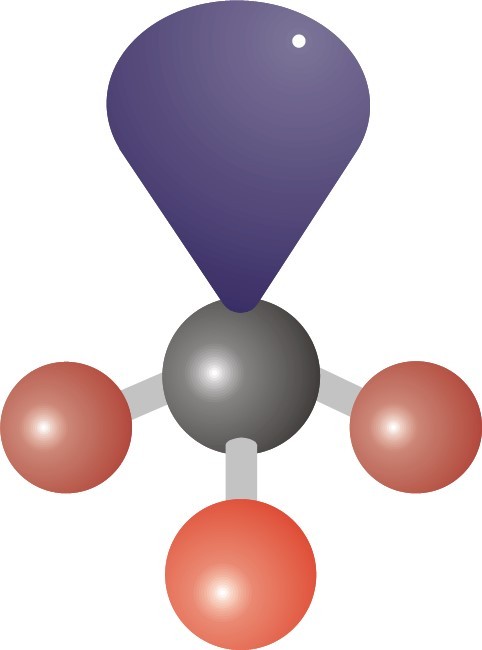
98.

Which geometric molecular shape is shown?

a)

bent

b)

trigonal pyramidal

c)

tetrahedral

d)

trigonal planar

99.

What is the mass of one mole of aluminum?

a)

26.98 g

b)

13 g

c)

53.98 g

d)

14 g

100.

What is the molar mass of AgF?

a)

514.9 g/mol

b)

99.7 g/mol

c)

126.87 g/mol

d)

198.8 g/mol

101.

Which compound below has the smallest molar mass?

a)

CO

b)

CO2

c)

H2O

d)

H2O2

102.

What is the mass of 1 mole of calcium carbonate, CaCO3?

a)

99.01 g

b)

100.09 g

c)

216.87 g

d)

84.09 g

103.

What is the molar mass of ammonium sulfide - (NH4)2S?

a)

68.17 g/mol

b)

40.02 g/mol

c)

114.12 g/mol

d)

82.91 g/mol