
 Worksheets
Chemistry 11 Semester 2 Review
Total questions: 100
Worksheet time: 1hrs 15mins
What particle view below is a mixture?


What is the best classification of this substance?
An element
A compound
A mixture of 2 elements
A mixture of 2 compounds

How many different TYPES of ATOMS are in this image?
1
2
3
4
The valence electron of element in group 1 =
11
3
5
1
Ions are formed when atoms gain or lose ___.
electrons
protons
neutrons
atomic mass
Which statement is true?
Cations are negatively charged ions.
Anions are positively charged ions.
Cations are positively charged electrons.
Anions are negatively charged ions.

What property is being measured in this diagram?
Density
Ionization Energy
Atomic Radius
Atomic Mass
Which element has properties most similar to those of Lithium?
Carbon (C)
Magnesium (Mg)
Sodium (Na)
Oxygen (O)
Which element has properties most similar to those of Fluorine?
Chlorine (Cl)
Oxygen (O)
Calcium (Ca)
Boron (B)

Which element is the least reactive?
Lithium
Potassium
Cesium
Francium

Which element is the most reactive?
Beryllium
Calcium
Strontium
Radium

Elements that have similar properties are found in the same
group
period
table
energy level

Rows on the modern periodic table are called
groups
periods
families
gases


Which method(s) below is suitable to obtain salt from a salt solution?
distillation
dissolving
filtration
evaporation
Which method(s) below is suitable to obtain pure water from a salt solution?
distillation
dissolving
filtration
evaporation
The colour of plant leaves is due to a mixture of pigments.
Which method is used to separate these pigments?
filtration
evaporation
distillation
chromatography

Which processes take place during distillation?
Hint: There are 2 processes.
freezing
boiling
condensation
melting

Chromatography is commonly used in food testing to identify the presence of banned additives in food.
Which additive(s), P, Q, R or S is/are present in Chewy Candy?
P and R
P and S
Q and R
Q and S

Which ink, W, X or Y is a pure substance based on the chromatogram shown?
W
X
Y
Electrons that have not been excited are said to be at:
high level
base line
set state
ground state
The spin of an electron is represented by this variable:
n
m
L
s, ms
The principle quantum number, n, represents the:
spin value
suborbital value
energy level
magnetic value
What does the 1 in "1s" stand for?
energy level
s orbitals
p orbitals
the number of electrons
Found that electrons in atoms orbit around the nucleus similar to the way planets around the Sun.
Democritus
Thomson
Bohr
Dalton

This image is an example of ...
A Bohr model
A Dalton model
A Rutherford model
A Thomson Model

JJ Thomson provided evidence that an atom...
Which one of the following discoveries came first?
electrons
neutrons
quarks
atoms
Rutherford and his students did experiments that showed the existence of the:
quark
nucleus
proton
electron
Which scientist discovered that the nucleus contained neutrons?
bohr
Rutherford
Dalton
Chadwick
What is a particle with one negative charge called?
electron
proton
quark
neutron
A bond between two nonmetal atoms is a __________ bond.
ionic
nuclear
metallic
covalent

Which of the following is NOT a covalent bond?
K2S
H2O
I2
CO2
Which of the following describes covalent bonds?
Bonds form because of opposite charges
electrons are shared to fill outer electron shells
Electrons are transferred between atoms
Covalent bonds are magical
Ionic bonds form between ---
nonmetals.
metals and nonmetals.

Which of the following is NOT an ionic bond?
NH3
KCl
K3N
NaCl
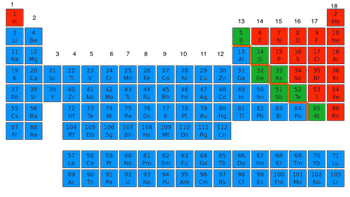
Which types of elements become cations?
nonmetals
metals
only transition metals
metalloids
The chemical formula of dinitrogen textroxide is
(a)
What part of the atom gains energy from the flame and then loses it in the form of light?
Proton
Neutron
Nucleus
Electrons
How do electrons become excited?
Emitting (releasing) energy
Absorbing (gaining) energy
Going down an energy level
Going up an energy level
What form of energy is emitted when an excited electron returns to the ground state?
Photon (light)
Heat
Kinetic
Potential
What evidence did you observe that proves that elements give off their own unique color spectrum?
All of the gas tubes produced a full spectrum. (A rainbow.)
When we looked at white light through a prism, we saw the rainbow.
Each gas tube gave off its own unique color and color spectrum when we looked at the light through the spectroscope. None of them were the exact same.
Each gas tube gave off the same color and color spectrum when we looked at the light through a spectroscope.
When electrons change energy levels, when is light emitted?
When the electrons jumps to a higher energy level.
When an electron falls back to the ground state.
When the electrons jump to the excited state.
When electrons are resting.
Explain what was occuring during the time the flame test was producing different colors.
The electrons in ground state gained energy and moved to an excited state.
The electrons in excited state gained more energy and moved to an ground state.
The electrons in the excited state released energy and moved to a ground state.
The electrons in ground state released more energy and moved to an excited state.

Based on the bright line spectra, the unknown emissions spectra at the top must belong to which element?
Hydrogen
Mercury
Neon
Sodium

Based on the bright line spectra, the unknown emissions spectra at the top must belong to which element?
Hydrogen
Mercury
Neon
Sodium
When atoms _____________ energy, their electrons move to higher energy levels. These electrons _____________ energy by emitting light when they return to lower energy levels.
lose, absorb
absorb, lose
lose, lose
absorb, absorb
An atom that gains or loses an electron becomes
an isotope
a new element
an ion
a molecule
Valence electrons are
neutral (no charge)
found in the outer most energy level of the atom
equal to the number of protons
Which type of bond occurs between non metals?
covalent bonds
ionic bonds
metallic bonds
all types of bonds
If a molecule of oxygen has 8 protons (+) and 10 electrons (-), what is its charge?
O10-
O8+
O2-
O10+
Which of the pair of elements form an ionic bond?
Magnesium and Oxygen
Magnesium and Sodium
Iron and Zinc
Nitrogen and Hydrogen
What is emission spectra?
The emission spectra is the absorption of light by an atom or molecule.
The emission spectra is the unique pattern of light emitted by an atom or molecule when it transitions from a higher energy state to a lower energy state.
The emission spectra is the reflection of light by an atom or molecule.
The emission spectra is the scattering of light by an atom or molecule.
15.773 + 2.8 = ?
(a)
How many significant figures are in the following number?
34.900
(a)
24.28 + 12.5

Which of these statements best describes the contents of the pile?
What is a difference between distillation and evaporation?
Distillation collects the solvent but evaporation does not.
Distillation does not require heat energy but evaporation does.
Distillation produces crystals but evaporation cannot.
Distillation requires the use of a wire gauze but not evaporation.
Match the following model to its name.

John Dalton's Atom

Plum Pudding Model

Bohr Model

Cloud of Probability
Match the following parts of the atom to their function.
Electrons
Determines how an atom will react/bond
Neutrons
Stabilizes the atom and adds mass
Protons
Identifies the atom and adds mass
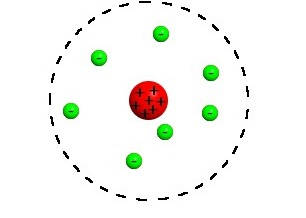
This model this model was the first to show a nucleus, consisting of protons and neutron. Electrons surround the nucleus but are not shown in distinct energy levels.
The "Rutherford Model" of the atom
The "Plum Pudding Model" of the atom
The "Quantum Mechanical Model" of the atom

In Rutherford's famous "Gold Foil" experiment, some particles passed through the foil, some were deflected, and some were bounced straight back. This observation made Rutherford conclude
gold atoms have a solid nucleus
gold atoms can conduct electricity
gold atoms are denser than other metals
gold's elections orbit the nucleus at definite distances from the center


Molarity is ...
grams of solute/deciliters of solvent.
grams of solute/liters of solution.
moles of solute/liters of solution.
moles of solute/milliliters of solvent.

The amount of solute that can be dissolved in a specific amount of solvent at a given temperature is its
concentration.
density.
dilution.
solubility.

Point to the area of lower pressure
What happens to the average kinetic energy of gas particles when they are heated?
it increases
it decreases
it remains the same
it is not possible to determine with the information given
Which graph shows the pressure-temperature relationship expected for an ideal gas?


A hypothetical gas that perfectly fits all the assumptions of the kinetic molecular theory is known as
real gas
ideal gas
imaginary gas
perfect gas
Under what conditions do real gases behave most like an ideal gas?
Low temperature and low pressure
Low temperature and high pressure
High temperature and low pressure
High temperature and high pressure
The collisions of gas particles on the walls of a container are perfectly_______________.
arranged
elastic
aligned
sped
There is/are no ___________________ present between gas particles or the walls of the container the gas is in.
forces of attraction
kinetic energy
helium
mL
The whole point of making a real gas behave like an ideal gas is to overcome _________________.
intermolecular forces
pressure
temperature
speed
Which type of chemical reaction has the following configuration?
Substance + Substance --> Compound
A + B --> AB
Composition/Synthesis
Decomposition
Single Replacement
Double Replacement
Combustion

Identify the type of chemical reaction pictured above
Composition/Synthesis
Decomposition
Single Replacement
Double Replacement
Combustion

