
 Worksheets
Lesson 5 Reading One— How Can I Model the Things Gases Do?
Total questions: 44
Worksheet time: 22mins

Squeezing the sponge makes it ________________.
higher
smaller
lower
larger

You can ______________________ a sponge.
eat
compress
fly
drive

Think about what happens when you compress a sponge with your hand. Then think about opening your hand. The sponge will _________ and open back up into its original shape.
compress
expand
fly
drive

Air can ___________________ and expand.
expand
compress
turn orange
drive

In Lesson 2 you learned that air takes up space. When you compress air, you squeeze the_____________ into a smaller space.
orange
air
fruit
car

To make air fit into a smaller volume, you compress
the air. Scuba __________ have compressed air in them.
fish
tanks
squid
whales

Squeezing or compressing _________ may sound strange. It is hard to grab a handful of air like you grab a sponge or a handful of sponges.
fruit
air

In class you saw that you can compress air. First you pulled
the handle of a ______________ to fill the syringe with air.
fish
bike
syringe
rope

When you push the syringe handle, you are
pressing the air in the syringe, making the air
compress (squeeze into a smaller ______________).
weight
size
mass
volume

When you push the syringe handle, you are pressing the air in the syringe, making the air ___________ (squeeze into a smaller volume).
expand
compress
softer
harder

Look at all of the forms of the word compress in this section. Words like compress, compression, and compressing all contain the word _______________.
free
press
sing
power

Gases can __________ taking up more space or ____________ taking up less space?
evaporate compress
compress expand
expand compress
compress evaporate

Most matter shrinks when it is cold and expands when it is hot. Water, however ____________________ when it freezes and is less dense than liquid water.
expands
contracts
shrinks
evaporates

When a gas releases energy its temperature goes down until it _______________ or changes to a liquid
condenses
melts
boils
evaporates

when a liquid takes in energy its temperature rises until it _______________ or changes to a ___________?
Boils , liquid
melts , Gas
evaporate , Gas
boils, gas

Water melts and freezes at _______ or _________
22 f 10 c
32 f 0 c
42 f 20 c
52 f 30c

Gases can _________ taking up more space or __________ taking up less space
compress, expand
inflate, deflate
expand , compress
boil, condense

GASES HAVE THE MOST ENERGY!
true
false

Squeezing the sponge makes it smaller. You might be able to squeeze a large sponge to fit in one hand. Because you can push (or press) the sponge, you can say that the sponge can be _________________.
sung
spilled
compressed
washed

Pressure is caused by millions and _____________ of particles hitting against a surface.
hundreds
millions
billions
trust

Air takes up space. When you compress air, you squeeze the __________ into a smaller space.
stuff
slime
water
air

You can also squeeze air when you add more _______ into a container that is already full of air.
water
liquid
solid
air

You already know that when you smell something, it is because an _________ is in the air.
ogre
orange
odor

What are the states of matter?
solid, liquid, and juice
solid and liquid
solid and gas
solid, liquid, and gas

Particles closest together
solid
liquid
gas
solid, liquid and gas

Particles move quickest
solid
liquid
gas
solid, liquid and gas

Which is a quality that only gasses display
Spread out to fill all available space
Take the shape of their container
Can't be compressed
All of these

Which of the following has the lowest density?
Gasses
Solids
Liquids
All mater is the same density
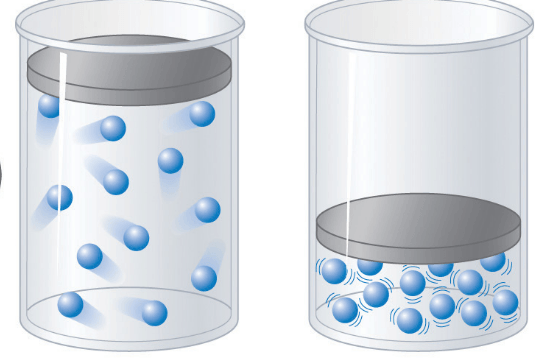
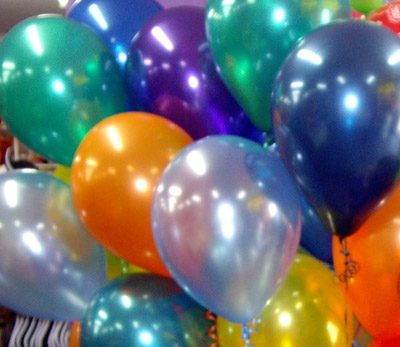


Which is a quality that only gasses display
Spread out to fill all available space
Take the shape of their container
Can't be compressed
All of these

What are the states of matter?
solid, liquid, and juice
solid and liquid
solid and gas
solid, liquid, and gas
A visual representation of a system.
Free Body Diagram
Newton's
Scientific Model
Phenomenon

One way to increase the pressure inside a container is to ...
increase the amount of particles in the container.
decrease the temperature of the container.
increase the volume of the container.
decrease the mass of the container.

Bread can be compressed because...
there are small spaces inside.
it tastes good.
the particles move freely.
its volume remains constant.

Air moves into your lungs because...
your body increases the volume of your lungs.
your body decreases the volume of your lungs.
it is attracted to your mouth.
you are actually forcing the air into your lungs.

One way to increase the pressure inside a container is to ...
decrease the volume of the container.
decrease the amount of particles inside the container.
allow the pressure to increase by itself.
increase the mass of the container.

A characteristic of air that cannot be modeled by one single sponge is...
small amounts of air can be taken away from or added to a container.
that air can be compressed.
that air can be expanded.
that air can hold odors.

What property of air allows large amounts of it to be placed into a scuba tank?
air can be compressed
air spreads out
air is invisible
air can be changed into a liquid

What property of air allows people to breath it out of a scuba tank?
Air spreads out in all directions
air flows
air contains water vapor
air is invisible

When air is compressed, the matter that makes up air ...
is pushed closer together.
spreads further apart.
gets colder.
becomes invisible.

This graph represents...
the amount of air in a scuba tank decreasing over time.
the amount of air in a scuba tank increasing over time.
the amount of air in a scuba tank remaining constant over time.
the temperature of air getting colder over time.
According to the graph, how long does it take for all of the air in a scuba tank to be used by a diver?
6 minutes
0 minutes
3 minutes
10 minutes

