

wayground logo

Free Printable Worksheets

NEW

Font size

S
M
L
XL
Worksheets

Chemistry Review

Total questions: 45

Worksheet time: 1hrs 23mins

Name
Class
Date
1.
Fill in the blank:
The law of conservation of mass states that matter cannot be created nor __________________.
a)
destroyed
b)
rearranged
c)
transferred
d)
changed
2.
The following chemical reaction occurs:
2S + 3O2 -> 2SO3
How many atoms of oxygen are there in the reactant?
a)
2 atoms of oxygen
b)
3 atoms of oxygen
c)
6 atoms of oxygen
d)
1 atom of oxygen
3.
In a reaction A + B ----> C,  reactant A has 5g and product  C has 9g. How many grams does reactant B should have? 
a)
4g
b)
5g
c)
9g
d)
14g
4.
Matter can not be created nor destroyed: it can only be
a)
Destroyed a little bit
b)
Invisible
c)
Transformed, changed
d)
None of the above
5.
A chemical reaction is balanced when
a)
both sides have the same elements
b)
Both sides have the same  number of atoms
c)
Same subscripts
d)
Same coefficients
6.
The substances listed on the right side of a chemical equation are the
a)
Yields
b)
Reactants
c)
Products
d)
Precipitates
7.
The substances listed on the left side of a chemical equation are the
a)
Products
b)
Coefficients
c)
Precipitates
d)
Reactants
8.
In chemical reactions, what does the principle of conservation of mass mean?
a)
Matter is not created or destroyed.
b)
The total mass of the reactants is greater than the total mass of the products.
c)
The total mass of the reactants is less than the total mass of the products.
d)
Matter is not changed.
9.
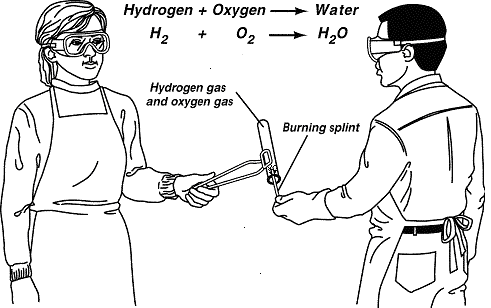
Identify the reactant(s) and product(s) of the reaction.
a)
All three are reactants and none are products.
b)
Hydrogen and water are the reactants, and oxygen is the product.
c)
Water and oxygen are the reactants, and hydrogen is the product.
d)
Hydrogen and oxygen are the reactants, and water is the product.
10.
How many Oxygen (O) atoms are in 2C2HO8Cl2
a)
2
b)
16
c)
8
d)
5
11.
How many Hydrogen (H) atoms are in NH3O5
a)
3
b)
4
c)
5
d)
1
12.
A molecule is________
a)
a glob of gelatinous goo
b)
smaller than an atom
c)
filled with raisons
d)
more than one atom bonded together
13.
The coefficient in  3H2O is
a)
6
b)
2
c)
3
d)
5
14.
If reaction starts with 20g of reactants it should produce 
a)
a total of 40g of products
b)
a total of 10g of products
c)
a total of 80 g of products
d)
a total of 20g of products
15.
In the following equation, what are the products?
HCl + Zn → H2 + ZnCl2
a)
HCl + Zn
b)
H2 + ZnCl2
c)
Zn → H2
d)
the stuff on the outside
16.
How many oxygen atoms are present in the following? 
4Ca(OH)2
a)
4
b)
6
c)
8
d)
1
17.
How many Sodium (Na) are in 6NaCl?
a)
1
b)
12
c)
6
18.

Which of these statements is NOT true?

a)

A molecule of sorbitol contains three more oxygen atoms than a molecule of glutamine.

b)

A molecule of lactose contains twice as many atoms as a molecule of fructose does.

c)

A molecule of fructose contains four more atoms than a molecule of glutamine does.

d)

A molecule of lactose contains twice as many carbon atoms as a molecule of sorbitol does.

19.

Which of these formulas contain equal numbers of nitrogen atoms?

a)

Formulas I and III

b)

Formulas I and IV

c)

Formulas II and III

d)

Formulas I, II, and V

20.

Which substances have the same number of carbon atoms?

a)

Substances 1 and 2

b)

Substances 2, 3, and 4

c)

Substances 2 and 3 only

d)

Substances 1 and 3

21.

What is the subscript in the chemical equation?

a)

The C

b)

The H

c)

The 4

d)

There isn't a subscript

22.

What is a subscript?

a)

It tells how many atoms of that certain element

b)

Tells how many molecules there are

c)

It tells how big the reactivity will be on a scale of 1-10

23.
The one or two letters used to represent elements 
a)
Yield sign
b)
Coefficient
c)
Symbol
d)
Subscript
24.
Black = Carbon (C)
White = Hydrogen (H)
What would be the formula for ethane?
a)
CH4
b)
CH6
c)
C2H2
d)
C2H6
25.
Which of the following tells you that a chemical change may have occurred?
a)
Change Shape
b)
Melting
c)
Vaporizing
d)
Change in color
26.
What happens in ALL chemical changes?
a)
Change in state of matter
b)
A new substance is formed
c)
Bubbles are produced
d)
An explosion
27.
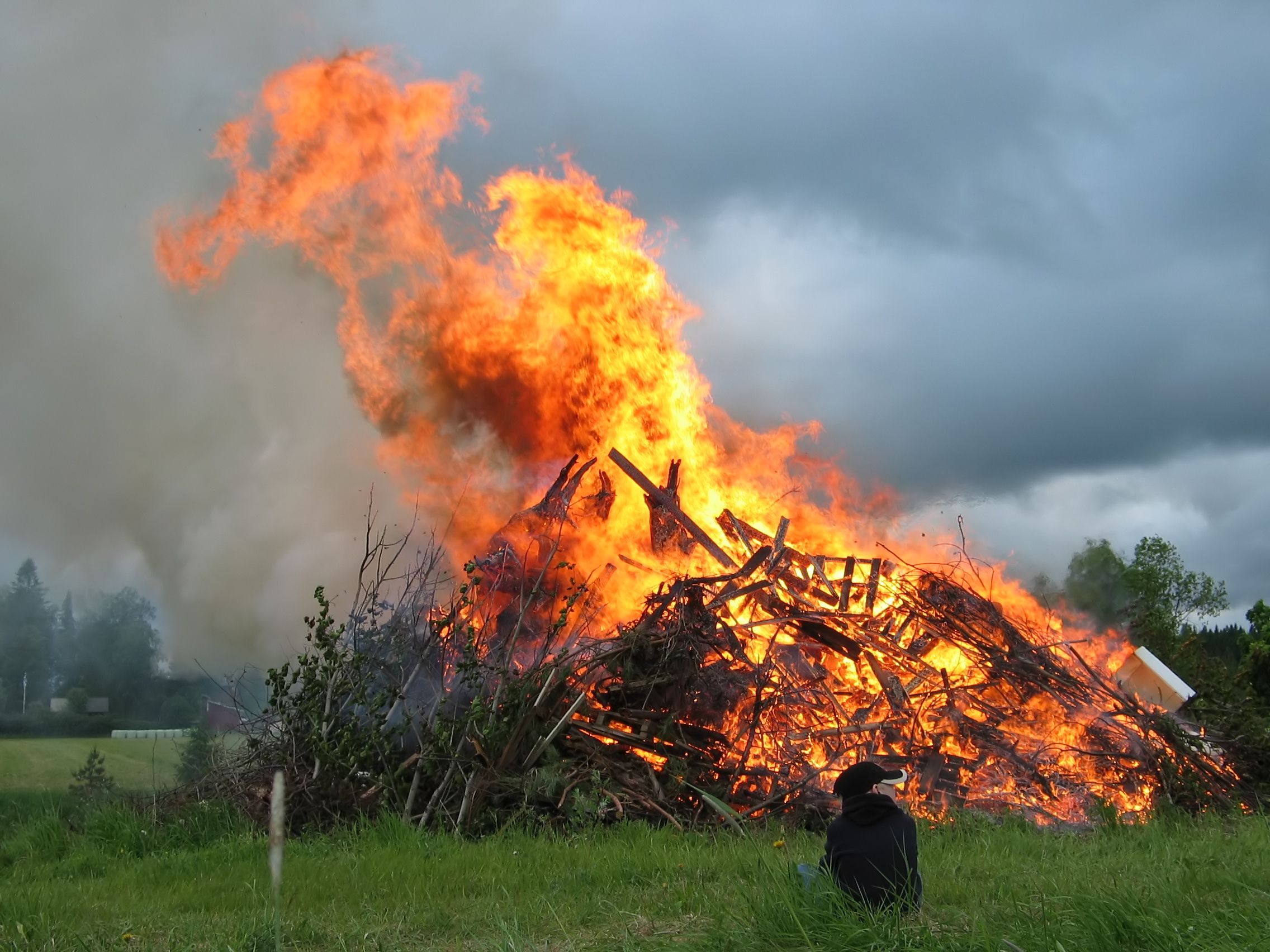
Is wood burning a physical or chemical change?
a)
Physical 
b)
Chemical
28.
Is copper tarnishing a physical or chemical change?
a)
Physical 
b)
Chemical
29.
Is sharpening a pencil a physical or chemical change?
a)
Physical 
b)
Chemical
30.
Which of the following is a reactant
a)
CH4
b)
H2O
c)
CO2
d)
2H2O
31.

How many Magnesium atoms are in 10MgCl2?

a)

10

b)

5

c)

20

32.

How many Hydrogen atoms in 3(NH₄)₂CrO₄?

a)

4

b)

2

c)

8

d)

24

33.

How many elements are present in this compound? (Careful!)

Mg2As3COHNi2

a)

2

b)

4

c)

6

d)

10

34.
Which of the following is a sign that a chemical reaction has occurred?
a)
change in shape
b)
melting
c)
formation of a gas
d)
dissolving
35.
Which of the following is NOT an example of a physical change?
a)
crumpled paper
b)
pencil sharpening
c)
shrunken clothing
d)
rust
36.
Fizzing, foaming, and burning are all examples of
a)
Chemical change
b)
Physical change
37.
A mixture is the result of a physical change because...
a)
The parts can be separated
b)
A new substance is made
c)
There is a chemical reaction
d)
One part of the mixture disappears
38.
What is the number of protons that the element in this image contain?
a)
14
b)
7
c)
15
d)
18
39.
Which letter represents a proton?
a)
A
b)
B
c)
C
d)
D
40.
Which letter represents a neutron?
a)
A
b)
B
c)
C
d)
D
41.
Which letter represents an electron?
a)
A
b)
B
c)
C
d)
D
42.
What is the atomic number of the atom pictured? 
a)
9
b)
10
c)
18
d)
19
43.
What is the atomic mass of the atom pictured? 
a)
9
b)
10
c)
18
d)
19
44.
Which subatomic particle has a positive (+) charge?
a)
Neutron
b)
Proton
c)
Electron
45.
Which subatomic particle has a negative (-) charge?
a)
Proton
b)
Electron
c)
Neutron
