
 Worksheets
Bonding and Structure
Total questions: 50
Worksheet time: 32mins

How many VALENCE ELECTRONS does Chlorine have?
2
7
8
10
17

Ionic bonds are formed when electrons get
Shared between two atoms
Removed from both atoms
Transferred from one atom to another
Added to both atoms

Ionic bonds typically form between
A metal and a nonmetal
Two nonmetals
Two metals
A metalloid and a metal

What is the correct formula for Sodium Chloride?
SCl
NaCl
SC
NaCl2

Name this ionic compound: Al2O3
Dialuminum oxide
Aluminum oxygen
Oxygen Aluminide
Aluminum oxide

Write the chemical formula for K and Br (potassium bromide).
KBr
K2Br
KBr3
KBr2

Write the chemical formula for Na and S (sodium sulfide).
NaS
S2S2
Na2S
NaS2

Metals (like Na) typically _____ electrons in the formation of ionic bonds.
Gain
Lose
Keep the same

Nonmetals (like Cl) typically ____ electrons when they form ionic bonds.
Gain
Lose
Keep the same
Magnesium Hydroxide is an ionic compound made up from Mg2+ and OH- ions. Which is its correct formula?
MgOH
MgOH2
Mg(OH)2
MgO


How many bonds will a C atom form?
1
2
3
4
Which has weak intermolecular forces in between layers?
graphite
diamond
fullerene
none of these
Each carbon atom joined to three other carbon atoms -
diamond
graphite
both
Which of these allotropes have high melting point?
diamond
graphite
both
Which of these is used as a lubricant?
diamond
graphite
Which of this is used in drill bits?
diamond
graphite
SiO2
_____ can conduct electricity because it has _____ _____
diamond
graphite
localised electrons
delocalised electrons
Graphite is soft because
it has strong covalent bonds
its layers can slide over one another due to weak forces between the layers
it has weak van der Waals forces between layers
it is used as a lubricant
Diamond is used for cutting glass because it is
hard and strong
soft
shiny
unreactive
Why is diamond hard and strong? It has
weak intermolecular forces
weak covalent bonds
strong covalent bonds
van der Waals forces of attraction
What is the ability of a substance to be pulled into a wire?
Malleability
Ductility
Conductivity
Solubility
Which of these are considered properties of metals? (choose ALL that apply)
brittleness
low melting point
luster (shininess)
malleability
ductility
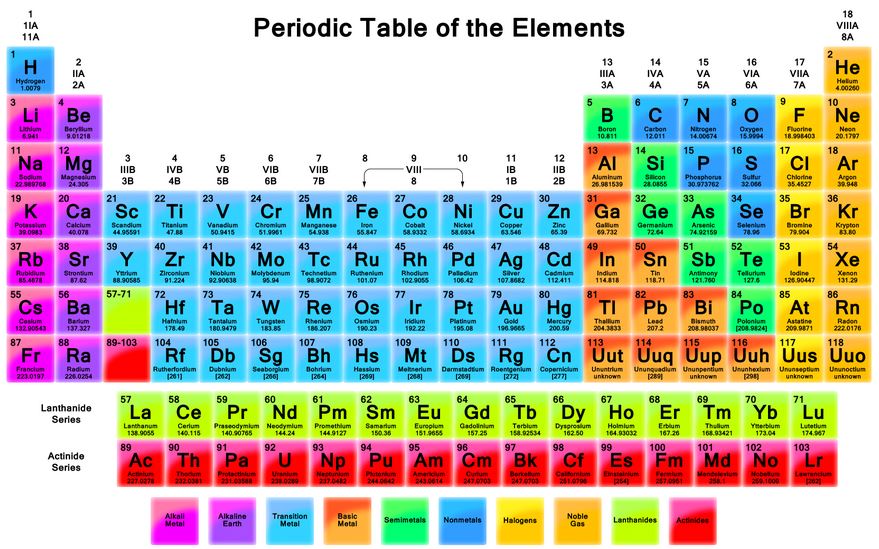
What is the name of the compound with the chemical formula CrCl3 ?
chromium (III) chlorate
chromium trichloride
chromium(II) chloride
chromium(III) chloride
What is the correct chemical formula for sodium sulfate?
NaSO4
Na2SO4
Na(SO4)2
Na2(SO4)2
Which of the following pairs of elements would NOT react to form an IONIC compound?
sulfur and phosphorus
sodium and iodine
iron and oxygen
aluminum and bromine
How are compounds with metallic bonds similar to ionic compounds?
Both tend to have double and triple bonds.
Both tend to have low boiling point
Both tend to have poor conductivity.
Both tend to have high melting points.
Which of the following would have the lowest melting point?
MgCl2
Al2O3
CO2
AlP
Nonmetals tend to form ions by
destroying electrons
gaining electrons
losing electrons
sharing electrons
What is the correct formula for Sodium Chloride?
SCl
NaCl
SC
NaCl2
Magnesium Hydroxide is an ionic compound made up from Mg2+ and OH- ions. Which is its correct formula?
MgOH
MgOH2
Mg(OH)2
MgO
In the compound CoSO4, what is the charge on cobalt?
+4
+2
-2
-1
an element from Group 7

Why do ionic compounds NOT conduct electricity when they are in their solid state?
Their ions are free to move.
Their ions are held in fixed positions.
Their electrons are free to move
Their electrons are held in a fixed state

