wayground logo

Free Printable Worksheets

NEW

Font size

S
M
L
XL
Worksheets

Practice for the Final Exam

Total questions: 50

Worksheet time: 29mins

Name
Class
Date
1.

protons

a)

negative charge, nucleus

b)

positive charge, shells

c)

positive charge , nucleus

d)

neutral charge, nucleus

2.

neutrons

a)

no charge, shells

b)

positive charge, nucleus

c)

no charge, nucleus

d)

negative charge, shells

3.

An observation made with your senses

a)

Qualitative observation

b)

Quantitative observation

c)

temperature

d)

conclusion

4.

What is an hypothesis?

a)

a guess

b)

a testable, tentative explanation

c)

a theory

d)

data

5.

What is a manipulated variable (independent variable)?

a)

the variable that changes as a result of the experiment

b)

the variable that the scientist changes

c)

the evidence

d)

the quantitative observation

6.

Which of the following is something you should NOT do in a lab?

a)

read the label of chemical bottles before using it

b)

pour unused chemicals back into their original bottles

c)

use lots of water to wash skin that has been splashed with chemicals

d)

take only as much as you need of shared chemicals

7.

Based on the graph, what happens to the solubility of CO2 as the temperature increases?

a)

it increases

b)

it stays the same

c)

it decreases

d)

what is a graph?

8.

What is an example of pure research?

a)

creating synthetic elements to study their properities

b)

producing heat-resistant plastics for use in household ovens

c)

finding ways to slow down the rusting of iron ships

d)

searching for fuel other than gasoline to power cars

9.

What is a control?

a)

a variable that is unchanged to compare results to

b)

a changed variable

c)

a hypothesis

d)

a conclusion

10.

Which of the following is an example of quantitative data?

a)

grey

b)

oily

c)

44.2oC

d)

Copper

11.

Which is NOT an SI base unit?

a)

second

b)

kilogram

c)

degree Celsius

d)

meter

12.

What is the correct representation of 702.2g in scientific notation?

a)

7.02 x 10³g

b)

70.22 x 101 g

c)

7.022 x 10² g

d)

70.22 x 10² g

13.

A piece of metal has a mass of 61.3g and a volume of 5.84cm3. What is the the metal? Hint: density!

a)

copper (8.96 g/cm3)

b)

molybdenum (10.2 g/cm3)

c)

silver (10.5 g/cm3)

d)

technetium (11.5 g/cm3)

14.

Which of the following shows 229.613 correctly rounded to four significant figures and in scientific notation?

a)

0.2296 x 10⁻³

b)

2.29 x 10³

c)

2.296 x 10⁻²

d)

2.296 x 10²

15.

How many significant figures (digits) are in the number 0.0034051?

a)

4

b)

5

c)

7

d)

3

16.

A 5mL sample of water has a mass of 5g. What is the density of water?

a)

1 g/mL

b)

1 mL/g

c)

25 gmL

d)

10 gmL

17.

What is chemistry?

a)

the study of matter

b)

the study of the universe

c)

the study of science

d)

the study of numbers

18.
What is the name for a row on the Periodic Table?
a)
Group
b)
Period
c)
Lanthanide
d)
Actinide
19.
What is the name for a column on the Periodic Table?
a)
Group
b)
Period
c)
Halogen
d)
Alkali
20.
What is the first noble gas listed on the Periodic Table? (Use the tables posted around the room to help if you need!)
a)
Hydrogen
b)
Helium
c)
Neon
d)
Boron
21.
Which of the following has a positive charge?
a)
Proton
b)
Neutron
c)
Electron
d)
Ion
22.
Which of the following has a negative charge?
a)
Electron
b)
Proton
c)
Neutron
d)
Ion
23.
Which component of an atom increases or decreases when you have a different isotope?
a)
Protons
b)
Neutrons
c)
Electrons
d)
Nuclei
24.
An atom's atomic number is equivalent to the number of what?
a)
Protons
b)
Neutrons
c)
Electrons
d)
Ions
25.

What chart is used to organize the elements by atomic number?

a)

Atomic Table

b)

Periodic Table

c)

Kitchen Table

26.
What are the three states of matter?
a)
solid, volume, mass
b)
density, volume, mass
c)
solid, liquid, gas
d)
density, gas, volume
27.
Something that takes up space and has mass.
a)
volume
b)
matter
c)
mass
d)
density
28.
A state of matter that has a definite volume and shape.
a)
solid
b)
liquid
c)
gas
d)
matter
29.
A measure of how much mass is contained in a given unit of volume.
a)
mass
b)
density
c)
volume
d)
matter
30.
Iron + oxygen = rust is an example of a ___________.
a)
physical property/change
b)
chemical property/change
c)
mass
d)
volume
31.
You can measure ______ with grams.
a)
mass
b)
volume
c)
conductivity
d)
melting point
32.
The ability of a metal to allow heat or electricity to pass through it.
a)
conductivity
b)
insulator
c)
mass
d)
density
33.
What is the difference between mass and weight?
a)
Mass is the total matter in an object, and weight is the downward pull of an object.
b)
Mass is the downward pull of gravity on an object, and weight is the total matter making up an object.
c)
Mass is Batnan, Weight is Spider-Cam
d)
I don't know 😭
34.

All matter is made of what

a)

energy

b)

atoms

c)

electrons

d)

compounds

35.

The positive particles of an atom are

a)

electrons

b)

positrons

c)

neutrons

d)

protons

36.

The central region of an atom where its neutrons and protons are is its

a)

nucleus

b)

electron cloud

c)

core

d)

center

37.

An atom with atomic number 6 would have how many protons

a)

6

b)

12

c)

3

d)

cannot be determined

38.

Particles in an atom that are neutral and have no charge are

a)

negatrons

b)

electrons

c)

neutrons

d)

protons

39.
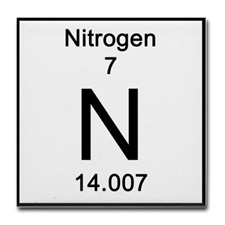
What is the number of protons that the element in this image contain?
a)
14
b)
7
c)
15
d)
18
40.
An atom with atomic number 6 would have how many protons 
a)
6
b)
12
c)
3
d)
cannot be determined 
41.
True or False? Neutrons have a negative charge
a)
True
b)
False
42.
What is the atomic number for an element with three protons?
a)
2
b)
1
c)
3
d)
6
43.

The vertical (up and down) columns in the Periodic Table are called

a)

groups

b)

towers

c)

periods

d)

atomic numbers

44.
The Modern Periodic Table of Elements is arranged by
a)
atomic mass
b)
atomic number
c)
valence electrons
d)
number of isotopes
45.
The atomic number tells you what?  READ THE ANSWERS CAREFULLY
a)
only the number of electrons
b)
 only the number of protons
c)
only the number of neutrons
d)
the number of both electrons and protons in an atom.
46.
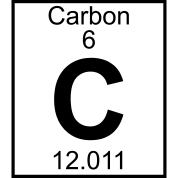
What does the 6 represent?
a)
atomic mass
b)
atomic number
c)
element name
d)
chemical symbol 
47.
What does 12.011 represent?
a)
atomic mass
b)
atomic number
c)
element name
d)
chemical symbol 
48.
What does the C represent?
a)
atomic mass
b)
atomic number
c)
element name
d)
chemical symbol 
49.
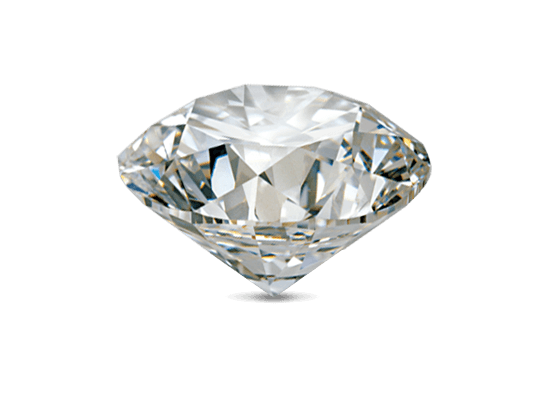
What element primarily makes a diamond?
a)
Hydrogen
b)
Silver
c)
Carbon
d)
Calcium
50.
What is the symbol for Potassium?
a)
P
b)
K
c)
Pb
d)
Pd