
 Worksheets
Chemical Bonds
Total questions: 45
Worksheet time: 34mins
The force that holds atoms or ions together as a unit.
Chemical bonds
Chemical equation
Chemical energy
Electrostatic energy
Why do elements bond to one another? (multi-select)
Because they are bored
To achieve an full valence shell
To become more stable
To have more energy
Why do all bonds form?
so the number of protons equals the number of electrons
so an atom can become unstable
to fill the outermost energy level
To bond atoms will ________________________ their valence electrons. (multi-select)
transfer
take
share
give


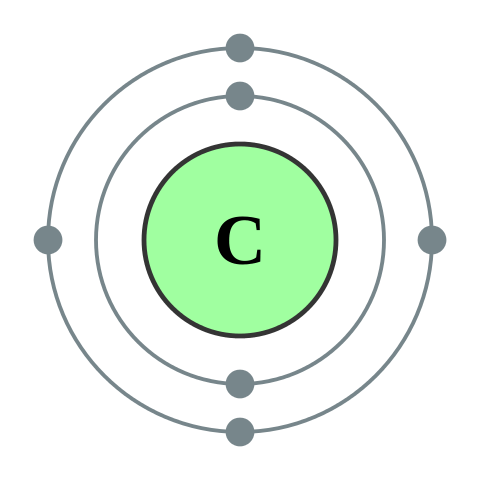
How many valence electrons does carbon have?
4
5
6
7
What kind of bond forms when atoms transfer electrons?
ionic
covalent
metallic
univalent

The positive ions tend to _____________ electrons.
lose
gain
The negative ions tend to _____________ electrons.
lose
gain

What happens when two negatively charged ions are pushed together?
they will repel (move apart)
they will be attracted to each other (move together)

What happens when two oppositely charged ions are pushed together?
they will repel (move apart)
they will be attracted to each other (move together)
Will a chlorine atom gain or lose electrons?
gain
lose
Will a sodium atom gain or lose electrons?
gain
lose
What kind of bond forms when atoms share electrons?
ionic
covalent
metallic
univalent
How do covalent bonds form?
By donating and receiving valence electrons between atoms.
Scientists still aren't sure.
Opposite slight charges attract each atom in the compound.
Sharing valence electrons between atoms
Metallic bonds are between
a metal and nonmetal
two nonmetals
two metals
An atom with 3 valence electrons "wants" a full shell, so it can either gain 5 or lose 3. Which is more likely to occur?
Gain 5
Lose 3
Nothing
How many Aluminum atoms are in Al2O3?
3
5
2
1

Cl2
Ionic Bond
Covalent Bond
CaCl
Ionic Bond
Covalent Bond
NH3
Ionic Bond
Covalent Bond
NaO
Ionic Bond
Covalent Bond
Cl2
Metal with Nonmetal
Nonmetal with Nonmetal
CaCl
Metal with Nonmetal
Nonmetal with Nonmetal
NaO
Metal with Nonmetal
Nonmetal with Nonmetal
NH3
Metal with Nonmetal
Nonmetal with Nonmetal

Which is not true of the chemical bond shown on the diagram?
An electron from Na is transferred to Cl.
The bond is ionic since electron is shared by the two atoms.
A metal and a non-metal are involved in the bonding.
Na will become positively charged and Cl will be negatively charged.
All are correct about ionic bonding, except...
It is an electrostatic force of attraction between opposite charges.
It occurs between a metal and a non-metal atoms.
It happens when electrons are shared by the atoms.
It involved the loss and gain of electrons.

Which two statements are correct about the figure shown?
It is a covalent bond.
Hydrogen atoms loss electrons and Carbon gains the atoms.
It happens on metal and on another non-metal.
The valence electrons are shared by both atoms.
Why does an atom tend to chemically bond with another atom?
To become more stable
To remain on its present state
To maintain its energy
To decrease its stability
When is an atom stable?
Full outer energy level
With 2 or 8 valence electrons
When protons equals electrons
When it has more electrons than protons
How many atoms of Carbon are in one molecule of C3H8?
3
8
11
24
What is the correct electron-dot notation for Helium?


What is the correct electron-dot notation for Aluminum?


How many atoms of hydrogen are in a sugar molecule with the formula C6H12O6
12
6
24
18
Atoms that are _____________ will form bonds.
stable
unstable

