wayground logo

Free Printable Worksheets

NEW

Font size

S
M
L
XL
Worksheets

Matter: States, Changes, Properties, Classification and Separa.

Total questions: 50

Worksheet time: 51mins

Name
Class
Date
1.

Matter is anything that has:

a)

mass

b)

volume

c)

mass and volume

d)

substance

2.
The amount of space something takes up
a)
density
b)
volume
c)
mass
d)
matter
3.
Which change can occur when  you add heat energy to water?
a)
The water can change from a liquid to a solid
b)
The water can change from a gas to a liquid
c)
The water can change from a liquid to a gas
d)
The water can change from a solid to a liquid
4.
Solids have a definite _______________.
a)
smell
b)
shape
c)
picture
d)
sound
5.
A combination that can be separated by physical processes is a .....
a)
Atom
b)
Compound
c)
Element
d)
Mixture
6.
What is a homogeneous mixture?
a)
a mixture that is the same throughout.
b)
a mixture that is made up of one type of atom.
c)
a mixture that is made up of one type of compound
d)
a mixture that cannot be separated through physical changes
7.
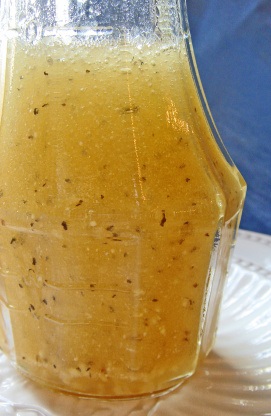
Italian Salad Dressing is a . . .
a)
heterogeneous mixture
b)
homogeneous mixture
c)
Pure Substance
d)
Compound
8.
Aluminum
a)
Element
b)
Compound
c)
Homogeneous Mixture
d)
Heterogeneous Mixture
9.
Water and alcohol are easily separated by distillation because of their
a)
 different melting points
b)
different colours
c)
different densities
d)
different boiling points
10.
A pure substance...
a)
is an element or a compound
b)
is an element or a mixture
c)
is a compound or a mixture
d)
is a mixture
11.
These can only be separated by chemical means. 
a)
element 
b)
compound 
c)
mixture 
d)
stuff 
12.
Temperature is a measure of the average ______ energy of the particles in the object. 
a)
thermal
b)
kinetic
c)
potential
d)
chemical
13.
The change of a substance from a solid directly to a gas is called
a)
condensation
b)
evaporation
c)
melting
d)
sublimation
14.
All matter is made of atoms and molecules that are
a)
always fixed in position
b)
always in motion
c)
moving in the same direction
d)
moving slowly
15.
Which state of matter has a definite volume, but not a definite shape?
a)
plasma
b)
gas
c)
liquid
d)
solid
16.
A gas becomes a liquid through a process called
a)
melting
b)
freeing
c)
evaporation
d)
condensation
17.

Which of the following is NOT a physical characteristic?

a)

Viscosity

b)

Volume

c)

Flammability

d)

Density

18.

What is the best piece of lab equipment to measure volume?

a)

Test tube

b)

Beaker

c)

Erlenmeyer flask

d)

Graduated cylinder

19.

Which of the following is NOT a chemical change?

a)

Dissolving sugar in your coffee

b)

Milk getting sour

c)

A metal fence post rusting

d)

Burning gasoline

20.
Salad is an example of...
a)
a mixutre
b)
an element
c)
a compound
21.
You are about to open an iced coffee, and notice the label says to "shake well", the drink must be a...
a)
solution
b)
colloid
c)
suspension
d)
compound
22.

Colloids are

a)

Clear mixtures that have fully dissolved parts

b)

A mixture that will separate into different parts when left to settle

c)

A suspension that appears cloudy and scatters light

d)

A solution that has all parts visible

23.
Which form of matter does not take the shape of its container?
a)
liquid
b)
gas
c)
solid
d)
air
24.
How is a gas defined?
a)
Indefinite shape, indefinite volume
b)
Definite shape, definite volume
c)
Found in stars
d)
Definite volume, indefinite shape
25.
Molecules are closest together in a 
a)
Solid
b)
Liquid
c)
Gas
26.

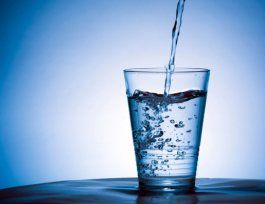
What state of matter?

a)

Solid

b)

Liquid

c)

Gas

d)

Plasma!!!

27.

If I add heat to a solid, how will the motion of the particles be affected?

a)

They will move slower

b)

They will stop moving

c)

They will move faster

d)

They will move to a different container

28.
What is happening when my ice cream changes from a solid to a liquid?
a)
freezing
b)
melting
c)
burning
d)
evaporation
29.
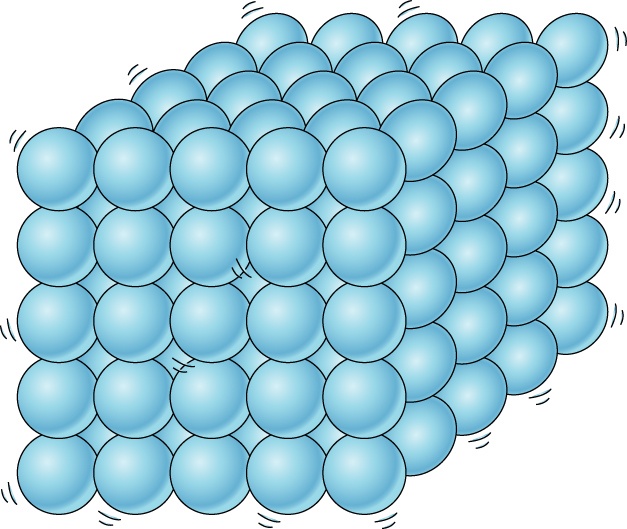
What does this picture represent? 
a)
solid
b)
liquid
c)
gas
d)
plasma
30.
What is an example of gas?
a)
crayons
b)
paper
c)
soda
d)
air
31.

Which process is an example of a physical change?

a)

Cutting Carrots into pieces and mixed in a salad

b)

A peanut butter and jelly sandwich being digested

c)

Sodium metal and water combining to form a compound and a gas

d)

Sodium metal and chlorine gas combined to form table salt

32.

Which process is an example if a physical change?

a)

Water turns to steam when boiled

b)

Carbon combines with oxygen to form carbon dioxide gas

c)

Water breaks down into hydrogen and oxygen gases over time

d)

Limestone breaks down into lime and carbon dioxide if heated

33.

Gallium is a metal. if you hold a solid piece in your hand, it will melt. This is a .

a)

Absorption

b)

Displacement

c)

Physical Change

d)

Chemical Change

34.

Which process is an example of a chemical change?

a)

A metal railing rusting in damp weather

b)

Alcohol evaporating from a cotton swab

c)

Steam rising from a boiling pot of soup

d)

A piece of wood shrinking as it dries out

35.

Which process is a sign of a chemical change?

a)

A rotting potato gives off a bad smell

b)

A melting block of ice leaves a large puddle

c)

A cloud quickly changes shape when blown by wind

d)

A plaster statue breaks when it falls onto the floor
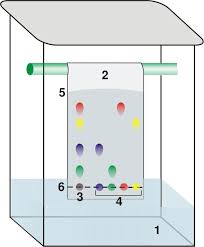
36.

Dyes in water soluble markers may be separated by means of..

a)

crystallization

b)

sublimation

c)

chromatography

d)

sedimentation

37.
Which one of the following would you use to separate sand from iron filings?
a)
a bar magnet
b)
filter paper
c)
chromatography paper
d)
alum
38.
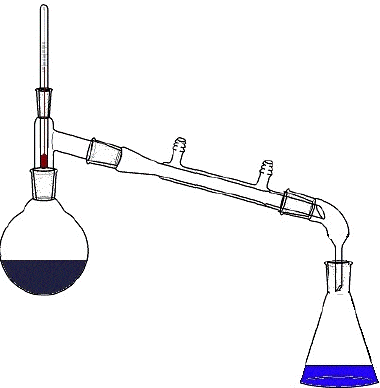
Look at the apparatus setup. It cannot be used to separate which of the following mixtures? 
a)
Marble chips from oil 
b)
Alcohol and water
c)
Chalk from sugar solution
d)
Sand and sea water
39.
chromatography separate the mixture of dyes on the basis of their ----------------------------
a)
density
b)
solubility
c)
gravity
d)
boiling point
40.

What is an example of a physical property?

a)

Ability to rust

b)

Flammability

c)

Tarnish

d)

Ductility

41.

What is an example of a chemical property?

a)

Color

b)

Shape

c)

Ability to rot/spoil

d)

Ductility

42.

Which is NOT evidence of a chemical reaction?

a)

Release of heat energy

b)

Change in shape

c)

Release of light energy

d)

Unexpected change in color

43.
Which of the following is NOT a pure substance?
a)
milk
b)
oxygen
c)
water
d)
carbon dioxide
44.
Which of the following is a heterogeneous mixture?
a)
water in a swimming pool
b)
sugar water
c)
a jar of mixed nuts
d)
stainless steel
45.
A mixture can be classified as a solution, suspension or colloid based on the 
a)
number of particles it contains
b)
size of its largest particles
c)
color of its particles
d)
size of its smallest particles
46.
Fog is considered a
a)
solution
b)
suspensionice
c)
colloid
d)
pure substance
47.

What happens when salty water is boiled?

a)

The salt becomes a new compound and water evaporates as it has a low boiling point

b)

The water evaporates and the salt remains in the beaker as it has a high melting point

c)

The water becomes a new compound and evaporates while salt remains in the beaker

d)

The water will disappear and the salt remains in the beaker as it is a solid

48.

How are you going to separate the iron filings from sulfur powder?

a)

by sieving

b)

by using magnet

c)

by decantation process

d)

by dissolving sulfur to water

49.

Which of these is a chemical properties of matter?

a)

color

b)

boiling point

c)

melting point

d)

corrosiveness

50.

How are you going to separated gravels from sand?

a)

by evaporation process

b)

by decantation process

c)

by sieving

d)

by using magnet