wayground logo

Free Printable Worksheets

Font size

S
M
L
XL
Worksheets

Reg Chem Midterm Review

Total questions: 53

Worksheet time: 2hrs 39mins

Name
Class
Date
1.
What should you do if you break glass in the lab?
a)
Tell the teacher.
b)
Sweep up the glass.
c)
Pick up the glass with your hands.
d)
Ignore it; the teacher will clean it up when she sees it later.
2.

What is important to remember when working with hot plates and burners?

a)

It's ok to walk away.

b)

Hot plates and burners are not dangerous.

c)

Hot plates and burners should not be left unattended.

d)

Hot plates and burners are fireproof.

3.
Keeping your work area neat and clean is important because:
a)
My teacher is a neat-freak
b)
I won't lose my supplies in the clutter.
c)
It keeps the room from looking messy.
d)
It helps prevent accidents.
4.
I can perform my own experiments with lab materials ___.
a)
I am sure it is safe to do so.
b)
Whenever I want to.
c)
When all of my group is ready.
d)
Never.
5.
What is the CORRECT procedure for students to follow if a chemical is spilled?
a)
Stand back and advise the teacher of the spill.
b)
Run madly out of the room.
c)
Splash large amounts of water onto the spill.
d)
Immediately ask to go to the restroom.
6.
At the end of the lab you see some leftover chemical that looks just like the stuff you were using.  You should:
a)
put the chemical back in the jar it came from.
b)
sweep it into your hand and throw it out.
c)
tell the teacher so you can dispose of it properly.
d)
tell your classmates that your lab partner is really messy.
7.
Which statement is an inference about this picture?
a)
The van is tan.
b)
The  van ran into KFC. 
c)
The driver was hungry. 
d)
An ambulance may be on the way. 
8.
What is an observation for this picture?
a)
The man is scared
b)
The man is going to get eaten
c)
There is a man in a kayak
d)
The man is paddling fast
9.
Which of the following statements is an inference of the picture?
a)
A student is roasting a marshmallow
b)
Two students are listening through cups
c)
The teacher is not in the classroom
d)
A student is setting off a rocket
10.
Matter has to main properties mass and volume
a)
True
b)
False
11.

Which among the following is a NON MATTER?

a)

Mars

b)

Smoke

c)

Steam

d)

none of the choices

12.

Which of the following is being used to identify if a certain object is a matter or NOT?

a)

Weight

b)

Density

c)

Volume

d)

Mass

13.

Which of the following is made up of matter?

a)

Music

b)

Light

c)

Love

d)

Air

14.
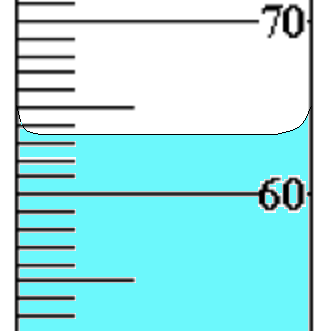
Volume?
a)
63.5 mL
b)
63 mL
c)
63.55 mL
d)
6 mL
15.
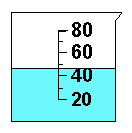
volume?
a)
48 mL
b)
48.2 mL
c)
48.25 mL
d)
4 mL
16.
What is the form of energy that is created using heat?  This form of energy makes particles of matter move faster.
a)
light energy
b)
thermal energy
c)
chemical energy
d)
kinetic energy
17.
What is the ability to do work or cause change?
a)
reflect
b)
energy
c)
refract
d)
absorb
18.

Which example best relates to chemical energy?

a)

A lamp plugged into an electrical outlet.

b)

Gasoline burning in a car's engine causing the car to move.

19.
Gas pressure is caused by
a)
gas molecules colliding with surfaces
b)
gas molecules condensing to a liquid
c)
gas molecules hitting other gas molecule
d)
barometers
20.

Energy stored because of gravity is called:

a)

Gravitational Potential Energy

b)

Kinetic Energy

c)

Mechanical Advantage

d)

Chemical Energy

21.
What will happen to the volume of a gas under constant temperature if the pressure increases?
a)
Increase
b)
Decrease
c)
Nothing
d)
Explosion!
22.
How are pressure and volume related?
a)
Directly
b)
Indirectly
c)
They aren't related
23.
If a balloon is cooled what will happen to the volume?
a)
Volume will increase
b)
Volume will decrease
c)
Volume will not change
24.
Which container will have lower pressure?
a)
left
b)
right
c)
they both have the same pressure
25.
A balloon will pop in the atmosphere because..
a)
Pressure goes down volume goes up
b)
Pressure goes up volume goes down
c)
temperature goes down volume goes up
d)
volume goes down temperature goes down
26.
The pictured graph shows the relationship between                      
a)
Temperature and Pressure at a fixed volume
b)
Pressure and Volume at a fixed temperature
c)
Temperature and Volume at a fixed pressure 
27.
Heat and Temperature are the same thing
a)
True
b)
False
28.
Diagram above shows milk at temperature 80oC immersed in water at temperature 10oC. Which statement is correct when milk and water eventually achieved thermal equilibrium?
a)
There is no flow of heat between milk and water.
b)
The net flow of heat between milk and water is zero.
c)
The temperature of milk and water will be the same at 10oC.
d)
The temperature of milk and water will be the same at 80oC.
29.
Ali bought an apple pie at the Taman Tasik McDonald. He finds that the apple pie filling is still hot and burnt his tongue though the pastry is already cold. Which of the following explain the above phenomenon?
a)
Apple pie filling has high specific heat capacity.
b)
Apple pie filling has low specific heat capacity.
c)
The pastry has high specific heat capacity
d)
Both the pastry and apple filling have the same specific heat capacity.
30.
There are four cups of hot cocoa. The cup sizes are shown. The temperature of the cocoa in each cup is 25 degrees celsius. Which cup has the MOST thermal energy?
a)
Large cup (Trenta)
b)
Small cup (Tall)
c)
Venti
d)
All three are the same temperature so they have same thermal energy
31.
What would be the effect on the particles if more heat is supplied to the system?
a)
They would slow down
b)
They would stop moving
c)
They would speed up
d)
There would be no effect
32.
Average of kinetic energy
a)
Thermal Energy
b)
Temperature
c)
Heat
33.
Water exists as a _____________ at 700 mmHg and 50 °C.
a)
solid
b)
liquid
c)
gas
d)
supercritical fluid
34.
What phase change(s) may occur at pressures below 4.58 mmHg?
a)
sublimation/deposition
b)
melting/freezing
c)
all phase changes are possible at these pressures
d)
vaporization/condensation
35.
The pressure is increased on a sample of water at 0 °C from 0 mmHg to 800 mmHg.  In order, what changes occur?
a)
deposition, melting
b)
sublimation, melting
c)
condensation, freezing
d)
deposition, freezing
36.
What state of matter is X?
a)
solid 
b)
liquid
c)
gas
d)
supercritical fluid
37.
What state of matter is Y?
a)
solid 
b)
liquid
c)
gas
d)
supercritical fluid
38.
What state of matter is Z?
a)
solid 
b)
liquid
c)
gas
d)
supercritical fluid
39.
What change occurs from F to E?
a)
sublimation
b)
deposition
c)
melting
d)
condensation
40.
What change occurs from E to C?
a)
sublimation
b)
freezing
c)
melting
d)
boiling
41.

During an endothermic reaction, heat is ________ and chemical bonds _______.

a)

released, formed

b)

absorbed, broken

c)

released, broken

d)

absorbed, formed

42.

During an exothermic reaction, heat is _________ and chemical bonds __________.

a)

released, formed

b)

absorbed, broken

c)

released, broken

d)

absorbed, formed

43.
If a chemical reaction is EXOTHERMIC, the temperature would....
a)
Stay the same
b)
Increase
c)
Decrease
44.
In an endothermic reaction, heat is ...
a)
taken in or absorbed
b)
given out or released 
45.
Rank the four fundamental forces of nature in order from weakest to strongest:  
a)
Electromagnetism, Gravity, Strong Nuclear, Weak Nuclear
b)
Weak Nuclear, Gravity, Electromagnetism, Strong Nuclear
c)
Gravity, Weak Nuclear,  Electromagnetism, Strong Nuclear
d)
Weak Nuclear, Electromagnetism, Gravity, Strong Nuclear
46.
____________ and ____________ are short range forces. 
a)
Gravity, Electromagnetism
b)
Strong Nuclear, Weak Nuclear
c)
 Electromagnetism, Strong Nuclear
d)
Gravity, Weak Nuclear
47.
_____________ is the force that binds protons together in the nucleus of an atom. 
a)
Gravity 
b)
Electromagnetism 
c)
Strong Nuclear 
d)
Weak Nuclear 
48.
Gravity has a range that is ____________. 
a)
Short
b)
Long 
c)
Infinite
d)
Variable
49.
What line segment represents only the solid state?
a)
A-B
b)
B-C
c)
C-D
d)
D-E
50.
What state(s) of matter are present at D-E?
a)
Solid-liquid
b)
Liquid
c)
Liquid-gas
d)
Gas-Solid
51.
What state of matter is segment 5?
a)
Solid
b)
Liquid
c)
Gas
d)
Plasma
52.
What are waves that can transfer heat through the vacuum of empty space?
a)
Electromagnetic waves
b)
Convection
c)
Conduction
d)
Heat
53.
What is a transfer of heat energy by electromagnetic waves?
a)
Radiation
b)
Convection
c)
Conduction
d)
Heat