wayground logo

Free Printable Worksheets

NEW

Font size

S
M
L
XL
Worksheets

U3 All things Atom Study Guide

Total questions: 49

Worksheet time: 35mins

Name
Class
Date
1.

What is the charge of an electron?

a)

positive

b)

negative

c)

no charge

d)

universal charge

2.
Who discovered the electron?
a)
Dalton
b)
Thomson
c)
Rutherford
d)
Bohr
3.
Who's atomic model was nicknamed the "planetary" model?
a)
Dalton
b)
Thomson
c)
Rutherford 
d)
Bohr
4.
Who discovered the nucleus of an atom?
a)
Dalton
b)
Thomson
c)
Rutherford
d)
Bohr
5.
Which particle(s) have no mass?
a)
Electrons only
b)
Electrons and Neutrons
c)
Electrons and Protons 
d)
Protons and Neutrons
6.

Which particle(s) will change the element?

a)

protons

b)

neutrons

c)

electrons

d)

all 3

7.
Who was the first to conclude that atoms could not be created or destroyed?
a)
Dalton
b)
Thomson
c)
Rutherford
d)
Bohr
8.
Most of the atom is made of...
a)
Protons and Neutron
b)
Electrons
c)
Empty space
d)
Aliens from outer space
9.
Who's atomic model is shown?
a)
Dalton
b)
Thomson
c)
Rutherford
d)
Bohr
10.

Which particle(s) do not change the mass of an atom?

a)

protons

b)

neutrons

c)

electrons

d)

protons and neutrons

11.

Which particle(s) do not change the total charge?

a)

protons

b)

neutrons

c)

protons and neutrons

d)

neutrons and electrons

12.

Which model is the oldest (earliest)?

a)
b)
c)
d)
13.

Which model shows a region called the electron cloud?

a)
b)
c)
d)
14.

What is the charge of a neutron?

a)

positive

b)

negative

c)

neutral

d)

universal

15.

Which colored particle is the electron?

a)

blue

b)

red

c)

yellow

d)

red and yellow

16.
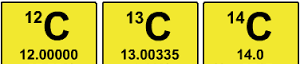
What do these isotopes of carbon all have in common?
a)
neutrons & mass number
b)
atomic number and neutrons
c)
atomic number and electrons
d)
protons, atomic number, and mass number
17.
How many neutrons does the isotope of lithium have?
a)
8
b)
3
c)
4
d)
5
18.
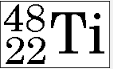
How many protons does this isotope of titanium have?
a)
48
b)
22
c)
26
d)
70
19.
In a correctly written symbol what would be located in the "A" position?
a)
number of neutrons
b)
atomic number
c)
number of electrons 
d)
mass number
20.
What quantities vary between isotopes of an element?
a)
protons, electrons, and atomic mass
b)
protons, electrons, and atomic number
c)
neutrons and electrons
d)
neutrons and atomic mass
21.
Isotopes are atoms of the same element with different #’s of __________ & therefore different __________.
a)
n0 ;  atomic #’s
b)
p+ ; atomic #’s
c)
e- ; atomic masses
d)
n0 ; atomic masses
22.
An atom is electrically neutral when
a)
protons and neutrons are the same
b)
protons and electrons are the same
c)
neutrons and electrons are the same
d)
neutrons balance the protons and electrons
23.
Ions are: 
a)
atoms with a positive or negative charge
b)
atoms with no charge
c)
atoms with ONLY a positive charge
d)
atoms with ONLY a negative charge
24.
How many electrons are in an atom that has an atomic number of 34, an atomic mass of 74 and a charge of -2?
a)
34
b)
36
c)
2
d)
40
25.
Cations are...
a)
Positive
b)
Negative
c)
Neutral
d)
Purring
26.
Anions are...
a)
Positive
b)
Negative
c)
Neutral
d)
Crying
27.
An atom becomes _________ when it gains electrons.
a)
Positive
b)
Negative
c)
Neutral
d)
Invinsible
28.
An atom becomes _______ when it loses electrons.
a)
Positive
b)
Negative
c)
Neutral
d)
Invinsible
29.
Which particles change the charge in atoms when ions are formed?
a)
Protons
b)
Electrons
c)
Neutrons
d)
Kittens
30.
all matter is made of what 
a)
energy 
b)
atoms 
c)
electrons 
d)
compounds 
31.
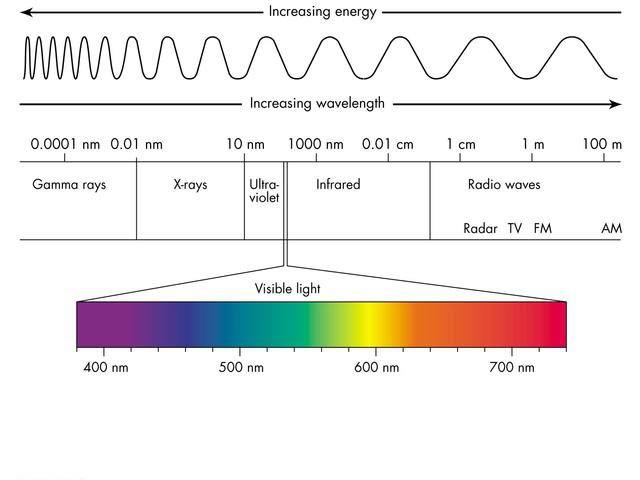
Which electromagnetic waves have the highest frequencies and the shortest wavelengths?
a)
microwaves
b)
visible light
c)
gamma rays
32.
For waves in any medium, as the wavelength decreases, what happens to the frequency?
a)
It also decrease
b)
It stays the same
c)
It increases
33.

What is the correct order of the visible light spectrum starting with the longer wavelength?

a)

Red, yellow, orange, blue, violet, indigo

b)

Violet, indigo, blue, green, yellow, orange, red

c)

Green, yellow, blue, indigo, red, orange

d)

Red, orange, yellow, green, blue, indigo, violet

34.
What gases are in the unknown mixture?
a)
Gas B & Gas D
b)
Gas C & Gas B
c)
Gas A & Gas D
d)
Gas D & Gas C
35.

Which color has the longest wavelength?

a)

Yellow

b)

Red

c)

Green

d)

Purple

36.
What waves have the lowest energy? 
a)
Gamma rays
b)
Visible light waves
c)
Radio waves
d)
X rays
37.
High frequency waves have _________ wavelengths.
a)
varying
b)
long
c)
the same
d)
short
38.

What is the state when electrons move to a higher energy level upon absorption of energy?

a)

active

b)

inactive

c)

excited

d)

ground

39.

What particles in the heated compounds are responsible for the production of the colored light?

a)

proton

b)

neutron

c)

electron

d)

proton and neutron

40.
Absorption of energy by an electron results in 
a)
it moving from the ground to an excited state
b)
it moving from an excited to the ground state
c)
the emission of a photon
d)
it moving from an excited to the ground state and the emission of a photon
41.

Flame tests are most useful for

a)

blood testing

b)

watching fireworks

c)

identification of elements

d)

none of the above

42.

What evidence did you observe that proves that elements give off their own unique color spectrum?

a)

All of the gas tubes produced a full spectrum. (A rainbow.)

b)

When we looked at white light through a prism, we saw the rainbow.

c)

Each gas tube gave off its own unique color and color spectrum when we looked at the light through the spectroscope. None of them were the exact same.

d)

Each gas tube gave off the same color and color spectrum when we looked at the light through a spectroscope.

43.

What evidence indicates that electrons move around the nucleus in definite pathways?

a)

None of the elements emitted a full color spectrum, but rather only certain frequencies of the spectrum were given off. Since some of the spectrum is missing, this means the electrons can only emit frequencies at the fixed energy levels and not in between.

b)

None of the elements emitted a full color spectrum, but rather only certain frequencies of the spectrum were given off. Since some of the spectrum is missing, this means the electrons can emit frequencies of light in between the energy levels.

c)

All of the elements emitted a full color spectrum. (The Rainbow.)

44.

Shorter Waves have ____Energy,Longer Waves___Energy?

a)

Lower,Higher

b)

Higher,Lower

45.
A wave with a large wavelength will have a ______ frequency and _____ energy
a)
high, low
b)
high, high
c)
low, high
d)
low, low
46.
If X is the symbol for an element, which of the following two symbols represent    isotopes of the same element?  
I. 7735X  II. 7733X  III. 8137X  IV. 8135 X
a)
I and II
b)
III and IV
c)
I and IV
d)
I and III
47.

What subatomic particle is responsible for the spectral lines seen in emission spectra diagrams?

a)

electrons

b)

protons

c)

neutrons

48.
Which elements are in the unknown sample?
a)
A and B
b)
B and C
c)
A and D
d)
B and D
49.

The unknown emissions spectra belongs to the element

a)

Hydrogen

b)

Mercury

c)

Neon

d)

Sodium