
 Worksheets
Honors Chemistry Spring Final Review
Total questions: 51
Worksheet time: 4hrs 11mins
How many grams of potassium chloride (KCl) can be produced from 356 g of potassium bromide (KBr)?
How many moles of carbon dioxide are produced from the combustion of 110 g of CH4?
What mass of O2 will be needed to burn 36.1 g of B2H6?
How many grams of aluminum sulfate would be formed if 250g H2SO4 completely reacted with aluminum?
How many liters of carbon dioxide are produced from 10L of carbon monoxide?
30.5g of silver nitrate react with excess sodium chloride. What is the theoretical yield of precipitate from this reaction?
12.9g
36.1g
25.7g
51.4g
30.5g of silver nitrate react with excess sodium chloride. If 10.5g of precipitate are collected from this reaction, what is the percent yield of this reaction?
40.9%
20.4%
81.0%
25.7%
2Al + 6HCl --> 2AlCl3 + 3H2
Aluminium reacts with hydrochloric acid. How many grams of aluminum are necessary to produce 11 L of hydrogen gas at STP?
13
8.8
0.99
1.0
Mg3N2 + 3H2O ––> 3 MgO + 2NH3
If 10.3 g of magnesium nitride is used, what volume of ammonia gas would be collected at 20˚C and 0.989 atm?
4.9 L NH3
4.96 L NH3
0.261 L NH3
0.26 L NH3
1Mg + 2H2O --> Mg(OH)2 + H2
What volume of hydrogen will be produced at STP by the reaction 67.3 g of magnesium?
62.0 L
0.12 L
2.77 L
1.15 L
4NH3+6NO --> 5N2 + 6H2O
How many liters of NH3 at 32.6 oC and 4.25 kPa are needed to react completely with 30.0L of NO at STP?
5.27 L
534 L
5.2 L
533.6 L
When solving for gas stoichiometry problems which of the following is correctly matched?
STP conditions; molar mass
NON STP conditions; PV=nRT
STP conditions; PV=nRT
NON STP conditions; 22.4 moles
2Cu2S + 3O2 → 2Cu2O + 2SO2
This reaction uses 18.2 g of copper (I) sulfide. What volume of sulfur dioxide gas would be collected at 237°C and 10.7 atm?
0.446 L
57 L
0.207 L
0.21 L
A sample of nitrogen gas is found to have a pressure of 4 atm, a temperature of 500 K, and a volume of 6 L. Calculate the number of particles (in mol) in the sample using the appropriate equation.
0.41 mol
0.58 mol
0.0039 mol
0.045 mol
The pressure of a gas is decreased from 5 atm to 3.5 atm which temperature and number of particles is held constant. We would expect a(n) _____ in the volume of the gas as pressure decreases.
Increase
Decrease
No change
Not enough information given
The pressure of a gas is decreased from 5 atm to 3.5 atm which temperature and number of particles is held constant. What law/equation could be used to calculate the change in volume?
Boyle's
Charles'
Ideal Gas
Not enough information given
What is the percent by mass of Cu in CuBr2?
50%
71.6%
28.4%
44.3%
What is the percent by mass of Br in CuBr2?
50%
71.6%
28.4%
44.3%
The decomposition of aluminum chlorate into its products requires 43.8 kJ of heat. Calculate the amount of heat required to decompose 125.0g of aluminum chlorate.
15.5kJ
20.0kJ
4.25kJ
9.87kJ
Calculate the empirical formula for a compound composed of 40.79g carbon, 6.844g of hydrogen, 54.329g of oxygen, and 13.59g of nitrogen.
C7H14O7N2
CHON
C21H42O21N6
C6H12O6N
A sample of a hydrate of sodium carbonate has a mass of 10.13g. After heating, it has a mas of 7.57g. Find the formula for of this hydrate.
Na2CO3 ∘ H2O
Na2CO3 ∘ 2H2O
Na2CO3 ∘ 3H2O
Na2CO3 ∘ 4H2O
Calculate the percent yield when 125.0mL of a 0.20M solution of zinc nitrate reacts with 250.0mL of a 0.45M solution of sodium phosphate. The actual yield is 2.85g of precipitate.
27%
55%
89%
13%

2 CaO--> 2 Ca + O2
What is the oxidation number of chlorine in HClO?
0
-1
+1
+5
The sum of the oxidation numbers in Na2CO3 is equivalent to
0
-2
+1
-1
In order to dilute a solution, you need to
add more of the solid
add more water
add organic solvent
add another solute
Tipo de sustancia que al disociarse produce concentración de iones H+
Sales
Agua
Hiróxidos
Acidos
If a solution has a [H+] of 9.3x10⁻¹¹, what is the pH?
10.0
4.0
3.5
8.2
If a solution has a [OH-] of 2.3x10⁻⁴, it must be a(n)...
Acid
Base
Neutral
What is the equation for calculating pH?
pH = [H+]
pH = log [H+]
pH = -log[OH-]
pH = -log [H+]
The pH of a solution is 8.43. What is the hydronium ion H3O+ concentration?
3.7 x 10⁻⁹ M
2.7 x 10⁻⁶ M
1.0 x 10-8.43 M
1.0 x 10⁻¹⁴
The pH of a solution is 8.43. What is the hydroxide ion OH- concentration?
3.7 x 10⁻⁹ M
2.7 x 10⁻⁶ M
antilog (-pH)
1.0 x 10⁻¹⁴/-pH
If I initially have 4.0 L of a gas at a pressure of 1.1 atm, what will the volume be if I increase the pressure to 3.4 atm?
1.29 L
12.36 L
1.29 atm
12.36 atm
A sample of nitrogen occupies a volume of 250 mL at 25oC. What volume will it occupy at 95oC?
308.70 mL
456.1 mL
308.70oC
456.1oC
Oxygen gas is at a temperature of 40oC when it occupies a volume of 2.3 liters. To what temperature should it be raised to occupy a volume of 6.5 liters?
611.84oC
611.84 K
880.33 K
880.33oC
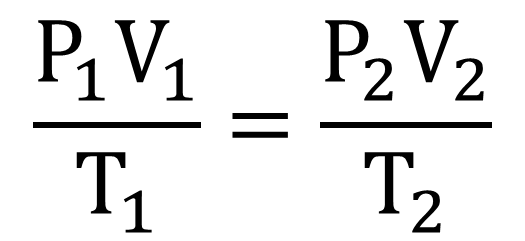
A weather balloon has a volume of 105L at 0.97 atm when the temperature is 318K. What is the volume at 293K and 1.05 atm?
89.4 L
0.32 L
93.8 L
3.13 L

