
NEW
Font size
S
M
L
XL
 Worksheets
Practice Semester Final
Total questions: 31
Worksheet time: 43mins
Name
Class
Date
1.
Which subatomic particle has almost no mass?
a)
proton
b)
neutron
c)
electron
2.
Found in the nucleus of the atom
a)
electrons only
b)
protons only
c)
neutrons and protons
d)
neutrons and electrons
3.
Valence electrons are:
a)
Electrons farthest away from the nucleus
b)
Electrons closest to the nucleus
c)
Electrons that just come and go - they don't stay with the atom
4.
How do you determine the number of valence electrons the main group elements have when neutral?
a)
Corresponds to the period
b)
Corresponds to the group
c)
Corresponds to the block
5.
What type of reaction occurs between an element and a compound?
Zn + 2HCl --> ZnCl2 + H2
Zn + 2HCl --> ZnCl2 + H2
a)
Synthesis
b)
Decomposition
c)
Single Replacement
d)
Double Replacement
6.
What kind of reaction is this:
4Fe + 3O2 → 2Fe2O3
4Fe + 3O2 → 2Fe2O3
a)
Synthesis
b)
Decomposition
c)
Single Replacement
d)
Double Replacement
7.
What kind of reaction is this:
2C3H7OH +9O2 -> 6CO2 + 8H2O
2C3H7OH +9O2 -> 6CO2 + 8H2O
a)
Double Replacement
b)
Combustion
c)
Single Replacement
d)
Decomposition
8.
Electronegativity is...
a)
how good an atom is at attracting electrons
b)
the ability of an atom to lose electrons
c)
the energy required to remove an electron from a specific atom
d)
how easy it is to make friends.
9.
Ionization energy is...
a)
the energy required to add an electron to a specific atom
b)
how much energy it takes to remove an electron from an atom
c)
the energy required to shield the outer electrons from the nucleus
d)
a measure of the ability of an atom to attract electrons
10.
Atomic radius generally increases as we move __________.
a)
down a group and from right to left across a period
b)
up a group and from left to right across a period
c)
down a group and from left to right across a period
d)
up a group and from right to left across a period
11.
What happens to electrons in a covalent bond?
a)
They are shared between two atoms
b)
They are shared between many atoms
c)
They are gained/lost (transferred)
d)
They turn into protons
12.
What happens to electrons in an ionic bond?
a)
They are shared between two atoms
b)
They are shared between many atoms
c)
They are gained/lost (transferred)
d)
They turn into protons
13.
If the number of protons equal the number of _____, the atom will have no charge
a)
protons
b)
neutrons
c)
electrons
d)
nucleus
14.

In the periodic table section above, what information does the 40.08 tell you?
a)
It is the number of protons.
b)
It is the number of neutrons.
c)
It is the atomic number.
d)
It is the atomic mass.
15.
In chemistry, a "mole" is:
a)
The mass of an atom
b)
a large number used to count particles
c)
based on the volume of a substance
16.
How many atoms of iodine are in a mole of iodine?
a)
53
b)
63.55g
c)
126.9
d)
6.02 x 10²³
17.
The number 6.02 x 10²³ is called...
a)
Einsteins number
b)
Bohr's number
c)
Elemental number
d)
Avogadro's number
18.
What is a limiting reactant?
a)
the reactant that determines how much product can be made
b)
the reactant that is in excess
c)
the product that you can make the most of
d)
the amount of reactants that react with each other
19.
You need 2 pieces of bread, 1 tablespoon of peanut butter and 2 tablespoons of jelly to make a sandwich. If you have 10 pieces of bread, 4 tablespoons of peanut butter and 20 tablespoons of jelly, what is the limiting reactant?
a)
bread
b)
jelly
c)
peanut butter
d)
sandwich
20.
1 P4 + 3 O2 --> 1 P4O6
What is the limiting reactant if 12 moles of P4 react with 15 moles of O2?
What is the limiting reactant if 12 moles of P4 react with 15 moles of O2?
a)
P4
b)
O2
c)
P4O6
d)
none of the above
21.
What is the molar mass of NaOH?
a)
368 g/mole
b)
40 g/mole
c)
57 g/mole
d)
23 g/mole
22.
36.0 g of Be contains how many moles?
a)
0.25 mol
b)
4.0 mol
c)
45 mol
d)
320 mol
23.
4.0 moles of H2O would have what mass?
a)
72 g
b)
23 g
c)
68 g
d)
4.5 g
24.
A mass of 6 g of Carbon contains
a)
1 mole of C
b)
2 moles of C
c)
0.5 moles of C
d)
72 moles of C
25.
A chemical reaction is balanced when
a)
both sides have the same elements
b)
Both sides have the same number of atoms
c)
Same subscripts
d)
Same coefficients
26.
What is the Law of Conservation of mass?
a)
Mass is created in a chemical reaction
b)
Mass is created in a physical change
c)
New chemicals formed from a chemical reaction have a larger overall mass than the original reactants
d)
Mass is never created or destroyed
27.
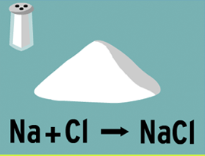
When sodium and chlorine combine to form sodium chloride, sodium chloride is the:
a)
Originator
b)
Reactant
c)
Product
d)
Produce
28.
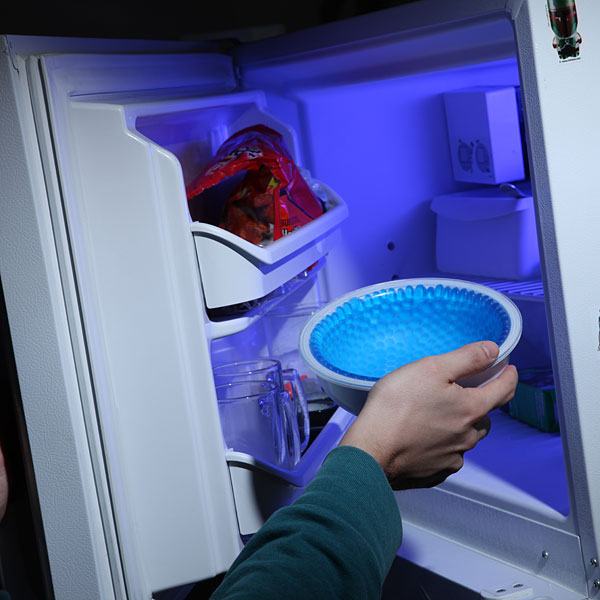
Maria fills a bowl with 200 g of water. She puts the bowl of water in the freezer, and the water freezes. Which will most likely be the mass of the frozen water?
a)
50 g
b)
100 g
c)
200 g
d)
400 g
29.
The coefficient in 3H2O is
a)
6
b)
2
c)
3
d)
5
30.
This particle determines what element you have - the elements identity.
a)
electron
b)
proton
c)
neutron
d)
valence shell
31.
All of the mass of an atom comes from what location?
a)
nucleus
b)
electron cloud
Reset

