
NEW
Font size
S
M
L
XL
 Worksheets
AP Bio: Genetics
Total questions: 50
Worksheet time: 40mins
Name
Class
Date
1.
Cells of organism must replicate for ?
a)
growth
b)
repair of damaged cells
c)
replacement of dying cells.
d)
All of the above
2.
Before cells can divide, what must be copied?
a)
mitochondria
b)
cytoplasm
c)
DNA
d)
Cell Wall
3.
The division of the nucleus is known as:
a)
Synthesis
b)
Mitosis
c)
G1
d)
G2
4.
Humans have ________ pairs of chromosomes.
a)
21
b)
23
c)
46
d)
None of the above
5.
Eukaryotic cells store their genetic information(DNA) in __________.
a)
Chromosomes
b)
Centromeres
c)
karyotypes
d)
Proteins
6.
Uncontrollable cell growth is known as _____
a)
obesity
b)
cancer
c)
diabetes
d)
hepatitis
7.
The ___________ holds the replicated sister chromatids together.
a)
centriole
b)
chromosomes
c)
centromere
d)
cycles
8.
The cell spends most of it's life in ________________.
a)
mitosis
b)
cytokinesis
c)
Interphase
d)
None of the above
9.
In the G1 stage of the cell cycle, the cell
a)
Grows
b)
Matures
c)
Carries on normal activities
d)
All of the above
10.
In the S stage of interphase_______________
a)
the cell grows
b)
the nucleus divides
c)
the cell membrane divides
d)
the DNA is replicated
11.
In the G2 stage of cell division, ______________ are made.
a)
organelles
b)
structures for cell division
c)
proteins
d)
all of the above
12.
When a plant cell goes through cell division, _____________.
a)
the 2 new nuclei are separated by the cell membrane pinching off.
b)
4 new cells are formed
c)
a cell plate forms, dividing the 2 new nuclei
d)
None of the above
13.
When an animal cell goes through cytokinesis,__________
a)
a cell plate forms dividing the 2 new nuclei.
b)
the cell membrane pinches off the 2 new cells.
c)
4 new cells are formed.
d)
None of the above
14.
A human cell has 46 chromosomes before mitotic division. How many chromosomes will the daughter cells after mitosis.
a)
12
b)
23
c)
46
d)
92
15.

Fruit fly body cells have 8 chromosomes. After mitosis, you would expect a resulting fruit fly daughter cell to have ...
a)
16 chromosomes.
b)
46 chromosomes.
c)
8 chromosomes.
d)
4 chromosomes.
16.

The stages of mitosis in order
a)
Metaphase, Anaphase, Prophase, Telophase
b)
Prophase, Anaphase, Metaphase, Telophase
c)
Prophase, Metaphase, Anaphase, Telophase
d)
Anaphase, Prophase, Telophase, Metaphase
17.

How many chromosomes do humans have?
a)
46
b)
21
c)
10
18.
The time between cell divisions in the life cycle of the cell is called
a)
anaphase
b)
interphase
c)
prophase
d)
metaphase
19.
The nuclear membrane breaks down occurs during which stage?
a)
Interphase
b)
Metaphase
c)
Prophase
d)
Telophase
20.
Asexual reproduction will result in
a)
Identical offspring to the parent
b)
Twins
c)
Meiosis
d)
Non-identical offspring to the parent
21.
The purpose of meiosis is to form ________ cells.
a)
body
b)
sex
c)
somatic
d)
brain
22.
Diploid Cells are represented by
a)
2n
b)
n
c)
4n
d)
1/2 n
23.

Meiosis makes sperm and egg cells. In humans, sperm and egg cells each have _____ chromosomes. Therefore a fertilized human egg cell (sperm and egg cell combined) would create a cell with _____ chromosomes.
a)
23, 46
b)
46, 23
c)
2, 4
d)
50, 100
24.
What is it called when a sperm and egg meet?
a)
meiosis
b)
fertilization
c)
cell division
d)
mitosis
25.
A cell with only half the normal number of chromosomes is called a ___________ cell.
a)
haploid
b)
prokaryotic
c)
heterotrophic
d)
eubacterial
26.
Cytoplasmic division is also known as
a)
cytokinesis
b)
mitosis
c)
interphase
d)
cytotoxic
27.
A homozygous dominant dog with brown fur is crossed with a heterozygous dog with brown fur. What are the percentages of the possible genotypes?
a)
100% BB
b)
75% BB and 25%Bb
c)
50 % BB and 50% Bb
d)
50% Bb and 50% bb
28.
The man who studied genetics and came up with genetics is
a)
Watson
b)
Crick
c)
Mendel
d)
Darwin
29.

Genotype refers to the ...
a)
physical expression of the genes
b)
the possible combination of alleles in a gene
c)
whether an allele is dominant or recessive
d)
how an organism will appear
30.

An offspring will receive how many alleles from each parent to determine a specific trait?
a)
one
b)
two
c)
three
d)
five
31.
Which of the following is a phenotype?
a)
BB
b)
Bb
c)
bb
d)
Blue eyes
32.
What is a phenotype
a)
The genetic make up (code)
b)
The physical trait
33.
the passing of genetic traits from parent to offspring.
a)
heredity
b)
trait
c)
gene
d)
allele
34.
having two of the same genes for the trait (sometimes called purebred).
a)
homozygous
b)
hetrozygous
c)
protein
d)
chromosome
35.
having two different genes for a trait (sometimes called hybrid).
a)
protein
b)
homozygous
c)
heterozygous
d)
genotype
36.
Magda is a tall, 11 year old drummer. She has a scar on her right cheek. She is good at swimming. Which of her traits did Magda most likely inherit?
a)
height
b)
the scar
c)
ability to swim
d)
ability to play drums
37.
Two brown eyed parents (Bb) have a baby. What is the chance the baby is blue eyed?
a)
0 %
b)
25%
c)
50%
d)
75%
38.
G = green, g = yellow
The genotype for a yellow plant is...
The genotype for a yellow plant is...
a)
GG
b)
Gg
c)
gg
d)
all of the choices result in yellow
39.
An allele whose trait only shows up when no dominant allele is present.
a)
hidden allele
b)
dominant allele
c)
recessive allele
d)
present allele
40.
Which answer best describes codominant alleles?
a)
Both are equally dominant
b)
Both are equally recessive
c)
Neither are dominant or recessive
41.
Which sequence of DNA bases would pair with this partial strand
ATG TGA CAG
ATG TGA CAG
a)
ATG TGA CAG
b)
TAC ACT GTC
c)
GTA AGT GAC
d)
CAT TCA CTG
42.
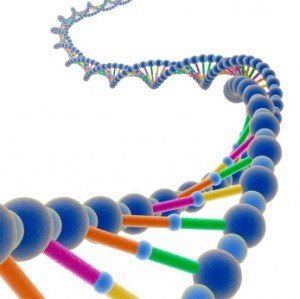
Which of the following best describes a DNA molecule?
a)
double helix
b)
contains ribose
c)
made of amino acids
d)
contains Uracil
43.
Which of the following units are repeatedly joined together to form a strand of DNA?
a)
amino acids
b)
nucleotides
c)
fatty acids
d)
polysaccharides
44.
Adenine bonds with ______________.
a)
Guanine
b)
Thymine
c)
Cytosine
d)
Adenine
45.
Guanine bonds with ______________.
a)
Adenine
b)
Guanine
c)
Cytosine
d)
Thymine
46.
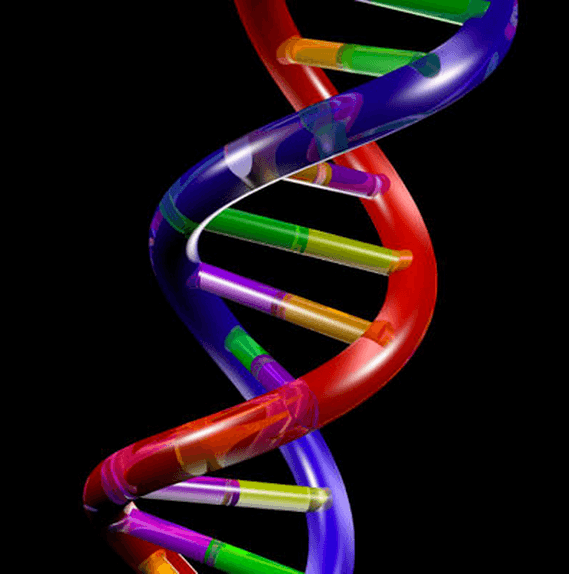
What determines the code, or information, of a DNA molecule?
a)
the shape (structure) of the nitrogen bases
b)
the order (sequence) of the nitrogen bases
c)
the color of the nitrogen bases
d)
the frequency (number) of nitrogen bases
47.
Which 2 molecules form the sides (backbone) of the DNA ladder?
a)
deoxyribose sugar and adenine
b)
deoxyribose sugar and a hydrogen bond
c)
deoxyribose sugar and the nucleus
d)
deoxyribose sugar and phosphate
48.
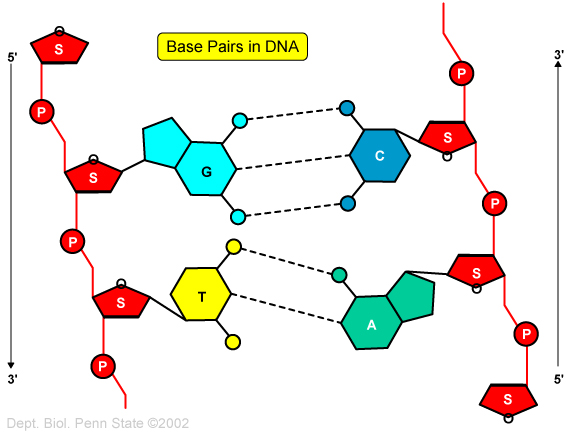
Nitrogenous bases are joined by which type of bond?
a)
polar bonds
b)
ionic bonds
c)
covalent bonds
d)
hydrogen bonds
49.

Replicate the following strand of DNA:
AATCATGGA
AATCATGGA
a)
AATCATGGA
b)
TTAGTACCT
c)
UUAGUACCU
d)
GGATAUCUA
50.
DNA replication results in two DNA molecules,
a)
each one with two original strands
b)
each one with two new strands
c)
each one with one new strand and one original strand
d)
one with two new strands and the other with two original strands
Reset

