
NEW
Font size
S
M
L
XL
 Worksheets
thermal energy
Total questions: 35
Worksheet time: 29mins
Name
Class
Date
1.
Conduction is heat transfer by -
a)
Touch
b)
Circles
c)
Waves
2.
Convection is heat transfer by-
a)
Touch an object
b)
The heating and cooling of a fluid
c)
Electromagnetic Waves
3.

Warm air rises and the cool air sinks demonstrates this type of heat transfer.
a)
conduction
b)
convection
c)
radiation
d)
Insolation
4.

The heat from a hot burner to a pot is transferred by ______.
a)
convection
b)
insulation
c)
radiation
d)
conduction
5.

When the 2nd story of a house is warmer than the 1st floor of a house is heat transfer through
a)
conduction
b)
convection
c)
radiation
d)
thermal equilibrium
6.

The sun warming your skin is an example of heat transfer through
a)
conduction
b)
convection
c)
radiation
d)
thermal electricity
7.

Heat transfer through electromagnetic waves is called
a)
conduction
b)
convection
c)
radiaton
d)
thermal
8.
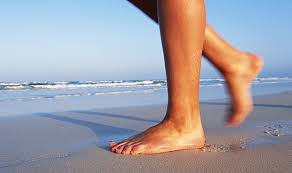
Walking on the warm sand sand with your bare feet demonstrates this type of heat transfer.
a)
conduction
b)
convection
c)
radiation
9.

A group of friends gather around a fire to stay warm.
a)
conduction
b)
convection
c)
radiation
10.
Hot coffee is stirred with a spoon; the spoon gets hot due to
a)
conduction
b)
convection
c)
radiation
11.
What type of heat transfer takes place in liquids and gasses?
a)
Conduction
b)
Convection
c)
Radiation
d)
Thermal Equilibrium
12.
As you touch a hot stove the heat transfers -
a)
from your hand to the stove
b)
from the stove to your hand
c)
It doesn't transfer
13.
Which is more dense?
a)
Hot Liquid
b)
Cold Liquid
14.
Heat transfer always goes from-
a)
Cold to Hot
b)
Hot to Cold
c)
Heat doesn't transfer
d)
Freezing to Cold
15.
What happens to particles as they heat up?
a)
They slow down
b)
Nothing
c)
They don't move
d)
They speed up
16.
What happens to particles as they cool down?
a)
They slow down
b)
Nothing
c)
They don't move
d)
They speed up
17.
Mittens help keep your hands warm in winter because:
a)
They are conductors of heat.
b)
They are fuzzy.
c)
They are conductors of electrical energy.
d)
They are insulators.
18.
Conductors are materials that...
a)
Allow heat to pass through
b)
Stop heat from passing through
c)
Allow cold to pass through
d)
Stop cold from passing through
19.
An object that doesn't conduct heat well is known as:
a)
a conductor
b)
an insulator
c)
conduction
d)
insulation
20.

Darth Vader is using a light saber. The light saber transfers heat through-
a)
Conduction
b)
Convection
c)
Radiation
21.
Which example below is an example of radiation?
a)
Standing on a hot metal bridge
b)
The attic is warmer than the basement
c)
The Sun heating the Earth
d)
Touching hot sand with your feet
22.
Which example below is an example of convection?
a)
Standing on a hot metal bridge
b)
The attic is warmer than the basement
c)
The Sun heating the Earth
d)
Touching hot sand with your feet
23.
Which example below is an example of conduction?
a)
Boiling macaroni
b)
The attic is warmer than the basement
c)
The Sun heating the Earth
d)
Touching hot sand with your feet
24.
What type of material makes the best conductor?
a)
Food
b)
Wood
c)
Styrofoam
d)
Metal
25.

This is an example of-
a)
Conduction
b)
Convection
c)
Radiation
26.

This is an example of-
a)
Conduction
b)
Convection
c)
Radiation
27.

This is an example of-
a)
Conduction
b)
Convection
c)
Radiation
28.

This is an example of-
a)
Conduction
b)
Convection
c)
Radiation
29.

This is an example of-
a)
Conduction
b)
Convection
c)
Radiation
30.
What happens to particles as they heat up?
a)
They slow down
b)
Nothing
c)
They don't move
d)
They speed up
31.
What happens to particles as they cool down?
a)
They slow down
b)
Nothing
c)
They don't move
d)
They speed up
32.
Warm air rises and the cool air sinks demonstrates this type of heat transfer.
a)
conduction
b)
convection
c)
radiation
d)
Insolation
33.
Convection is heat transfer by-
a)
Touch an object
b)
The heating and cooling of a fluid
c)
Electromagnetic Waves
34.
What is temperature?
a)
How much potential energy something has
b)
How hot or cold something is
35.
The Fahrenheit and Celsius scales are the most commonly used ____ scales.
a)
specific heat
b)
temperature
c)
friction
d)
thermal expansion
Reset

