
 Worksheets
Sineus PMA 2 Study Guide Part I
Total questions: 200
Worksheet time: 5hrs 21mins
Why did the Second Continental Congress create a weak central government in the Articles of Confederation?
to encourage more trade between states
to preserve the powers of the individual states
to promote national security against foreign invasion
to permit the taxation of citizens to pay the nation's debts
The Articles of Confederation created a _________________ system of government.
strong
average
confederal
federal
Why did the 2nd Continental Congress not include an executive or judicial branch under the Articles of Confederation?
They feared a strong national government
they feared the threat of a foreign invasion
they were willing to put up with a tyrannical Congress
They wanted to copy the British monarchy

Which document addressed the weaknesses shown in the cartoon?
Bill of Rights
United States Constitution
Declaration of Independence
Articles of Confederation
The problem with having no court system under the Articles of Confederation was that...
no one would go to jail
disputes between states or citizens of different states could not be settled fairly
there was no system to license lawyers

The Articles of Confederation were replaced with the U.S. Constitution because ...
they were to much like England's government
the Articles of Confederation were too amazing
the Articles of Confederation failed to protect the country
MAGIC
Under the Articles the government could NOT regulate ______ among the states.
food quality
laws
travel
commerce (trade)

A confederation is...
where the national government holds all the power
an organization of separate states that cooperate together
A way to make peace.
None of the these answers
After experiences with Britain, Americans feared having a strong central or national government because they feared the government would
take away rights of states, take away rights of citizens, and it reminded Americans of the power the British government used to have over them
Give the states more power.
take their land and their property
become bored.
Under the Articles of Confederation, Congress had no power to ensure its laws were followed by the states. How did the US Constitution remedy/fix this problem?
THE US CONSTITUTION FIXED THIS PROBLEM BY CREATING A JUDICIAL BRANCH WITH A SUPREME COURT TO INTERPRET LAWS.
THE US CONSTITUTION WAS NOT CAPABLE OF REMEDYING THIS ISSUE
THE US CONSTITUTION FIXED THIS PROBLEM BY TAXING STATES
THE US CONSTITUTION FIXED THIS PROBLEM BY CREATING AN EXECUTIVE BRANCH TO ENFORCE LAWS
Under the Articles of Confederation, only the state legislatures could levy (collect) taxes. How did the US Constiution fix this problem?
THE US CONSTITUTION FIXED THIS PROBLEM BY ALLOWING THE STATES TO DONATE MONEY WHEN THEY COULD.
THE US CONSTITUTION COULD NOT FIX THIS PROBLEM
THE US CONSTITUTION FIXED THIS PROBLEM BY ALLOWING BOTH THE NATIONAL GOVERNMENT AND THE STATES TO COLLECT TAXES
THE US CONSTITUTION FIXED THIS PROBLEM BY NOT COLLECTING TAXES AT ALL.
1.The Confederation Congress (under the Articles of Confederation) could declare war BUT THEN----> 2. ??????????? ------> 3. so it could direct the army and navy.
draft soldiers.
ask the states to contribute troops and money
take a training class for the army
Under the Articles of Confederation, the government was not allowed to regulate commerce which allowed states to trade unfairly with each other and with foreign nations. States having this authority to impose taxes caused..
trade to increase
trade to decrease
Why did merchants want the Articles of Confederation changed?
because there wasn't an army
because the states were discouraging trade by taxing one another’s goods.
because the national/central government couldn't collect taxes
because they wanted to go to school and change careers
Who wanted a strong central/federal/national government?
Federalists
Anti-Federalists
What was the name of the papers written to support the Constitution?
Lubbock Avalanche Journal
Federalist Papers
Anti-Federalist Papers
Which group wanted a Bill of Rights?
Federalists
Anti-Federalists
In the Preamble, the words establish Justice mean...
fairness for all
make everyone a judge in the court
peace
every state can make its own rules
building a fence around the country
calm and peaceful land
protection for all the states from foreign threats
each state must provide its own protection


Which is the basic message of the Preamble to the U.S Constitution?
This document is an improvement over the Articles of Confederation
This document was written for the purpose of achieving six important goals
This document outlines a framework for government
This document should be ratified as quickly as possible
Why did the Preamble to the Constitution begin with the phrase " We the People"?
To indicate that the national government had limited powers
Tp indicate that the states had been associated in a confederation
To indicate that the federal power was separated among three branches
To indicate that the American people were the ultimate source of authority
The fact that the Judicial Branch can declare a law of the U. S Congress unconstitutional is an example of which government feature?
executive privilege
checks and balances
separation of powers
advice and consent
The goal of a Candidate during Election Time is to deliver as much information about the candidate and the party’s platform to as many people as possible. True or False?
TRUE
FALSE
Every four years on Election Day, the American public elects the president of the United States. The first set of election results tallies the ____, a count of every vote cast.
Electoral College
absolute majority
popular vote
electors
In order to win, a candidate must have 270 out of a total of 538 electoral votes. This number is half of 538 (269) plus one, which is considered a(n) ______.
a. absolute majority
b. acceptance speech
c. a tie
d. popular vote
What are the names of the two major political parties in the United States today?
Democratic and Republican
Democratic and Libertarian
Socialist and Republican
Socialist and LIbertarian

Which is a constitutional requirement to run for Congress?
U.S. permanent resident
at least 25 years old
at least 30 years old
U.S. citizen

The poster below is from a recent election.
Doug is pro-immigration!
Doug is pro-military!
Vote for Doug
Based on the poster, what conclusion can be drawn about the candidate?
Doug is running for judge.
Doug is running for mayor.
Doug is running for president.
Doug is running for city council.
A person running for political office.
candidate
democrat
platform
public policy
A person’s ideas about how government should run and how issues should be solved
majority party
political views
minority party
candidate
A political party other than Republican or Democratic
majority party
candidate
third party
minority party
Which statement reflects Republican views on the role of government?
Republicans favor valued-based governance, opposing excessive consumption and unregulated competition.
Republicans favor more affordable health care, increased public funding for education, and an end to discrimination in all forms.
Republicans favor less government, lower taxes, and greater personal freedom
Republicans favor a national mass peoples' party, based on the working classes and against monopoly capitalism.
Which issue represents a basic disagreement between Socialists and Communists?
whether conditions for workers should improve
whether income taxes should be lowered whether conditions
whether all private businesses should be replaced by state ownership
whether the government should provide public services like free education and health care
This party believes the government should own businesses and decide what will be produced and distributed.
Socialist party
Communism party
Democratic party
Republican party
Set of statements describing a party’s views on major issues
platform
political views
candidate
public policy
An organized group of people who share similar political views and work to influence government.
platform
candidate
third party
political party
The following are requirements for which political office?
- At least 35 years old
- Natural born citizen
- Lived in US for 14 years
President
U.S. Senator
FL Senator
Vice President
The following are requirements for which political office?
At least 30 years old
US citizen for 9 years
Live in the state they represent
President
U.S. Senator
U.S. Representative
FL Senator
The following are requirements for which political office?
At least 25 years old
US citizen for 7 years
Live in the state they represent
U.S. House of Representatives
U.S. Senator
FL Legislator
President
The following are requirements for which political office?
At least 21 years old
Live in the district they will represent
Live in Florida for 2 years
U.S. Senator
FL Legislator
FL Governor
U.S. Representative
The requirements to be a Florida Governor, Lieutenant Governor, or Cabinet Member are...
Pick TWO
At least 30 years old
Lived in Florida for the last 7 years
Lived in Florida for at least 10 years
At least 25 years old
The goals and principles (beliefs) of a political party or political candidate is called a ________.
political platform
political ad
political office

This is an example of a ______.
political ad
political office
name calling
political party
After serving as a U.S. Senator, Laura decided to run for governor of Florida. Liz, Laura’s opponent, claims in court that Laura is not qualified to run. A judge rules in Liz’s favor. What was the basis for the lawsuit?
Laura has never owned land in Florida.
Laura is not a Florida resident.
Laura is not yet 40 years old.
Laura has never voted.

The newspaper headline above describes a government process.
Why might this have been a difficult election for Richards to win?
Richards is a homeowner.
Richards is a party leader.
Richards has less political experience than his opponent.
Richards has less employment experience than his opponent.
A local newspaper endorsed Mayor Sanford in a state senate race over his opponent. Why might the newspaper endorse Mayor Sanford?
Mayor Sanford owns a local farm.
Mayor Sanford is an elected official.
Mayor Sanford is an experienced teacher.
Mayor Sanford owns a local radio station.
The 1968 Florida Constitution limits the governor to two consecutive four year terms, which disqualifies two-term governors from running for a third consecutive term. Which of the following statements explains the purpose of this requirement?
The authors of the Florida Constitution wanted to guarantee experience among Florida’s elected officials.
The authors of the Florida Constitution wanted to protect Florida residents against tyranny.
The authors of the Florida Constitution wanted to guarantee equal opportunities for Florida’s elected officials.
The authors of the Florida Constitution wanted to guarantee equal power for the branches of government.
Which political party believes that the federal government should play a less active role in people's lives and that
individuals can take care of themselves without government help?
Republican Party
Democratic Party
Libertarian Party
Socialist Party
Which political party believes in democratic government but also that the government should run some of the largest parts of the economy?
Communist Party
Socialist Party
Democratic Party
Libertarian Party
Which political party believes that the federal government should take a more active role in people's lives, particularly those who are in need?
Republican Party
Democratic Party
Socialist Party
Libertarian Party
Which political party thinks that everyone should pay their fair share of taxes?
Republican Party
Democratic Party
Which political party think we should help immigrants become citizens?
Republican Party
Democratic Party
Which political party wants to save money by limiting government programs?
Republican Party
Democratic Party
Which political party opposes forgiveness for illegal immigrants?
Republican Party
Democratic Party
The statement below is from a political party platform
" We, the workers and our allies, need to take power from the hands of the wealthy few, their corporations, and their political operatives."
Which political party’s position is represented in the statement?
Communist
Democrat
Republican
Socialst
Which spending increase would the Democratic Party likely support?
homeland security
space exploration
education
military
The conversation below is part of a political discussion.
---------------------------
Lou: I am going to vote for the candidate who will support cutting government spending.
Bob: Yes, we spend too much on some programs.
---------------------------
Which party’s candidates are these voters most likely to support?
Democrat
Green
Republican
Socialist
The only purpose of the federal government is to protect people's rights.
Which party would agree with this statement?
Libertarian
Democratice
Republican
Socialist
Government Funded Healthcare: SUPPORTS~!
Lowering Taxes: Supports!~
Increase environmental protection funds: Supports~!
Increase in Oil production: AGAINST
Increase spending on education: Supports!
Which statement would go with this list???
The government should lower taxes to encourage businesses to run healthcare
The government should lower taxes to encourage businesses to fund education
The government should raise taxes to create government programs to protect the environment
The government should raise taxes to increase oil production in the US
Which part of the U.S. Constitution outlines legislative power?
1st amendment
preamble
Bill of rights
article I
What is the order in which the branches used their powers?

The newspaper headline below describes an event in U.S. history.
Which parts of the national government participated in the process described in the newspaper headline?
Senate and President
Supreme Court and President
House of Representatives and Senate
Supreme Court and House of Representatives
How many members are in the House of Representatives?
100
400
435
235
Congress may override a presidential veto with a
a. majority vote.
b. three-quarters vote.
c. two-thirds vote.
d. unanimous vote.
Which of the following is not a power of congress?
a. Declare War
b. Negotiate Peace Treaties
c. Coin and print money
d. Maintain the Army
The elastic clause of the United States Constitution gives Congress the power to...
“make rules for the government and regulation of the land and naval forces;…”
“regulate commerce with foreign nations, and among the several states, and with the Indian tribes;…”
“lay and collect taxes, duties, imports and excises,…”
“make all laws which shall be necessary and proper for carrying into execution the foregoing powers,…" (respond to changing conditions)
Although implied powers are not written specifically in the Constitution, Congress must attach it to a power already expressed.
True
False
The necessary and proper clause is also known as the elastic clause.
True
False
Click on the expressed/enumerated/delegated powers that belong to Congress.
Coin and print money
Declare war
regulate trade
Commander in Chief of the Military
Click on expressed/enumerated/delegated powers that belong to Congress.
Make naturalization laws
Establish post offices and post roads
Collect taxes
Issue pardons
Click on expressed/enumerated/delegated powers of the President
Makes/proposes a budget
Makes treaties
Appoints ambassadors, Cabinet members, federal judges and justices
issues pardons
executes laws
Click on all powers of the judicial branch.
declare laws and Presidential actions unconstitutional
interpret and apply the laws
settle disputes between states
negotiates treaties between states
Powers that are expressly listed or outlined in the Constitution are called (click on all that apply)
Delegated powers
Expressed powers
Enumerated powers
Implied Powers
Powers that are not expressly outlined in the Constitution, but are reasonably suggested by delegated powers are called
expressed powers
delegated powers
enumerated powers
implied powers
Powers that are shared by the Federal and State governments
concurrent powers
reserved powers
implied powers
enumerated powers
Which level of government controls election procedures?
Federal
State
Local
Which law meant that all African Americans could now vote without any “loopholes”?
Voting Rights Act of 1965
Civil Rights Act of 1968
Equal Rights Amendment
19th Amendment
What do the 15th , 19th , 24th and 26th amendment all have in common?
They all gave more citizens the right to vote
They all limited citizens' right to vote
They all helped people in poverty
They all related to racial discrimination
Which amendment gave African American males 21 and over the right to vote?
15th
19th
24th
26th
Which amendment gave women the right to vote?
15th
19th
24th
26th
Which amendment abolished (ended) poll taxes?
15th
19th
24th
26th
Which amendment changed the voting age from 21 to 18?
15th
19th
24th
26th
The Civil Rights Act of 1968 is also known as the...
Fair Housing Act
Fair Lending Act
Equal Rights Amendment
Equality Act
What are some examples of social inequalities that African American suffered in the 1950s?
Choose all that apply.
Public facilities
Educational opportunities
Employment practices
Which amendment to the U.S. Constitution made slavery
unconstitutional in the United States?
10th
13th
15th
19th
________ are the basic rights of citizens to be free from unequal treatment based on certain characteristics (e.g., race, gender, disability).
states' rights
individual rights
civil rights
federal rights
How did the passage of the Voting Rights of 1965 impact political participation?
All persons who passed a literacy test could now vote.
All children of foreign citizens could now vote.
All African-Americans could now vote.
All women could now vote
The passage below describes a U.S. Supreme Court decision.
In 1940, the Texas Democratic Party refused to give an African-American man a ballot to select candidates to run for Congress and governor.
In finding this action unconstitutional, the U.S. Supreme Court stated “…this Court is not constrained to follow a previous decision which…, involves the application of a constitutional principle, rather than an interpretation of the Constitution to evolve the principle itself.”
According to the passage, what did this U.S. Supreme Court decision illustrate?
The U.S. Supreme Court expanded voting rights through Voting Rights Act interpretation
The U.S. Supreme Court expanded voting rights through amendment interpretation
The U.S. Supreme Court limited voting rights through amendment interpretation
The U.S. Supreme Court limited voting rights through the Voting Rights Act.
How are 14th Amendment due process protections related to the Civil Rights Act of 1968?
Congress may not enact discriminatory housing statutes
Congress may not enact discriminatory employment policies.
State legislatures may not enact discriminatory housing statutes
State legislatures may not enact discriminatory employment policies
In a Unitary system power is____?

Which statement completes the diagram?
in a confederal system, city governments have the most power
in a confederal system, international associations have the most power
In a confederal system, state governments have the most power
in a confederal system, the people have the most power
Canada has voters, a legislature, prime minister, and judicial branch. What system of government does Canada have?
Aristocratic
Parliamentary
Federal
Authoritarian
What system of government was in place after the United States adopted the U.S. Constitution?
confederal
federal
unitary
parlimentary
The table below describes a type of government.
??
Executive---elected by the legislature
Legislature---elected by the people
Which title completes the table?
parliamentary government
confederal government
federal government
unitary government
"But as the plan of the [Constitutional] convention aims only at a partial union or consolidation, the state governments would clearly retain all of the rights of sovereignty which they had before, and which were not, by that act, EXCLUSIVELY delegated to the United States."
--Alexander Hamilton, Federalist Paper No. 32
What word means a citizen has the right to vote?
civil rights
prohibition
suffrage
A system of government where power is shared between the central government and the state governments
Unitary
Federal
Parliamentary
Confederal
A system of government where the power lies with the legislative body and the leader of the country is part of the legislature.
Unitary
Federal
Parliamentary
Confederal


Which are her best options?
Who do lobbyists represent?
interest groups
politicians
lawmakers
individual citizens
Who do lobbyists attempt to influence?
interest groups
the media
lawmakers
PACs
What is the role of the media in regards to political systems and government? Pick all that apply.
lobbyist
watchdog
agenda setting
cheerleader
_________ are groups that form because of a common goal; they support a specific issue and work in large numbers to get their issue recognized by the government.
Federalists
political parties
interest groups
representatives
Lobbying is when
Interest groups work with elected legislators to get laws passed
citizens petition the government
candidates promote their platform
Which of the following can influence government? Choose all that apply.
the media
interest groups
individuals
Which of the following are ways that individuals can influence government? Choose all that apply.
voting
act as watchdog
attending civic meetings
joining interest groups
Which of the following are ways that individuals can influence government? Choose all that apply.
amending the Constitution
joining a political party
running for office
petitioning the government
Which of the following are roles of interest groups? (Select all that apply).
raise money for candidates
lobby
act as watchdog
run for office

This poster was displayed in 1947, at the beginning of the Cold War.
How can the information on this poster best be categorized?
Advertisement
Entertainment
Factual
Propaganda

This poster was displayed in 1876.
What is primary goal of this propaganda poster?
To encourage people to move to government lands.
To discourage people from moving to government lands.
To encourage people to move to California.
To discourage people from moving to California.
Which of the following is NOT one of the ways in which the media affect politics?
By providing information on both parties.
By contributing to election campaign funds.
By focusing public attention on particular issues.
By providing in-depth coverage of national issues.
Which represents an opinionated, one sided point of view?
symbolism
bias
propaganda
What influencing technique spreads ideas with the purpose of helping or hurting a particular candidate?
symbolism
bias
propaganda
What influencing techniques uses images or pictures to convey a message?
symbolism
bias
propaganda
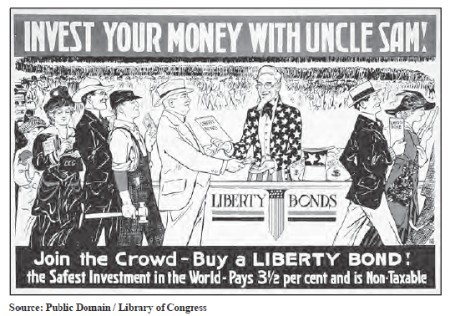
Which type of communication is shown in this poster?
accurate
biased
informational
propaganda


propaganda technique involving the use of showing
one-sided information
bandwagon
card stacking
testimonial
name calling
propaganda technique using short phrases or words to promote positive feelings or emotions
bandwagon
card stacking
glittering generalities
testimonial
propaganda technique conveying that a candidate is a “regular” person, just like everyone else
card stacking
bandwagon
testimonial
plain folks
propaganda technique using negative words to associate with a product or person
bandwagon
card stacking
name calling
testimonial
a propaganda technique encouraging the viewer to like
something or someone because everyone else does
name calling
card stacking
glittering generalities
bandwagon
propaganda technique involving the use of a celebrity or spokesperson to speak on behalf of a product of candidate
testimonial
transfer
plain folks
glittering generalities
propaganda technique involving the use of symbols to convey a message or feeling
transfer
testimonial
name calling
bandwagon

For what purpose did the Framers write the Constitution?
“What is the Preamble?”
Which of the following phrases from the Preamble is best described by saying: "We should have a military to protect us!"
Which of the following phrases from the Preamble is best described by saying: "Our country should be united together, not divided apart!"
Which of the following phrases from the Preamble is best described by saying: "Our home and country should be a peaceful and happy place to live."
What does the Constitution mean when it "...secures The Blessings of Liberty"?
Which part of the U.S. Constitution states the six purposes of government?

Which government purpose identified in the Preamble is reflected in the headline?
The Central Intelligence Agency was created to gather information to protect American Security Forces.
The National Guard was called in to maintain law and order after segregation laws were struck down and schools were integrated.
Congress created Medicaid in 1965 to provide medical care to the poor and the elderly.
The Department of War was established in 1789 and later became known as the Department of Defense.
The 1st Supreme Court Justice was appointed by George Washington in 1789.
Article IV (4) of the Constitution says that all states have to obey national laws.
What case dealt with the president having executive privilege? In the court decision it was determined executive privilege only exists when there is a national security issue. NO ONE is above the law.
Brown v. Board of Ed
Bush v. Gore
US v. Nixon
Gideon v. Wainwright
What Supreme Court Case decided that a popular vote recount was unnecessary and basically chose the winner for presidency.
Gore v. Bush
US v. Nixon
Gideon v. Wainwright
Marbury v. Madison
The Articles of Confederation created a _________________ system of government.
strong
average
confederal
federal

