
 Worksheets
Matter and Changes in Matter Unit Review
Total questions: 46
Worksheet time: 23mins

ALL matter is made up of
atoms
molecules
cells
carbon

What state of matter has particles with the least amount of kinetic energy?
solid
liquid
gas
plasma

Which state of matter has a definite volume, but no definite shape?
solid
liquid
gas
plasma
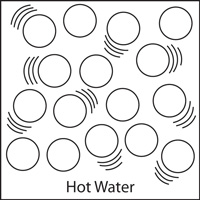
The average kinetic energy of the the particles is measured as the _____.
volume
density
pressure
temperature
When the temperature of matter decreases, the particles ...
speed up and move farther apart
speed up and move closer together
slow down and move farther apart
slow down and move closer together


What state of matter does this picture represent?
solid
liquid
gas
plasma

What state of matter does this picture represent?
solid
liquid
gas
plasma

What state of matter has this arrangement of particles?
solid
liquid
gas


Which of the following terms identifies the change from a liquid to gas?
vaporization
condensation
melting
freezing


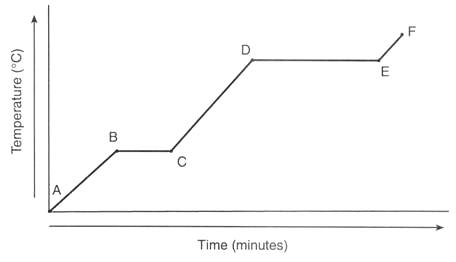

According to this graph, what is the boiling point of this substance? (in degrees)
40
70
100
140
According to this graph, what is the melting point of this substance? (in degrees)
40
70
100
140
Why does water NOT change temperature during phase changes?
Because all of the energy is used to overcome the attraction of the particles
Because heat is not the same thing as temperature
Because adding heat doesn't ever change the temperature of water

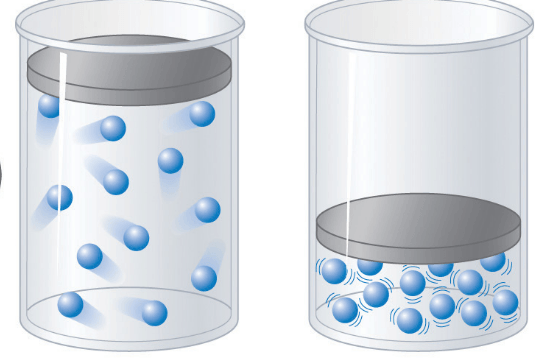
If both containers are the same temperature, which container will have a lower pressure?
left
right
they both have the same pressure
I don't know

If the temperature of a gas increases at a constant volume, the pressure of the gas ____.
Increases
Decreases
Stays the same
Fluctuates

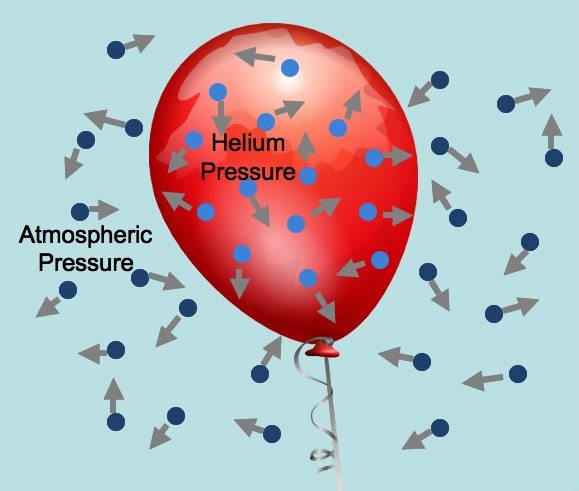
What causes pressure?
The walls of the container pushing on the particles
The vacuum in the container
The collisions of the particles with the walls
Atmospheric pressure acting on the outside walls

Is glass breaking a chemical or physical change?
chemical
physical
One reactant, with a mass of 7 grams (g), is combined with another reactant, with a mass of 3 g, in a sealed container. After the reaction, what is the most reasonable prediction for the total mass of the products of this reaction?
7g
3g
10g
4g
Which of the following is true regarding the atoms involved in a chemical reaction?
The same number of each type of atom will always be present before and after a chemical reaction takes place.
Some of the atoms present before the reaction will always be lost during a chemical reaction.
Some of the atoms will always be changed into a different type of atom by a chemical reaction.
During a chemical reaction, atoms will always be combined into much larger molecules.

