wayground logo

Free Printable Worksheets

NEW

Font size

S
M
L
XL
Worksheets

Cell Unit Test Review

Total questions: 45

Worksheet time: 49mins

Name
Class
Date
1.
The diffusion of WATER across a semi-permeable membrane is
a)
osmosis
b)
diffusion
c)
endocytosis
d)
exocytosis
2.
Active transport requires
a)
energy
b)
the nucleus
c)
chloroplasts
d)
lysosomes
3.
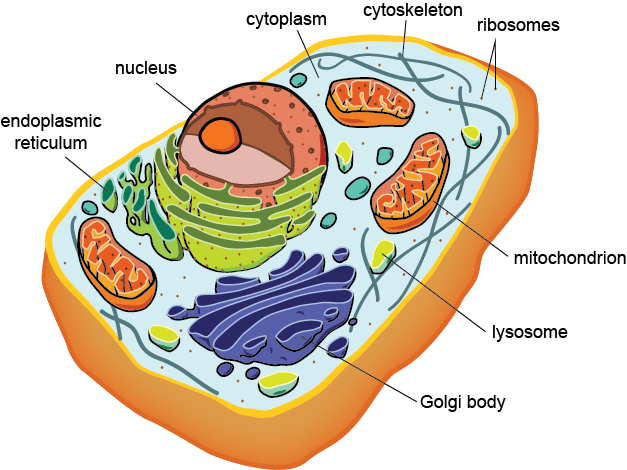
What organelles are only found in PLANT cells
a)
lysosomes & centrioles
b)
cell wall & chloroplasts
c)
nucleus & nucleolus
d)
mitochondria & ribosomes
4.
What organelles is NOT found in a PROkaryote
a)
nucleus
b)
cell membrane
c)
Chromosomes (DNA)
DNA
d)
ribosomes
5.
what is the control center in a cell
a)
mitochondria
b)
DNA
c)
nucleus
d)
movement
6.
What is the basic structural and functional unit of all living things? 
a)
atom
b)
cell
c)
molecule
d)
human
7.
An organism made of one cell is called
a)
unicellular
b)
multicellular
8.
Rocks are not living because
a)
they never move
b)
they aren't needed for humans
c)
they are not made of cells
d)
they don't break down
9.
Controls what enters and leaves the cell
a)
Mitochondria
b)
Cell Membrane
c)
Cell Wall
d)
Nucleus
10.
What is known as the brain of a cell
a)
cell wall
b)
Cell membrane
c)
Nucleus
d)
Nuclues
11.
All cells need energy to function.  Which cell organelle is responsible for producing energy in the cell?
a)
chloroplasts
b)
mitochondria
c)
nucleus
d)
vacuoles
12.
In what part of the plant cell does the process of photosynthesis take place?
a)
nucleus
b)
mitochondria
c)
chloroplasts
d)
vacuoles
13.
Cells with a nucleus and membrane-bound organelles are called ____________________.
a)
prokaryotes
b)
eukaryotes
c)
bacteria
d)
protists
14.
a)
produces ribosomes
b)
contains genetic information
c)
stores food, water, wastes and other materials
15.
a)
found only in plants
b)
contains chlorophyll
c)
produces energy
16.
a)
contain DNA
b)
used in photosynthesis 
c)
give plants their taste
17.
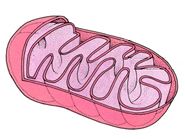
What is the name of the structure shown in the diagram where cellular respiration takes place?
a)
Chloroplast
b)
Mitochondrion
c)
Nucleus
d)
Vacuole
18.
What organelle surrounds and supports plant cells?

a)
Cell Membrane
b)
Cell Wall
c)
Nucleus
d)
Golgi Complex
19.

What is the movement of substances through a cell membrane without the use of ATP (energy)?

a)

Active transport

b)

Diffusion

c)

Passive transport

d)

Osmosis

20.

The movement of substances through a cell membrane with the use of ATP (energy)

a)

Osmosis

b)

Passive transport

c)

Diffusion

d)

Active transport

21.
While cleaning a saltwater aquarium, students placed the aquarium plants in a container of distilled water. What effect will this have on the plants? 
a)
The plant cells will swell.
b)
The plant cells will remain the same.
c)
The plant cells will shrink.
d)
The plant cells will seperate.
22.

What is special about osmosis?

a)

Used only in regards to water

b)

moves from low to high concentrations

c)

uses energy

d)

requires special transport proteins

23.

Because cell membranes are _____________, they only allow certain things to pass through.

a)

permeable

b)

impermeable

c)

semi-permeable

24.
The concentration of water is higher in the soil than in plant root cells. Water moves into root cells of a plant by...
a)
Facilitated Diffusion
b)
Simple Diffusion
c)
Active Transport
d)
Osmosis
25.
The picture below is an example of _________________.
a)
osmosis
b)
isotonic
c)
diffusion
d)
active transport
26.
A person should never drink salty water because their cells would
a)
shrink
b)
expand
27.
What are the products of photosynthesis?
a)
water and carbon dioxide
b)
oxygen and glucose
c)
oxygen and carbon dioxide
d)
oxygen and water
28.
What is photosynthesis?
a)
The process in which humans eat their food
b)
When a photographer takes a photo.
c)
To get your pictures from the photo lab.
d)
The process in which plants make their food.
29.
What is the pigment in chloroplasts that performs photosynthesis?
a)
Chlorosynthesis
b)
Chlorophyll
c)
ADP
d)
Electron Transport
30.
Which organelle from the plant cell is primarily responsible for converting sunlight to energy?
a)
Mitochonria
b)
Nucleus
c)
Vacuole
d)
Chloroplast
31.
Which of the following is the correct equation for PHOTOSYNTHESIS?
a)
6CO2 + 6H2O --> 6O+ C6H12O6
b)
6CO+ C6H12O6 + 6H2O --> O
c)
6O2 + 6H2O --> 6CO+ C6H12O6
d)
C6H12O6 + 6O2 ---> 6H2O + 6CO2 
32.
Which of the following structure is where cellular respiration occurs in the cell?
a)
nucleus
b)
cytoplasm
c)
mitochondria
d)
vacuoles
33.
What is the correct equation for cellular respiration?
a)
6O2 + C6H12O6 -> 6CO2 + 6H2O + Energy
b)
6O2 + C6H12O6 + Energy -> 6CO2 + 6H2O
c)
6CO2 + 6H2O -> 6O2 + C6H12O6 + Energy
d)
6CO2 + 6H2O + Energy -> 6O2 + C6H12O6
34.
What are the reactants (what's needed) for photosynthesis?
a)
glucose and oxygen
b)
light, water, and carbon dioxide
35.

What is another word that can be used to describe "homeostasis"?

a)

balance

b)

equal

c)

complete

d)

full

36.

What stimulus would cause a decrease in a plant's turgor pressure?

a)

gravity pulling downward

b)

not enough sunlight

c)

soil that is too dry

37.

All living organisms need gases to live. In plants, gas exchange occurs mainly in the

a)

waxy covering over the leaf

b)

stomata of the leaf

c)

roots

d)

lungs

38.
What is the body system that sends and recieves electrical signals from the brain?
a)
Skeletal System
b)
Nervous System
c)
Muscular System
d)
Digestive System
39.

Which of the following statements is not part of the cell theory?

a)

Cells are the basic unit of structure and function in all living things.

b)

All cells are produced from other cells.

c)

All cells have the same organelles.

d)

All living things are composed of cells.

40.
The invention of the microscope made it possible for people to discover and learn about
a)
Plants
b)
Skin 
c)
Animals 
d)
Cells
41.
Who looked at cork and named the cell?
a)
Robert Hooke
b)
Van Leeuwenhoek
c)
Robert Brown
d)
Francesco Redi
42.
Which scientist did NOT contribute to the cell theory?
a)
Anton Van Leeuwenhoek
b)

Robert Hooke
c)
Albert Einstein 
d)

Matthias Schleiden
43.
Which of the following is the correct order of organization in living things from most basic (simple) to most complex?
a)
a.  Organism, cell, tissue, organ, organ system
b)
a.  Organ system, organ, tissue, cell, organism
c)
a.  Cell, tissue, organ, organ system, organism
d)
a.  Cell, organ, tissue, organ, organism, organ system
44.
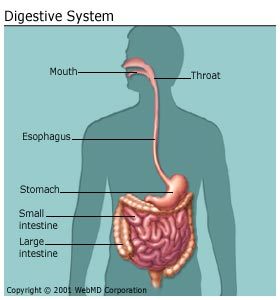
The digestive system includes the stomach. What level is the stomach?
a)
organ
b)
tissue
c)
cell
d)
organism
45.
This is a example of........ 
a)
organ system
b)
cells
c)
organ
d)
tissue