Wayground logo

Free Printable Worksheets

Font size

S
M
L
XL
Worksheets

Unit 7: Europe Test Review

Total questions: 77

Worksheet time: 59mins

Name
Class
Date
1.
What country is highlighted on the map? 
a)
France
b)
The United Kingdom
c)
Spain
d)
Germany
2.
What country is highlighted? 
a)
Ukraine
b)
Bulgaria
c)
Russia
d)
Greece
3.
What country is highlighted? 
a)
France
b)
Ireland
c)
Scotland
d)
The United Kingdom
4.
What mountain range is shown in brown relief?
a)
North European Mountains
b)
Alps
c)
Urals
d)
Pyrenees
5.
Which country is highlighted on the map?
a)
Germany
b)
Italy
c)
Poland
d)
Ukraine
6.
Which letter represents Germany on the map?
a)
E
b)
B
c)
F
d)
H
7.
Which letter represents Spain on the map?
a)
C
b)
B
c)
D
d)
H
8.
Which letter represents France on the map?
a)
C
b)
B
c)
A
d)
H
9.
Which letter represents Russia on the map?
a)
I
b)
B
c)
G
d)
H
10.
What waterway is located at #10?
a)
Elbe River
b)
Rhine River
c)
Rhone River
d)
Seine River
11.
What waterway is located at #18?
a)
Ionian Sea
b)
Adriatic Sea
c)
Mediterranean Sea
d)
Black Sea
12.
What physical feature is in the circle?
a)
North Sea
b)
Strait of Gibraltar 
c)
English Channel
d)
Mediterranean Sea
13.
Why is Europe called a peninsula? 
a)
It is an island
b)
It is surrounded on three sides by water
c)
It has has many mountains and rivers
d)
It has a rich history and strong culture
14.
What does population density mean?
a)
How many people live in a certain area
b)
How fat the people are
c)
How many different languages the people speak
d)
Having lots of different kinds of people in an area
15.
What climate is most likely to have high population density? 
a)
Tundra
b)
Cold and mountainous climate
c)
Cold and wet climate
d)
Dry and warm climate
16.
Rivers are important to a country's economy because
a)
They support wildlife
b)
They provide swimming spaces
c)
They make it easier to transport goods
d)
They serve as borders between countries
17.
Which river flows from the Alps mountains east across much of Europe and empties into the Black Sea?
a)
Rhine River
b)
Danube River
c)
Amazon River
d)
Volga River
18.
Which body of water lies between the United Kingdom and mainland Europe?
a)
Arctic Ocean
b)
Atlantic Ocean
c)
Rhine River
d)
English Channel
19.
Which mountain range separates Europe from Asia?
a)
Ural Mountains
b)
Pyrenees Mountains
c)
Alps Mountains
d)
Rocky Mountains
20.
Which mountain range separates the Iberian Peninsula from the rest of Europe?
a)
Alps Mountains
b)
Ural Mountains
c)
Pyrenees Mountains
d)
Rocky Mountains
21.
Which mountain range does the Danube and Rhine rivers begin in?
a)
Pyrenees Mountains
b)
Alps Mountains
c)
Rocky Mountains
d)
Ural Mountains
22.
Which body of water can be found to the south of Europe?
a)
Atlantic Ocean
b)
Arctic Ocean
c)
English Channel
d)
Mediterranean Sea
23.
What is the name of this tiny country?
a)
France
b)
Germany
c)
Russia
d)
Belgium
24.
This is an area of extremely fertile land stretching across northern Europe
a)
Scandinavian Peninsula
b)
European Plain
c)
Great Rift Valley
d)
Iberian Peninsula
25.
Spain and Portugal are located on which peninsula?
a)
Iberian Peninsula
b)
Scandinavian Peninsula
c)
English Peninsula
d)
Italian Peninsula
26.
Which country is highlighted on the map?
a)
Germany
b)
England
c)
France
d)
Belgium
27.
Which country is highlighted on the map?
a)
Germany
b)
Italy
c)
Poland
d)
Ukraine
28.
This river begins in the Alps mountains and flows north to the North Sea
a)
Danube River
b)
Volga River
c)
Nile River
d)
Rhine River
29.
What is the name of the country that is dark green in the picture?
a)
Germany
b)
Russia
c)
United Kingdom
d)
Poland
30.
What has made trading, working and communicating difficult with other countries in Europe? 
a)
The European Union
b)
Having ONE common language
c)
Having so many countries and languages among European people. 
d)
Getting rid of old European Languages.
31.

Which two places do the Ural Mountains act as a natural barrier between?

a)

Europe & the United States

b)

Spain & Portugal

c)

Italy & France

d)

Europe & Asia

32.

What is the name of the peninsula that is made up almost totally by the country of Denmark?

a)

Italian Peninsula

b)

Jutland Peninsula

c)

Balkan Peninsula

d)

Iberian Peninsula

33.

Why is the North Atlantic Drift significant to Europe?

a)

Because it causes there to be very little storms, which is a pull factor

b)

Because it makes the fish disappear every 4 years and affects local economies

c)

Because the warm ocean current and prevailing winds make it warmer in Europe than it should be based on its latitude

d)

Because it provides protection from attacking armies

34.

Which of of the following best describes the effect of the Mediterranean Sea on Europe's people and culture over time.

a)

The Mediterranean Sea creates tornadoes which affects people on the coasts

b)

The Mediterranean Sea gives countries the ability to trade and for people to freely move around the European continent

c)

The Mediterranean Sea gets very cold every four years and affects the fishing industry in the region

d)

The Mediterranean Sea has glaciers that are melting and making sea level rise

35.

What is the name of the peninsula that includes Spain & Portugal?

a)

Jutland Peninsula

b)

Balkan Peninsula

c)

Iberian Peninsula

d)

Scandinavian Peninsula

36.

What is the name of the dark black soil that is found in Eastern Europe and the Northern European plain that makes it a good place for farming and for people to settle?

a)

Polder

b)

Chernozem

c)

Fjord

d)

Topsoil

37.

How have avalanches shaped the way people live in Europe?

a)

People live at the top of mountains so the snow doesn't fall on them

b)

People never live near mountains because of the danger of avalanches

c)

People have to decide if it is worth the risk living near mountains because there are also pull factors like the beautiful landscape

d)

People live in the middle of mountains and hope that an avalanche falls on them

38.

The Pyranees Mountains act as a natural border between what two places?

a)

The Iberian Peninsula & The Scandinavian Peninsula

b)

France & Italy

c)

Eastern Europe & Asia

d)

The Iberian Peninsula & the rest of Europe

39.

Why are The Bosporus & The Dardanelles important water forms in Europe?

a)

Because they connect the Black Sea to the Aegean Sea and allow ships to travel from Asia all the way through the Mediterranean and to the Atlantic

b)

Because they are mountains that create barriers and rain shadows causing deserts in Europe

c)

Because they are responsible for creating the Northern European Plain

d)

Because they are man-made canals that would not be there if humans had not created them for ships to pass through

40.

What is the name of the peninsula that includes Norway, Sweden & Finland in northern Europe?

a)

Jutland Peninsula

b)

Iberian Peninsula

c)

Scandinavian Peninsula

d)

Balkan Peninsula

41.

A long, narrow & deep inlet of a sea that is created by glaciers cutting through a mountain, then melting away

a)

Canal

b)

Polder

c)

Fjord

d)

Glaicer

42.

What is the name for a group of islands, like the many islands that exist in the Mediterranean Sea?

a)

Antilles

b)

Archipelago

c)

Alps

d)

Appalachians

43.

What is the name of the peninsula that is made up of Greece at the southern end, and includes other countries of Eastern Europe?

a)

Jutland Peninsula

b)

Iberian Peninsula

c)

Scandinavian Peninsula

d)

Balkan Peninsula

44.

Which of the following best describes how glaciation has affected Europe?

a)

Glaciation cases many floods in Europe, especially in the Netherlands

b)

Glaciation created fjords in Scandinavia that allow for fishing and transport, and today, global warming is a concern because it could cause sea level to rise as glaciers melt

c)

Glaciation is a great tourist attraction because people love to go on vacation where there are glaciers and this is good for the economy

d)

Glaciation caused many indigenous people to go extinct because they quickly covered cities and wiped out entire civilizations

45.

How have polders been important to human settlement in Europe?

a)

The creation of polders in the Netherlands allowed people to make money off of natural resources like oil

b)

The creation of polders in the Netherlands allowed people to use geothermal energy

c)

The creation of polders in the Netherlands allowed people to live, farm and fish on land that previously had been underwater

d)

The creation of polders did not have an effect on human settlement in Europe

46.

The Adriatic Sea lies directly to the east of which European country?

a)

Finland

b)

Italy

c)

Spain

d)

United Kingdom

47.

Why is the Strait of Gibraltar an important water form in Europe?

a)

Because it is the only water passage from the Atlantic Ocean to the Mediterranean and gives access to most European countries to trade in the Atlantic

b)

Because it is a great tourist attraction that brings money to Europe's economy

c)

Because it there is a lot of geothermal energy created there, which helps the people of the region

d)

Because fish are attracted to it because of its cold ocean currents and this is a major industry in the area

48.

Why is the Northern European Plain an important place in Europe?

a)

It provides mountains for tourism and rain shadows

b)

It provides geothermal energy because of its geysers

c)

It is great for fishing because of its many fjords and archipelagos

d)

It is great for farming because of its rich, fertile soil

49.

Why are geothermal & hydroelectric energy important?

a)

Because they are major money makers for the European economy in many countries

b)

Because they are clean & renewable energy sources that allow people to create energy for themselves in many countries in Europe

c)

Because they allow countries detect earthquakes & tsunamis earlier

d)

Because they bring in lots of tourists to view the dams and geothermal factories

50.

Which country has the longest Deforestation

a)

North Korea

b)

Asia

c)

Europe

d)

South America

51.

What is the North Atlantic Drift

a)

warm water from the tropics to the Europe's east coast

b)

warm water from the tropics to the Europe's west coast

c)

warm water from the tropics to the Europe's north coast

d)

warm water from the tropics to the Europe's south coast

52.
Using your knowledge of social studies, answer the following question.
Where are the most likely places where people will settle?
a)
Deserts and Mountains
b)
Forests and Jungles
c)
Valleys and tundra
d)
Rivers and Coasts
53.
Why are many major cities located near or on rivers?
a)
Necessary for farming
b)
Shipping for trade
c)
Transportation
d)
all of the above
54.
The percent of people in a country who can read and write.
a)
literacy stimulation
b)
cultural characteristics
c)
literacy rate
d)
standard of living
55.
The level of wealth, comfort, material goods, and necessities available to a certain group of people (how well do you live)
a)
literacy rate
b)
cultural characteristics
c)
diversity
d)
standard of living
56.
What country is highlighted? It has a constitutional monarchy and an underwater tunnel the "chunnel" connecting it to mainland Europe.
a)
France
b)
Ireland
c)
Scotland
d)
The United Kingdom
57.
What country is highlighted? Part of this country sits above the Arctic Circle, and it hands out the Nobel Peace Prize each year.
a)
Sweden
b)
Spain
c)
Norway
d)
Finland
58.
What country is highlighted? It is in Eastern Europe and the main religion is Catholicism.
a)
Poland
b)
Germany
c)
Russia
d)
Turkey
59.
What country is highlighted? It is the largest country on earth and is part of Europe and Asia. It's President is Vladimir Putin and the main religion is Eastern Orthodox Christianity. It was once communist.
a)
Ukraine
b)
Bulgaria
c)
Russia
d)
Greece
60.
What country is highlighted? It is home to one of the oldest civilizations on earth, and many ancient ruins such as the Parthenon.
a)
Italy
b)
Greece
c)
Spain
d)
Germany
61.
What country is highlighted? It is currently in conflict with Russia over a peninsula that sits on on the Black Sea known as the "Crimea"....both countries claim this valuable piece of land.
a)
Ukraine
b)
Poland
c)
Spain
d)
Romania
62.
What country is highlighted? This country has 4 official languages and is very mountainous, because the Alps cross over it.
a)
Austria
b)
Switzerland
c)
France
d)
Italy
63.
What mountain range is shown in brown relief?
a)
North European Mountains
b)
Alps
c)
Urals
d)
Pyrenees
64.
What mountain range, dividing Europe & Asia, is highlighted here?
a)
Pyrenees
b)
Carpathians
c)
Alps
d)
Urals
65.
These mountains divide France & Spain, & the Iberian Peninsula (Spain plus Portugal) from mainland Europe.
a)
Pyrenees
b)
Urals
c)
Danubes
d)
Alps
66.
The Ural Mountains separate which two continents?
a)
Europe and Asia
b)
Europe and Africa
c)
Europe and Russia
d)
Europe and North America
67.
Which is Europe's 2nd longest river heading East from the Alps and bordering 12 countries?
a)
Rhine River
b)
Volk River
c)
Yellow River
d)
Danube River
68.
Why are many major cities located near or on rivers?
a)
Necessary for farming
b)
Shipping for trade
c)
Transportation
d)
all of the above
69.
Geographically, what helped the United Kingdom become a leader in world trade?
a)
Abundance of natural resources
b)
Climate: plenty of rainfall and good temperature for agriculture
c)
It's an island so trading is easy
d)
High literacy rate
70.

The Ruhr valley developed as an industrial and transportation center because of its

a)

large forested areas.

b)

mineral deposits.

c)

smooth, flat plains.

d)

warm, sunny climate

71.

The Po River Valley is important because of its development as

a)

An industrial center.

b)

A religious pilgrimage site.

c)

An agricultural center

d)

A seaport.

72.

Which of the following is NOT a major product of countries along the Mediterranean Sea?

a)

olives

b)

grapes

c)

corn

d)

citrus fruits

73.
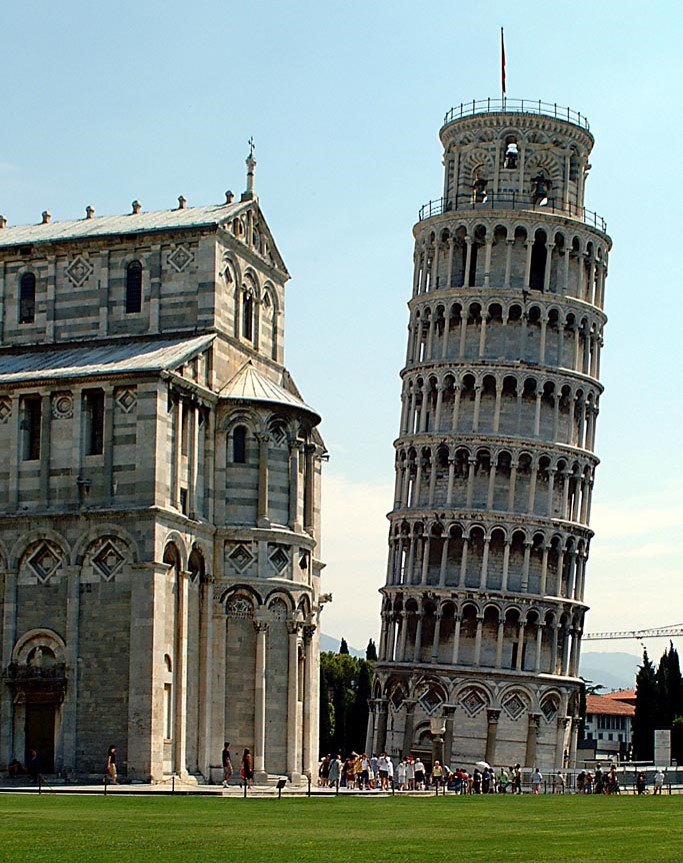
The Leaning Tower of Pisa is located in which country?
a)
England
b)
France
c)
Italy
74.
a)

Eiffel Tower

b)

Elizabeth Tower

c)

Buckingham Palace

d)

Vatican City

75.
a)

Colosseum

b)

Parthenon

c)

Leaning Tower of Pisa

d)

Hagia Sophia

76.
a)

Parthenon

b)

The Kremlin

c)

The Berlin Wall

d)

Colosseum

77.
a)

the Louvre

b)

Stonehenge

c)

La Alhambra

d)

Neuschwanstein Castle