wayground logo

Free Printable Worksheets

NEW

Font size

S
M
L
XL
Worksheets

Test - 2nd Semester Final (Summer School)

Total questions: 71

Worksheet time: 52mins

Name
Class
Date
1.
Stretching rock so it becomes thinner in the middle is what kind of stress?
a)
tension
b)
compression
c)
shearing
2.
Squeezing rock until it breaks is what stress?
a)
tension
b)
compression
c)
shearing
3.
The hanging wall slides up and over the footwall is what kind of fault?
a)
strike-slip
b)
normal
c)
reverse
4.
What fault has little up or down motion?
a)
strike-slip
b)
normal
c)
reverse
5.
When the hanging wall slips downward below the footwall, what kind of fault is it?
a)
strike-slip
b)
normal
c)
reverse
6.
The surface along which rock break and slide past each other is called a:
a)
fracture
b)
fault
c)
joint
7.
A type of fault where rocks on either side move past each other sideways is called:
a)
normal fault
b)
reverse fault
c)
strike-slip fault
8.
a)
normal fault
b)
reverse fault
c)
strike-slip fault
9.
The cat is standing on the...
a)
foot wall
b)
hanging wall
c)
left
d)
weirdest elevator ever
10.
Where is the point at which the first movement occurs during an earthquake?
a)
Epicenter
b)
Focus
c)
Fault
d)
Plate
11.
Where is the point on the Earth’s surface directly above the focus of an earthquake?
a)
Epicenter
b)
Fault
c)
Hypocenter
d)
Tremor
12.

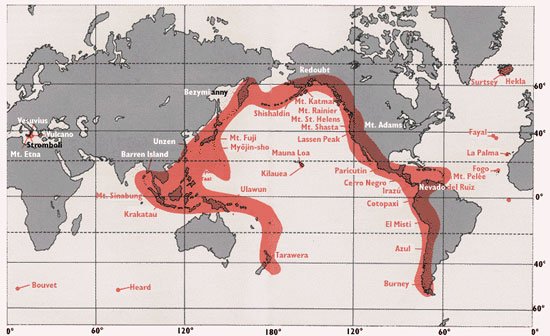
This is the name for the chain of volcanoes and earthquakes around the edge of the Pacific Plate.

a)

Circle of Fire

b)

Ring of Lava

c)

Ring of Fire

d)

Circle of Magma

13.
A fault caused by rocks moving together
a)
normal fault
b)
reverse fault
c)
slip strike fault
14.
a fault caused by rocks moving away from each other
a)
strike slip fault
b)
reverse fault 
c)
normal fault
15.

What is the study of earthquakes?

a)

Limnology

b)

Geology

c)

Volcanology

d)

Seismology

16.

What is the instrument used to measure the magnitude of an earthquake?

a)

Seismograph

b)

Telegraph

c)

Seismometer

d)

Histogram

17.

These are vibrations of the Earth caused by the sudden release of energy stored in rocks.

a)

Tectonic plates

b)

Compression

c)

Shearing

d)

Seismic waves

18.
The type of plate boundary where two plates come together is a .....
a)
Convergent Boundary
b)
Divergent Boundary
c)
Transform Boundary
d)
Plate Boundary
19.
A divergent boundary occurs when plates ....
a)
Pull apart
b)
Come together
c)
Slide past each other
d)
subducting
20.
Earthquakes typically occur _________________.
a)
In the middle of tectonic plates
b)
only in California
c)
only in the middle of the ocean
d)
along plate boundaries
21.
What kind of plate boundary is shown here?
a)
divergent
b)
convergent
c)
transform
d)
strike slip
22.

Which of the following is a TRUE statement about tectonic plates?

a)

All tectonic plates are located at the earth's core

b)

They're located approximately 10 meters below the surface of the ocean

c)

They're located in the molten layer beneath the earth's crust

d)

All of the earth's landmass rests on tectonic plates

23.

What are the 3 layers of the suns interior

a)

Radiation Zone, Convection Zone, Core

b)

Radiation Zone, Corona, Nuclear Fusion

c)

Corona, Convection Zone, Core

d)

Chromosphere, Convection Zone, Solar Wind

24.

____________are areas of gas on the sun that are cooler than the gas around them.

a)

Solar Wind

b)

Solar Flares

c)

Sunspots

d)

Core

25.

Reddish Loops of gas called_____________links different parts of sunspot regions.

a)

Sunspot

b)

Prominences

c)

Nuclear Fusion

d)

Convection Zone

26.

The Corona sends out a stream of electrically charged particles called...........?

a)

Core

b)

Corona

c)

Solar Flares

d)

Solar Wind

27.

What are the 3 parts of the suns atmosphere?

a)

Chromosphere, Gravity, Core

b)

Convection Zone, Sky Zone, Radiation Zone

c)

Gym, Music,Technology

d)

Chromosphere, Photosphere, and Corona

28.

The path that planets take around the sun is called its....

a)

Atom

b)

Orbit

c)

Nucleus

29.

to turn on an axis

a)

Revolve

b)

Orbit

c)

Atom

30.
The energy from the sun is created by a process called:
a)
nuclear fission
b)
nuclear fusion
c)
nuclear reaction
d)
nuclear core
31.
In which area of the sun does gas rise as it heats up, then fall back down as it cools?
a)
the core
b)
the radiation zone
c)
the convection zone
d)
the corona
32.
When we look at the sun, what layer are we viewing?
a)
photosphere
b)
chromosphere
c)
corona
d)
convection zone
33.
The sun makes up about _________ percent of the solar system's total mass.
a)
98
b)
95
c)
99.8
d)
98.9
34.
The sun converts matter into energy in the
a)
corona.
b)
radiative zone
c)
convection zone
d)
core
35.
What is the hottest layer of the sun’s atmosphere called?
a)
convective zone
b)
corona
c)
radiative zone
d)
photosphere
36.
What elements make up most of the sun’s mass?
a)
carbon and oxygen
b)
carbon and hydrogen
c)
helium and nitrogen
d)
hydrogen and helium
37.

Can only be seen during a total eclipse.

a)

Corona

b)

Chromosphere

c)

Photosphere

d)

Convection zone

38.
Energy is created in the core when two _____________ atoms join together to form a ______________ atom.
a)
helium, hydrogen
b)
carbon, hydrogen
c)
nitrogen, helium
d)
hydrogen, helium
39.

What is the sun?

a)

A medium sized star.

b)

The star nearest to Earth.

c)

A burning ball of hot gases.

d)

All of the above

40.
How many Earths could fit inside the Sun?
a)
About 1 million
b)
About 2 million
c)
About 1.5 million
d)
About 2.5 million
41.
How is the Sun like other stars?
a)
Gives off heat
b)
Gives off light
c)
Made of gasses
d)
All the above
42.
The particles of the corona extends into space for millions of kilometers and spreads into streams of electrically charged particles called:
a)
coronal discharge
b)
solar flares
c)
coronal ejection
d)
solar winds
43.
Day and night is caused by the _____________ of earth.
a)
revolution
b)
orbit
c)
rotation
44.
It takes the Earth _______ days to travel all the way around the Sun.
a)
28
b)
100
c)
24
d)
365
45.
Is it safe to look directly at a lunar eclipse? 
a)
Yes
b)
No
46.

What is a protostar?

a)

A star that has died

b)

A smaller than average star

c)

A big, blue star that is on the main sequence of the HR diagram

d)

A contracting mass of gas which represents an early stage in the formation of a star

47.

What is a nebula?

a)

It is what a medium mass star will eventually become

b)

A cloud of gas and dust in outer space

c)

It is what is at the center of a black hole

48.

What is a red giant?

a)

It is what happens when a star begins fusing helium into carbon.

b)

It is a star on the main sequence of the HR diagram.

c)

It is a star that has died and is no longer fusing any material.

49.

What is fusion?

a)

It is the measure of brightness of a star.

b)

The process of merging atoms together to create energy.

c)

It is the process of analyzing stars for what atoms they contain.

d)

It is a description of how massive a star is.

50.

What is a supernova?

a)

The measure of brightness of a star.

b)

Something that only low mass stars can do.

c)

A star that explodes, creating a great amount of light and energy.

51.

A neutron star is

a)

The end phase of a massive star.

b)

A star made up of only protons.

c)

The type of star you have before it turns into a black hole.

52.

A super giant is

a)

What happens when a small mass star begins fusing helium to carbon.

b)

What happens when a really massive star begins fusing helium to carbon.

c)

A very hot star.

53.

Luminosity is

a)

The measure of brightness of a star.

b)

The temperature of a star.

c)

The mashing of atoms to create heat and light.

54.

A black hole is

a)

A way to measure the light output of a star.

b)

The end phase of a medium mass star 1 - 7 solar masses.

c)

The end phase of a really massive star over 20 solar masses.

55.

What is a planetary nebula?

a)

A nebula that creates protostars.

b)

A nebula that forms after a red giant blows off its outer layers.

c)

The end stage of a massive star.

56.
Which of the following is not a stage for a low mass star?
a)
Protostar evolves
b)
Main sequence
c)
Red giant
d)
Red dwarf
57.
Which of the following is not a stage for medium mass stars?
a)
Red Giant
b)
Planetary nebula
c)
White dwarf
d)
Black hole
58.
Which of the following is not a stage for high mass stars?
a)
Main sequence
b)
Red dwarf
c)
Red supergiant
d)
Supernova
59.
Which is the correct order for star formation for all stars?
a)
Nebular, Protostar forms, Collapsing cloud fragment
b)
Collapsing cloud fragment, Protostar forms, Interstellar cloud
c)
Main sequence, Collapsing cloud fragment, Newborn star
d)
Protostar forms, Protostar evolves, Newborn star
60.
Which stage is common for low and medium mass stars?
a)
Planetary nebula
b)
Black dwarf
c)
Red giant
d)
Supernova
61.
Which is a similarity between medium and high mass stars?
a)
planetary nebula
b)
helium fusion
c)
Types II supernova
d)
white dwarf
62.
Once all energy sources are used up in a low or medium mass star, the star will end its life as a ....
a)
red giant
b)
black dwarf
c)
white dwarf
d)
planetary nebular
63.
Why is the depletion of hydrogen in a star's core such an important event?
a)
a star is no longer considered a main sequence star
b)
the entire star shrinks in size
c)
hydrostatic equilibrium is reached
d)
pressure out becomes greater than gravity in the core
64.
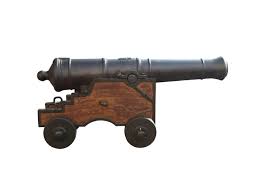
When a cannon fires a cannonball we observe Newton's third law. Which force is the reaction force?
a)
The cannon moving forward
b)
The cannonball moving forward
c)
The cannon moving backward
d)
The cannonball moving backward
65.
According to Newton's second law, if you increase the force applied to an object :
a)
it accelerates more
b)
it doesn't move
c)
you get more inertia
d)
it decelerates
66.
A 20 kg bike accelerates at 10 m/s2.  What was the force?
a)
25 Newtons
b)
20 Newtons
c)
200 Newtons
d)
10 Newtons
67.
According to Newton’s first law of motion, a moving object that is not acted on by an unbalanced force will
a)
remain in motion.
b)
eventually come to a stop.
c)
change its momentum.
d)
accelerate.
68.
What law?
a)
1st
b)
2nd
c)
3rd
69.
A magician pulls a tablecloth out from under dishes and glasses on a table without disturbing them.
a)
Newton's 1st Law
b)
Newton's 2nd Law
c)
Newton's 3rd Law
70.
A 20 kg bike accelerates at 10 m/s2.  what was the force
a)
25
b)
200 N
c)
20 N
d)
10 N
71.
In the picture, the blocks are flying out of the truck based on which of Newton's laws?
a)
Newton's 1st Law
b)
Newton's 2nd Law
c)
Newton's 3rd Law
d)
Newton's 6th Law