
 Worksheets
US History A Final Exam Review Quiz
Total questions: 66
Worksheet time: 33mins
Although the Fourteenth Amendment was ratified nearly a century and a half ago, what aspects of the amendment have enduring significance?
Due process and equal protection clauses
Affirmative action and witness protection clauses
Voting rights and ballots clauses
Nondiscrimination and elastic clauses
To support the claim that the Fifteenth Amendment failed to fulfill its promise for nearly a century, a historian would most likely cite which of the following as evidence?
Athletic opportunities were still unequal for blacks and whites
Public schools were still segregated
Employment practices were still racially discriminatory
Voting rights were still denied
Many Southern States tried to limit the effects of Radical Reconstruction by
Adopting federal laws mandating segregations
Enacting Jim Crow laws
Abolishing the Southern sharecropping system
Securing passage of new amendments to the United States Constitution
What effect did the system of sharecropping have on the South after the Civil War?
It kept formerly enslaved persons economically dependent
It brought investment capital to the South
It encouraged Northerners to migrate south
It provided for a fairer distribution of farm profits
The poll tax, the literacy test, and the Ku Klux Klan were all attempts to limit the effectiveness of
The 14th and 15th amendments
The Supreme Court’s decision in Brown v. Board of Education
Civil rights legislation passed in all states after the Civil War
Immigration laws such as the Gentleman’s Agreement and the Chinese Exclusion Act
Although important strides were made, “Reconstruction failed to provide lasting guarantees of the civil rights of the freedmen.” Which evidence best supports this statement?
Passage of Jim Crow laws in the latter part of the 19th century
Ratification of the 13th, 14th, and 15th amendments
Refusal of Southern States to allow sharecropping
Passage of the Civil Rights Acts of 1866
What impact did the Plessy v. Ferguson case have on America?
It held that separate facilities for different races were unequal and therefore unconstitutional. This put an end to the Jim Crow laws that were passed by states in the post Civil War era.
It held that separate but equal facilities for different races were constitutional, allowing Jim Crow laws to exist in America until the Civil Rights Movement.
It held that no slave could be citizen of the United States
It held that literacy tests were unconstitutional. As a result more and more African Americans began to vote.
The greatest achievements of the Freedmen’s Bureau were in
Its distribution of land
Education
Helping people find employment
The provision of food and clothing
The main purpose of the Black Codes was to
Guarantee freedom for former slaves
Prevent African Americans from becoming sharecroppers
Ensure a stable and subservient labor supply
Create a system of justice for former slaves
The U.S. Calvary’s buffalo soldiers shared what experience with most other African Americans of their time?
They earned respect for their skill and valor
They were segregated because of their race
They were beneficiaries of affirmative action
They were not permitted to own property
Chief Joseph, Sitting Bull, and Geronimo shared what common experience?
They were beneficiaries of peace treaties with the U.S. government
They were popular figures in Buffalo Bill’s Wild West Show
They opposed the tactics of the Apache and the Cheyenne
They resisted efforts to displace their people from traditional homelands
Which of the following were components of the Populists’ platform?
Free and unlimited coinage of silver, government ownership of railroads, graduated income tax
Free and unlimited coinage of gold, government ownership of railroads, graduated income tax
Bimetallism, high tariffs, and civil rights
Free and unlimited coinage of silver, open immigration, and civil rights
Which conclusion can be drawn about the impact of the Populist Party on the United States?
Some Populist goals eventually were adopted by the major parties
The United States has steadily moved from a two-party system to multi-party system
Religious ideals have more often motivated people to splinter away from major parties
An increasing number of citizens have grown weary of party politics and fail to vote in elections
How did the Homestead Act of 1862 influence the economic and social development of the American West?
It provided free federal land, which encouraged settlement of the west
It set up reservations for Native American Indians and provided economic opportunities
It established land-grant colleges
It recruited immigrants for factory jobs in urban areas
Which quotation was associated with the forced assimilation of American Indians at the Carlisle Indian Industrial School?
Our labor symbolized nothing, and left us mentally sluggish in the dusk of the evening
Humility and charity are the only credentials for admission
It never enters our heads that we can offend anyone by the expression of love
We all wore white man’s clothes and ate white man’s food
Which of the following geographic factors influenced the development of the West in the late 1800s?
Availability of land and mineral resources like gold and silver
The development of the transcontinental railroad
Fertile land good for cash crops like tobacco and cotton
The influx of Chinese immigrants
A significant impact of the spread of mining boomtowns in the west from 1850-1900 was
Large numbers of miners struck it rich
Ethnic groups were welcomed and treated equally
The environment was protected and preserved
Native Americans were adversely affected
What was the main topic of William Jennings Bryan’s 1896 “Cross of Gold” speech?
Fighting the growing influence of business trusts
Ending the tax-free status of religious institutions
Changing the government’s monetary policy
Providing federal aid to poor families
The Exoduster movement involved which group?
American Indians demanding the return of tribal lands during the 1970s
Eastern Europeans immigrating to the U.S after World War I
African Americans leaving the South after the Civil War
Colonial Americans forming local militias during the Revolutionary War
Which of the following statements would most likely be found in a secondary source about the Bessemer Process?
The Bessemer Process revolutionized transportation in the United States because it made communication easier between different regions of the United States.
The Bessemer Process made the production of steel more costly, leading to the emergence of monopolies in the steel industry.
The development of the Bessemer Process accelerated the Industrial Revolution, as iron was replaced with cheaper and more effective steel.
The Bessemer Process allowed for iron production to outpace steel production for the first time since the start of the Industrial Revolution.
As a result of the trends shown in the graphs, the Populist Party wanted the federal government to increase the money supply to
Raise the prices of crops
Limit the exportation of corn
Discourage the consumption of corn
Increase agricultural imports
Steinbeck’s remark relates most closely to what concept?
Culture shock
Social Darwinism
Civil Rights
Melting pot
Which of the following factors was most significant in the development of labor unions during the nineteenth century?
Working conditions
Racial segregation
Class discrimination
Growing prosperity
The United States government’s use of laissez faire principles during the late 19th century resulted in the
commitment of aid to small American businesses
decline in the number of factory jobs
opposition of American businesses to protective tariffs
growth of trusts and monopolies
For which of the following reasons did nativists worry about the influx of immigrants during the 1880s?
They feared immigrants would gain control of city and state governments and encourage even more immigration.
They believed immigrants would receive preferential treatment from the federal government and be given large tracts of land.
They thought the country’s ports could not handle the increasing number of immigrants and greater flow of exports.
They considered immigrants from southern and eastern Europe to be a threat to traditional American cultural values.
Consistent with their reputations for greed and corruption, nineteenth-century city bosses and their “machines” maintained control of city governments by
providing aid to citizens in exchange for political support.
developing alliances among diverse immigrant populations.
using police forces to protect organized labor.
Establishing local militias to prevent outside interference.
Which of the following factors had the greatest impact on the development of the United States’ industrial infrastructure in the late nineteenth century?
Revolutionary changes in steel production and the growth of railroads.
The passage of the Homestead Act and the closing of the American frontier.
Restraints on monopolistic business practices and the legalization of unions.
The ideas of Henry George, Edward Bellamy, and Henry D. Lloyd.
A difference between a market economic system and a command economic system is
A market economy imposes strict government regulations on business practices, while a command economy limits regulation.
A command economy relies on the accumulation of private wealth to address the issue of scarcity, whereas a market economy discourages private wealth.
A market economy encourages the development of labor unions and places an emphasis on equitable treatment between producers and consumers, while a command economy encourages control of private, wealthy investors.
A market economy is governed by the principle of laissez-faire with limited government involvement while a command economy relies heavily on government intervention.
Which action by the federal government would Progressive reformers be most likely to support?
regulating business practices to protect consumers and workers
ending federal regulation of the banking system
passing high tariffs to protect domestic industries from foreign competition
authorizing tax breaks for large corporations
Progressivism was an early 20th-century movement that promoted
limited war to spread social justice to other countries
increased immigration to diversify the nation’s population
colonialism to increase United States power throughout the world
government actions to correct political, economic, and social problems
The primary objective of the women’s movement during the first two decades of the 20th century was to
gain property rights
promote higher education
secure full suffrage rights
win equal pay for equal work
The term muckraker was used during the Progressive Era to describe
dissatisfied workers who went on strike
Northerners who went South following the Civil War
investigative journalists who exposed societal problems
women who supported the Prohibition movement
Which statement best summarizes the perspective of President Theodore Roosevelt concerning natural resources?
Decisions about conservation are best left to the states.
Corporations can be trusted to use natural resources wisely.
The federal government must protect the nation’s lands from exploitation.
The free market should set the value of the nation’s natural resources.
Which Progressive Era muckraker’s book led to the passage of the Meat Inspection Act?
Jacob Riis’s How the Other Half Lives
Lincoln Steffens’s The Shame of the Cities
Upton Sinclair’s The Jungle
Frank Norris’s The Octopus
Involvement in the Spanish-American War, acquisition of Hawaii, and introduction of the Open Door Policy in China were actions taken by the United States government to
Establish military alliances with other nations
Gain overseas markets and sources of raw materials
Begin the policy of manifest destiny
Support isolationist forces in Congress
Which of the following did the American Anti-Imperialist League oppose?
U.S. conquest and possession of overseas territories
Extension of the right to vote to women
Government regulation of large businesses
Federal legislation ensuring food safety
This statement provides a reason why political leaders of the late 1800s adopted the policy of: Quotation from Senator Albert J. Beveridge, 1898: "But today we are raising more than we can consume. Today we are making more than we can use. Today our industrial society is congested; there are more workers than there is work; there is more capital than there is investment. We do not need more money—we need more circulation, more employment. Therefore, we must find new markets for our produce, new occupation for our capital, new work for our labor. . . ."
Imperialism
Isolationism
Protectionism
Collective security
President Theodore Roosevelt's Big Stick policy is most closely associated with
Friendly relations with China after the Boxer Rebellion
Conservation of natural resources
Court actions to support business monopolies
Intervention in Latin American affairs
As a result of the Spanish American War, the United States saw the need to build the Panama canal because
New colonies had been acquired in Africa
Spanish opposition to the canal had ended
The United States navy could then move more quickly between oceans
United States railroads could not transport enough manufactured goods
Which headline related to the Spanish American War is an example of yellow journalism?
President McKinley Asks Congress for War Declaration Against Spain
United States Mobilized for War with Spain
United States Demands Response to Spanish Actions
Spanish Troops Slaughter Innocent Cuban Citizens
What was one characteristic of American imperialism in the late 19th and early 20th centuries?
avoiding involvement with nations in East Asia
supporting independence movements in Africa
rejecting the use of military force to gain colonies
acquiring territory to promote economic and strategic interests
Which conclusion is most clearly supported by this photograph?
Textile manufacturing was not important to the national economy.
State and federal governments did not adequately regulate child labor.
American factories were less productive than factories in other countries.
Strict federal safety standards were enforced in factories across the nation.

The foreign policy illustrated in this cartoon was used by the United States to
punish Mexico for siding with Germany in World War I
enforce the Monroe Doctrine against Great Britain
secure control of land for the Panama Canal Zone
announce the Open Door policy

The headlines in this newspaper are an example of
Yellow journalism
Investigative reporting
Muckraking literature
Government censorship
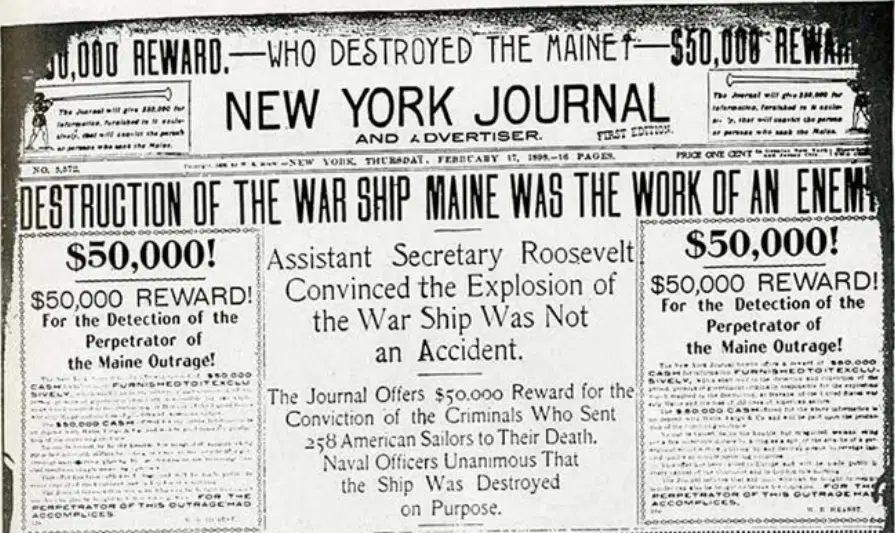
Publication of this and similar news stories encouraged Congress to
Declare war on Spain
Improve naval safety
Pass anti terrorist legislation
Conduct a criminal investigation
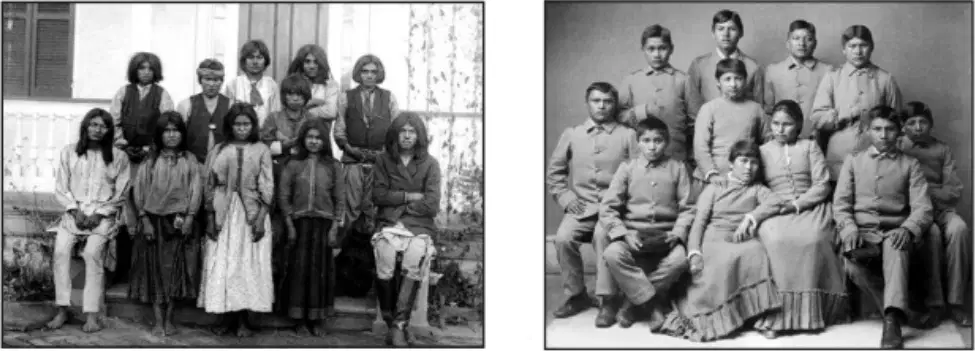
This pair of photographs suggests that the major purpose of the Carlisle Indian School was to
train future leaders in tribal traditions
prepare children for life on the reservation
teach skills needed for working in factories
promote cultural assimilation
What is the basic cause of the farm problem described by these song lyrics?
limits on agricultural imports
government ownership of the railroads
overproduction of farm crops
prolonged droughts in the Midwest
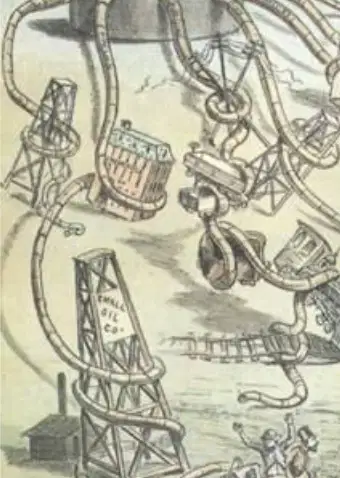
Which statement BEST describes the point of this late-19th century cartoon?
The United States is increasing its exploration for natural resources.
American society is being controlled by the coal and steel industries.
Major industry is in control of much of American government and society.
The Federal Government is controlling big business in the United States.
Which world region was the focus of the foreign policy expressed in this statement?
Middle East
Southeast Asia
Soviet Union
Latin America
This statement helped provide justification for President Theodore Roosevelt’s use of the
Policy of Dollar Diplomacy
Big Stick policy
Conservation policy
Open Door policy
In the late 1800’s, the policy of the Federal Government toward Native American Indians, as exemplified by the Dawes Act, was to
grant immediate and full citizenship rights to Native American Indians
encourage assimilation of Native American Indians into the mainstream of American culture
move Native American Indians into the cities to supply labor for developing industries
restore lands to the Native American Indian tribes that had lost lands to white settlers
Sullivan’s observation in his 1896 essay relates to which feature of most large, modern cities?
Airports
Malls
Skyscrapers
Suburbs
The construction of the Central Pacific Railroad relied largely on laborers of which immigrant group?
Chinese
German
Irish
Mexican
Migration within the United States from rural areas to urban areas was MAINLY the result of which of the following?
Foreign immigration
Increased urban crime
Increased industrialization
Reduced soil quality
Platt’s words advocate:
American Isolationism
American Progressivism
American Imperialism
American Reconstruction
Which of the following foreign policy statements declared that the U.S. would not tolerate European interference in the affairs of the Americas?
Monroe Doctrine
Tariff of Abominations
Good Neighbor Policy
Open Door Policy
Between 1870 and 1910, American immigration could be described as:
The number of European immigrants to the U.S. decreased
The number of European immigrants to the U.S. fluctuated (went up and down)
The number of Northern European immigrants increased
The number of European immigrants to the U.S. increased dramatically
Which of the following statements best represents a nativist attitude toward the influx of immigrants around 1900?
Slavs and Italians will be assimilated as easily into the American way of life as were earlier immigrant groups.
Ellis Island should be enlarged to accommodate the huge influx of immigrants.
Immigrants will work for low wages and break strikes, thereby hurting all American workers.
Native-born Americans should organize to help find jobs and homes for new immigrants so that they can become citizens as quickly as possible.
During the late 19th century, wealthy industrialists tried to keep workers from joining labor unions because they feared that unions would...
Demand that higher wages be paid to employees
Lead to more government regulation of labor practices
Prevent some workers from receiving higher wages than others
Require employers to abandon discriminatory hiring practices
Effects of Westward Expansion include all of the following EXCEPT
Increasing popularity of the gold standard in U.S. monetary policy, since gold was abundant in the West.
Conflict between white settlers on the frontier and Native American tribes occupying reservations in the Western territories.
Significant accumulation of wealth in the hands of railroad tycoons as railroads expanded West.
Tension between white workers in the West and Chinese immigrants, whom whites feared would compete for their jobs.
The passage to the right most likely refers to
The completion of the Transcontinental Railroad
William Jennings Bryan’s “Cross of Gold Speak”
Haymarket Massacre/Riot
Battle of Wounded Knee
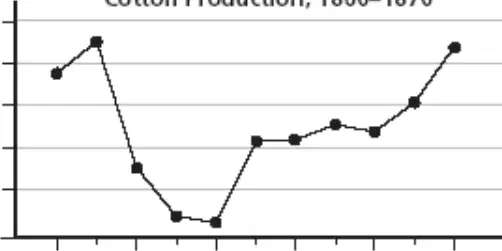
The trend in the graph above could best be explained by
The shift away from a cotton-based economy in the South during Reconstruction.
Restrictive government intervention in the economy that regulated cotton production.
An increasing reliance on sharecropping after the Civil War in the South.
The full and equal integration of black workers into the Southern economy.
Which of the following is NOT a reason listed for why certain groups have been denied opportunities in United States history?
Age
Ethnic background
Gender
Economic status
Which of the following is a foreign policy goal for which the United States has engaged in military conflicts around the world?
To acquire territory
To increase population
To promote tourism
To reduce taxes
Which invention listed below contributed to social and economic change in the United States?
Steam engine
Bessemer Process
Printing press
Airplane
Which of the following is NOT listed as an invention that led to change in the United States?
Railroad
Lightbulb
Barbed Wire
Computer

