wayground logo

Free Printable Worksheets

Font size

S
M
L
XL
Worksheets

Chem 1 Midterm Study Guide

Total questions: 102

Worksheet time: 2hrs 44mins

Name
Class
Date
1.
This variable in an experiment is the one being deliberately changed by the scientist. 
a)
dependent variable
b)
independent variable
c)
data
d)
control group
2.
A possible explanation to a problem that has not yet been tested. 
a)
data
b)
theory
c)
hypothesis
d)
fact
3.
There are two types of data. Which type of data involves numbers that are obtained by counting or measuring?
a)
quantitative
b)
qualitative
4.
There are two types of data. Which type of data involves descriptions/photographs/illustrations that cannot be counted or measured?
a)
qualitative
b)
quantitative
5.
Convert from meters to cm:  9 meters
a)
900 cm
b)
90 cm
c)
0.9 cm
d)
0.09 cm
6.
Convert 300 cm to m:
a)
3 m
b)
30 m
c)
0.3 m
d)
0.03 m
7.
490,000 g =____ kg
a)
490
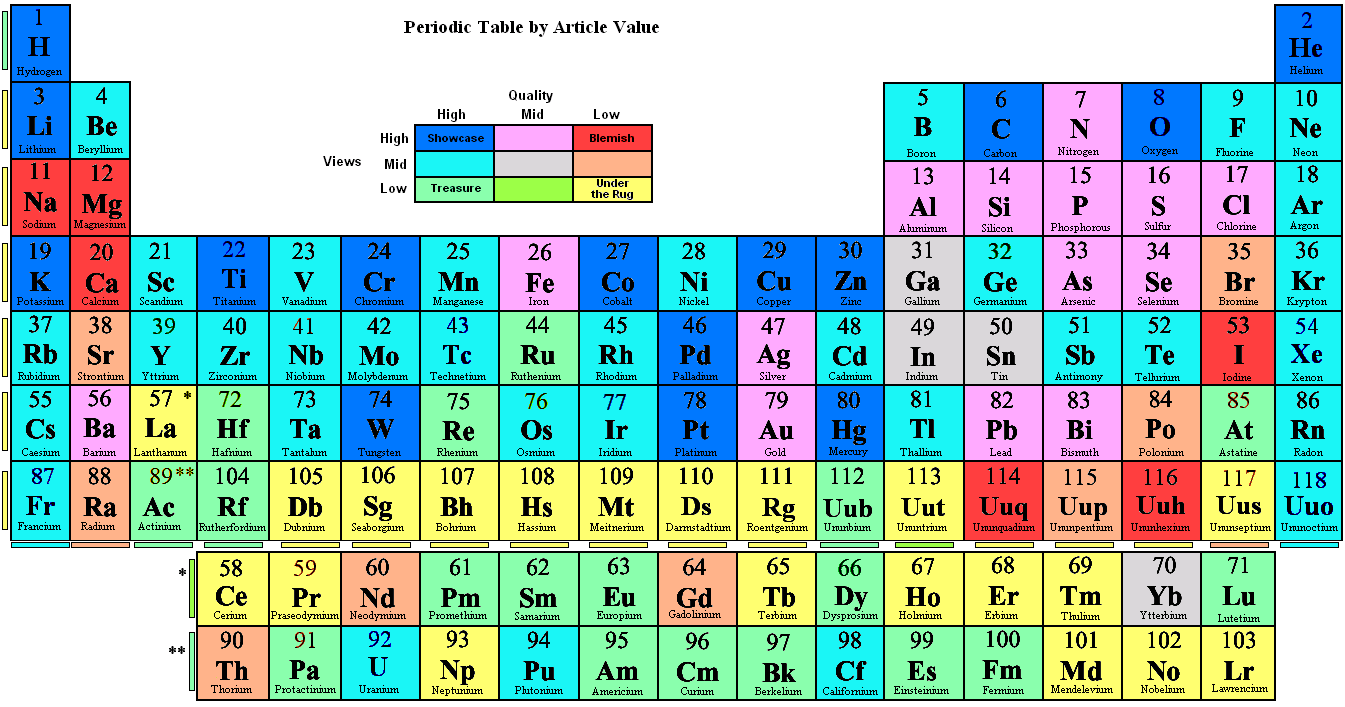
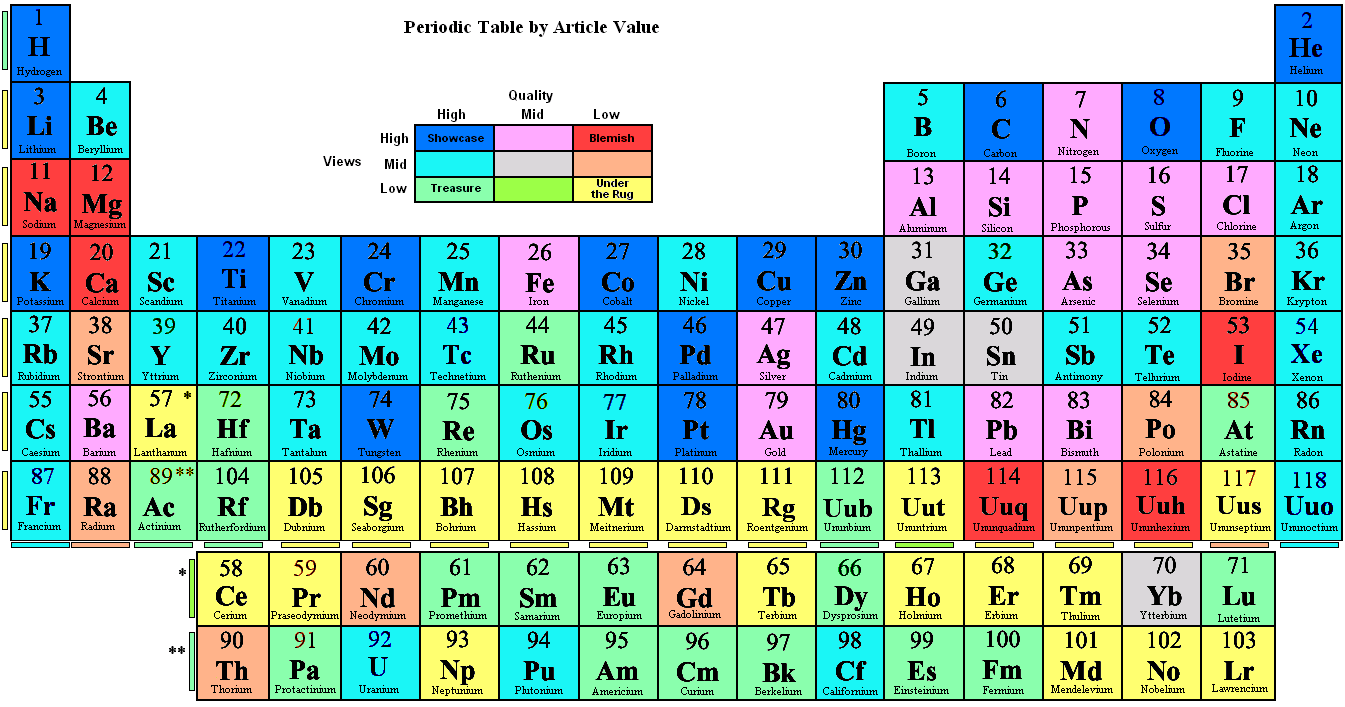
b)
49
c)
4,900
d)
0.49
8.
100 cL = _____mL
a)
10,000
b)
1,000
c)
10
d)
0.1
9.
.79 Km = ______m
a)
79
b)
790
c)
0.79
d)
7,900
10.
An experiment is performed on plants to see how different liquids affect plant growth. Each plant in the experiment is given a different liquid; water, apple juice, or milk. Each plant has the same amount of soil, sunlight, and listens to the same music. In this investigation, what are the controlled variables?
a)
Type of plant, amount of music, and sunlight
b)
Water, apple juice, milk
c)
Plant growth
11.
What temperature does the thermometer show?
a)
31° C
b)
35° C
c)
32° C
d)
39° C
12.
What property is a balance used to measure?
a)
Size of an object
b)
Mass of an object
c)
Flexibility of an object
d)
Weight of an object
13.
Many tools measure liquid. What would be the most accurate to measure the volume in a sea shell?
a)
Beaker
b)
Test tube
c)
Measuring cup
d)
Graduated cylinder
14.
Identify the equipment shown here:
a)
beaker
b)
Erlenmeyer flask
c)
Florence flask
d)
volumetric flask
15.

You bought an aquarium for your pet Blobfish. You measured the tank and found its dimensions to be 25cm wide, 35 cm tall and 40 cm deep. You need to fill it with salt water. How many liters of salt water will you need?

a)

35000L

b)

35000mL

c)

35000cm^3

d)

350.00L

e)

35.00L

16.

Lisa is working on a science project. Her task is to answer the question: "Does Rogooti (which is a commercial hair product) affect the speed of hair growth". Which is the independent variable?

a)

Hair growth

b)

Rogooti (hair product)

17.
A scientist has four different liquids and pours them all into a bottle.  The silver liquid sinks to the bottom, the red liquid settles on top of the silver one, and the pink liquid stays at the surface. Which liquid has the smallest density?
a)
the pink liquid
b)
the silver liquid
c)
the red liquid
d)
the water
18.
Which particle has a positive charge?
a)
electron
b)
orbital
c)
proton
d)
neutron
19.
This particle determines what element you have - the elements identity.
a)
electron
b)
proton
c)
neutron
d)
valence shell
20.
This causes the mass of the nucleus to increase.
a)
adding an electron
b)
adding a neutron
c)
more orbitals
d)
adding negatively charged particles
21.
Has a mass of 1/200th the mass of a proton.
a)
electron
b)
neutron
c)
nucleus
d)
electron cloud
22.
The particles of the atom you can find by knowing the atomic number.
a)
neutrons
b)
protons and electrons
c)
protons and neutrons
d)
atomic mass
23.
What charge does the nucleus have and why?
a)
positive - the neutrons do not have a charge
b)
positive - the neutrons and protons are positively charged particles
c)
neutral - the neutral charge dominates the positive charge
d)
neutral - electrons cancel out the positive charge of the atom
24.
What is the mass number and name of an element with 8 protons and 8 neutrons?
a)
16 - Carbon
b)
16 - Oxygen
c)
24 - Oxygen
d)
8 - Neon
25.
An atom has 10 protons, 15 neutrons and 10 electrons what is its mass number.
a)
20
b)
10
c)
5
d)
25
26.
Matter that cannot be broken down into a simpler substance – building blocks of life.
a)
neutron
b)
atom
c)
electron
d)
quarks
27.
Elements on the periodic table increase by...
a)
atomic mass
b)
size
c)
mass number
d)
atomic #
28.
An atom has 13 protons, 15 neutrons and ___ electrons what is its mass number?
a)
13
b)
26
c)
28
d)
15
29.
What is the number that gives you the element and the number of protons contained in each elemental atom?
a)
atomic mass
b)
mass number
c)
symbol
d)
atomic #
30.
Who believed that electrons were scattered amongst positively charged material.
a)
JJ Thomson
b)
Ernest Rutherford
c)
John Dalton
d)
Niels Bohr
31.
Did experiments to show that atoms form compound in set ratios.
a)
John Dalton
b)
Schrodinger
c)
Niels Bohr
d)
JJ Thomson
32.
Discovered that the atom has a small, dense, positively charged nucleus.
a)
Ernest Rutherford
b)
Heisenberg
c)
Democritus
d)
JJ Thomson
33.
Believed that all atoms of the same element would be the same.
a)
John Dalton
b)
JJ Thomson
c)
Niels Bohr
d)
Modern Atomic Theory
34.
The following element has _____________ electrons.
a)
114
b)
289
c)
175
d)
403
35.
Ernest Rutherford discovered that atoms were mostly _________________. 
a)
negatively charged
b)
positively charged
c)
electrons
d)
empty space. 
36.
Who discovered the nucleus of an atom?
a)
JJ Thomson
b)
Ernest Rutherford
c)
John Dalton
d)
Democritus
37.
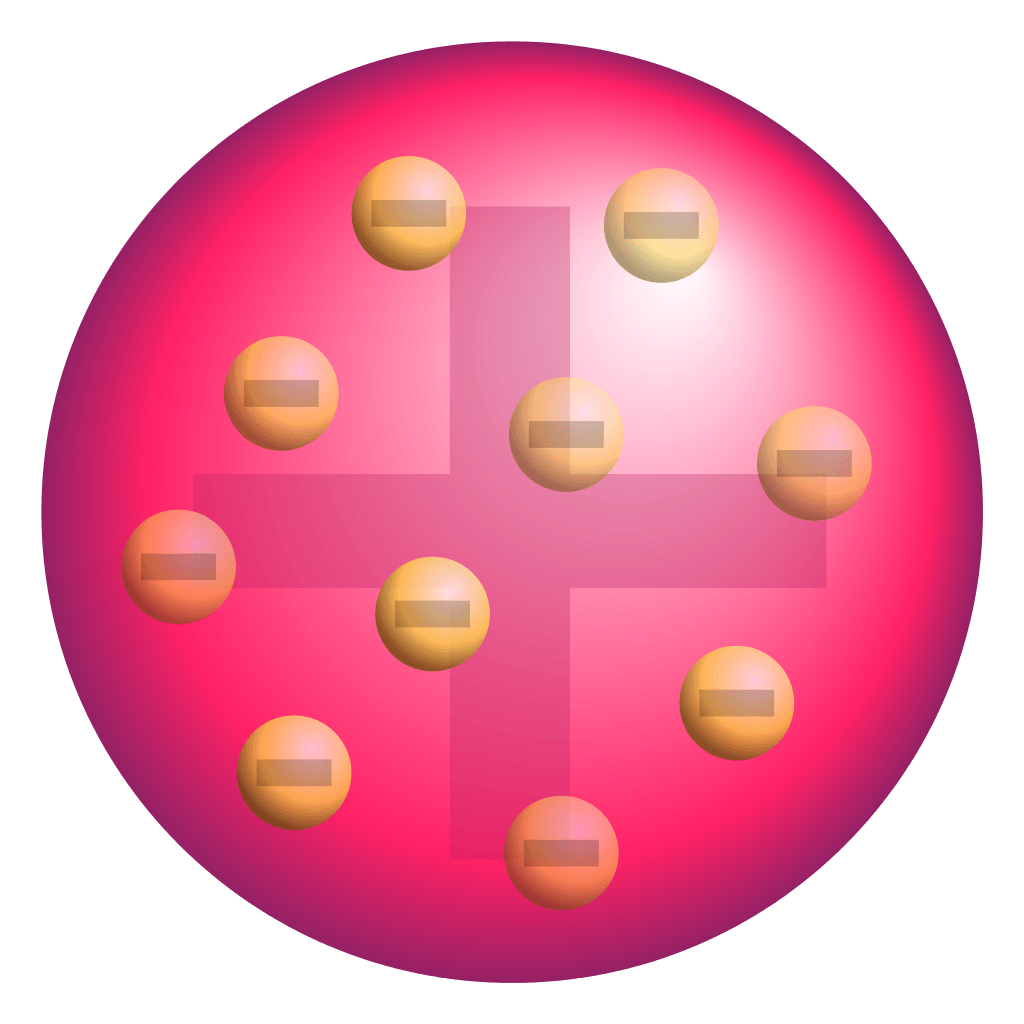
This model was developed after J.J. Thompson discovered electrons, a particle smaller than an atom. Is shows electrons floating freely in a positive space.
a)
The "Plum Pudding Model" of the atom
b)
The "Rutherford Model" of the atom
c)
Democritus's model of the atom
d)
The "Solar System Model" of the atom
38.

The nucleus of most atoms is composed of

a)

tightly packed protons.

b)

tightly packed neutrons

c)

tightly packed protons and neutrons.

d)

loosely connected protons and electrons

39.

An aluminum isotope consists of 13 protons, 13 electrons, and 14 neutrons. Its mass number is

a)

13

b)

14

c)

27

d)

40

40.
He unknowingly discovered the electron as a result of cathode ray tube experiments.    
a)
Thomson
b)
Chadwick
c)
Democritus
d)
Aristotle
41.
He determined the mass of an electron and confirmed it’s charge in 1909 as a result of oil drop experiments.
a)
Thompson
b)
Chadwick
c)
Millikan
d)
Democritus
42.
He discovered the neutron and paved the way for the discovery of nuclear fission and the atomic bomb.
a)
Chadwick
b)
Thomson
c)
Democritus
d)
Goldstein
43.
Place the following scientists in order, from earliest to latest: 
A) Ernest Rutherford
B) J.J. Thomson
C) John Dalton
a)
B,C,A
b)
C,A,B
c)
A,C,B
d)
C,B,A
44.
The atom is mostly empty space is a confirmed idea made by who?
a)
Rutherford
b)
Nagaoka
c)
Bohr
d)
Chadwick
45.

Discovered mass of proton = mass of neutron

a)

Bohr

b)

Chadwick

c)

Rutherford

d)

Schrodinger

46.
Developed the “quantum mechanical” model of the atom
a)
John Dalton
b)
Schrodinger & Heisenberg
c)
James Chadwick
d)
Ernest Rutherford
47.

Who is responsible for the "uncertainty principle"?

a)

Bohrs

b)

Einstein

c)

Heisenberg

d)

de Broglie

48.

Made "waves" a thing in Atomic Theory

a)

Heisenberg

b)

Bohrs

c)

Lavoisier

d)

de Broglie

49.

Oil drop experiment helped to prove charge of electron

a)

Thomson

b)

Rutherford

c)

Millikan

d)

Chadwick

50.

Explained how a hot glowing object emitted light

a)

Planck

b)

Einstein

c)

Rutherford

d)

Dalton

51.

Isolated radium, discovered Polonium

a)

Curie

b)

Goldstein

c)

Thomson

d)

Planck

52.
a)
energy levels
b)
valence electrons
c)
protons
d)
neutrons
53.
a)
energy levels
b)
valence electrons
c)
protons
d)
neutrons
54.
a)
Same group
b)
Same period
55.
a)
Group 1
b)
Group 17
c)
Group 2
d)
Group 18
56.
a)
Metals
b)
Nonmetals
c)
Metalloids
57.
a)
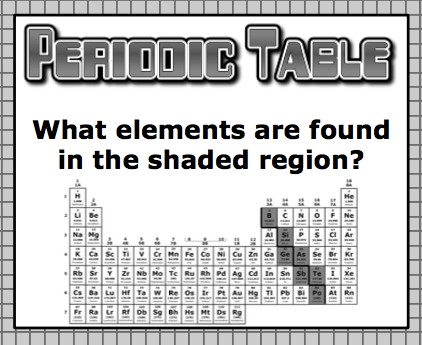
Metals
b)
Nonmetals
c)
Metalloids
58.
a)
Metals
b)
Nonmetals
c)
Metalloids
59.
How did Mendeleev arrange the elements?
a)
alphabetical 
b)
density
c)
melting point
d)
atomic mass
60.
A vertical column is called...
a)
group
b)
tower
c)
period
d)
crew
61.
Which of these element is the least metallic?
a)
Potassium (K)
b)
Carbon (C)
c)
Sulfur (S)
d)
Neon (Ne)
62.
The number at the bottom of each square on the periodic table is the ...
a)
atomic number
b)
atomic mass
c)
chemical symbol
d)
element name
63.
What group of elements don't have individual names?
a)
Alkaline-earth Metals
b)
Transition Metals
c)
Alkali Metals
d)
Halogens
64.
Which is a halogen?
a)
Helium
b)
Chlorine
c)
Oxygen
d)
Neptune
65.
Which is an alkali metal?
a)
Magnesium
b)
Iron
c)
Sodium
d)
Europium
66.
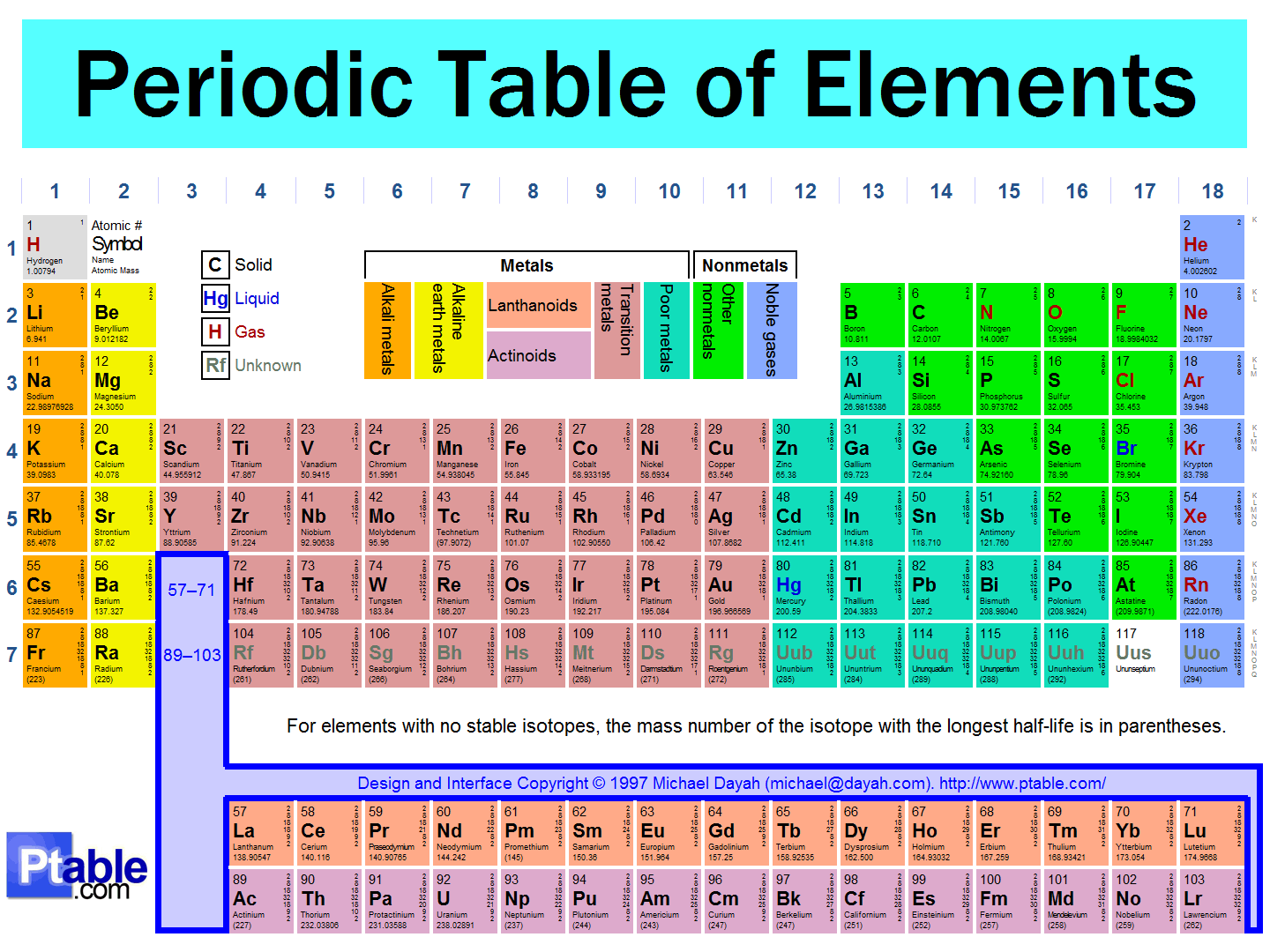
The period for Bromine is ___________.
a)
3
b)
2
c)
4
67.
Beryllium is in group number______.
a)
Group 2
b)
Group 3
c)
Group 4
d)
Group 7
68.
Group 18 elements are known as the _____ _____ and have full valence shells.
a)
royal gases.
b)
supreme solids.
c)
noble gases.
d)
legit liquids.
69.
The elements in this group only have 1 valence electron and include Li, Na, and K. 
a)
Group 11
b)
Group 1
c)
Group 3
70.
In what section would Transition Metals be found?
a)
orange
b)
light blue
c)
blue
d)
white
71.
Which two families on the periodic table react aggressively?
a)
noble gases and alkali metals
b)
alkali metals and halogens
c)
noble gases and halogens
d)
metals and halogens
72.
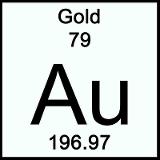
Which number is the atomic mass?
a)
79
b)
196.97
73.
Elements which are considered semiconductors are 
a)
metal
b)
nonmetal
c)
metalloid
d)
nonexistent
74.
The period for Bromine is ___________.
a)
3
b)
2
c)
4
75.

Which of the following describes a metal?

a)

Hard, lustrous, malleable, ductile and readily conduct electricity and heat.

b)

Easily break, cannot be hammered and molded without breaking

c)

Insulators

76.
The majority of an atom's mass exists where?
a)
In the nucleus
b)
In the electron cloud
c)
In the space between the nucleus and the electrons
d)
In the neutrons
77.
Who am I? 
HINT: energy level and ve
a)
Oxygen 
b)
Boron
c)
Neon
d)
Nitrogen
78.
What family is Cadmium a part of?
a)
Noble Gases
b)
Metalloids
c)
Transition Metals
d)
Actinoids
79.
Silicon is a 
a)
Metal
b)
Nonmetal
c)
Metalloid
d)
Halogen
80.
What is the Pauli Exclusion Principle?
a)
An atomic orbital can only hold a maximum of 2 electrons, each with opposite spins
b)
An atomic orbital can hold a minimum of 6 electrons, each with opposite spins
c)
An atomic orbital can hold a maximum of 6 electrons, each with the same spin
d)
An atomic orbital can hold a minimum of 2 electrons, each with opposite spins
81.
What is this element?
1s22s22p63s2
a)
Neon
b)
Magnesium
c)
Aluminum
d)
Potassium
82.
What is this element?
1s22s22p63s23p64s23d10
a)
Zinc
b)
Copper
c)
Nickel
d)
Germanium
83.
According to the Aufbau Principle, which sublevel should starting filling with electrons before the 3p sublevel?
a)
3s
b)
2p
c)
4s
d)
4p
84.
What is the electron configuration for Bromine (Br)
a)
1s2, 2s2, 2p6, 3s2, 3p6, 4s2, 3d1
b)
1s2, 2s2, 2p4
c)
1s2, 2s2, 2p6, 3s2, 3p6, 4s2, 3d10, 4p5
d)
1s2, 2s2, 2p6
85.
How many orbitals in the d subshell? 
a)
1
b)
7
c)
3
d)
5
86.
For a p sublevel, "l" equals ____.
a)
0
b)
1
c)
2
d)
3
87.
What is the correct representation for an orbital which has an "n" value of 3 and an "l" value of 1?  
a)
3s
b)
3p
c)
3d
d)
3f
88.
For the quantum number, "l", equal to 2, is an "ml" value of -1 permitted?  
a)
yes
b)
no
89.
Is the 5p orbital permitted? 
a)
yes
b)
no
90.
For a principle quantum number, "n", equal to 2, what is the total electron capacity of that level?  
a)
2
b)
4
c)
8
d)
16
91.
The 4th  energy level (n = 4) has how many total orbitals?
a)
2
b)
4
c)
8
d)
16
92.
Is the following quantum numbers (n, l, ml, ms) possible?   (4, 1, -1, +1/2)  
a)
yes
b)
no
93.

What are the 4 quantum numbers for Br (atomic # = 35)

a)

(4, 1, 0, -1/2)

b)

(4, 1, 0, 1/2)

c)

(4, 1, 1, -1/2)

d)

(4, 1, -1, -1/2)

94.
Identify the Electron Configuration for Aluminum (Al)
a)
1s2s2p3s3p1
b)
1s2s2p3s3p3
c)
1s2s2p3s4p1
95.
Electrons occupy orbitals of lowest energy first is part of what electron configuration rule?
a)
Hund’s Rule
b)
Aufbau Principle
c)
Pauli Exclusion Principle
96.
What is the shorthand electron configuration for Sulfur atom?
a)
[Ar] 3p4
b)
[He] 3s23p4
c)
[Ne] 3s23p4
d)
[Na] 3s23p3
97.
What is the noble gas configuration for boron?
a)
[He]1s22s2
b)
[He]2s22p2
c)
[He]2s22p1
d)
[Li]2s22p1
98.
What is the noble gas configuration for phosphorus?
a)
[Ar] 3p5
b)
[He] 3s2 3p5
c)
[Ne] 3s2 3p3
d)
[Na] 3s2 3p5
99.
[Ne]3s23p5 is the noble gas configuration for which element?
a)
chlorine
b)
fluorine
c)
sulfur
d)
aluminum
100.
How many dots would a Lewis Dot structure of Helium have?
a)
1
b)
2
c)
8
d)
0
101.
This is a correct dot diagram for oxygen (O)
a)
true
b)
false
102.
How many valence electrons does carbon (C) have?
a)
3
b)
4
c)
5
d)
6