wayground logo

Free Printable Worksheets

Font size

S
M
L
XL
Worksheets

Chemistry Final Review

Total questions: 104

Worksheet time: 4hrs 19mins

Name
Class
Date
1.
Particles in an atom that are neutral and have no charge are 
a)
negatrons 
b)
electrons 
c)
neutrons 
d)
protons 
2.
The smallest particle of any particular type of matter is known by which of the following terms?
a)
Compound
b)
Atom
c)
Chemical
d)
Element
3.
The subatomic particle with a negative charge is the
a)
electron
b)
proton
c)
neutron
d)
nucleus 
4.
What is the atomic number?
a)
the number of protons
b)
the number of protons and neutrons
c)
the number of neutrons
d)
the number of protons and electrons
5.
What is the mass number?
a)
the number of protons
b)
the number of protons and neutrons
c)
the number of neutrons
d)
the number of protons and electrons
6.
An atom with an unequal number of protons and electrons is said to have (a) ___.
a)
no charge
b)
balance
c)
charge
d)
unbalance
7.
How many neutrons does the isotope of lithium have?
a)
8
b)
3
c)
4
d)
5
8.
Ions are: 
a)
atoms with a positive or negative charge
b)
atoms with no charge
c)
atoms with ONLY a positive charge
d)
atoms with ONLY a negative charge
9.
The state of matter that takes the shape of its container is....
a)
Gas
b)
Solid
c)
Liquid
d)
None of these
10.
Which is the following is NOT a sign of a chemical change?
a)
Releasing a gas
b)
Releasing bubbles
c)
Changing state
d)
Rearranging atoms
11.
Signs that a chemical change has occurred include
a)
a change in color
b)
the release of bubbles
c)
the production of an odor
d)
all of the above
12.

All the elements on the left side of the periodic table are called..

a)

Metals

b)

Metalloid

c)

Nonmetals

13.

A substance that is made up of one type of atom is called an:

a)

atom

b)

element

c)

compound

d)

mixture

14.

Where on the periodic table are the metalloids found?

a)

Right Side

b)

Along the Zig Zag Line

c)

Left Side

d)

Bottom

15.
Silicon is a semiconductor and has properties of both metals and nonmetals. What type of element is Silicon? 
a)
Metal
b)
Nonmetal
c)
Metalloid
d)
Pretty
16.
Nonmetals are located in what section of this periodic table?
a)
Blue
b)
Yellow
c)
Pink
17.
H2
a)
Element
b)
Compound
18.
CO2
a)
Element
b)
Compound
19.
Where are electrons of an atom found?
a)
Nucleus
b)
Electron Cloud
c)
Some are in the nucleus and some in the electron cloud.
d)
They are moving everywhere.
20.
A negatively charged particle that moves around the nucleus is a(n)
a)
proton
b)
neutron
c)
electron
d)
quark
21.
How many protons does Carbon have?
a)
3
b)
4
c)
5
d)
6
22.
Burning a piece of paper 
a)
Chemical Change 
b)
Physical Change 
23.
Melting Ice 
a)
Chemical Change 
b)
Physical Change 
24.
How many ATOMS are in the following compound:  C2H4O2
a)
3
b)
8
c)
1
d)
6
25.
Mixing salt and water 
a)
Chemical Change 
b)
Physical Change 
26.
A _________ is a substance made of two or more DIFFERENT elements chemically combined. 
a)
mixture
b)
compound
c)
substance 
27.

What are the name of the atoms of the same element that have a different number of neutrons ?

a)

Allotropes

b)

Radio actives

c)

Organics

d)

Isotopes

28.
The substances listed on the right side of a chemical equation are the
a)
Yields
b)
Reactants
c)
Products
d)
Precipitates
29.

An ionic bond is:

a)

a metal bonded to a nonmetal

b)

a nonmetal bonded to a nonmetal

c)

a metal bonded to a metal

30.
The substances listed on the left side of a chemical equation are the
a)
Products
b)
Coefficients
c)
Precipitates
d)
Reactants
31.
In chemical reactions, what does the principle of conservation of mass mean?
a)
Matter is not created or destroyed.
b)
The total mass of the reactants is greater than the total mass of the products.
c)
The total mass of the reactants is less than the total mass of the products.
d)
Matter is not changed.
32.
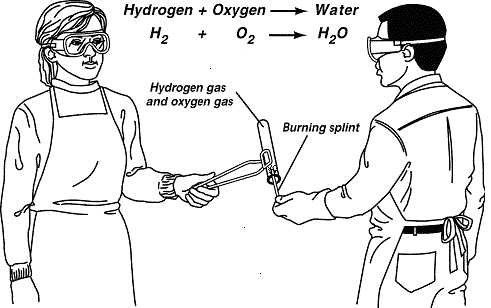
Identify the reactant(s) and product(s) of the reaction.
a)
All three are reactants and none are products.
b)
Hydrogen and water are the reactants, and oxygen is the product.
c)
Water and oxygen are the reactants, and hydrogen is the product.
d)
Hydrogen and oxygen are the reactants, and water is the product.
33.
How many Oxygen (O) atoms are in 2C2HO8Cl2
a)
2
b)
16
c)
8
d)
5
34.
Which number should go in the blank?
_ H2 + O2 -> 2 H2O
a)
1
b)
2
c)
3
d)
0
35.
Which number should go in the blank?
2 Na+ _ Cl2 -> 2 NaCl
a)
1
b)
2
c)
3
d)
0
36.
Which number should go in the blank?
Mn + _ HNO3 → Mn(NO3)2 + H2
a)
1
b)
2
c)
3
d)
0
37.
Mn + _ HNO3 → Mn(NO3)2 + H2
Which kind of reaction is this?
a)
synthesis
b)
decomposition
c)
single displacement
d)
double displacement
38.
H2 + O2 -> 2 H2O
Which kind of reaction is this?
a)
synthesis
b)
decomposition
c)
single displacement
d)
double displacement
39.
FeS + HCl ---> FeCl2 + H2S
Which kind of reaction is this?
a)
synthesis
b)
decomposition
c)
single displacement
d)
double displacement
40.
H2CO3 → H2O + CO2
Which kind of reaction is this?
a)
synthesis
b)
decomposition
c)
single displacement
d)
double displacement
41.
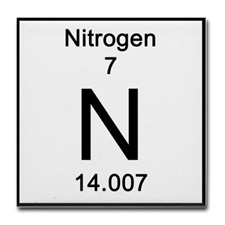
What is the number of protons that the element in this image contain?
a)
14
b)
7
c)
15
d)
18
42.
the central region of an atom where its neutrons and protons are is its 
a)
nucleus 
b)
electron cloud
c)
core 
d)
center 
43.
A "group" is a ____________ on the periodic table.
a)
column
b)
row
44.
A "period" is a ____________ on the periodic table.
a)
column
b)
row
45.
Helium, neon, argon, krypton, xenon, and radon are known as  _____________.
a)
halogens
b)
noble gases
c)
metalloids
d)
transition elements
46.
Is salt (NaCI) a compound or a element
a)
Compound
b)
element
47.
Rows ⋘---⋙ on the periodic table indicate the number of...
a)
groups
b)
energy levels
c)
valence electrons
d)
total electrons
48.
a)
Chlorine wants to lose 7 electrons
b)
Chlorine wants to gain 1 electron
c)
Chlorine is stable
49.
a)
This is an ionic bond with electrons shared
b)
This is an ionic bond with electrons transferred
c)
This is a covalent bond with electrons shared
d)
This is a covalent bond with electrons transferred
50.
What bonds to make an ionic bonds?
a)
metals and metals
b)
metals and nonmetals
c)
nonmetals and metalloids
d)
nonmetals and nonmetals
51.
During an endothermic reaction, energy will be...
a)
released
b)
absorbed
c)
destroyed
d)
created
52.
Which of these elements is a metal?
a)
argon
b)
carbon
c)
iron
d)
hydrogen
53.
How many valence electrons do elements in group 17 have in their outer energy level?
a)
7
b)
17
c)
1
d)
0
54.
The temperature at which a liquid changes into a gas
a)
boiling point
b)
melting point
c)
freezing point
d)
evaporation point
55.
Molecules in this state of matter move slowly and vibrate near each other
a)
solid
b)
liquid
c)
gas
56.
Molecules in this state of matter move very fast and are far apart
a)
solid
b)
liquid
c)
gas
57.
This state of matter has a definite volume and definite shape
a)
solid
b)
liquid
c)
gas
58.
Two samples of gold must have the same
a)
length
b)
volume
c)
mass
d)
density
59.

Balancing a chemical equation so that the same number of atoms of each element is found in both the reactants and the products is an example of?

a)

Activation energy

b)

The law of conservation of energy

c)

The law of conservation of mass

d)

A double-displacement reaction

60.

What is the number before a chemical formula called?

Example: 2H2 + O2 ---> 2H2O

a)

Coefficient

b)

Atom

c)

Subscript

d)

Equation

61.

What is the little number after an element in a chemical equation called?

Example: H2

a)

Coefficient

b)

Atom

c)

Subscript

d)

Equation

62.
How many Oxygens are in this molecule? 
(OH)2
a)
4
b)
1
c)
2
d)
3
63.
How many HCl molecules do you need to balance this equation? 
Mg +  __HCl --->  MgCl2 + H2
a)
1
b)
2
c)
3
d)
4
64.

Is the following equation balanced?

Al + O2 ---> 2Al2O3

a)

YES

b)

NO

65.

What coefficients are needed to balance the equation?

___Al + ___ O2 ---> 2Al2O3

a)

3,2

b)

3,4

c)

4 , 3

d)

4,2

66.

The information you collect while doing your experiment is called

a)

conclusions

b)

data

c)

hypotheses

d)

procedures

67.
The independent variable is the ONE thing you _____.
a)
change on purpose
b)
control or keep constant
c)
measure
68.

What is a constant/control in an experiment?

a)

Things that do not change in a experiment. It's the variable that stays the same. You can have many variables stay the same.

b)

It's the variables that the scientist changes in the experiment

c)

It's the variables that are being measured in an experiment

69.
If I ride my bike to school instead of walking, then I will get to school faster. What is the dependent variable?
a)
True
b)
How fast you get to school
c)
Riding a bike or walking
d)
False
70.
Why do elements bond?
a)
To be friends
b)
To create a new element
c)
To become stable
71.
How are covalent bonds formed?
a)
Sharing of electrons
b)
Transfer of electrons
72.
How are ionic bonds formed?
a)
Transfer of electrons
b)
Sharing of electrons
73.
Atoms are most stable when their outer shell is complete.
a)
true
b)
false
74.
Noble gases will form chemical bonds with other elements
a)
True
b)
False
c)
Sometimes
75.

The octet rules states that most elements want to have _____ valence electrons.

a)

2

b)

4

c)

6

d)

8

76.

How many valence electrons does Oxygen (O) have?

a)

6

b)

8

c)

15

d)

16

77.

What two types of atoms make a covalent bond?

a)

2 nonmetals

b)

2 metals

c)

1 metal and 1 nonmetal`

78.

Sodium and Bromine will make a _____ bond.

a)

ionic

b)

covalent

c)

metallic

79.

What is the correct formula for potassium oxide?

a)

KO2

b)

KO

c)

K2O

d)

OK2

80.

What is the correct name for SrF2?

a)

fluoride strontium

b)

strontium fluorine

c)

strontium diflluoride

d)

strontium fluoride

81.

What is the correct name for VBr3?

a)

vanadium(III) bromide

b)

vanadium bromide

c)

vanadium(III) bromate

d)

vanadium tribromide

82.

What is the correct name for CrO?

a)

chromium monoxide

b)

chromium(I) oxide

c)

chromium(II) oxide

d)

chromium oxide

83.

What is the formula for copper(II) phosphide?

a)

Cu2P3

b)

Cu3P2

c)

Cu3(PO4)2

d)

Cu2P

84.

What is the correct name for (NH4)2CO3?

a)

diammonium carbonate

b)

nitrogen hydrogen carbon oxide

c)

ammonium carbonate

d)

ammonium carbide

85.

What is the correct name for Zn(CN)2?

a)

zinc cyanide

b)

zinc dicyanide

c)

zinc carbide

d)

zinc(I) cyanide

86.

What is the correct name for Al2(SO4)3?

a)

aluminum(II) sulfate

b)

dialuminum trisulfate

c)

aluminum sulfide

d)

aluminum sulfate

87.
phosphorus trichloride
a)
KCl3
b)
PCl3
c)
K3Cl
d)
P3Cl
88.
silicon dioxide
a)
SO2
b)
NaO2
c)
SiO2
d)
SiO
89.

dinitrogen pentoxide

a)

N2O5

b)

NO5

c)

N5O2

d)

N2O6

90.
SiCl4
a)
silicon tetrachloride
b)
silicon quadchloride
c)
monosilicon tetrachloride
d)
silicon chloride
91.

P₄S₁₀

a)

tetrapotassium decasulfide

b)

phosphorus decasulfide

c)

tetraphosphorus decasulfide

d)

phosphorus (X) sulfide

92.

SO₃

a)

sulfate

b)

sulfur oxide

c)

sulfur trioxide

d)

monosulfur trioxide

93.

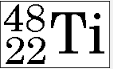
How many protons does this isotope of titanium have?

a)

48

b)

22

c)

26

d)

70

94.
What is the symbol for an alpha particle?
a)
42He
b)
0-1e
c)
0+1 e
d)
10n
95.

A physical blend of 2 or more components is called a ____.

a)

type of element

b)

mixture

c)

chemical reaction

d)

physical property

96.

The lemonade in this glass is what type of mixture?

a)

Heterogeneous

b)

Homogeneous

97.

A mixture in which the composition is NOT uniform throughout is called a _____ mixture.

a)

Heterogeneous

b)

Homogeneous

98.

Oil and water are each homogeneous mixtures. What happens to them when they are mixed?

a)

They form a heterogeneous mixture.

b)

They form a pure substance.

c)

They form a phase.

99.

What type of mixture is shown?

a)

Homogeneous

b)

Heterogeneous

100.

What type of substance is shown?

a)

compound

b)

heterogeneous mixture

c)

homogeneous mixture

d)

element

101.

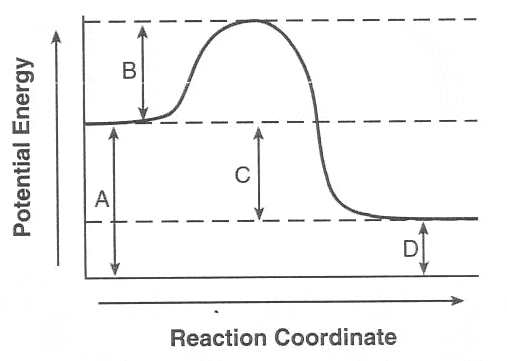
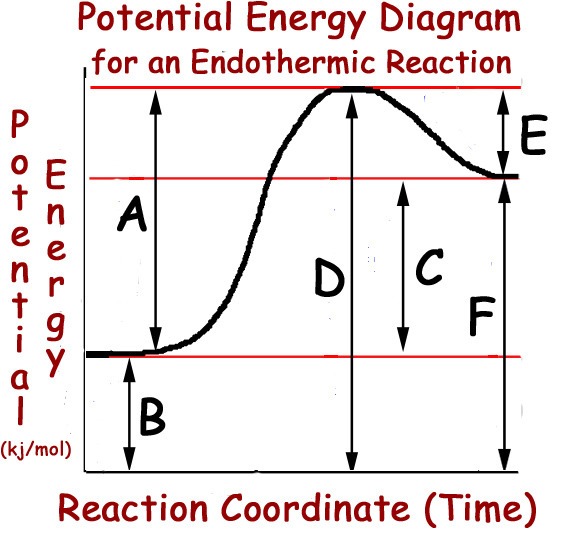
What letter represents the energy of the products?

a)

A

b)

B

c)

C

d)

D

102.

What letter represents the activation energy for the forward reaction?

a)

A

b)

B

c)

C

d)

D

e)

E

103.
What does temperature measure?
a)
Heat
b)
ºC
c)
Kinetic Energy
d)
Thermal Energy
104.
Graphite has a specific heat of 0.709 J/g⁰C. If a 20 gram piece of graphite is cooled from 38⁰C to 18⁰C, how much energy was lost by the graphite?
a)
283.6 J
b)
183.6 J
c)
203 J
d)
109 J