
 Worksheets
Unit 6: States of Matter, KMT, and Gas Laws
Total questions: 106
Worksheet time: 2hrs 57mins

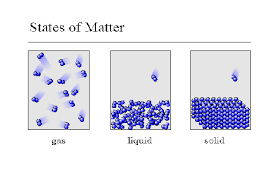
Which form of matter has a definite shape and takes up space (has definite volume)?
liquid
solid
gas
clay


The reverse of condensation is
sublimation
evaporation
boiling
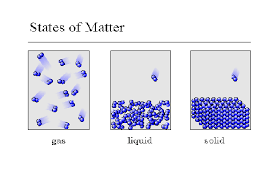


Which of the following is NOT a type of vaporization.
Boiling
Evaporizing
Melting
Which type of particles would move faster, solids or liquids?
Solid
Liquid
What type of particle would move slower, solids or gas?
Solid
Gas
Which of the following states of matter moves the fastest?
Solid
Liquid
Gas
If you have two different liquids at the same temperature one is smaller and one larger, which would move slower?
The smaller particle
The larger particle

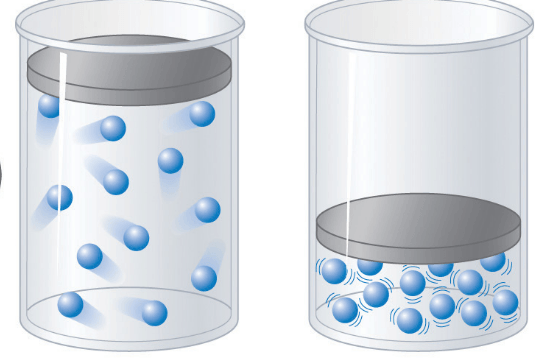
Which container will have a lower pressure?
left
right
they both have the same pressure




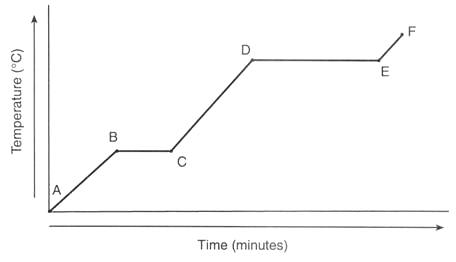


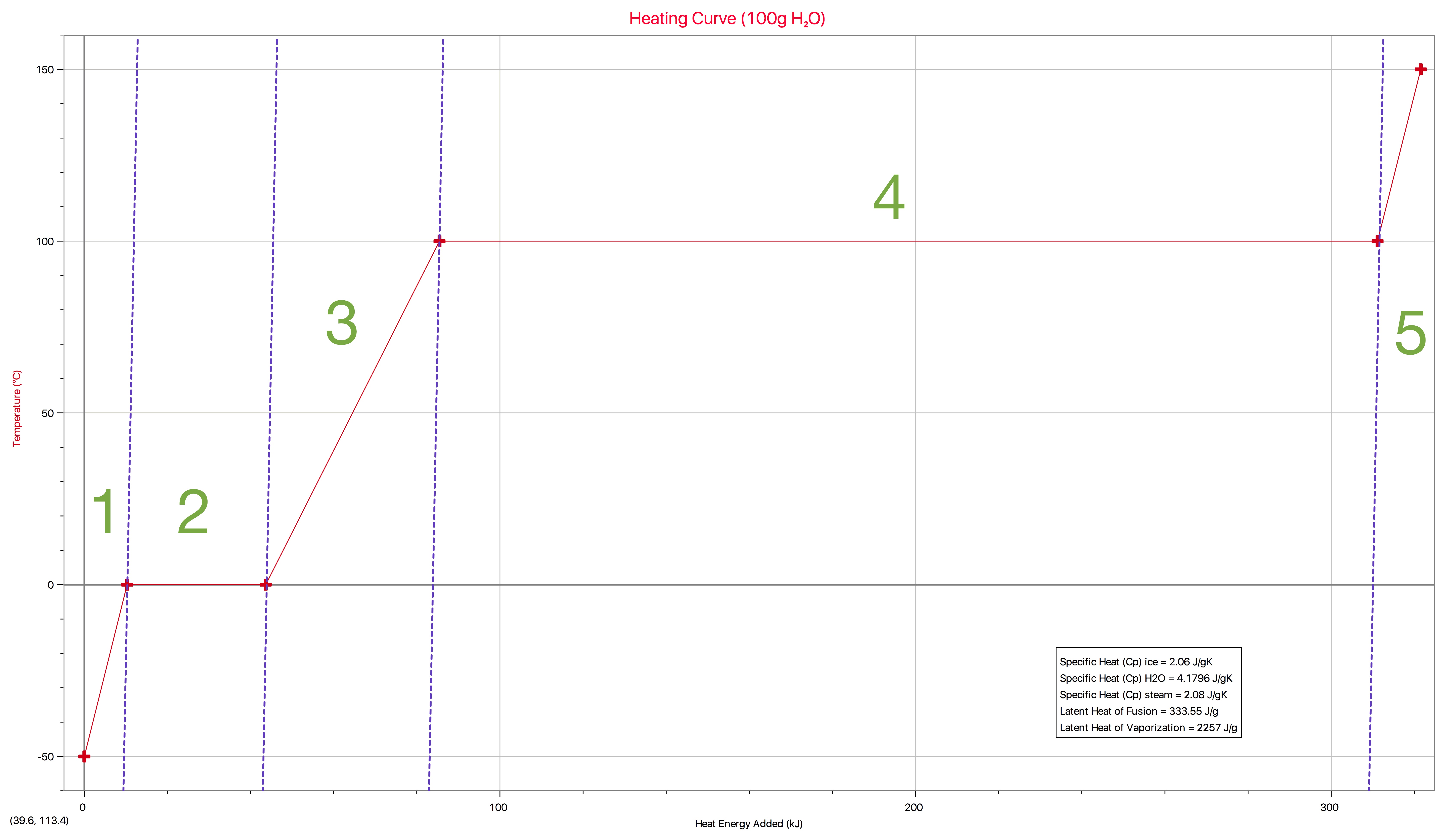
The heating curve for a sample of pure ethanol is provided
above. The temperature was recorded as a 50.0 g sample of
solid ethanol was heated at a constant rate. What is the boiling point of ethanol?
50K
150K
350K
550K

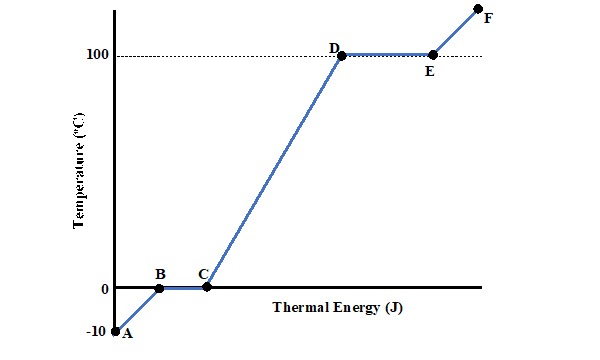
Between which two points is Heat of Fusion?
A <----> B
B <----> C
C <----> D
D <----> E
E <----> F
Between which two points is Heat of Vaporization?
A <----> B
B <----> C
C <----> D
D <----> E
E <----> F
Between which two points is Heat of Vaporization?
A <----> B
B <----> C
C <----> D
D <----> E
E <----> F


In amorphous solids, the atoms or molecules are held together in a completely random formation.
True
False

What variable is held constant in the diagram?
Volume
Moles
Pressure
No constant

What variable(s) is constant in the diagram?
moles
volume
temperature
Temperature and moles

What relationship can be interpreted from the diagram?
As volume decreases, pressure decreases
As pressure increases, volume increases
As moles increase, temperature increases
As pressure increases, volume decreases
According the KMT, the particles are in
different states
organized patterns
constant motion
various containers
According to the KMT, increasing the temperature of particles will
give off energy
increase motion
decrease volume
increase pressure
According to the KMT, the particles of the different states of matter differ in what two key aspects?
volume and mass
density and extention of interactions
temperature and freedom of motion
freedom of motion and extent of interactions
In which state of matter are the particles the farthest apart?
gas
liquid
solid


Which statement must be true of an ideal gas?
Gas particles are elastic and do not attract each other.
The kinetic energy of gas is dependent on temperature
Energy is not lost when gas particles collide with each other or with the walls of the container.
All of the above
If He atoms (mass 4), Ne atoms (10), Ar atoms (40) and Kr atoms (84) at the same temperature, what is true about their average kinetic energy?
He has the highest kinetic energy
Kr has the highest kinetic energy
Ar has the highest kinetic energy
They all have the same kinetic energy

