wayground logo

Free Printable Worksheets

Font size

S
M
L
XL
Worksheets

Unit 3 Review Atomic Structure

Total questions: 110

Worksheet time: 4hrs 40mins

Name
Class
Date
1.

What is the smallest unit of matter? It is composed of protons and neutrons, held together in the nucleus, and electrons around the nucleus in different electron orbitals, which form an electron cloud.

a)

cell

b)

nucleus

c)

atom

d)

electron

2.

What are any of the various self-contained units of matter or energy that are fundamental parts of all matter. These particles include electrons, protons, and neutrons.

a)

subatomic particles

b)

elements

c)

nucleus

d)

electron cloud

3.

What is a subatomic particle with a positive charge that is in the nucleus of an atom?

a)

neutron

b)

proton

c)

electron

d)

valence electron

4.

What is a subatomic particle without an electric charge, located in the nucleus of an atom?

a)

neutron

b)

proton

c)

electron

d)

valence electron

5.

What is a subatomic particle with a negative charge? It is found in the electron cloud surrounding the nucleus.

a)

neutron

b)

proton

c)

electron

d)

electron cloud

6.

What is the center of an atom containing protons and neutrons?

a)

nucleus

b)

neutron

c)

proton

d)

electron cloud

7.
Which subatomic particles are found in the nucleus of an atom?
a)
Protons and Electrons
b)
Protons and Neutrons
c)
Neutrons and Electrons
d)
Protons, Neutrons and Electrons
8.
What electrical charge does a proton have?
a)
+1
b)
0
c)
-1
d)
+2
9.
Complete the missing label on the diagram.
a)
Neutron
b)
Centre
c)
Nucleus
d)
Sub atomic particle
10.
Which particle is negatively charged?
a)
proton
b)
atom
c)
neutron
d)
electron
11.
In order for an atom to be neutral what has to be true?
a)
The atom has more protons than neutrons
b)
The atom has more neutrons than protons
c)
The atom has the same number of protons and neutrons
d)
The atom has the same number of protons and electrons
12.

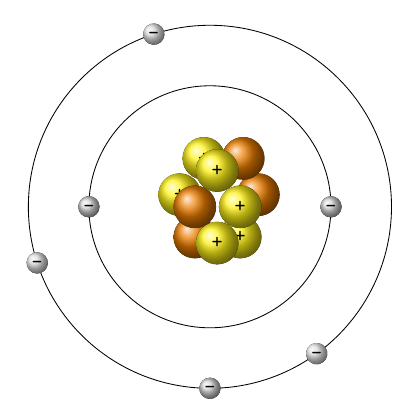
How many electrons does this atom have?

a)

2

b)

4

c)

6

d)

10

13.
Where is most of the mass in an atom located?
a)
in the nucleus
b)
in the protons
c)
in the neutrons
d)
in the electrons
14.

The smallest piece of an element:

a)

quark

b)

electron

c)

shell

d)

atom

15.

Which scientist discovered the electrons?

a)

Dalton

b)

Thomson

c)

Atristotle

d)

Bohr

16.

Bohr discovered that electrons are located in

a)

the nucleus

b)

inside protons

c)

electron cloud

d)

circular orbits around the nucleus

17.
In Dalton's Atomic Theory, all elements consist of __________ that cannot be divided.
a)
Atoms
b)
Parts
c)
Molecules
d)
Hydrogen
18.

Who was the Greek philosopher who called the smallest particle of matter an "atom"?

a)

Democritus

b)

Aristotle

c)

J.J Thompson

d)

Einstein

19.

Which of the following is/are conclusions based on Rutherford’s gold foil experiment?

a)

Atom is mostly empty space

b)

The nucleus is positively charged

c)

The atom has a small dense nucleus

d)

All answers are correct

20.
Who is the scientist who proposed the "solar system" model of an atom where the electrons orbit around the nucleus?
a)
Democritus
b)
Niels Bohr
c)
Ernest Rutherford
d)
Chadwick
21.
Which of the following is NOT a part of Dalton's atomic theory?
a)
All elements are composed of atoms.
b)
Atoms are alwyas in motion.
c)
Atoms of the same element are always identical.
d)
Atoms that combine do so in simple, whole-number ratios.
22.

Which one of the following is the correct order of scientific contribution of the atom?

a)

Dalton, Bohr, Rutherford, Democritus,Thomson

b)

Thomson, Democritus,Rutherford, Bohr, Dalton

c)

Dalton, Bohr, Rutherford, Democritus,Thomson

d)

Democritus, Dalton, Thomson, Rutherford, Bohr

23.

This force keeps the protons (+) together in the nucleus.

a)

Strong nuclear force

b)

Electromagnetic force

c)

Gravity

d)

Attraction

24.

This force means that opposite charges attract (+ and -) and the same charges repel (+,+)

a)

Strong nuclear force

b)

Electromagnetic force

c)

Gravity

d)

Attraction

25.

This means that 2 things do NOT want to be together.

a)

Repulsion

b)

Attraction

c)

Neutral

26.

This means that 2 things want to be together.

a)

Repulsion

b)

Attraction

c)

Neutral

27.

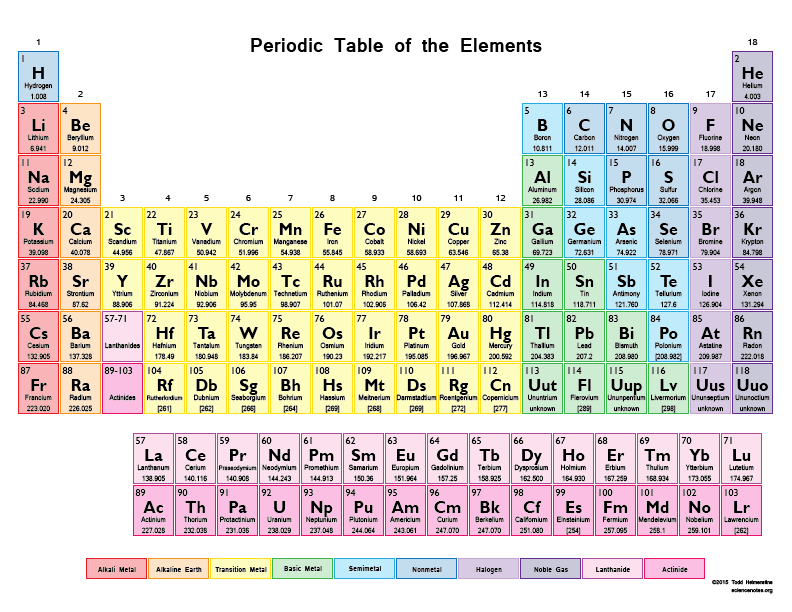
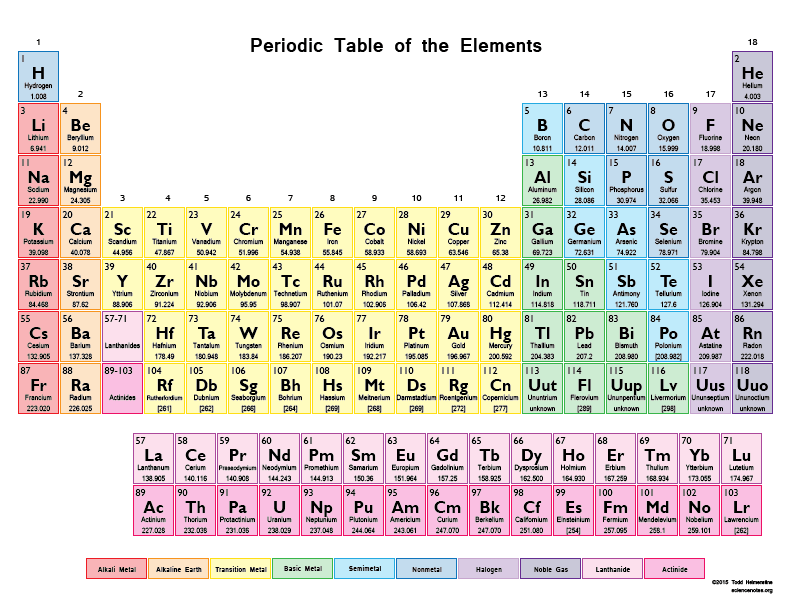
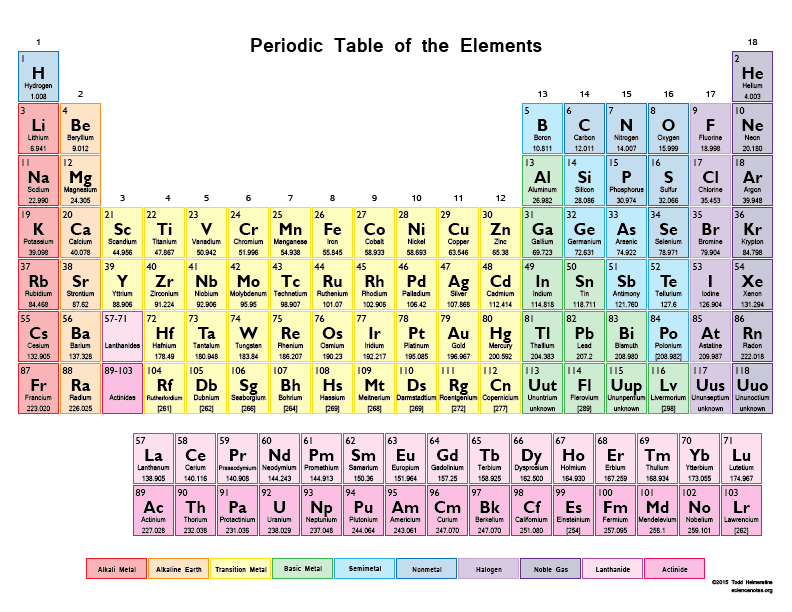
What does the number in the top left corner represent?

a)

protons

b)

neutrons

28.

What does the number under the symbol represent?

a)

atomic number

b)

atomic mass

c)

electron structure

29.

What number tells us how many electrons would be in a neutral atom?

a)

mass number

b)

atomic number

30.

What are the electrons in the outermost energy level called?

a)

valence electrons

b)

octet electrons

c)

energy levels

31.

What element has this symbol?

a)

kopernium

b)

kadium

c)

potassium

d)

phosphorus

32.

What element has this symbol?

a)

iron

b)

iradium

c)

sodium

d)

iridium

33.

These shaded elements are

a)

metals

b)

nonmetals

c)

metalloids

34.

These shaded elements are

a)

metals

b)

nonmetals

c)

metalloids

35.

These shaded elements are

a)

metals

b)

nonmetals

c)

metalloids

36.

The mass of an atom, approximately equal to the number of protons and neutrons in the atom

a)

Atomic Number

b)

Atomic Mass

c)

Chemical Formula

d)

Metalloids

37.

The number of protons in the nucleus of one atom of an element

a)

Atomic Number

b)

Atomic Mass

c)

Chemical Compound

d)

Metalloid

38.

The columns on a periodic table that arrange the elements by the number of electrons that are in the outermost shell; also called families

a)

Metalloids

b)

Groups

c)

Elements

d)

Periodic table of elements

39.

Elements that have properties of both metals and nonmetals; sometimes referred to as semiconductors

a)

Metalloids

b)

Atoms

c)

Neutrons

d)

Metals

40.

Elements that are typically solid, shiny, malleable,

and good conductors of heat and electricity; includes most elements

a)

Metalloids

b)

Atoms

c)

Neutrons

d)

Metals

41.

Elements that are typically not shiny, not

malleable, and poor conductors of heat and

electricity; usually gases or brittle solids

a)

Metalloid

b)

Metal

c)

Nonmetal

d)

Periodic Table of Elements

42.

A table in which all the known elements are arranged by properties and are represented by chemical symbols

a)

Reactivity

b)

Chemical Compound

c)

Chemical Formula

d)

Periodic Table of Elements

43.

Elements that have properties of both metals and nonmetals; sometimes referred to as semiconductors

a)

Metalloids

b)

Atoms

c)

Neutrons

d)

Metals

44.
What is the atomic number?
a)
the number of protons
b)
the number of protons and neutrons
c)
the number of neutrons
d)
the number of protons and electrons
45.
What is the mass number defined as?
a)
the number of protons
b)
the number of protons and neutrons
c)
the number of neutrons
d)
the number of protons and electrons
46.
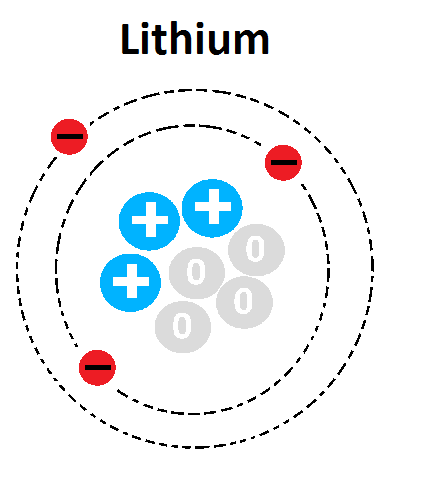
What is the atomic number of this atom?
a)
1
b)
3
c)
4
d)
7
47.

What is the mass number of this atom?

a)

1

b)

3

c)

4

d)

7

48.

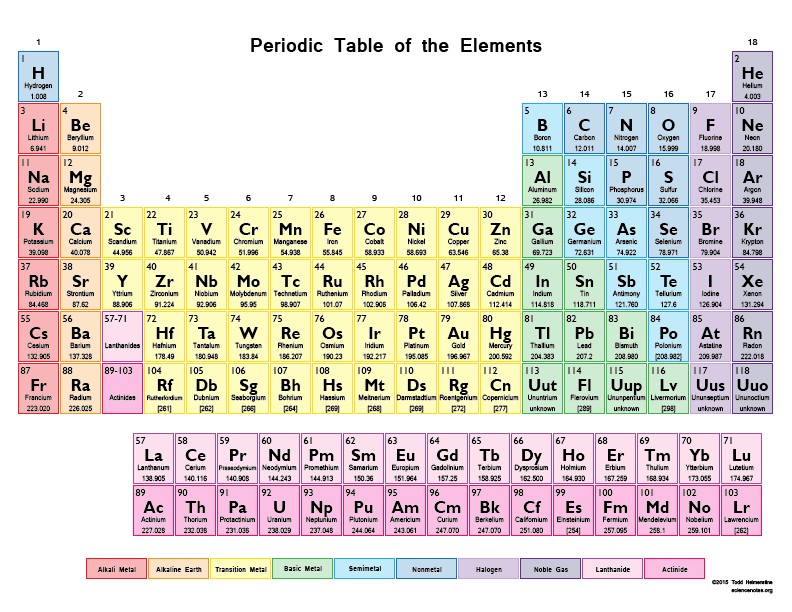
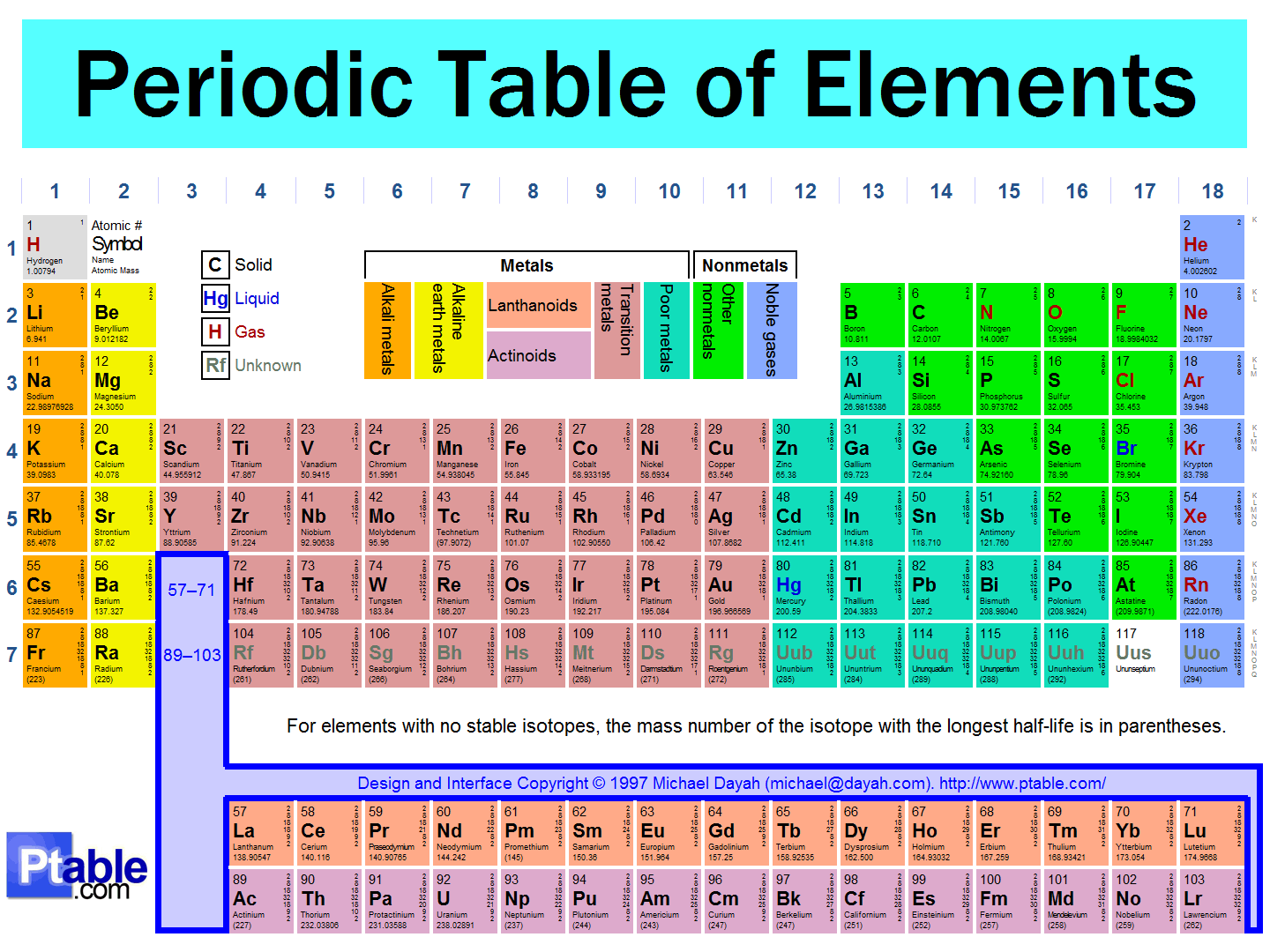
What is the atomic number of Barium, Ba? (enlarge the periodic table)

a)

20

b)

38

c)

56

d)

88

49.

How many protons are in a sodium atom, Na? (tap to enlarge the periodic table)

a)

Sodium has 1 proton.

b)

Sodium has 3 protons.

c)

Sodium has 11 protons

50.

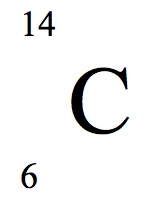
How many neutrons does C-14 contain? (tap to enlarge the image)

a)

6

b)

7

c)

14

d)

8

51.

How many neutrons does an atom of the isotope Neon-22 have? (tap to enlarge the image)

a)

12

b)

10

c)

22

d)

20

52.

How many electrons are in an atom with an atomic number of 50?

a)

5

b)

8

c)

50

d)

2

53.

ALL atoms of the same element have:

a)

same number of protons

b)

same number of nucleons

c)

different number of neutrons

d)

different number of electrons

54.
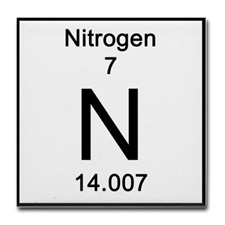
What is the number of protons that the element in this image contain?
a)
14
b)
7
c)
15
d)
18
55.
Four isotopes of lead include lead-204, lead-206, lead-207, and lead-208.  The average atomic mass of lead is 207.2.  Which isotope of lead is likely to be the most abundant.
a)
204
b)
206
c)
207
d)
208
56.
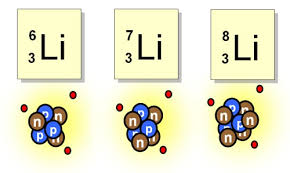
which atom has  4 neutrons?
a)
Li-6
b)
Li-7
c)
Li-8
d)
they have the same # of neutrons
57.
What is the mass number of this atom?
a)
9
b)
10
c)
19
d)
27
58.
What is the mass number of this atom?
a)
1
b)
2
c)
3
d)
4
59.

A specific atom of molybdenum has an atomic number of 42 and a mass number of 96. How many protons are in this atom of molybdenum?

a)

21

b)

54

c)

42

d)

96

60.
What is the formula to solve for the neutron?
a)
Mass + Atomic Number= Neutrons
b)
Mass x Atomic Number = Neutrons
c)
Mass - Atomic Number = Neutrons
d)
Mass + Number of Protons = Neutron
61.
An atom with 19 protons, and 19 electrons and a mass of 39 has how many neutrons?
a)
19
b)
39
c)
20
d)
58
62.

What can you do to find the number of neutrons in an atom?

a)

It's the same as the atomic #.

b)

Ask Sierra!

c)

Subtract the atomic # (protons) from the mass # (protons and neutrons)

d)

Multiply the mass # (protons and neutrons) and the atomic # (protons)
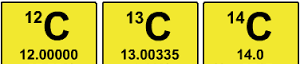
63.
What do these isotopes of carbon all have in common?
a)
neutrons & mass number
b)
atomic number and neutrons
c)
atomic number and electrons
d)
protons, atomic number, and mass number
64.
How many neutrons does the isotope of lithium have?
a)
8
b)
3
c)
4
d)
5
65.
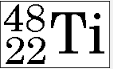
How many protons does this isotope of titanium have?
a)
48
b)
22
c)
26
d)
70
66.
What quantities vary between isotopes of an element?
a)
protons, electrons, and atomic mass
b)
protons, electrons, and atomic number
c)
neutrons and electrons
d)
neutrons and atomic mass
67.
Isotopes are atoms of the same element with different #’s of __________ & therefore different __________.
a)
n0 ;  atomic #’s
b)
p+ ; atomic #’s
c)
e- ; atomic masses
d)
n0 ; atomic masses
68.
How many neutrons does the isotope below have?     89 36Kr
a)
53
b)
36
c)
89
d)
125
69.
Two isotopes of carbon are carbon-12 and carbon-14.  These isotopes differ from one another by two protons.
a)
true
b)
false
70.
How many electrons are in an atom that has an atomic number of 34, an atomic mass of 74 and a charge of -2?
a)
34
b)
36
c)
2
d)
40
71.
What is an isotope? 
a)
A charged atom
b)
An atom with different amounts of neutrons
c)
An atom with different amounts of protons
d)
A neutral atom
72.
The photo above shows the isotopic notation for which isotope?
a)
Carbon 12
b)
Carbon 13
c)
Carbon 14
d)
Carbon 15
73.
The period for Bromine is ___________.
a)
3
b)
2
c)
4
74.
Beryllium is in group number______.
a)
Group 2
b)
Group 3
c)
Group 4
d)
Group 7
75.
Elements in the same ________ are more chemically similar.
a)
group
b)
period
c)
club
d)
table
76.

Name group 1 on the periodic table (hydrogen is an exception).

a)
alkali metals
b)
alkaline earth metals
c)
noble gases
noble gases
d)
halogens
77.

Name group 2 on the periodic table.

a)
alkali metals
b)
alkaline earth metals
c)
noble gases
d)
transition metals
78.

Name group 18 on the periodic table.

a)
alkali metals
b)
alkaline earth metals
c)
transition metals
d)
noble gases
79.

Name groups 3 - 12 on the periodic table.

a)
noble gases
b)
halogens
c)
metalloids
d)
transition metals
80.

Name group 17 on the periodic table.

a)
transition metals
b)
metalloids
c)
halogens
d)
alkali metals
81.
Which group has the most reactive nonmetals?
a)
alkali metals
b)
noble gases
c)
metalloids
d)
halogens
82.
Where are the nonmetals located on the periodic table?
a)
top left corner
b)
bottom left corner
c)
top right corner
d)
bottom left corner
83.
Which statement is true about the carbon family?
a)
They are all non-metals.
b)
They all have four valence electrons.
c)
They are all metals.
d)
They do not react with other elements.
84.
Which statement is true about the alkaline earth metal family?
a)
They have 2 valence electrons.
b)
They are found on the right side of the periodic table.
c)
They form -2 charges.
d)
They tend to gain valence electrons.
85.

The vertical (up and down) columns in the Periodic Table are called

a)

groups

b)

towers

c)

periods

d)

atomic numbers

86.
The Modern Periodic Table of Elements is arranged by
a)
atomic mass
b)
atomic number
c)
valence electrons
d)
number of isotopes
87.
Which is a halogen?
a)
Helium
b)
Chlorine
c)
Oxygen
d)
Neptune
88.

True or False: The reactivity of metals tends to decrease as you move from left to right across the periodic table.

a)

True

b)

False

89.
an element will always have the same number of 
a)
neutrons
b)
protons
c)
isotopes
d)
atoms
90.
How are electrons arranged in an atom?
a)
In groups of five
b)
In energy levels
c)
By color
d)
By shape
91.
Isotopes are elements with a different amount of
a)
protons
b)
neutrons
c)
electrons
d)
atoms
92.
What does the nucleus of an atom contain?
a)
Electrons and neutrons
b)
Protons and neutrons
c)
Neutrinos and positrons
d)
Electrons and megatrons
93.
What is the name of this element?
a)
Helium
b)
Hydrogen
c)
Argon
d)
Silver
94.
What is the name of this element?
a)
Lithium
b)
Boron
c)
Carbon
d)
Neon
95.
What is the mass number of this atom?
a)
1
b)
3
c)
4
d)
7
96.
What is the atomic number of this atom?
a)
2
b)
4
c)
6
d)
none of the above
97.

What is the mass number of this atom of Chlorine?

a)

17

b)

18

c)

35

d)

35.453

98.

What is the atomic number of this element?

a)

17

b)

18

c)

35

d)

35.453

99.

How many electrons can fit on the 1st energy level (orbital) for any Bohr Model?

a)

2

b)

6

c)

8

d)

10

100.

What element is represented in this Bohr Model?

a)

Carbon

b)

Hydrogen

c)

Aluminum

d)

Lithium

101.

What is a Bohr Model?

a)

a simplified representation of an atom

b)

vertical column in periodic table

c)

horizontal row in periodic table

d)

Only shows the element symbol and it's outer most electron shell

102.

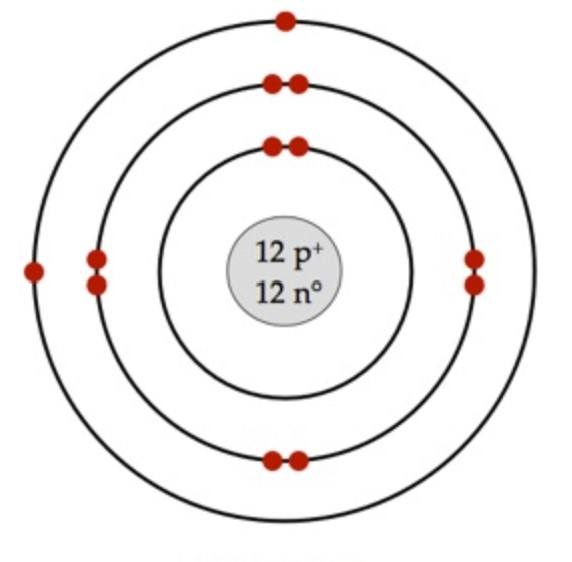
Which element does this Bohr model represent?

a)

Aluminum

b)

Silicon

c)

Magnesium

d)

Cobalt

103.

What is the mass of this atom?

a)

9

b)

10

c)

19

d)

28

104.

What element does this Bohr model represent?

a)

Chromium

b)

Magnesium

c)

Carbon

d)

Krypton

105.

The maximum number of electrons that can fit into the 2nd energy level is

a)

2

b)

8

c)

18

d)

32

106.

How many electrons can an d sublevel hold?

a)

5

b)

10

c)

6

d)

2

107.

How many f orbitals can an f sublevel hold?

a)

1

b)

7

c)

5

d)

14

108.

How many orbitals does an s sublevel have?

a)

1

b)

3

c)

5

d)

7

109.
How many electrons can the first energy level hold?
a)
1
b)
2
c)
8
d)
0
110.

Which Bohr model represents Neon?

a)
b)
c)
d)