
 Worksheets
1st Semester Exam Review
Total questions: 108
Worksheet time: 1hrs 8mins
Elements larger than (a) are not made inside a star.
Which of the following is a possible end of the stellar life cycle of an AVERAGE star?
white dwarf
black hole
supernova
neutron star
What color star is the hottest?
(a)
A cloud of dust and gas in space is called a (a)
The only star is our solar system is the (a) .
Neptune is a-
gas giant
terrestrial planet
icy giant
Jupiter is a-
gas giant
terrestrial planet
icy giant
Saturn is a-
gas giant
terrestrial planet
icy giant
Uranus is a-
gas giant
terrestrial planet
icy giant
Mercury is a-
gas giant
terrestrial planet
icy giant
Earth is a-
gas giant
terrestrial planet
icy giant
Venus is a-
gas giant
terrestrial planet
icy giant
Mars is a-
gas giant
terrestrial planet
icy giant
Which planet is Earth's twin?
(a)
(a) has a massive storm that has raged for over a century.
(a) is known as the red planet that has polar ice caps made of dry ice.
Which of the following is a donut shaped ring of icy objects beyond Neptune?
Oort cloud
Which of the following is a rock made up of minerals and metals that orbits the Sun?
satellite
Asteroid
Which of the following is currently the accepted theory for the formation of the solar system?
solar nebular hypothesis
accretion theory
protoplanet theory
Which of the following is a proposed huge sphere of ice and rocks?
Which of the following is an object that revolves around a planet?
meteor
satellite
Which of the following did Galileo discover?
The moon has craters.
The Earth is the center of the solar system.
Our moon is called Luna.
Which of the following is a large group of stars?
asteroid
comet
galaxy
solar system
Which of the following is the science of the origin and development of the universe?
Which of the following states that the further away a galaxy is, the faster it is moving away?
Big Bang Theory
Which of the following states that the universe bagan as a point and has been expanding ever since?
Hubble's law
Doppler Effect
Which of the following determines the path a star takes during its life cycle?
gravity
mass
Which of the following describes the Sun?
red supergiant
white dwarf
main sequence star
What force causes a stellar nebula to contract and form a protostar?
(a)

According the the HR diagram, which star is the coldest?
Which of the following is a possible end to the life cycle of a MASSIVE star?
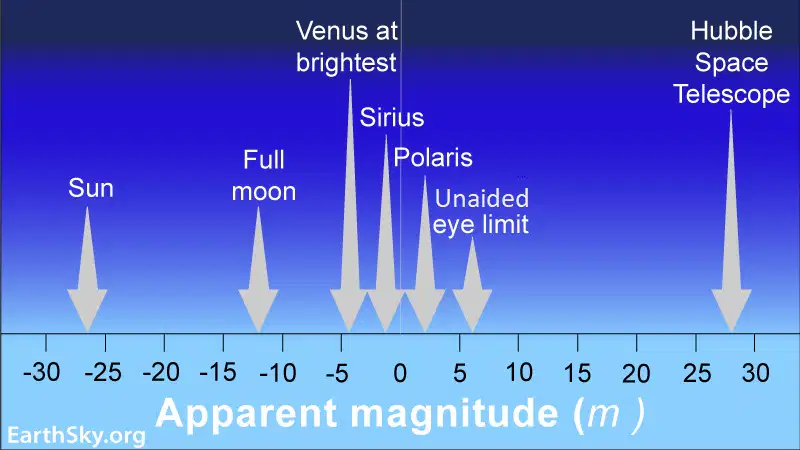
Which of the following is the brightest?
Hubble Space telescope
Sirius
full moon
Polaris
Which color light has the highest energy?
Which of the following has the LOWEST energy?
UV rays
gamma rsyd
yellow light
radiowaves
Which of the following is a key point of the Big Bang theory? Check ALL that apply.
The universe is expanding.
Stars come from the stellar nebula.
The universe started out small, hot and dense.
As the universe expands, it is cooling down.
"Cooking" elements by converting lighter elements into heavier ones is called-
(a)
According to scientist, which of the following was formed during the Big Bang?
Which of the following is evidence of the Big Bang theory?
gamma rays
Hubble's law
cosmic background microwave radiation
UV rays
If a wave has high energy, which of the following is TRUE? Check ALL that apply.
Which of the following is a natural satellite?
asteroid
Pluto
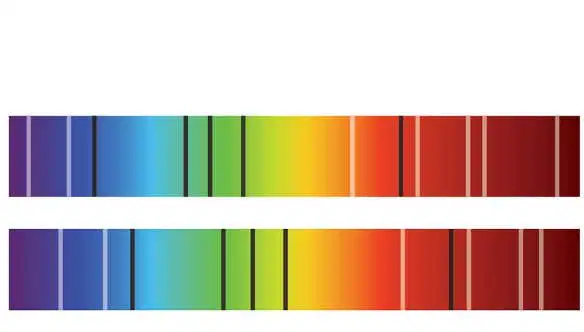
Compared to the top spectrum, the galaxy represented by the spectrum on the bottom is-
Check ALL that apply.
red shifted
blue shifted
moving away
moving toward
Which of the following describes the shape of a planet's orbit?
The asteroid belt is between Mars and
(a)
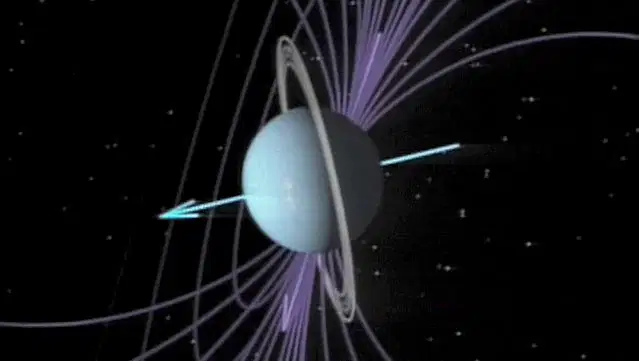
Which planet is shown in the picture?
Uranus

The sphere on the outside is referred to as-
Oort cloud
Kuiper belt
asteroid belt
Our solar system incudes our (a) and everything attached to it by gravity.
Why is Pluto no longer a planet?
Pluto is too close to the sun to be considered a planet.
Pluto is made of different materials than other planets.
Pluto does not have a moon.
It is not big enough for its gravity to clear away objects of similar size near its orbit around the Sun.

What type of galaxy is shown?
irregular galaxy
Which of the following is the correct order of the planets starting at the sun?
Which of the following is the change in a wave's frequency that occurs due to the relative motion of the wave as it moves toward or away from an observer?
Hubble's effect
A group of stars is called a -
(a)

What is position 2 called?
(a)
What is position 1 called?
(a)
Which scientist collected large amounts of data about the planets before the invention of the telescope?
Brahe
Galileo
Kepler
Ptolemy
Who proposed the geocentric model of the solar system?
Kepler
Brahe
Who used data collected by someone else to develop 3 laws of planetary motion?
Kepler
Brahe
The eccentricity of an ellipse is between zero and -
(a)
The two main sources of heat inside the earth are-
radioactive decay of isotopes
UV rays
primordial heat
magma
Which of the following processes are the primary sources of heat transfer in the Earth's interior?
Conduction
convection
condensation
transmission
Isotopes are different forms of the same element. They contain the same number of protons but a different number of:
(a)
The color of the powder of a mineral is called-
How light is reflected from a mineral's surface is called-
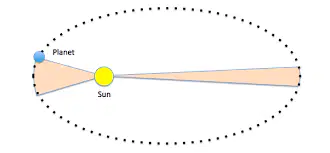
If the time it takes a planet to travel the 2 highlighted paths on the orbit is equal, the areas of the shaded spaces are also-
(a)
The two types of seismic waves are
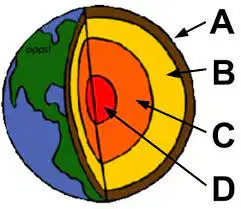
The layer labelled A is the-
crust
inner core
outer core
mantle
The layer labelled B is the-
crust
inner core
outer core
mantle
The layer labelled C is the-
crust
inner core
outer core
mantle
The layer labelled D is the-
crust
inner core
outer core
mantle

The outmost layer of the diagram is the-
exosphere
stratosphere
troposphere
thermosphere
The innermost layer of the diagram is the-
exosphere
stratosphere
troposphere
thermosphere
Which mineral is found in the highest percentage in the Earth's crust?
(a)
Which of the following has a regular repeating pattern?
minerals
rocks
both minereals and rocks
Which of the following is naturally occurring?
minerals
rocks
both minereals and rocks
Which of the following is unorganized in structure?
minerals
rocks
both minereals and rocks
Which of the following is only contains nonliving matter?
minerals
rocks
both minereals and rocks
How are igneous rocks formed?
recrystallization
crystallization
deposition, burial, and lithification
How are metamorphic rocks formed?
recrystallization
crystallization
deposition, burial, and lithification
How are sedimentary rocks formed?
recrystallization
crystallization
deposition, burial, and lithification
Which of the following states the greater a force applied to an object, the greater it’s acceleration will be, and the heavier the object, the slower its acceleration will be?
Newton’s first law
Newton’s second law
Newton’s third law
Which of the following states that a planet sweeps out equal area of the ellipse over equal intervals?
Kepler’s 1st law
Kepler’s 2nd law
Kepler’s 3rd law
Which of the following states that planets move in elliptical orbits with the Sun at one focus?
Kepler’s 1st law
Kepler’s 2nd law
Kepler’s 3rd law
Which of the following states that the square of the period of any planet is proportional to the cube of the semi major axis of its orbit?
Kepler’s 1st law
Kepler’s 2nd law
Kepler’s 3rd law
If the Earth is at the center of a solar system model, it is referred to as-
(a)
If the Sun is at the center of a solar system model, it is referred to as-
(a)
Which of the following states that for every action there is an equal and opposite reaction?
Newton’s 1st law
Newton’s 2nd law
Newton’s 3rd
Which of the following states that an object at rest will remain at rest, and an object in motion will continue in motion unless acted upon by an unbalanced force?
Newton’s 1st law
Newton’s 2nd law
Newton’s 3rd
As one gets closer to the center of the Earth, the temperature-
Increases
Decreases
Stays the same
Which of the following heat transfers occurs through convection?
From inner core to outer core
Through the outer core
Through the mantle
Through both the outer core and mantle
Which of the following heat transfers occurs through conduction?
Through the atmosphere
Through the mantle
Through the crust
Through the outer core
The way a mineral breaks is called
(a)
Celestite (SrSO4) is classified as a-
Native element
Sulfate
Sulfide
Hydroxide
Gold (Au) classified as a-
Native element
Sulfate
Sulfide
Hydroxide
Sphalerite (ZnS) classified as a-
Native element
Sulfate
Sulfide
Hydroxide
Pyrochroite(Mn(OH)2) classified as a-
Native element
Sulfate
Sulfide
Hydroxide
Witherite (BaCO3) is classified as a-
Silicate
Oxide
Carbonate
Halide
Cuprite (Cu2O) is classified as a(n)
Silicate
Oxide
Carbonate
Halide
Cerargyrite (AgCl) is classified as a(n)
Silicate
Oxide
Carbonate
Halide
Quartz (SiO2) is classified as a-
(a)
Which of the following is made of melted rocks in the hot, deep crust and upper mantle?
Igneous rocks
Metamorphic rocks
Sedimentary rocks
Which of the following is made from weathering and erosion of rocks exposed at the surface?
Igneous rocks
Metamorphic rocks
Sedimentary rocks
Which of the following is made from rocks under high pressure and temperature in the deep crust and upper mantle?
Igneous rocks
Metamorphic rocks
Sedimentary rocks
When igneous and metamorphic rocks undergo weathering, they become-
Sediment
Magma
Igneous rocks
Sedimentary rocks
When metamorphic rocks are heated, they become-
Sediment
Magma
Igneous rocks
Sedimentary rocks
Which of the following is formed as a result of heat and has no distinguishable layers?
Non-foliated metamorphic rocks
Foliated metamorphic rocks
Organic non-clastic rocks
Organic clastic rocks
Which of the following is formed as a result of pressure and has distinguishable layers?
Non-foliated metamorphic rocks
Foliated metamorphic rocks
Organic non-clastic rocks
Organic clastic rocks
Which of the following is formed as a result of water evaporating?
Non-foliated metamorphic rocks
Foliated metamorphic rocks
Organic non-clastic rocks
Chemical non-clastic rocks
Which of the following is formed from the remains of plants and animals?
Non-foliated metamorphic rocks
Foliated metamorphic rocks
Organic non-clastic rocks
Chemical non-clastic rocks
Extrusive/volcanic and intrusive/plutonic are examples of (a) rocks.

