wayground logo

Free Printable Worksheets

Font size

S
M
L
XL
Worksheets

HGH Semi-Final Study Guide

Total questions: 123

Worksheet time: 2hrs 42mins

Name
Class
Date
1.

_____ location is the exact spot on earth a place is found.

a)

absolute

b)

exact

c)

pinpoint

d)

accurate

2.
This location tells you EXACTLY where something is
a)
absolute location
b)
relative location
3.
Using lines of latitude and longitude to find an exact location is...
a)
Absolute Location
b)
Relative Location
c)
Prime Meridian
d)
Place
4.
Mexico is south of the United States is an example of...
a)
Absolute Location
b)
Relative Location
c)
Prime Meridian
d)
Bad Dirtections
5.
What is the Absolute location of Los Angeles?
a)
118 degrees W by 36 degrees N
b)
118 degrees W by 34 degrees N
c)
118 degrees N by 36 degrees W
d)
118 degrees N by 34 degrees W
6.
Where did the diseases and germs carried by the Spaniards come from?
a)
Europe
b)
Asia
c)
Africa
d)
North America
7.
What gave some cultures a head start in establishing civilizations?
a)
Superior weapons
b)
Superior medicines
c)
Superior agriculture
d)
Superior fertility
8.
_______is a productive way to get food because it provides a stable source of food
a)
Hunting & Gathering
b)
Farming
c)
Fishing
d)
Shopping
9.
_______ is an inefficient way to get food because it is unpredictable and takes a lot of time
a)
Hunting & Gathering
b)
Farming
c)
Fishing
d)
Shopping
10.

How climate and landscape affect lifestyle

a)

Geography

b)

Religion

c)

Economics

d)

Achievements

11.

Is a civilization isolated, or is it open to cultural exchange and invasion?

a)

Economics

b)

Religion

c)

Geography

d)

Politics

12.

Who runs a society and how do they do it?

a)

Social Structure

b)

Religion

c)

Politics

d)

Geogrpahy

13.

Who has power, and how is it used?

a)

Geography

b)

Politics

c)

Achievements

d)

Religion

14.

How a society uses its resources

a)

Achievements

b)

Politics

c)

Religion

d)

Economics

15.

How resources are distruibited and traded

a)

Economics

b)

Politics

c)

Religion

d)

Social Structure

16.

A society’s belief about the after life

a)

Politics

b)

Religion

c)

Geography

d)

Economics

17.

What are moral rules you should live by?

a)

Achievements

b)

Geography

c)

Economics

d)

Religion

18.

The different levels or classes in a society

a)

Social Structure

b)

Religion

c)

Achievements

d)

Politics

19.

Who is the least and most important in a society?

a)

Economics

b)

Geography

c)

Social Structure

d)

Politics

20.

Who was Copernicus?

a)

Published Concerning the Revolution of the Celestial Spheres and said that the Earth was not the center of the universe

b)

An ancient Greek doctor whose writings about the human body became the basis for medical knowledge in the Middle Ages

c)

Nicknamed the father of experimental design he urged that mathematics and experimentation be used to study the laws of nature

d)

He was a mathematician and scientist who discovered laws of motion, the law of gravity, and the law of inertia.

21.

Who was Galileo?

a)

An ancient Greek doctor whose writings about the human body became the basis for medical knowledge in the Middle Ages

b)

He discovered the Laws of Planetary Motion which confirmed that planets have an oval shaped orbit around the sun

c)

Nicknamed the father of experimental design he urged that mathematics and experimentation be used to study the laws of nature

d)

Known as the father of microbiology, he used a microscope to discover that a single drop of water can contain hundreds of microorganisms

22.

Who was Johannes Kepler?

a)

An ancient Greek doctor whose writings about the human body became the basis for medical knowledge in the Middle Ages

b)

He discovered the Laws of Planetary Motion which confirmed that planets have an oval shaped orbit around the sun

c)

Known as the father of microbiology, he used a microscope to discover that a single drop of water can contain hundreds of microorganisms

d)

He was a mathematician and scientist who discovered laws of motion, the law of gravity, and the law of inertia.

23.

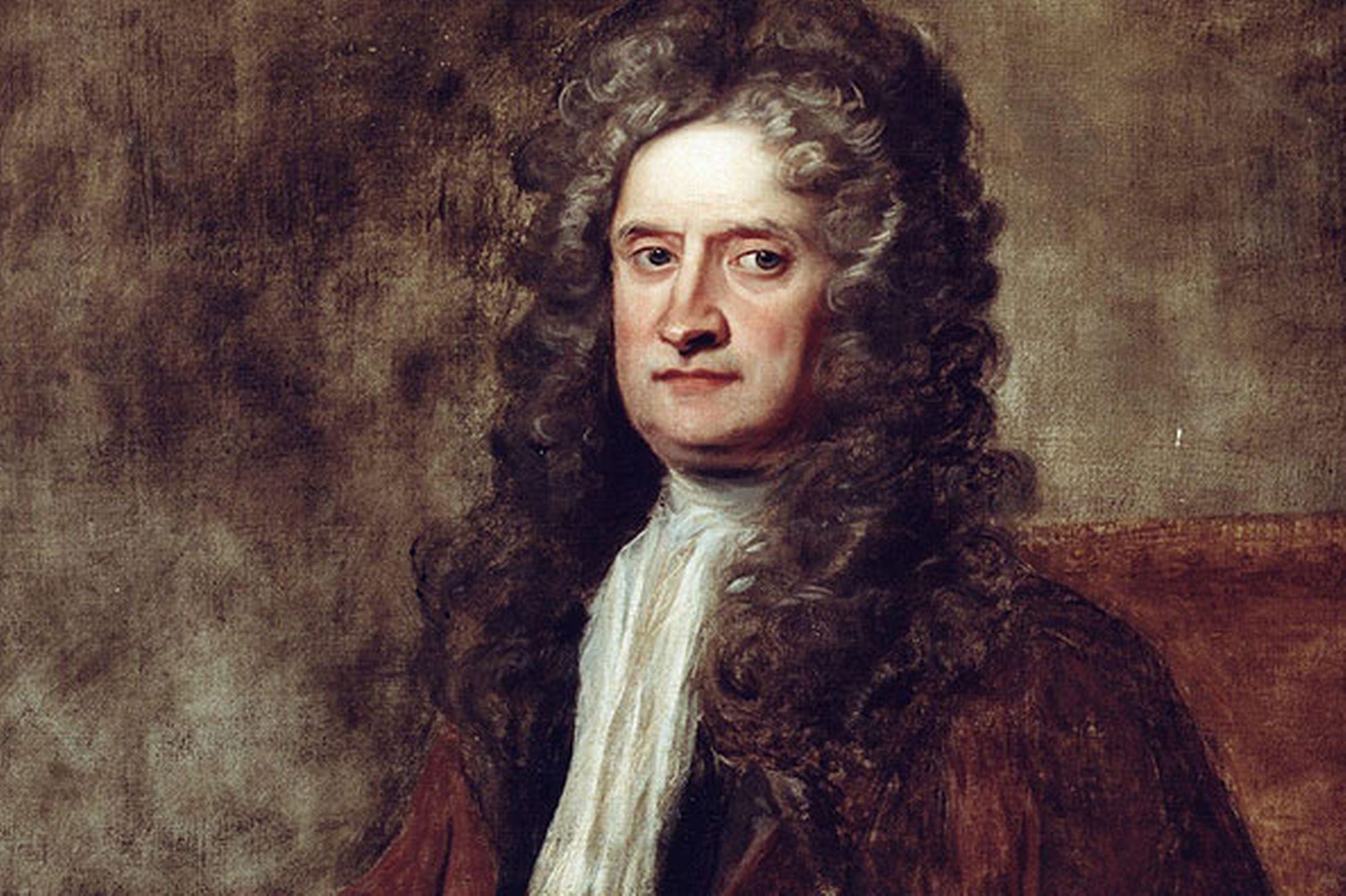
Who was Sir Isaac Newton?

a)

He discovered the Laws of Planetary Motion which confirmed that planets have an oval shaped orbit around the sun

b)

Nicknamed the father of experimental design he urged that mathematics and experimentation be used to study the laws of nature

c)

Known as the father of microbiology, he used a microscope to discover that a single drop of water can contain hundreds of microorganisms

d)

He was a mathematician and scientist who discovered laws of motion, the law of gravity, and the law of inertia.

24.

Who was Francis Bacon?

a)

He was a mathematician and scientist who discovered laws of motion, the law of gravity, and the law of inertia.

b)

He studied the heart and circulation of the blood through the body

c)

Wrote about the experimental science, encouraged the use of carefully organized investigation to find the truth

d)

He studied anatomy - the structure of the body - by dissecting animals and human being
25.

Who was Andreas Vesalius?

a)

He was a mathematician and scientist who discovered laws of motion, the law of gravity, and the law of inertia.

b)

He studied the heart and circulation of the blood through the body

c)

Wrote about the experimental science, encouraged the use of carefully organized investigation to find the truth

d)

He studied anatomy - the structure of the body - by dissecting animals and human being

26.
During the Scientific Revolution the heliocentric view of the universe was first proposed by __.
a)
Ptolemy
b)
Francis Bacon
c)
Isaac Newton
d)
Nicolaus Copernicus
27.
The Scientific Revolution challenged many medieval ideas about science. All of the following were astronomers during the Scientific Revolution except __.
a)
Nicolaus Copernicus
b)
Ptolemy
c)
Galileo Galilei
d)
Johannes Kepler
28.
The idea that the earth is the center of the universe is the ___________ theory.
a)
geocentric
b)
heliocentric
c)
earthcentric
d)
world's worst
29.
During the scientific  revolution people started using experiments to test theories rather than just believing the ___________
a)
King
b)
Family
c)
Church
d)
Sir Salami 
30.
He used math to prove that the planetary orbits were elliptical.
a)
Copernicus
b)
Clovis I
c)
Kepler
d)
Pony Boy
31.
Which scientist developed laws of motion?  
a)
Ptolemy
b)
Copernicus
c)
Galileo
d)
Newton
32.
He pioneered the use of inductive reasoning for the use in the scientific method.
a)
Kepler
b)
Bacon
c)
Galen
d)
Aristotle
33.
Which of the following was developed by Isaac Newton?
a)
the heliocentric theory
b)
the scientific method
c)
the theory of scientifc rationalism
d)
the theory of universal gravitation
34.
Who  Discovered circulation of blood in the body ?
a)
Edward Jenner
b)
 James Blundell 
c)
Anton van Leeuwenhoek
d)
William Harvey 
35.
Martin Luther was unhappy with what he saw as a corrupt Catholic Church. What he see as the final authority on religious matters?
a)
The Pope
b)
The Catholic priests
c)
sermons
d)
The Bible
36.
He correctly proved how the blood was circulated in the human body
a)
William Shakesphere
b)
William Harvey
c)
Sir Issac Newton
d)
Petrarch
37.
Who was Rene Descartes?
a)
Philosopher
b)
Anatomist
c)
French Noble
d)
Writer
38.

Which of these is not a quote from Descartes?

a)

”Cogito ergo sum. (I think; therefore I am.)”

b)

”Each problem that I solved became a rule, which served afterwards to solve other problems.”

c)

”Each problem that I solved became a rule, which served afterwards to solve other problems.”

d)

"Anyone who has never made a mistake has never tried anything new"

e)

”The reading of all good books is like a conversation with the finest minds of past centuries.”

39.
Who was the German monk and teacher of theology, who set off the chain reaction we know as the Reformation?
a)
Tetzel
b)
Martin Luther
c)
Johann Gutenburg
d)
Henry VIII
40.
The term for the movement started by Luther and his followers is often misleading. What is it?
a)
Renaissance
b)
Reformation
c)
Lutheranism
d)
Justice
41.

What helped quickly spread ideas about the church?

a)

Printer

b)

Poster

c)

Billboards

d)

Printing press

42.

What were indulgences?

a)

when people took out a loan to buy the church

b)

when people payed the church for their sins

c)

When people payed their tithes

d)

when people used the church to rent a car

43.

What language did Luther translate the New Testament

a)

Blackanese

b)

Latin

c)

Greek

d)

German

44.

How many these's did Martin Luther have

a)

97

b)

98

c)

92

d)

95

45.

Martin Luther believed church teaching's should be based on...

a)

Power rangers

b)

Goats

c)

Bible

d)

Lamb

46.

People who followed Luther were considered

a)

Brandon's

b)

Martin's

c)

Japablack

d)

Lutherans

47.

What was the time in history when the Roman Catholic Church was questioned?

a)

Middle Ages

b)

Renaissance

c)

Reformation

d)

All of the Above

48.

How did the invention of the printing press help the Reformation?

a)

Bibles printed allowed more people to read them.

b)

People could read translations of the Bible in their language.

c)

It allowed reformers to spread their ideas.

d)

All of the Above

49.

Why did the Reformation begin?

a)

Luther wanted to start a new religion.

b)

The Church was poor and needed a new leader.

c)

Calvin wanted to head the Church.

d)

There were abuses in the Church that needed changing.

50.

What was the list of complaints against the Church called?

a)

95 Theses

b)

Peace of Augsburg

c)

Magna Carta

d)

New Testament

51.

Why did Luther disagree with the selling of indulgences?

a)

He believed they should cost more.

b)

He believed people had to work to earn salvation.

c)

He believed salvation was a gift of grace.

d)

He believed his 95 Theses could get people to Heaven.

52.

Which was NOT a cause of the Protestant Reformation?

a)

Bibles being available for people to read.

b)

Luther's 95 Theses

c)

Crusades

d)

People becoming more educated and a focus on humanism
53.
Fill in the blank. Luther believed that ________________ was how people would end up in heaven.
a)
faith
b)
indulgences
c)
good deeds
d)
going to church
54.
What does the word "Renaissance" mean?
a)
Rebirth
b)
Stagnation
c)
Traditional
d)
A Latin term for art
55.
What provided the major economic support for the Renaissance?
a)
wealthy patrons
b)
church officials
c)
government grants
d)
kings competing for prestige
56.
Which of the following is associated with Humanism?
a)
the ideas of the middle ages
b)
the ideas of Greece & Rome
c)
the ideas of ancient China
d)
the ideas of ancient India
57.
Where did the Renaissance begin?
a)
Italy
b)
France
c)
England
d)
Germany
58.
Who painted the Mona Lisa?
a)
Michelangelo
b)
Boticceli
c)
Leonardo da Vinci
d)
Donatello
59.
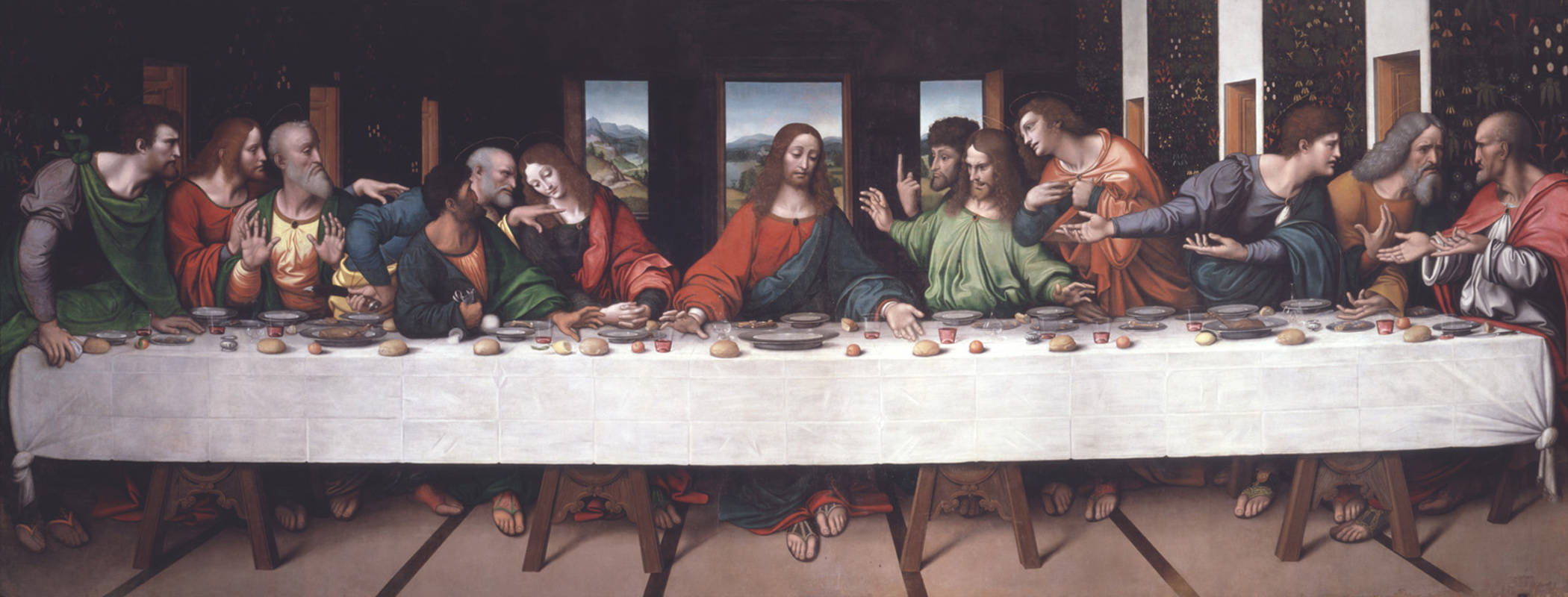
Who painted "The Last Supper"?
a)
Machiavelli
b)
Botticelli
c)
Kepler
d)
Leonardo da Vinci
60.
Which of the following is NOT a reason why the Renaissance began in Italy?
a)
Wealthy Italian patrons supported the arts
b)
Cultural diffusion encouraged curiosity and spread Arab and African ideas
c)
The Black Plague did not hit Italy as a result of the Alps 
d)
Renewed interest in the cultures of Ancient Greece and Rome
61.
What was the Renaissance a "rebirth" of?
a)
Religion
b)
Classical culture
c)
Life (after the black death)
d)
Middle Ages
62.
"The end justifies the means" was a key belief of this man, who wrote "The Prince" 
a)
Machiavelli
b)
Castiglione
c)
Shakespeare 
d)
Petrarch
63.
Advantages of Johannes Gutenberg's printing press include all of the following EXCEPT:
a)
Cheaper book prices
b)
Increase in education/literacy
c)
Increase in church power
d)
Rapid spread of ideas
64.
While Gutenberg introduced the printing press in Europe, this country was the first to develop moveable type, which influenced his invention.
a)
Japan
b)
Korea
c)
England
d)
China
65.
Humanism...
a)
emphasized the Bible
b)
leads to happier lives
c)
encourages people to learn Latin and Greek
d)
focuses on the potential of humans to achieve 
66.
The Sistine Chapel was painted by...
a)
Michalangelo
b)
Albrecht Durer
c)
Miguel Cervantes
d)
Leonardo DaVinci
67.
Artist who painted the ceiling of the Sistine Chapel in Rome 
a)
Michelangelo
b)
Leonardo Da Vinci
c)
Perspective
d)
Patron
68.
Italian artist who also excelled in astronomy, engineering, and anatomy 
a)
Michelangelo
b)
Raphael
c)
Johann Guttenberg
d)
Leonardo da Vinci
69.
Artist who painted the Mona Lisa &The Last Supper
a)
Michelangelo
b)
Leonardo da Vinci
c)
perspective 
d)
patron
70.
Natural Rights
a)
Life, Liberty, and the Pursuit of Happiness.
b)
Life, Liberty, and Property
c)
Freedom
d)
Rights to say what we want, when we want to.
71.
The Enlightenment is
a)
a time of rebirth
b)
a time when science ruled
c)
a time with people used reason and logic to explain the world
d)
a time when technology ruled
72.
According to John Locke, why are governments created?
a)
God gives monarchs a divine right to rule over their people
b)
People are naturally selfish and need a strong ruler to create order
c)
People set up governments to protect their lives and property
d)
Civil government must be established to offset the power of the church
73.
Montesquieu believed that the best form of government would have
a)
Direct democracy in which every man voted directly
b)
A intelligent monarchy
c)
Three branches that would check and balance each other
d)
No influence on the economy
74.

Machiavelli's best-known book is _.

a)

The Prince

b)

Leviathan

c)

The Hobbit

d)

Game of Thrones

75.
Which astronomer was tried for heresy and placed under house arrest because he argued that the universe was heliocentric?
a)
Ptolemy
b)
Copernicus
c)
Newton 
d)
Galileo 
76.
What is another name for the Enlightenment?
a)
The Age of Reason
b)
The Age of Great Philosophers
c)
The Age of Religion
d)
The Age of Revolution
77.
American's used _________________'s idea of separation of powers to write the US Constitution. 
a)
A. Montesquieu
b)
B. Hobbes
c)
C. Rousseau
d)
D. Voltaire
78.
Enlightenment thinkers and theories inspired
a)
A. the French Revolution
b)
B. the American Revolution
c)
C. other revolutions of the 1800s
d)
D. all of the above
79.
Enlightenment philosophers believe that if government abuses power the people should change it.
a)
True
b)
False
80.
Who proposed the idea that all men are born with natural rights, which included life, liberty and property?
a)
John Locke
b)
Voltaire
c)
Thomas Hobbes
d)
Baron de Montesquieu
81.
In order to keep one branch of government from becoming too powerful, Montesquieu suggested a system of
a)
checks and balances
b)
a social contract
c)
absolute monarchy
d)
feudalism
82.
What did John Locke say that people could do to a government that did not protect their natural rights?
a)
write s formal letter of complaint
b)
overthrow it
c)
just deal with it
d)
vote for a new king
83.
How did the scientific revolution lead to the Enlightenment?
a)
religious toleration was more prevalent
b)
revolutions began
c)
traditional beliefs were questioned
d)
the feudal system ended
84.
How did the philosophies of the Enlightenment influence people to want revolution?
a)
people wanted to learn more about science
b)
people wanted greater religious toleration
c)
people favored an absolute monarchy
d)
they began to question the current system
85.
One cause of the French Revolution was the emergence of a new middle class of merchants and professionals called the 
a)
bourgeoisie
b)
aristocracy
c)
sans culottes
d)
denoument
86.
The idea that reason should guide society rather than tradition helped cause the revolution and came from
a)
the Declaration of Independence
b)
the Scientific Revolution
c)
the Enlightenment
d)
all of the above
87.
Revolutions in France and the US shared Enlightenment ideas in all the following areas except
a)
Where governments get their powers
b)
the purpose of governments
c)
what the people can do if their government does not do its job
d)
what religion governments should promote
88.
When the other estates refused to change voting rules the 3rd Estate 
a)
met separately
b)
declared themselves the new government
c)
Created the National Assembly
d)
all of the above
89.
The National Assembly set down the ideas of the Revolution in 
a)
the Declaration of Independence
b)
the Declaration of the Rights of Man
c)
the US Constitution
d)
The Edict of Nantes
90.
The Radicals eliminated anyone accused of being against the Revolution during 
a)
the Terror
b)
the Great Fear
c)
Thermidorian Reaction
d)
Thermidorian Reaction
91.
The extreme actions of the Radicals began with the
a)
storming of the Bastille
b)
Great Fear
c)
execution of Louis XVI
d)
the meeting of the Estates General
92.
The end of the Revolution came with 
a)
France's surrender to England
b)
Napoleon's coup
c)
the Louisiana Purchase
d)
the Invasion of Russia
93.
The third estate attacked a prison looking for guns and ammunition. In the process, they killed all the guards, let the prisoners go, and tore down portions of the old fort brick by brick. This event is known as:
a)
Storming of the Bastille
b)
Reign of Terror
c)
The Great Fear
d)
Tennis Court Oath
94.
Which of the following wars helped to inspire the French Revolution?
a)
The American Civil War
b)
The French and Indian War
c)
American Revolution
d)
The Seven Years War
95.
What is the name of the document passed by the National Assembly?
a)
The Declaration of the Rights of Man and of the Citizens
b)
US Constituion
c)
Tennis Court Oath
d)
English Bill of Rights
96.
Which of the three estates was the poorest?
a)
1st Estate
b)
2nd Estate
c)
3rd Estate
97.
What did the National Assembly promise to do in the Tennis Court Oath?
a)
To execute the king
b)
To write a new constitution
c)
To stage a Coup d'etat
d)
To make France independent
98.
Why was voting in the Estates General unfair
a)
votes were not secret
b)
each estate voted by how many members there were
c)
each estate got the same number of votes
d)
the King got two votes
99.
What was the Estates-General? 
a)
A group that was made up of reps from all 3 estates.
b)
Group that ruled France after the Reign of Terror. 
c)
Name of the 3rd estate after they broke away. 
d)
A radical group. 
100.
The Revolution stood for what?
a)
Democratic government and social equality
b)
Freedom for all people
c)
To ensure that monarchs stayed in power
d)
To expand the power of France
101.
Both the French and American revolutions did what?
a)
Failed in the attempt
b)
Allow for a rewrite of the constitution 
c)
Served as a model for other countries seeking political change
d)
To end the idea of Feudal aspects in Europe 
102.
What was one aspect of the revolution that was challenged?
a)
Kings
b)
Peoples rights
c)
the divine rights and privileges of kings and nobles
d)
The voice people were allowed to have in government. 
103.
Three motivations for European explorers: God, Gold, and ______.
a)
Grace
b)
Glory
c)
Greed
d)
Glaciers
104.
Conquistadors is a Spanish word meaning:
a)
to entrust
b)
to connect
c)
court
d)
conquerors
105.
Two things that conquistadors had that the Native Americans did not: horses and _______
a)
families
b)
gold
c)
guns
d)
land
106.
How did diseases impact the New World?
a)
They didn't
b)
They wiped out 75-90% of the Europeans
c)
They wiped out 75-90% of the indigenous people
d)
They helped the natives beat the Spanish
107.

The unintentional mixing of crops, animals, diseases, ideas and technology between the Old and New World

a)

Columbian Exchange

b)

Triangular Trade

c)

Era of Exploration

d)

Innovation Nation

108.
The New World refers to 
a)
Europe and Africa
b)
North and South America
c)
Australia and Antarctica
d)
Asia
109.

Which of the following is a major POSITIVE impact of the Columbian Exchange?

a)

decline of diversity in crops, animals, plants, etc.

b)

spread of disease

c)

introduction of new foods that are now staples in many cultures

d)

the extinction of the honey bee

110.
What was the Columbian Exchange? 
a)
American and the New World would exchange items in trade with European countries
b)
Columbus exchanged ideas with other Europeans
c)
An exchange between two people from Columbia
111.
During the Columbian Exchange, which of the items listed was NOT exchanged?
a)
Animals
b)
People 
c)
Ships
d)
Disease
112.

The Columbian Exchange is best defined as

a)

Exchange of plants, animals, disease, and technology between the rest of the world following Columbus's voyage

b)

The relationship between people in different parts of the world

c)

The story of how Columbus came to North America

d)

Everything Columbus brought back to Spain after his first voyage

113.

Which statement best explains a major reason for the trend illustrated by the graph?

a)

The population adopted the European custom of smaller families

b)

The population was exposed to diseases from Europe

c)

Frequent tribal wars throughout the period decreased the population

d)

Much of the population moved to coastal areas

114.
In which country did the Industrial Revolution begin?
a)
The United States
b)
England
c)
France
d)
Germany
115.
What product was first made using machines in factories?
a)
Steel
b)
textiles
c)
locomotives
d)
flying shuttles
116.
Which of the following was NOT associated with early factory working conditions?
a)
Low wages
b)
Safe working conditions
c)
Dangerous working conditions
d)
Widespread pollution
117.
Mass production led to:
a)
Products being more superior in quality
b)
goods became less expensive
c)
laborers received higher wages
d)
industries moved to rural areas
118.
Why did people move to the cities during the Industrial revolution?
a)
Jobs in factories
b)
Jobs on the farm
c)
Family
d)
Friends
119.
England is an island. Why was this an advantage during the Industrial Revolution?
a)
It wasn't an advantage.
b)
It made it more difficult for other countries to steal England's ideas.
c)
England has many ports and rivers which allow easier worldwide trade.
d)
England had tropical weather, which allowed more crops to be grown.
120.
Which innovation  allowed factories to be built anywhere?
a)
flying shuttle
b)
spinning jenny
c)
cotton gin
d)
steam engine
121.
Which of the following groups would most likely benefit from the socialist ideas of Karl Marx?
a)
Entrepreneurs
b)
Factory Workers
c)
Large Business Corporations
d)
Factory Managers
122.

laissez faire is an economic term emphasizing what kind of relationship between the government and the economy

a)

the government should control all the factors of production

b)

the government should work with industries to achieve maximum profits

c)

the government should refrain from interfering with economic affairs

d)

the government should tell companies what they can make and set the prices of the goods that get produced

123.

Which of the following was a widespread social consequence of industrialization in the 1800s?

a)

A decline in the social status of women

b)

An increase in the power and prestige of the landowning aristocracy

c)

The general leveling of social hierarchies based on wealth

d)

The creation of a wage-earning working class concentrated in urban areas