wayground logo

Free Printable Worksheets

Font size

S
M
L
XL
Worksheets

8th Grade - Midterm Review

Total questions: 109

Worksheet time: 2hrs 35mins

Name
Class
Date
1.
The positive particles of an atom are 
a)
electrons 
b)
positrons 
c)
neutrons 
d)
protons 
2.
How many Hydrogen are in 4H2O?
a)
6
b)
8
c)
2
d)
4
3.
How many Oxygen are in H2O?
a)
1
b)
2
c)
0
d)
4
4.
2H2 + O2 ----> 2H2O What is the product?
a)
------>
b)
2H2O
c)
2H2+ O2
5.
2H2 + O--------> 2H2O What  are the reactants?
a)
----->
b)
2H2O
c)
2H2 +O2
6.
How many elements are in C6H12O6?
a)
1
b)
2
c)
3
d)
4
7.
How many Sodium (Na) are in 6NaCl?
a)
1
b)
12
c)
6
8.
(Element or Compound)
       C2H8
a)
Element
b)
Letters
c)
Numbers
d)
Compound
9.
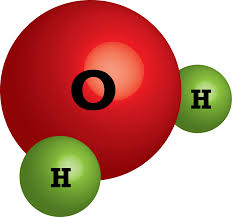
How many atoms of Hydrogen are in this compound
a)
1
b)
2
c)
3
d)
4
10.
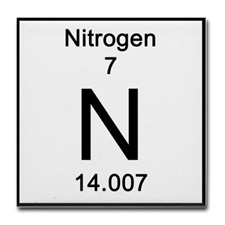
What is the number of protons that the element in this image contain?
a)
14
b)
7
c)
15
d)
18
11.
What is the atomic mass of "F"
a)
9
b)
18
c)
17
d)
19
12.
The first energy level can hold up to how many electrons?
a)
8
b)
4
c)
2
d)
5
13.
an atom with atomic number 6 would have how many protons 
a)
6
b)
12
c)
3
d)
cannot be determined 
14.
Particles in an atom that are neutral and have no charge are 
a)
negatrons 
b)
electrons 
c)
neutrons 
d)
protons 
15.
Which of the following is a negatively charged subatomic particle?
a)
Electron
b)
Proton
c)
Neutron
d)
Quark
16.
The atomic number of an elements is the total number of which particles in the nucleus?
a)
neutrons
b)
protons
c)
electrons
d)
protons and electrons
17.
electrons have this type of charge?
a)
negative
b)
positive
c)
neutral
18.
How many neutrons are in a Gold atom?
a)
79
b)
196
c)
118
d)
275
19.
What's a valence electron?
a)
electrons in the second energy level
b)
electrons in the outermost energy level
c)
the atomic number
d)
electrons in the first level
20.
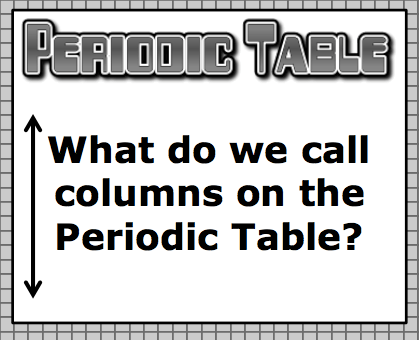
a)
Periods
b)
Groups
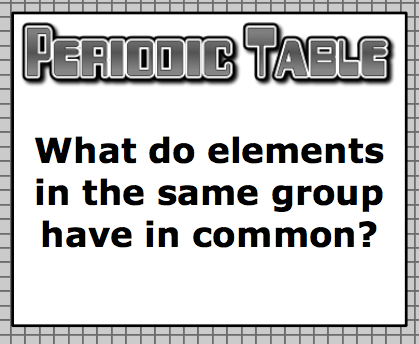
21.
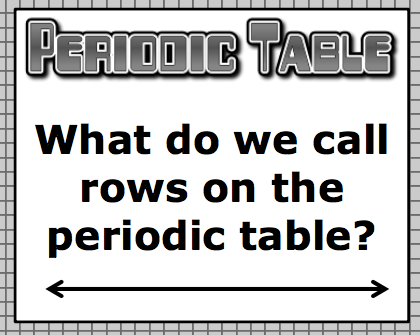
a)
Periods
b)
Groups
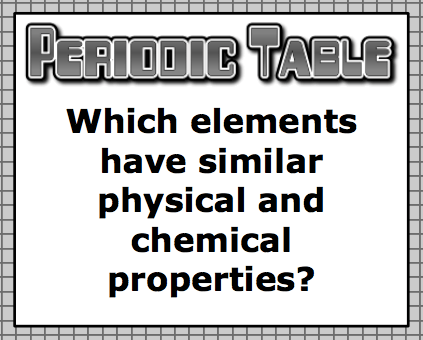
22.
a)
energy levels
b)
valence electrons
c)
protons
d)
neutrons
23.
a)
energy levels
b)
valence electrons
c)
protons
d)
neutrons
24.
a)
Same group
b)
Same period
25.
a)
Group 1
b)
Group 17
c)
Group 18
d)
Group 2
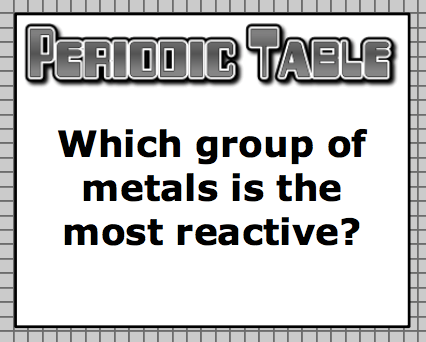
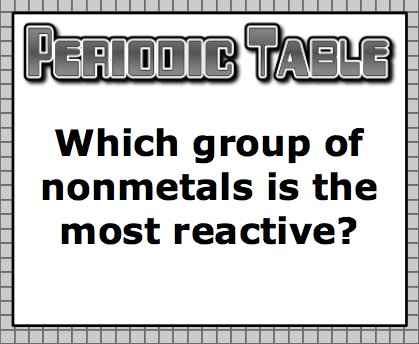
26.
a)
Group 1
b)
Group 17
c)
Group 18
d)
Group 2
27.
a)
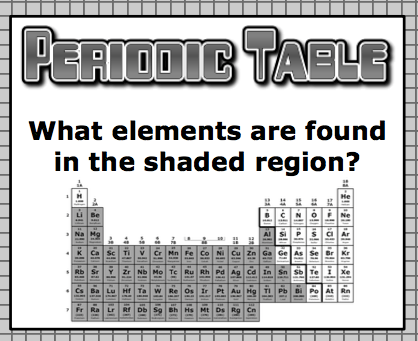
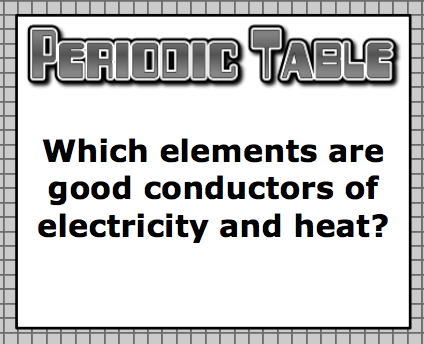
Metals
b)
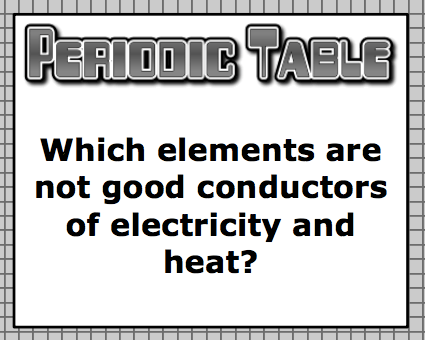
Nonmetals
c)
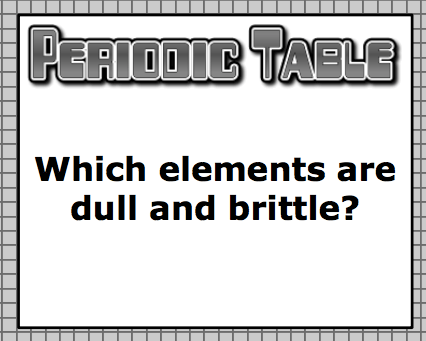
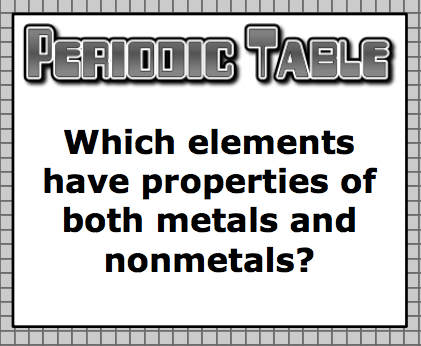
Metalloids
28.
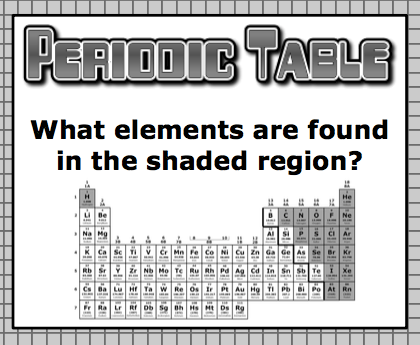
a)
Metals
b)
Nonmetals
c)
Metalloids
29.
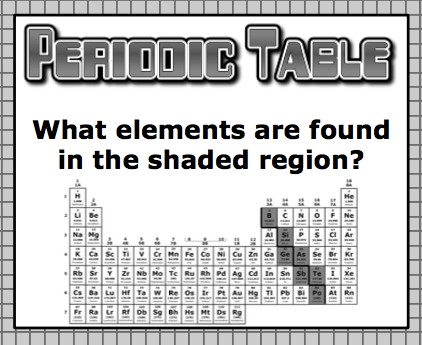
a)
Metals
b)
Nonmetals
c)
Metalloids
30.
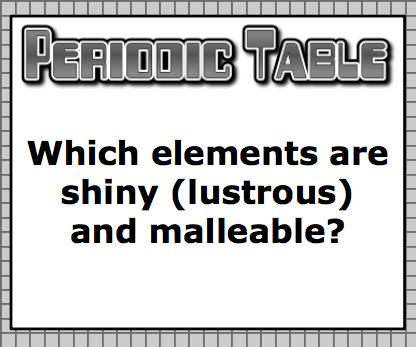
a)
Metals
b)
Nonmetals
c)
Metalloids
31.
a)
Metals
b)
Nonmetals
c)
Metalloids
32.
a)
Metals
b)
Nonmetals
c)
Metalloids
33.
a)
Metals
b)
Nonmetals
c)
Metalloids
34.
a)
Metals
b)
Nonmetals
c)
Metalloids
35.
a)

Physical

b)

Chemical

36.
a)

Physical

b)

Chemical

37.
a)

Physical

b)

Chemical

38.
a)

Physical

b)

Chemical

39.
a)

Physical

b)

Chemical

40.
a)

Physical

b)

Chemical

41.

Evidence of Chemical Change

a)

Bubbles, precipitate, color change

b)

bubbles, color change, energy change, precipitate, smell change

c)

Color change, energy change, smell change

42.

Chemical Change is

a)

stays the same

b)

something new

43.

Amanda melted a 4-oz chocolate bar in a pot with a lid. What is most likely true about the weight of the melted chocolate?

a)

It weighs more than 4 oz.

b)

It weighs less than 4 oz.

c)

It weighs exactly 4 oz.

d)

It weighs double 4 oz.

44.

Which compounds are the PRODUCTS of this reaction?

a)

CO2 + H2O

b)

C6H12O6 + O2

c)

C6H12O6 + CO2

d)

H2O + O2

45.

How many atoms of Al are in the PRODUCTS of this balanced equation?

a)

10

b)

2

c)

3

d)

4

46.

How many molecules of CO2 are in the REACTANTS of this equation?

a)

4

b)

2

c)

1

d)

8

47.

In a chemical reaction, reactants are on _________ of the arrow

a)

the left

b)

the right

c)

top

48.

This appears on the left side of a chemical formula, and represents how many molecules there are.

a)

An Atom

b)

The Subscript

c)

The Coefficient

49.

This is used to represent the number of each atom being represented.

a)

A Exponent

b)

The Coefficient

c)

The Subscript

50.

Is this equation balanced?

a)

yes

b)

no

51.

Is this equation balanced?

a)

yes

b)

no

52.
N2 + H2 = NH4
a)
Balanced
b)
Unbalanced
53.
Which problem is balanced?
a)
PbO2 + 2H2
b)
SO2 + H20 --> H2SO4
c)
2Na + 2H2O --> 2NaOH + H2
54.
a)
1st
b)
2nd
c)
3rd
55.
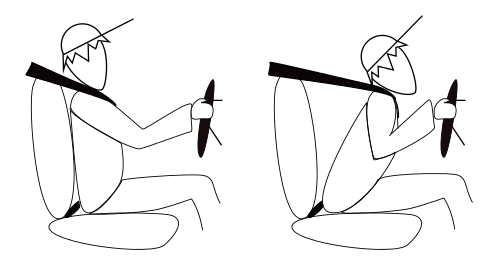
What law is best described by inertia?
a)
1st
b)
2nd
c)
3rd
56.
a)
1st
b)
2nd
c)
3rd
57.
a)
1st
b)
2nd
c)
3rd
58.
a)
1st
b)
2nd
c)
3rd
59.
a)
1st
b)
2nd
c)
3rd
60.
a)
1st
b)
2nd
c)
3rd
61.
Object at rest stays at rest.
a)
1st
b)
2nd
c)
3rd
62.
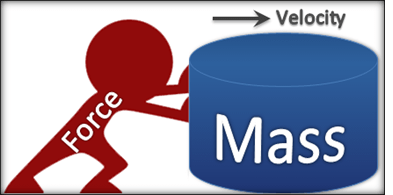
F = MxA
a)
1st
b)
2nd
c)
3rd
63.
What is the net force?
a)
400 N Up
b)
400 N Down
c)
- 400 N Down
d)
800 N Down
64.
What Newtons law does this picture represent
a)
Newtons 2nd law 
b)
Law of gravity 
c)
Newtons 1st law
d)
Newtons 5th law
65.
Balanced or Unbalanced?
a)
Balanced 
b)
Unbalanced
66.
A 10 kg object is accelerated upward at 2 m/s2.  What force is required? 
a)
20 N
b)
2 N
c)
5 N
d)
0 N
67.
A 20 kg bike accelerates at 10 m/s2.  What was the force?
a)
25 Newtons
b)
20 Newtons
c)
200 Newtons
d)
10 Newtons
68.
How much force is needed to accelerate a 25kg bowling ball at 2m/s2?
a)
50N
b)
5N
c)
12.5N
d)
100N
69.
How much force is needed to accelerate a 3kg skateboard at 5m/s2?
a)
8N
b)
1.6N
c)
0.6N
d)
15N
70.
You give a shopping cart a shove down the aisle. The cart is full of groceries and has a mass of 18 kg. The cart accelerates at a rate of 3 m/s2. How much force did you exert on the cart?
a)
6N
b)
54N
c)
21N
d)
18N
71.
A 50 kg skater pushed by a friend accelerates 5 m/s2.  How much force did the friend apply?
a)
45 N
b)
15 N 
c)
10 N
d)
250 N
72.
What is the equation to calculate speed?
a)
speed = distance/time
b)
speed = time/distance
c)
speed = time x distance 
d)
speed = speed/time 
73.
What is the equation to calculate time?
a)
time = speed/distance
b)
time = distance/speed 
c)
time = speed x distance 
d)
time = distance x speed
74.
What is the equation to calculate distance?
a)
distance = speed/time
b)
distance = time/speed
c)
distance = speed/distance
d)
distance = speed x time 
75.
Which of the following is a unit of speed?
a)
km/hr
b)
hr
c)
km
d)
s
76.
Which of the following is a unit of time?
a)
km/hr
b)
hr
c)
km
d)
mi
77.
Which of the following is a unit of distance ?
a)
miles/hr
b)
hr
c)
km
d)
min
78.
Mr. Rudman drives his speed boat 22 km at 45 km/hr how, how long will it take him to go the 22 km?
a)
48 hrs 
b)
0.48 hrs
c)
990 hrs
d)
45 min
79.
Allen travels 100 km in 5hrs. Find his average speed in km/h
a)
5km/hr
b)
10km/hr
c)
50km/hr
d)
20km/hr
80.
During which interval is the object not moving?
a)
B to C
b)
C to D
c)
D to E
d)
only at point A
81.
During which interval is the object traveling at a constant velocity?
a)
B to C
b)
D to E
c)
F to G
d)
it traveling at a constant velocity during all of the intervals shown.
82.
Acceleration occurs when an object changes its speed or ______.
a)
direction
b)
force
c)
inertia
d)
mass
83.
Which runner stopped for a rest?
a)
Albert
b)
Bob
c)
Charlie
84.
Velocity is
a)
speed and acceleration
b)
constant speed
c)
a frame of reference
d)
speed in a given direction
85.
Acceleration is
a)
increasing speed
b)
decreasing speed
c)
changing direction
d)
all of the above
86.
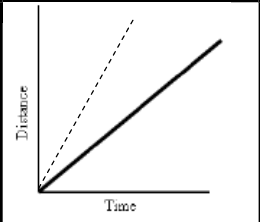
What does this graph represent?
a)
Constant Speed
b)
Acceleration
c)
Not moving
87.
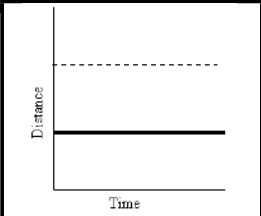
What does this graph represent?
a)
Constant speed
b)
Acceleration
c)
Not moving
88.
What does this graph represent?
a)
Constant speed
b)
Acceleration
c)
Not moving
89.
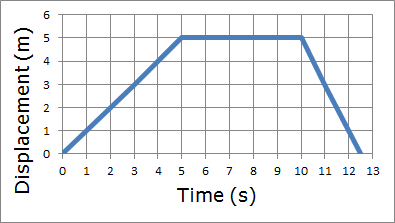
According to the graph how fast does the person travel in the first 5 seconds?
a)
2 m/s
b)
10 m/s
c)
12.5 m/s
d)
1 m/s
90.
What is happening at C?
a)
Stationary
b)
Accelerating
c)
Fast steady speed; moving away from the starting position
d)
Slower steady speed; moving away from the starting position
91.
What is happening at A?
a)
Stationary
b)
Accelerating
c)
Slower steady speed; moving away from the starting position
d)
Steady speed; returning to start position
92.

What is happening at D?

a)

Stationary

b)

Accelerating

c)

Fast steady speed; moving away from the starting position

93.
What is the net force?
a)
20 N 
b)
0 N 
c)
400 N 
d)
40 N 
94.
What is the net force?
a)
30 N 
b)
25 N 
c)
5 N 
d)
55 N 
95.
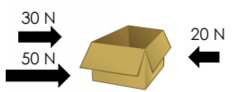
What is the net force?
a)
10 N
b)
0 N
c)
25 N
d)
1 N
96.
This is an example of what kind of force?
a)
Balanced Force
b)
Pushing Force
c)
Gravity Force
d)
Unbalanced Force
97.
What is the net force?
a)
30 N left
b)
25 N right
c)
5 N left
d)
55 N right
98.
Calculate the Net Force. 
a)
60N, Left 
b)
40N, Right 
c)
0N
d)
60N, Right
99.

Which is the best example of an unbalanced force?

a)

A book resting on a shelf

b)

A train accelerating from the station

c)

A chair sitting motionless

100.
What are the reasons for the season?
a)
Earth's tilt & rotation
b)
Earth's tilt & revolution
c)
Earth's rotation & rovolution
d)
Earth's tilt & resolution
101.
The hemisphere where you live 
a)
equator
b)
southern
c)
northern
d)
eastern
102.
What happens when the area in which you live tilts away from the sun?
a)
It is summer.
b)
It is spring.
c)
It is winter.
d)
It is fall.
103.
Which season is taking place in the Northern Hemisphere in Position 2?
a)
Winter
b)
Spring
c)
Summer
d)
Fall
104.
Which season is taking place in the Northern Hemisphere in Position 3?
a)
Winter
b)
Spring
c)
Summer
d)
Fall
105.
What is Earth's annual motion around the sun called?
a)
Rotation
b)
Revolution
106.
How long does Earth take to make a complete rotation?
a)
365 days
b)
24 hours
107.
What would seasons be like if Earth's axis were straight up and down?
a)
Seasons would be the same.
b)
Seasons would be more extreme.
c)
There would be no seasons.
108.
This is the reason we experience day and night
a)
rotation
b)
revolution
109.

The Earth completes one of these every 365.25 days

a)

rotation

b)

revolution