Wayground logo

Free Printable Worksheets

Font size

S
M
L
XL
Worksheets

CDB #1 Review 6th Grade

Total questions: 49

Worksheet time: 54mins

Name
Class
Date
1.
Energy due to motion is ____________ energy. 
a)
Potential 
b)
Energy
c)
Kinetic
d)
Friction
2.
__________ is stored energy. 
a)
Potential
b)
Kinetic
c)
None of the above 
d)
All of the above 
3.
What kind of energy is in a rock at the edge of a cliff?
a)
Potential
b)
Kinetic
4.
What kind of energy is in a moving skateboard?
a)
Potential
b)
Kinetic
5.
What kind of energy is in a stretched rubber band?
a)

Potential Elastic

b)

Kinetic Elastic

6.
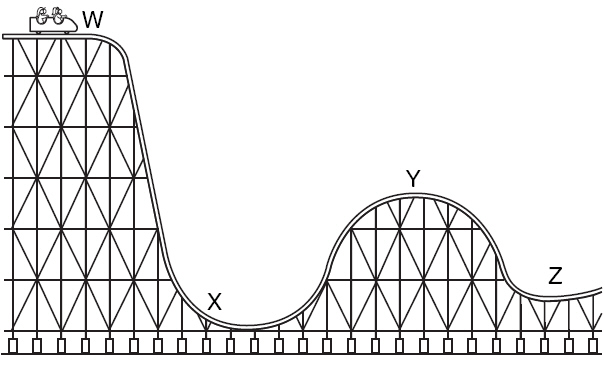
At which point is potential energy greatest?
a)
W
b)
X
c)
Y
d)
Z
7.
At which point is kinetic energy greatest? 
a)
W
b)
X
c)
Y
d)
Z
8.
Which of the following energy transformations occur when a lamp that is plugged into a wall socket is functioning correctly?
a)

Chemical to radiant/light

b)
Electrical to chemical
c)

Electrical to radiant/light

d)
Chemical to electrical
9.
What energy transformations take place when a battery-operated radio is in use?
a)
Electrical to chemical to light
b)
Sound to chemical to mechanical
c)
Chemical to electrical to sound
d)
Light to electrical to thermal
10.

People get energy from the food that they eat and transform that energy as they move. Which energy transformations occur as a student eats and then rapidly rubs the palms of his hands together?

a)
mechanical to thermal to electrical
b)
chemical to mechanical to thermal
c)
mechanical to chemical to sound
d)
chemical to sound to electrical
11.
The diagram shows a complete circuit with a battery and a buzzer making noise. This circuit works by transforming -
a)
chemical energy to electrical to sound.
b)
electrical energy to thermal to light.
c)
sound energy to electrical to chemical.
d)
mechanical energy to electrical to sound.
12.
What force holds the planets in motion around the sun?
a)
Magnetic
b)
Electrical
c)
Gravitational
d)
Air Resistance
13.
What force ultimately slows the roller coaster to a stop?
a)

Elastic

b)
Normal
c)
Friction
d)
Magnetic
14.

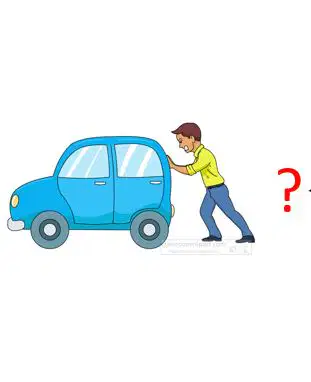
Which force is the person using to push the car?

a)
applied force
b)
weight force
c)
tension force
d)
drag
15.

An Orange falls off a tree and lands on the ground. What force caused the orange to fall?

a)

friction

b)

heat

c)

gravity

d)

wind

16.

A force exerted by a compressed or stretched spring upon any object that is attached to it.

a)

Spring Force

b)

Tension Force

c)

Elastic Force

17.

The repelling or attracting force between a magnet and a material like iron.

a)

Magnetic Force

b)

Electrical Force

c)

Gravity

18.

Magnetic force is the repelling or attracting force between a magnet and a material like iron.

Magnetic force is a...

a)

Contact Force

b)

Non-contact Force

19.
What is a force?
a)
a push or pull
b)
speed or acceleration 
c)
potential or kinetic energy
d)
balanced or unbalanced force
20.

The force that is transmitted through a string, rope, cable or wire when it is pulled tight.

a)

Spring Force

b)

Tension Force

c)

Elastic Force

21.
What is the net force?
a)
65 N left
b)
65 N right
c)
35 N left
d)
35 N right
22.
What is the net force?
a)
11 N left
b)
11 N right
c)
3 N left
d)
3 N right
23.
What is the net force?
a)
3 N left
b)
3 N right
c)
7 N left
d)
7 N right
24.

What happens when a baseball and a bat collide?

a)

They hit each other with equal force in opposite directions.

b)

They hit each other with unequal force in opposite directions.

c)

They hit each other with equal force in the same direction.

25.

How is this an example of Newton's Third law

a)

Only the ball is using the head

b)

only the head is pulling the ball

c)

They are both exerting an equal force on each other

26.
What is the reaction force to a foot pushing down on the floor?
a)
The foot going through the floor
b)
The floor pushing back against the foot
c)
The floor breaking to the foot
27.

A fly hits the windscreen of a moving car.

The force that the car applied to the fly was ____________ the force that the fly applied to the car.

a)

Equal to

b)

Less than

c)

Greater than

28.

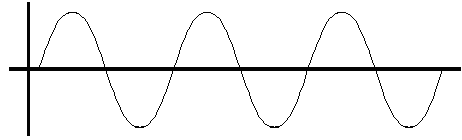
Identify the wave part

a)

crest

b)

trough

c)

wavelength

29.

Identify the wave part

a)

crest

b)

compression

c)

trough

30.

Letter D represents the ______ of the wave.

a)

amplitude

b)

frequency

c)

wavelength

31.
Sound waves are _______________
a)
Transverse waves
b)
Longitudinal waves
32.
A wave transfers:
a)
matter
b)
water
c)
energy
33.
Which wave is pictured?
a)
Transverse
b)
Longitudinal
34.
Which wave is pictured?
a)
Transverse
b)
Longitudinal
35.
What kind of wave is pictured?
a)
Transverse
b)
Longitudinal
36.

What type of wave is this?

a)

Transverse

b)

Longitudinal

37.

Gravity is a

a)

Contact Force

b)

Non-contact Force

38.

When the net forces equal 0 N, they are which of the following?

a)

unbalanced

b)

balanced

39.

Which of the following causes a change in motion?

a)

balanced forces

b)

unbalanced forces

40.

The combination of ALL forces acting on an object.

a)

newton

b)

net force

41.

A rock is sitting on the ground. The rock is experiencing this type of force.

a)

unbalanced force

b)

balanced force

c)

no forces

42.
At what position does the rock have the greatest kinetic energy?
a)
A
b)
B
c)
D
d)
E
43.
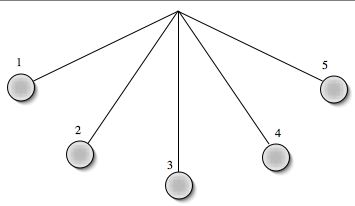
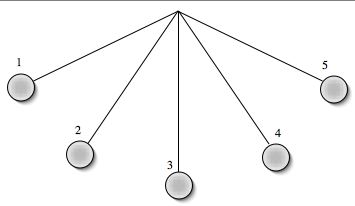
When a pendulum swings, at which point is potential energy at its greatest?
a)
1
b)
2
c)
3
d)
4
44.
When a pendulum swings, at which point is kinetic energy highest?
a)
1
b)
2
c)
3
d)
4
45.

Which of Earth's layers is best described as liquid metal?

a)

crust

b)

mantle

c)

outer core

d)

inner core

46.
The thinnest layer of the Earth is the ___________.
a)
mantle
b)
crust
c)
core
47.
What is the thickest layer of the Earth?
a)
the crust
b)
the mantle
c)
the inner core
48.

What is the correct order (starting from the outside surface) of Earth's layers?

a)
mantle, outer core, inner core, crust
b)
crust, mantle, outer core, inner core
c)
outer core, inner core, crust, mantle
49.

Scientists determine what Earth’s interior looks like by studying:

a)
Seismic Waves
b)
Convection Currents