wayground logo

Free Printable Worksheets

Font size

S
M
L
XL
Worksheets

Final Exam Review

Total questions: 194

Worksheet time: 3hrs 13mins

Name
Class
Date
1.
What is the main difference between THEME and MAIN IDEA. 
a)
Theme is a universal lesson, and main idea is what a story is about.
b)
Theme is what a story is about, and main idea is the universal lesson it teaches.
2.
Tone can best described as
a)
attitude of the reader
b)
the overall mood or feeling in a story
c)
the author's attitude toward his writing
d)
reader's point of view
3.
if an author has no emotion regarding the story he is telling, his tone can be described as
a)
playful
b)
objective
c)
ironic
d)
mysterious
4.
What is the "mood" of  a story?
a)
Emotions audience feels from a given passage.
b)
The time and place of the story.
c)
The summary of events of the story.
d)
The lesson the reader learns from the story.
5.
What is the "tone" of a story?
a)
The feeling the passage evokes from the reader
b)
The author, narrator, or speaker's attitude toward a subject
c)
The time and place of the story
d)
The summary of events in the story
6.
The theme is a lesson learned; the moral of the story.
a)
True
b)
False
7.
A novel can have more than one theme.
a)
TRUE
b)
FALSE
8.
The thesis statement should include your opinion on the on the points your are analyzing.
a)
True
b)
False
9.
The thesis statement should express a main idea that links to supporting points
a)
True
b)
False
10.
What is a thesis statement?
a)
A general idea of what the essay is about
b)
A summary of the main idea
c)
A statement that explains the main idea of an essay
d)
A suggestion that you should read the essay
11.
Which one is a good thesis statement?
a)
Always do your homework before watching TV 
b)
"Whatever you are, be a good one." Abe Lincoln
c)
Marijuana should not be legalized because it is harmful to your health, will increase crime, & create more drug addicts.
d)
Marijuana can be used as medicine.
12.
Which of the following is a major component of any thesis?
a)
making a claim
b)
providing an amusing anecdote
c)
being at least three sentences
d)
only providing facts
13.
Where should a thesis statement appear?
a)
first paragraph
b)
anywhere in the essay
c)
last paragraph
d)
the first sentence of every paragraph
14.

The thesis statement should include your opinion on the points you are analyzing.

a)

True

b)

False

15.
Which topic sentence DOES NOT belong with the thesis below?
The best kind of pet is a cat because they are friendly, low maintenance, and have great personalities.
a)
First, cats are affectionate creatures.
b)
Next, cats are inexpensive.
c)
In addition, it is not hard to take care of a cat.
d)
Finally, every cat has a unique personality.
16.
What is the purpose of the thesis?
a)
To remind your reader what your paper is about
b)
To state your opinion or claim and prove it
c)
To hook the reader's attention
d)
To use vocabulary words
17.

Most monsters don’t mind making messes.

a)

Simile

b)

Metaphor

c)

Hyperbole

d)

Alliteration

e)

Personification

18.

My dad knows everything about cars.

a)

Simile

b)

Metaphor

c)

Hyperbole

d)

Alliteration

e)

Personification

19.

The ice sculptor’s hands fluttered like hummingbird wings.

a)

Simile

b)

Metaphor

c)

Hyperbole

d)

Alliteration

e)

Personification

20.

Each blade of grass was a tiny bayonet pointed firmly at our bare feet

a)

Simile

b)

Metaphor

c)

Hyperbole

d)

Alliteration

e)

Personification

21.

The candle flame danced in the dark.

a)

Simile

b)

Metaphor

c)

Hyperbole

d)

Alliteration

e)

Personification

22.

We welcomed all the wise men from the West.

a)

Simile

b)

Metaphor

c)

Hyperbole

d)

Alliteration

e)

Personification

23.

Pam was skinny enough to jump through a keyhole.

a)

Simile

b)

Metaphor

c)

Hyperbole

d)

Alliteration

e)

Personification

24.

The shingles on the shack shook in the storm winds like scared children.

a)

Simile

b)

Metaphor

c)

Hyperbole

d)

Alliteration

e)

Personification

25.

She was fairly certain that life was a fashion show.

a)

Simile

b)

Metaphor

c)

Hyperbole

d)

Alliteration

e)

Personification

26.

Thunder grumbled and raindrops reported for duty.

a)

Simile

b)

Metaphor

c)

Hyperbole

d)

Alliteration

e)

Personification

27.

She stuck the stolen stapler in her suitcase.

a)

Simile

b)

Metaphor

c)

Hyperbole

d)

Alliteration

e)

Personification

28.

Tanya never stops talking.

a)

Simile

b)

Metaphor

c)

Hyperbole

d)

Alliteration

e)

Personification

29.

Her laughter was like a warm blanket or a familiar song

a)

Simile

b)

Metaphor

c)

Hyperbole

d)

Alliteration

e)

Personification

30.

The wind whispered the rumors of the forest.

a)

Simile

b)

Metaphor

c)

Hyperbole

d)

Alliteration

e)

Personification

31.
What is an example of a consonance?
a)
I hit a cat with a bat wearing a hat (No i did not)
b)
Fee fi fo fum, i'm going to eat all of your bread crumbs 
c)
ℵ₁ to ℵ∞
d)
Nobody knows that, so just search it on google like what everyone else does for everything
32.
What is assonance?
a)
The repetition of letters in a line of poetry
b)
the repetition of letter sounds in a line of poetry
c)
the repetition of vowel sounds in poetry
d)
the repetition of consonant sounds in poetry
33.
What is consonance?
a)
The repetition of letters in a line of poetry
b)
the repetition of letter sounds in a line of poetry
c)
the repetition of vowel sounds in poetry
d)
the repetition of consonant sounds in poetry
34.

Your soul will follow.

a)

assonance

b)

consonance

c)

none

d)

rhyme

35.
I wish that date would fade from memory.
a)
assonance
b)
consonance
c)
none
d)
rhyme
36.
The sleeping geese recline their heads.
a)
assonance
b)
consonance
c)
none
d)
rhyme
37.
The stony wall enclosed the garden.
a)
assonance
b)
consonance
c)
none
d)
rhyme
38.
It bent in a slant against the weight.
a)
assonance
b)
consonance
c)
none
d)
rhyme
39.
When you faltered, I wilted.
a)
assonance
b)
consonance
c)
none
d)
rhyme
40.
Descriptive words that appeal to the senses
a)
hyperbole
b)
onomatopoeia
c)
metaphor
d)
imagery
41.
An obvious exaggeration to make a point or add excitement
a)
assonance
b)
repetition
c)
hyperbole
d)
onomatopoeia
42.
Giving human qualities to non-living objects
a)
personification
b)
metaphor
c)
simile
d)
hyperbole
43.
A comparison of two seemingly unlike things
a)
simile
b)
metaphor
c)
personification
d)
hyperbole
44.
Words or phrases that are repeated in writings to give emphasis
a)
alliteration
b)
repetition
c)
assonance
d)
consonance
45.
The repetition of two or more of the same beginning consonant sound close together
a)
simile
b)
imagery
c)
consonance
d)
alliteration
46.
The repetition of inner vowel (a-e-i-o-u) sounds in nearby words
a)
assonance
b)
alliteration
c)
metaphor
d)
simile
47.
"The air is like a butterfly"
a)
methaphor
b)
simile
c)
repetition
d)
onomatopoeia
48.
"To the swinging and the ringing of the bells, bells, bells..."
a)
metaphor
b)
simile
c)
repetition
d)
onomatopoeia
49.
"The wind stood up and gave a shout"
a)
metaphor
b)
personification
c)
imagery
d)
onomatopoeia
50.
"Blazing in gold and quenching in purple,"
a)
metaphor
b)
consonance
c)
imagery
d)
personification
51.
"Moses supposes his toeses are roses"
a)
repetition
b)
onomatopoeia
c)
alliteration
d)
assonance
52.
I dropped my sock in the thick, sticky mud.
a)
consonance
b)
metaphor
c)
personification
d)
repetition
53.
A comparison of two seemingly unlike things using "like" or "as"
a)
alliteration
b)
simile
c)
metaphor
d)
personification
54.
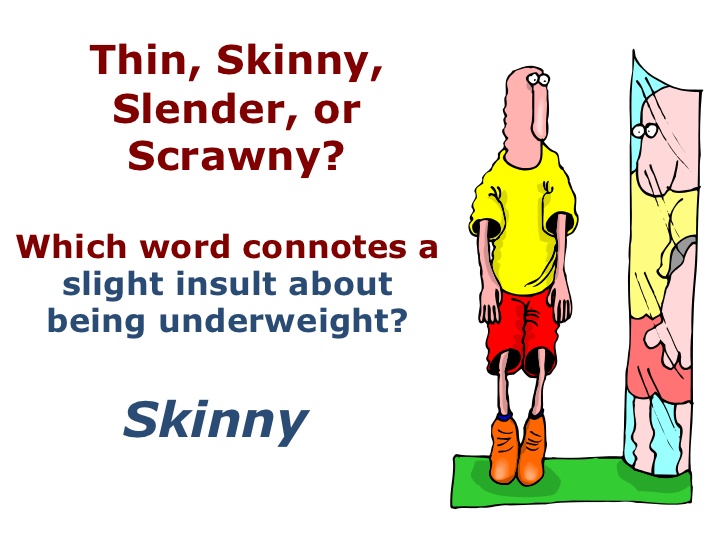
What is connotation?
a)
Connotation implies or suggests a meaning of a word.
b)
Dictionary meaning of a word.
c)
I don't know!
d)
Unknown meaning
55.
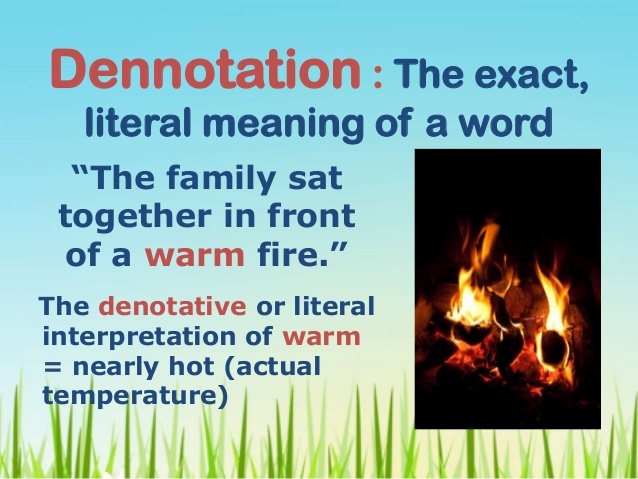
What is denotation?
a)
Direct meaning of a word or dictionary meaning.
b)
It means down.
c)
Let me ask my friend
d)
It means to note the word.
56.
Which connotation is MORE positive?
Our trip to the amusement park was _______.
a)
fine
b)
wonderful
57.
Which connotation is MORE negative?
I didn't like the ______ on Patrick's face.
a)
grin
b)
smirk
58.
Which connotation is MORE negative?
I ate a ________ sandwich.
a)
moist
b)
soggy
59.

Denotation is a word's ____________.

a)

Literal, dictionary definition

b)

Emotional meaning

c)

synonym

d)

antonym

60.
Connotation is a word's ___________.
a)
synonym
b)
emotional meaning
c)
antonym
d)
Literal, dictionary definition.
61.
Writers use this to communicate positive or negative feelings in their writing.
a)
connotation
b)
denotation
62.
Kevin's interest in model cars has turned into a hobby. If you change the word hobby to obsession, the word now has a _____ connotation.
a)
positive
b)
negative
63.

He is acting kind of salty today. How is "salty" being used in this sentence?

a)

connotative meaning

b)

denotative meaning

64.

He is a lying snake, you can't trust him! How is "snake" being used in this sentence?

a)

denotative meaning

b)

connotative meaning

65.

We saw the snake on exhibit in the zoo. How is snake being used in this sentence?

a)

connotative meaning

b)

denotative meaning

66.

The popcorn is really salty. How is "salty" being used in this sentence?

a)

connotative meaning

b)

denotative meaning

67.
McDonald's is an inexpensive meal. If you change the word inexpensive to cheap, the word now has a ____ connotation.
a)
positive
b)
negative
68.
Choose the word with the positive connotation.
gathering--mob
a)
gathering
b)
mob
69.
Which connotation is MORE positive?
We saw ______ animals in the animal house.
a)
fascinating
b)
weird
70.
Which connotation is MORE negative?
Mike _______ us to go to the funny house.
a)
nagged
b)
reminded
71.
Which is the best answer?
Which is worth more?
a)
something old
b)
something antique
72.
What is connotation?
a)
Connotation implies or suggests a meaning of a word.
b)
Dictionary meaning of a word.
c)
I don't know!
d)
Unknown meaning
73.
What is denotation?
a)
Direct meaning of a word or dictionary meaning.
b)
It means down.
c)
Let me ask my friend
d)
It means to note the word.
74.
Diction is the literary term that means
a)
The connections we have with words
b)
An author's choice of words
c)
The definition of words
d)
The common way of speaking with friends
75.
Which word has to do with our personal connections with words, and can be discussed in terms of positive, negative, or neutral?
a)
jargon
b)
denotation
c)
vernacular
d)
connotation
76.
Refers to the feelings and associations created by a word.
a)
synonym
b)
denotation
c)
connotation
d)
acronym
77.
The denotation is the _____ meaning of a word.
a)
emotional
b)
dictionary
c)
incorrect
d)
opposite
78.
_______ refers to the author's word choice.
a)
Connotation
b)
Diction
c)
Denotation
d)
Synonym
79.
Which word has to do with our personal connections with words, and can be discussed in terms of positive, negative, or neutral?
a)
mood
b)
denotation
c)
tone
d)
connotation
80.
Which word has to do with the definitions of words? Information you find in a dictionary.
a)
mood
b)
denotation
c)
tone
d)
connotation
81.
Connotation is a word's ___________.
a)
synonym
b)
emotional meaning
c)
antonym
d)
Literal, dictionary definition.
82.
Diction is the literary term that means
a)
The connections we have with words
b)
An author's choice of words
c)
The definition of words
d)
The common way of speaking with friends
83.
Red is used for Valentine's Day decorations. Why is this color chosen?
a)
It is vivid.
b)
It represents love.
c)
It is the color of roses.
d)
It represents the chosen one.
84.
The use of an image or an object to stand for something else 
a)
Imagery
b)
Symbolism
c)
Theme
d)
Denotation
85.
Why does an author use symbolism in their literary piece?
a)
To convey deeper meanings about a topic or subject
b)
To show the importance of symbols
86.

Symbols represent a concept or idea that is more significant (or more important) than the symbol itself.

a)

True

b)

False

87.
Dialogue is
a)
a conversation between/amongst characters
b)
a verb
c)
when the narrator tells you what is happening in a story
d)
boring
88.
Put __________________ around a speaker's exact words.
a)
commas
b)
speaker tags
c)
quotation marks
d)
An indent
89.
Which of the following are quotation marks?
a)
?
b)
"
c)
'
d)
,
90.
_______________ the first word of a quotation and first word of each sentence.
a)
Indent
b)
Capitalize
c)
Underline
d)
Delete
91.
Choose the sentence that uses quotation marks correctly.
a)
Polly shouted, "I want a cracker!"
b)
Polly shouted! "I want a cracker."
c)
Polly shouted, "I want a cracker"!
d)
"Polly shouted," I want a cracker!
92.
Choose the correctly punctuated sentence.
a)
"Hi," Shelly replied, "my name is Shelly Rutt."
b)
Hi Shelly replied. My name is Shelly Rutt.
c)
"hi" Shelly replied "my name is Shelly Rutt
d)
Hi, Shelly replied "my name is Shelly Rutt."
93.
Imagery is language that creates a picture.
a)
True
b)
False
94.
If something is sweet, which sense am I describing?
a)
Sight
b)
Smell
c)
Taste
d)
Touch
95.
One bite of the sour lemon caused my lips to pucker.  Which sense does this describe?
a)
Taste
b)
Sight
c)
Smell
d)
Touch
96.
How does imagery help us understand the story?
a)
It doesn't
b)
By expressing how the author is feeling
c)
Imagery helps us to see, touch, taste, smell, and feel what the characters feel and see
d)
By telling the mood
97.
Vivid description of things seen, heard, smelled, touched, or tasted
a)
Theme
b)
Sensory Details 
c)
Imagery 
d)
Sound Devices
98.
What is the definition of climax? 
a)
the turning point of the story
b)
the struggle between two characters
c)
the beginning of the story
d)
the point when the conflict is resolved
99.
The sequence of events in a story or novel is called the ________. 
a)
action
b)
conflict 
c)
setting
d)
plot 
100.
The theme is a lesson learned; the moral of the story.
a)
True
b)
False
101.
Interest and suspense are built during which part of the story? 
a)
exposition
b)
rising action
c)
climax
d)
falling action 
102.
What is the definition of climax? 
a)
the turning point of the story
b)
the struggle between two characters
c)
the beginning of the story
d)
the point when the conflict is resolved
103.
Which list shows the plot elements in the correct order? 
a)
exposition, falling action, climax, rising action, resolution 
b)
exposition, falling action, rising action, climax, resolution
c)
exposition, rising action, climax, falling action, resolution 
d)
rising action, falling action, exposition, climax, resolution
104.
What is the synonym we use to describe the beginning of the story where the main characters, setting, and problem are introduced?
a)
beginning
b)
rising action
c)
introduction/exposition
d)
resolution
105.
True or False:
It is possible to have multiple plots within one story.
a)
True
b)
False
106.
What takes place after the climax that prepares the story for its resolution?
a)
resolution
b)
rising action
c)
falling action
d)
exposition
107.
Where would you usually find the topic sentence in a paragraph? 
a)
It's the last sentence of the paragraph.
b)
The topic sentence is found in the middle of the paragraph after the details. 
c)
Most of the time it is the first sentence of the paragraph. 
108.
What are the sentences called that tell more about the topic sentence? 
a)
conclusion 
b)
main idea 
c)
supporting details 
d)
paragraph
109.
What is the purpose of a thesis?
a)
Explain an example from an outside source.
b)
Grab the reader's attention
c)
Connect the body paragraph to the thesis idea.
d)
Clearly state the focus for the entire essay.
110.
What is the purpose of a topic sentence?
a)
Explain an example from an outside source.
b)
Grab the reader's attention
c)
Connect the body paragraph to the thesis idea.
d)
Clearly state the focus for the entire essay.
111.
What is the purpose of a hook?
a)
Explain an example from an outside source.
b)
Grab the reader's attention
c)
Connect the body paragraph to the thesis idea.
d)
Clearly state the focus for the entire essay.
112.
"If you do all of your homework, you will get a good grade."
a)
pathos
b)
ethos
c)
logos
113.
"The veterinarian says that an Australian shepherd will be the perfect match for our active lifestyle."
a)
logos
b)
ethos
c)
pathos
114.
A prescription drug commercial featuring a doctor uses this appeal...
a)
Ethos
b)
Pathos
c)
Logos
d)
Rhetoric 
115.
A commercial featuring statistics and facts is using this appeal...
a)
Ethos
b)
Logos
c)
Pathos
d)
Rhetoric 
116.
Appeals to audience because the speaker appears trustworthy. This appeal is Greek for "character".... 
a)
Pathos
b)
Logos
c)
Ethos
d)
Rhetoric
117.
Using emotion to persuade your audience. The Greek word for "suffering" or "experience"...
a)
Ethos
b)
Pathos
c)
Logos
d)
Rhetoric
118.
Empathy
a)
Ethos
b)
Pathos
c)
Logos
119.
Logic
a)
Ethos
b)
Pathos
c)
Logos
120.
Emotions
a)
Ethos
b)
Pathos
c)
Logos
121.
Proof
a)
Ethos
b)
Pathos
c)
Logos
122.
Desire
a)
Ethos
b)
Pathos
c)
Logos
123.
Charts and Graphs
a)
Ethos
b)
Pathos
c)
Logos
124.
Fear
a)
Ethos
b)
Pathos
c)
Logos
125.
Speaker/Writer Trust
a)
Ethos
b)
Pathos
c)
Logos
126.
Facts
a)
Ethos
b)
Pathos
c)
Logos
127.
Type of appeal: Nearly 25% of all car accidents are caused by drivers using a cell phone while driving.
a)
ethos
b)
pathos
c)
logos
d)
everyday
128.
Type of appeal: Listerine is recommended by most dental professionals
a)
ethos
b)
pathos
c)
logs
d)
trustworthy
129.
Type of appeal:
"By donating fifty cents a day...your child can have clean drinking water..."
a)
ethos
b)
pathos
c)
logos
d)
sad...
130.
a)
ethos
b)
logos
c)
pathos
131.
a)
ethos
b)
pathos
c)
logos
132.
a)
ethos
b)
pathos
c)
logos
133.
a)
ethos
b)
pathos
c)
logos
134.
a)
ethos
b)
logos
c)
pathos
135.
Method of persuasion that appeals to EMOTIONS and FEELINGS.
a)
ethos
b)
pathos
c)
logos
136.
"Wear Air Jordans at your next game, and see how high you fly!" - Michael Jordan
a)
ethos
b)
pathos
c)
logos
137.
Examples of this method of persuasion include statistics, research, data, and facts.
a)
ethos
b)
logos
c)
pathos
138.
This method of persuasion requires a credible authority to convince the audience.
a)
ethos
b)
pathos
c)
logos
139.
"Ladies and gentlemen of the jury: we have not only the fingerprints, the lack of an alibi, a clear motive, and an expressed desire to commit the robbery… We also have video of  the suspect breaking in. The case could not be more open and shut."
a)
Ethos
b)
Pathos
c)
Logos
140.
"You will never be satisfied in life if you don’t seize this opportunity. Do you want to live the rest of your years yearning to know what would have happened if you just jumped when you had the chance?"
a)
Ethos
b)
Pathos
c)
Logos
141.
"My three decades of experience in public service, my tireless commitment to the people of this community, and my willingness to reach across the aisle and cooperate with the opposition, make me the ideal candidate for your mayor."
a)
Ethos
b)
Pathos
c)
Logos
142.
"Research compiled by scientists and analysts from NASA, as well as organizations from five other nations with space programs, suggests that a moon colony is possible with international support."
a)
Ethos
b)
Pathos
c)
Logos
143.
"He is a forensics, weapons, and ballistics expert for the federal government – if anyone’s qualified to determine the murder weapon, it’s him."
a)
Ethos
b)
Pathos
c)
Logos
144.
"Better men than us have fought and died to preserve this great nation. Now is our turn to return the favor. For God and country, gentlemen!"
a)
Ethos
b)
Pathos
c)
Logos
145.
"Doctors all over the world recommend this type of treatment."
a)
Ethos
b)
Pathos
c)
Logos
146.
"More than one hundred peer-reviewed studies have been conducted over the past decade, and none of them suggests that this is an effective treatment for hair loss. Only 1 in 10 treatments were successful!"
a)
Ethos
b)
Pathos
c)
Logos
147.
Making a claim and supporting it using logic is:
a)
persuasion
b)
claim
c)
argument
d)
evidence
148.
Making a claim and supporting it using feelings and emotions is called....
a)
evidence
b)
argument
c)
persuasion
149.
information used to back up and support your answer
a)
bridge
b)
persuasion
c)
argument
d)
evidence
150.
Challenging the argument by addressing the position of someone who may not agree with the argument
a)
turnback/rebuttal
b)
warrant
c)
counterargument
d)
argument
151.
The people that will be affected by this topic or read your essay
a)
evidence
b)
your teacher
c)
audience
152.
Your introduction paragraph includes
a)
your hook
b)
thesis
c)
all the above
153.
A claim is: 
a)
The position you are trying to get your readers to accept
b)
the thesis statement
c)
found in the introduction
d)
all of the above
154.
Define allusion
a)
a figure of speech that refers to a well-known story, event, person, or object from history in order to make a comparison in the readers' minds
b)
a figure of speech that is not meant to be taken literally 
c)
a comparison made using like or as that also utilizes personification 
d)
when the author appeals to the 5 senses of the reader to help the reader feel like we are experiencing what is happening in the reading.
155.
"Him and her were unhealthy lovers. They remind me of Romeo and Juliet." 
Why might the author use the allusion referencing Romeo and Juliet?
a)
To enable readers to know the characters are madly in love and headed to the altar. 
b)
To give us a better glimpse into the future of their relationship
c)
To make the reader laugh at their relationship and feel better about their own
d)
To give hints that their relationship may end miserably just like Romeo and Juliet's
156.
Which of these is NOT an example of an allusion?
a)
a reference to George Washington
b)
a reference to Adam and Eve
c)
a reference to the Boston Tea Party
d)
a reference to the colors in the rainbow
157.

How would allusion be defined?

a)

a reference to a famous person, place, or event

b)

words that involve one of the five senses

c)

two lines working as a unit

d)

a form or wordplay with similar sounding sounds

158.

Which of the following is not an example of an allusion?

a)

his wife was his Achille's heel

b)

he lies so much, I'm surprised his nose doesn't grow like Pinnochio's

c)

she transformed her backyard to look like the Garden of Eden.

d)

we'll miss him so much because he was the best dog ever.

159.

Choose the correct form of the word to make the sentence parallel:

Smoking and ____ are both prohibited on the subway.

a)

to spit

b)

spitting

c)

spit

160.

The use of multiple words, phrases, or sentences that have similar structure

a)

Parallelism

b)

Repetition

c)

Personification

d)

Inversion

161.
Select the sentence that illustrates the use of proper parallel construction. 
a)
Phuong Tran has wit, charm, and she has an extremely pleasant personality.
b)
Phuong Tran has wit, charm, and a pleasing personality.
162.
.  Select the sentence that illustrates the use of proper parallel construction. 
a)
In English class, Tashonda learned to read poems critically and to appreciate good prose.

b)
In English class, Tashonda learned to read poems critically and she appreciated good prose.
163.
.  Select the sentence that illustrates the use of proper parallel construction. 
a)
He wanted three things out of college: to learn a skill, to make good friends, and to learn about life.

b)
He wanted three things out of college: to learn a skill, to make good friends, and learning about life.
164.
.  Select the sentence that illustrates the use of proper parallel construction. 
a)
Coach Espinoza was a brilliant strategist, a caring mentor, and a wise friend.

b)
Coach Espinoza was a brilliant strategist, a caring mentor, and friend.
165.
.  Select the sentence that illustrates the use of proper parallel construction. 
a)
We found the film repulsive, offensive, and we thought it was embarrassing.

b)
We found the film repulsive, offensive, and embarrassing.
166.

A literary technique where the order of the words is reversed to emphasize something

a)

Inversion

b)

Syllogism

c)

Aphorism

d)

Symbol

167.

Their dog was fierce. Nobody would visit them.

a)

So fierce a dog did they had that nobody would visit them.

b)

So fierce was their dog that nobody would visit them.

c)

Their dog was fierce enough for anybody to visit them.

d)

If their dog weren't fierce, somebody would visit them.

168.
We don't ask the teachers for their opinion very often.
a)
Seldom ask we the teachers for Seldom as we the teachers for their opinion very often
b)
Seldom do we ask the teachers for their opinion.
169.
You should not ignore our advice under any circumstances.
a)
Under no circumstances should you ignore our advice.
b)
Under no circumstances shouldn't you ignore our advice.
170.
The girl was so beautiful that nobody could talk of anything else
a)
So beautiful was the girl that nobody could talk of anything else.
b)
Beautiful so was the girl that nobody could talk of anything else.
171.

What is the conclusion that you can infer from these two premises below:


All tigers are cat

All cats are animals

Therefore .................................

a)

Cat are tigers

b)

Animals are cats

c)

All tigers are animals

d)

Cat are tigers

172.

Most lawyers are men

Most men love to lie

Therefore ........................................

a)

Lawyers are men

b)

Lawyers are lier

c)

Men are lawyers

d)

Most lawyers are liars

173.

All nerds are smart

Smart people makes more money

Therefore .................................................

a)

All nerds makes more money

b)

Nerds are smart people

c)

Money is with smart people

d)

Smart people are rich nerds

174.

A concise statement designed to make a point or illustrate a common belief is called a(n) _____________________.

a)

anecdote

b)

rhetoric

c)

allusion

d)

aphorism

175.
Always be truthful.
a)
Fish and visitors smell in three days.
b)
Love your neighbor; yet don't pull down your hedge.
c)
Honesty is the best policy.
d)
Better slip with foot than tongue.
176.
Do not procrastinate.
a)
Make hay while the sun shines.
b)
A rolling stone gathers no moss.
c)
A penny saved is a penny earned.
d)
Never leave that till tomorrow, which you can do today.
177.
Do not plan something out and act as if it is going to happen because it might not happen as you intended
a)
God helps them that help themselves.
b)
Don't count  your chickens before they are hatched.
c)
A friend in need is a friend indeed.
d)
He that goes a borrowing goes a sorrowing.
178.

A rhetorical question is a question that...

a)

No one will answer

b)

Cannot be answered

c)

the reader/audience does not answer

179.

A rhetorical question allows people to

a)

answer truthfully

b)

persuade in disguise

180.

A rhetorical question is asked for the

a)

Answer

b)

The effect

181.

Persuasive strategies used by a writer or public speakers to persuade

a)

rhetorical devices

b)

rhetoric

c)

persuasion

d)

appeal

182.

A type of writing that tries to convince an audience to think or act in a certain way

a)

rhetorical question

b)

appeal

c)

rhetoric

d)

persuasion

183.

The art of using language to present facts and ideas in order to persuade

a)

rhetorical question

b)

rhetoric

c)

persuasion

d)

appeal

184.

A rhetorical strategy (ex: ethos, pathos, logos)

a)

Appeal

b)

Persuasion

c)

Rhetoric

185.
Point of view is...
a)
the author's opinion
b)
who the narrator is
c)
the vantage point, or perspective of a story
d)
the reader's opinion or perspective
186.
How can you know that something is written in first person point of view?
a)
Pronouns like I, my, and him are used.
b)
The author is addressing the reader.
c)
The narrator is not in the story.
d)
Pronouns like I, my, and we are used.
187.
She liked ice cream, but he liked cake. So they bought both.
a)
3rd person pov
b)
1st person pov
188.
A type of narrative perspective in where the  author uses pronouns like ''your" and "you."
a)
Second Person POV
b)
Third Person POV
c)
First Person POV
189.
She liked ice cream, but he liked cake. So they bought both.
a)
3rd person OMNISCIENT
b)
3rd person limited
c)
3rd person objective
d)
1st person
190.
Third person omniscient point of view is when the narrator knows the feelings and thoughts of ______ characters.
a)
all
b)
one
c)
no
d)
more than three
191.
Which point of view do you see these signal words?
he, she, they, them, (character's names)

a)
First person
b)
Second person
c)
Third person
192.
Which point of view is when the narrator only knows the thoughts and feelings of ONE character?
a)
Second person
b)
Third person objective
c)
Third person limited
d)
Third person omniscient
193.
"Leslie sat in front of Paul. She had two long, brown pigtails that reached all the way down to her waist. Paul saw those pigtails, and a terrible urge came over him. He wanted to pull a pigtail. He wanted to wrap his fist around it, feel the hair between his fingers, and just yank." Sideways Stories From Wayside School, Louis Sachar
a)
First Person
b)
Second Person
c)
Third Person Limited
d)
Third Person Omniscient
194.
“Ozma took the arm of her hostess, but Dorothy lagged behind.  When at last she rejoined Glinda and Ozma in the hall, she found them talking earnestly about the condition of the people, and how to make them more happy and contented– although they were already the happiest and most contented folks in all the world.  This interested Ozma, of course, but it didn’t interest Dorothy very much, so the little girl ran over to the big table on which was lying open Glinda’s Great Book of Records.” Ozma of Oz by Frank L. Baum
a)
First Person
b)
Second Person
c)
Third Person Limited
d)
Third Person Omniscient