
NEW
Font size
 Worksheets
Lewis Dot and IMFs
Total questions: 48
Worksheet time: 2hrs 36mins
When electrons are completely transferred from one atom to another, the bond between the ions is called
polar covalent
ionic
polar ionic
nonpolar covalent
covalent
How many electrons are in the Lewis structure of lithium nitride?
0
3
4
5
8
How many electrons must a phosphorus atom gain in order to have a full valence shell?
0
1
2
3
5
How many bonding pairs of electrons are in one molecule of ammonia (NH3)?
1
2
3
4
0
How many valence electrons are in one molecule of carbon dioxide?
0
4
6
8
16
Which of the following contains a triple bond?
F2
O2
CN-
CO2
SiCl4
Which of the following contains a double bond?
C2H4
H2
OF2
CF4
OH-
A force that occurs between molecules is called
intramolecular
intermolecular
molecular
covalent
ionic
Of those listed, which type of intermolecular force is the strongest?
covalent
dipole-dipole
hydrogen bonding
molecular
dispersion

This is a correct dot diagram for neon (Ne)
True
False

By replacing the element symbol, this could be the dot diagram of
Mg
Cl
C
O

What is the correct formula for this molecule?
NH
N3H
NH3
NH4
When an atom loses an electron, it becomes a:
Positive ion
Negative ion
Neutral ion
Neutral atom
Ionic compounds are formed when one or more valence electrons are transferred from _____
A nonmetal atom to a metal atom
A nonmetal atom to a nonmetal atom
A metal atom to a nonmetal atom
A metal atom to a metal atom
What is the ONLY part of the atom that makes a chemical bond
Nucleus
Electrons
Valence Electrons
Protons

How many lone pairs of electrons (the ones not in bonds) in the molecule pictured above?
2
3
6
8
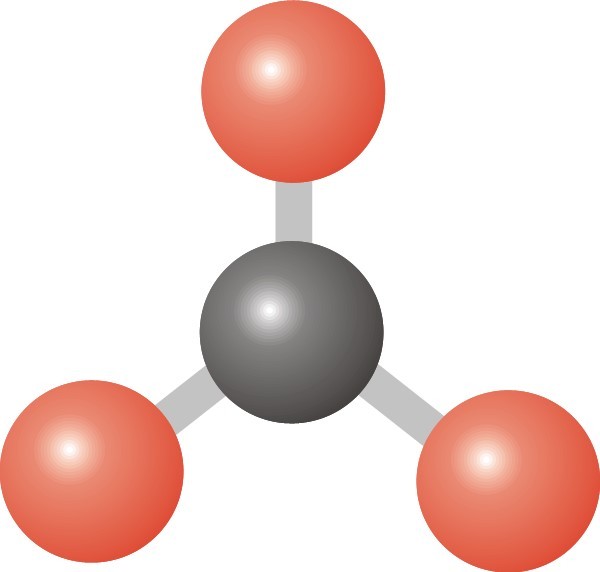
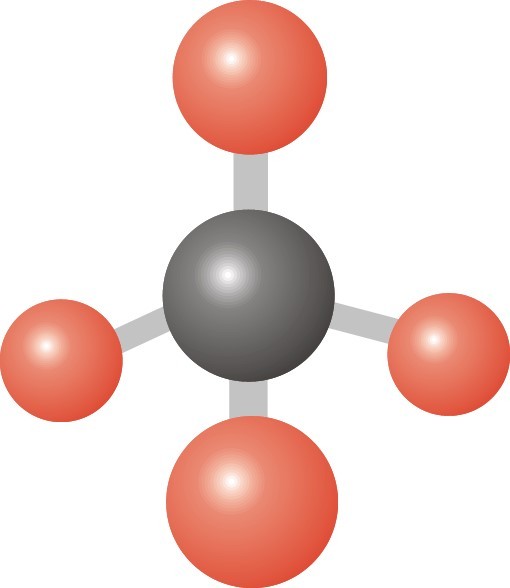

Which is the correct Lewis Dot Structure for NH3?


Which is the correct Lewis Dot Structure for H2S?


What is the goal of the Lewis Dot Structure?
To determine the electron position.
To show the element's valence electrons & bonding capabilities.
To find the atomic mass of an element.
To search for the number of electrons in an individual atom.
Hydrogen needs _____ electrons in its valence shell to be stable.
4
6
8
2
According to the octet rule most elements need _______ valence electrons.
2
8
6
18
Which of these is incorrect?


Water, H2O, is classified as what type of molecule?
a polar molecule
a nonpolar molecule
a coordinate covalent compound
an ionic compound

A little lowercase delta plus (δ+) or delta minus (δ–) by the individual atoms signify ___
partial charges
the magnetic poles
a difference in electronegativities
nonpolar molecules

The oxygen sides of water are always doing their best to orient themselves toward ___
magnetic north
the hydrogen sides of other molecules
negative ions
the surface of a liquid
Which of the following forces are found between two NONPOLAR molecules?
Dispersion force
Dipole-dipole
Hydrogen bond
Dipole-induced dipole
What type of intermolecular force requires BOTH molecules to have an H-N, H-O, or H-F connection within them?
Hydrogen bond
Dispersion
Dipole-dipole
Dipole-induced dipole
What type of intermolecular force occurs between two POLAR molecules?
Dispersion
Dipole-dipole
Hydrogen
Dipole-induced dipole
Rank these in order of strength (from strongest to weakest):
Dispersion forces
hydrogen bond
dipole-dipole attraction
dipole-dipole>hydrogen bond>dispersion
Dispersion>dipole-dipole>hydrogen bond
hydrogen bond>dipole-dipole>Dispersion
Dispersion>hydrogen bond>dipole-dipole
A diatomic molecule like O2 is always _____ because electrons are shared _____
nonpolar; unequally
polar; equally
nonpolar; equally
polar; unequally
Very soluble (able to dissolve) in water:
Ionic Bonds
Covalent Bonds
Both bonds
Neither bond

