
 Worksheets
Unit 3 Review
Total questions: 44
Worksheet time: 52mins

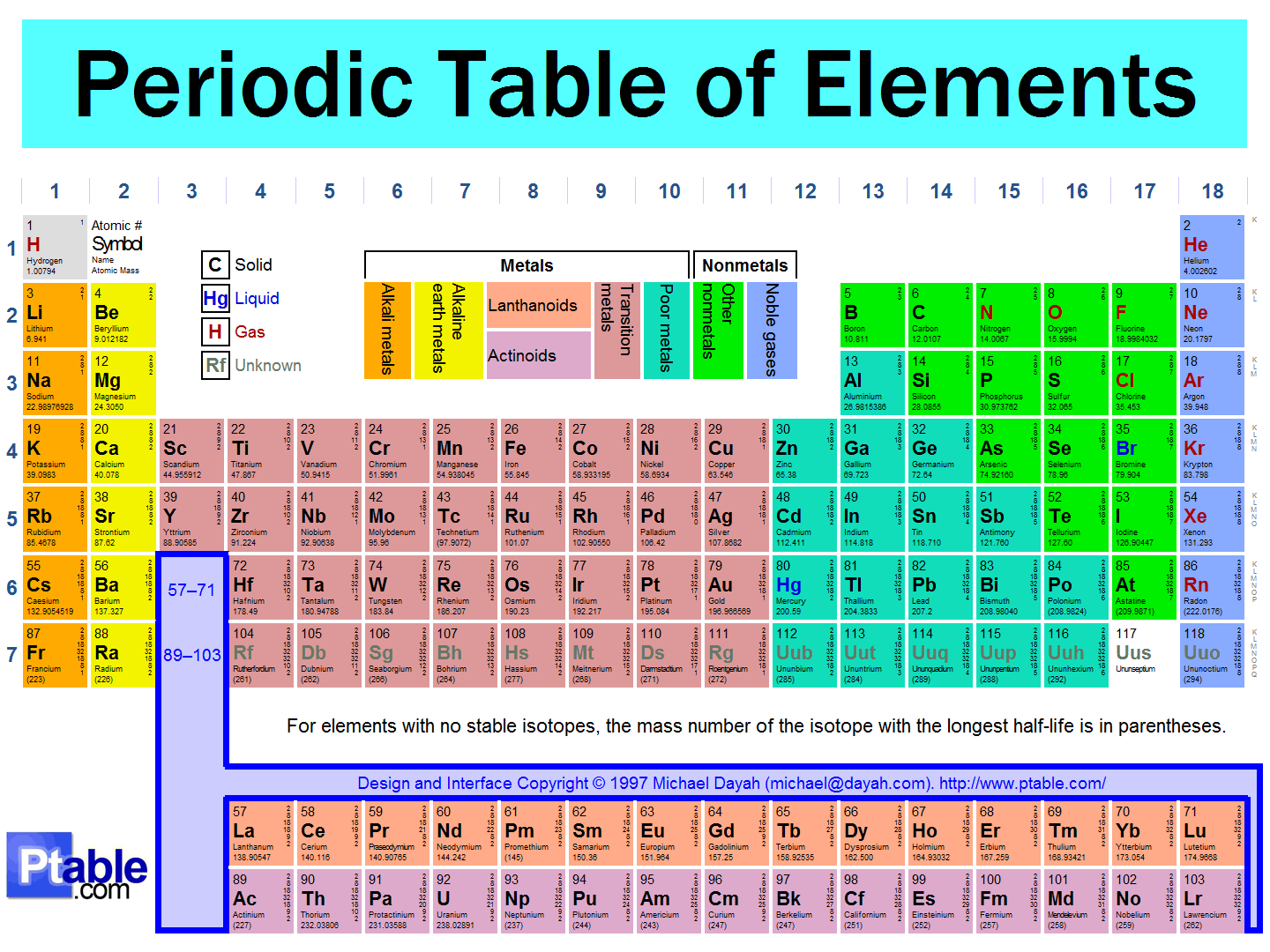
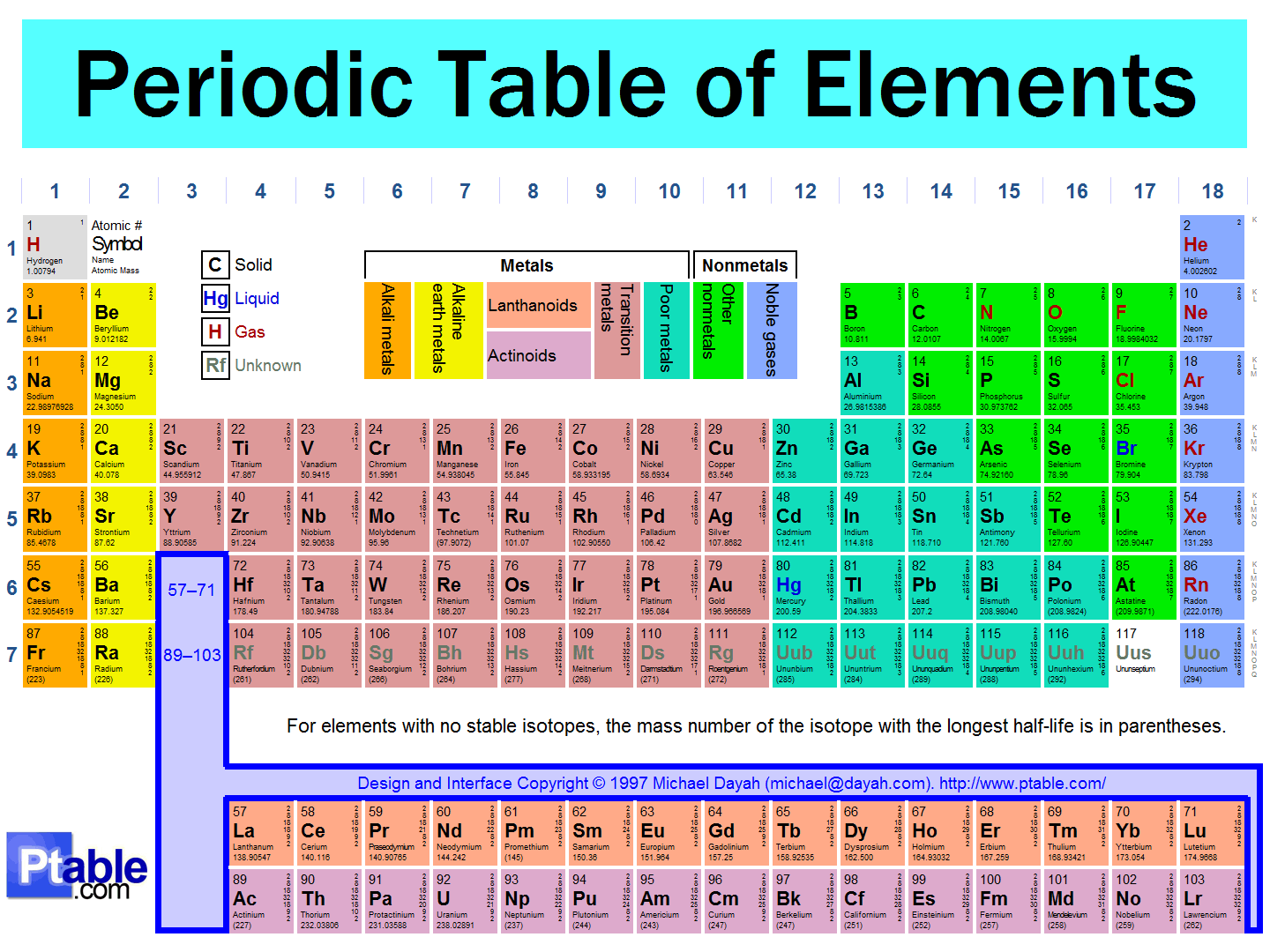

What are the three main groups of the periodic table?
groups
metal
nonmetals
metalloids
periods
What does the number of proton tell us?
electrons
atomic number
atomic mass
neutrons
How do you calculate the number of neutrons? *
Mass = Atomic number - Neutrons
Mass - Atomic number = Neutrons
Atomic number = Neutrons

What is the name of the element? (Periodic table will be needed)
sodium
magnesium
vanadium

What group and period does this element belong in? *
period 1 and group 3
period 3 and group 1
period 2 and group 3
period 3 and group 2

How many valence electrons does the element have?
1
2
3
4

How many protons and electrons does nickel have?
28
58.69
Who invented the Periodic Table?
Mendeleev
Bohr
Lewis
Democritus
The distance between nucleus and outermost shell occupied electron
Atomic Radii
Ionization Energy
Electronegativity
Electron Afinity
Oxidation Number
The tendency of an atom to attract a shared pair of electrons
Atomic Radii
Ionization Energy
Electronegativity
Electron Afinity
Oxidation Number
Which element has bigger atomic radii?
Beryllium is bigger than Fluorine
Oxygen is bigger than Sulphur
Litihium is bigger than Sodium
Phosphorus is bigger than Bromine

If an element has 117 protons which group will it be in on the periodic table?
1
7
11
17
Which element is most likely to have six electrons in its 4th energy level?
Oxygen (O)
Selenium (Se)
Krypton (Kr)
Potassium (K)

Which color on the image of the periodic table corresponds with the actinides.
red
black
blue
yellow on bottom
The elements in this family are soft, silvery, and very reactive with water.
Alkaline Earth Metals
Alkali Metals
Transition Metals
Lanthanides
1s22s22p63s23p64s23d10
1s22s22p63s2

What do you start all electron configurations with?
1s2
1d10
1f14
1p6
The 4 orbitals are
s, p, d, f
a, b, c, d
2, 4, 6, 8
[Xe] 6s2 4f14 5d9


