
 Worksheets
Tinkler Final Exam 2018
Total questions: 148
Worksheet time: 2hrs 41mins
What structure separates the thoracic cavity and the abdominal cavity?
mediastinum
medial cartilage
ribs
diaphragm

Identify the quadrant located at "W".
Left Lower Quadrant
Right Upper Quadrant
Left Upper Quadrant
Epigastric Region

*right and left refer to "right" and "left" of the body in position.
Bluish discoloration of the skin is
cyanosis
bradypnea
tachypnea
dyspnea
Difficult or painful breathing
apnea
Cheyne-Stokes
dyspnea
orthopnea
Rapid respiration
bradypnea
tachypnea
bradycardia
tachycardia
Normal adult respiratory rate per minute is:
5-10
12-20
16-30
8-12


#3 is the
nose
throat
voicebox
windpipe
The folds of the stomach wall
rugae
villi
peritoneum
papillae
The door into the stomach that regulates food entry and prevents stomach contents from going back up the esophagus...
Epiglottis
Pyloric sphincter
Cardiac sphincter
Appendix
What separates the stomach and the small intestine and controls the amount of food entering the small intestine?
upper esophageal sphincter
pyloric sphincter
anal sphincter
cardiac (lower esophageal) sphincter
Rhythmic muscular contractions that move food along the GI tract
heterotrophs
peristalsis
nutrients
alimentary canal
How long does food stay in the adult stomach?
1 hour
2 to 4 hours
3 to 5 hours
10 hours
Part of the small intestines in order
duodenum, jejunum, ileum,
jejunum, ileum, duodenum
duodenum, ileum, jejunum
no one really knows
The skeleton is divided into two main sections:
Axial & Distal
Appendicular & Proximal
Distal & Proximal
Axial & Appendicular

A yellowing of the skin due to liver failure
Carotene
Jaundice
Pallor
Erythema
Turning blue due to a lack of oxygen
Pallor
Erythema
Cyanosis
Vitiligo
A reddening of the skin due to fever or blushing
Pallor
Erythema
Vitiligo
Albinism
The underlying or inner layer of the skin, which is also called the derma corium, cutis, or true skin, is the:
dermis
papillary
dermal
epidermis
What types of Skin Cancer are there?
Melanoma
Bowel
Basal Cell Carcinoma
Squamous Cell Carcinoma
Leukemia
yellowing of the skin might be due to
jaundice
pallor
erythema
blanching

Name this muscle
Biceps
triceps
Deltoids
Trapezius

Name this bone
Tibia
Femur
Fibula
Radius

Femur
Tibia
Fibula
Ulna

Name this bone
Ulna
radius
Humerus
Scapula

Name this bone
Scapula
Sternum
Clavicle
Mandible

Name this bone
radius
Humerus
Tibia
Ulna

What is this action?
Flexion
Rotation
Abduction
Extension

What is this action?
Extension
Flexion
Circumduction
plantar flexion


sudoriferous glands are
sweat glands
oil glands
mammary glands
What layer of the skin is avascular?
Dermis
Subcutaneous/Hypodermis
Epidermis


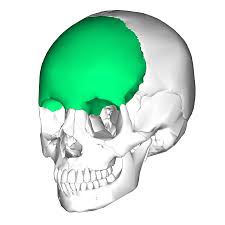
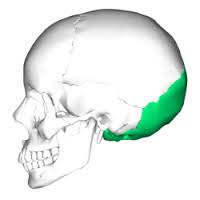
What bone is highlighted?
Skull (Cranium)
Mandible
Scapula
Clavicle
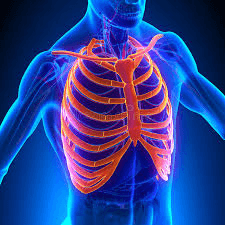
What bone is highlighted?
Ribs
Vertebrae
Clavicle
Femur

What bone is highlighted?
Radius
Ulna
Humerus
Carpals

What bone is highlighted?
Vertebrae
Radius
Pelvis
Ribs

What bone is highlighted?
Patella
Pelvis
Clavicle
Femur

What bone is highlighted?
Patella
Pelvis
Clavicle
Mandible

What is the axial skeleton made up of?
skull, ribs, vertebrae
Skull, ribs, vertebrae, clavicle
Skull ribs, vertebrae, pelvis
Skull, sternum, spine
a rounded bowing of the thoracic area of the back
ruptured disc
kyphosis
lordosis
scoliosis
If you do not exercise your muscles, they will become weak, flaccid, and will begin to:
hypertrophy
atrophy
fill with fluid
become myosclerotic

When muscles are not used for a long time, they can ___ or waste away.
tone
contracture
lengthen
atrophy
The end of the muscle that does not move when attached to bone is:
Insertion
Origin
Ligament
Tendon
When muscles are not used for a long time, they can ___ or waste away.
tone
contracture
lengthen
atrophy
____________ allows the muscle to return to its original shape after contracted or stretched.
Excitability
Elasticity
Extensibility
Contractibility
When muscles are able to return to their original shape when they relax. This is called:
Irritability
Excitability
Extensibility
Elasticity
Which of followings show correct steps of nerve pathway?
along axon --> synapse --> dendrite-->cell body
Dendrite --> along axon --> cell body --> synapse --> dendrite
Axon --> along axon --> cell body --> synapse --> dendrite
Dendrite --> along axon --> cell body --> synapse --> axon --> dendrite


What are the 4 main lobes of the brain?
Hereditary, blood, cortex, involuntary
Voluntary, math, pain, hearing
Smell, taste, touch, senses
Frontal lobe, parietal lobe, occipital lobe, temporal lobe
____________________ and ____________________ nerves are part of the peripheral nervous system.
Cranial, spinal
caudal, cranial
spinal, cadual
cephalic, spinal
There are ____________________ pairs of spinal nerves and ____________________ pairs of cranial nerves.
31, 12
12, 31
32, 12
12,2

Inability to understand and/or produce speech.
Aura
Incontinence
Dysarthria
Aphasia
Hemiparesis
Loss of bowel and/or bladder control.
Weakness on one side of the body.
Seizures that result from sudden high fevers.
A state of profound semi-conscviousness
What are the layers of membranes that surround the brain and spinal cord known as?
Ventricles
Meninges
Choroid Plexus
Hippocampus
Which is the innermost meninge?
Dura mater
Arachnoid mater
Pia mater
Cranial mater
Which is the outermost meninge?
Dura mater
Arachnoid mater
Pia mater
Cranial mater
Which is the middle meninge?
Dura mater
Arachnoid mater
Pia mater
Cranial mater

What quadrant does number 1 Represent?
Right Upper
Right Lower
Left Upper
Left Lower

What quadrant does number 2 Represent?
Right Upper
Right Lower
Left Upper
Left Lower

What quadrant does number 3 Represent?
Right Upper
Left Upper
Right Lower
Left Lower
What is the largest artery in the body?
aorta
vena cava
arteriole
pulmonary artery
These blood vessels always carry blood away from the heart.
ventricles
arteries
atria
veins
What is the name of the membrane that surrounds the outside of the heart?
endocardium
pericardium
myocardium
epicardium


The heart lies on which side of the body?
right
center
left
Which is the largest vein in the body?
Aorta
Arteriole
Vena Cava
Pulmonary Vein
What are the 2 types of nerves?
sensory nerves and motor nerves
sensory nerves and circular nerves
motor nerves and circular nerves
circular nerves and octular nervs

