
NEW
Font size
S
M
L
XL
 Worksheets
7th REVIEW 2019
Total questions: 45
Worksheet time: 26mins
Name
Class
Date
1.
The reactants are on the left side of the chemical equation.
a)
True
b)
False
2.
Which is a chemical change?
a)
freezing fruit juice
b)
slicing a potato
c)
boiling water
d)
copper metal turning green
3.
Is burning wood a chemical or physical change?
a)
chemical
b)
physical
4.
Is hammering wood together to build a house a chemical or physical change?
a)
chemical
b)
physical
5.
Is a a rusting bicycle a chemical or physical change?
a)
chemcial
b)
physical
6.
Is melting butter for popcorn a chemical or physical change?
a)
chemical
b)
physical
7.
The purpose of selective breeding is to
a)
Get bigger animals
b)
get smaller animals
c)
create animals with desirable traits
d)
create animals with bad traits
8.
It is very common for yellow labs to have bad hips. This is because owners want purebred yellow labs who are good hunting dogs. This is an example of
a)
Natural Selection
b)
Selective breeding
c)
Mitosis
d)
Fossil Record
9.
The following are inherited traits of humans EXCEPT...
a)
long hair
b)
blue eyes
c)
long eyelashes
d)
small dimples
10.
Which best describes an inherited trait?
a)
a characteristic one chooses to express
b)
a characteristic one receives from the food one eats
c)
a characteristic that is passed on from one's parents
d)
a characteristic that is influenced by one's surroundings
11.
Which sample of molecules has the greatest kinetic energy
a)
He at 100k
b)
H2 at 300k
c)
O2 at 400k
d)
H2O at 200k
12.
When the temperature of matter increases the particles...
a)
speed up and move closer
b)
speed up and move farther apart
c)
slow down and move closer together
d)
slow down and move farther apart
13.
Particles closest together
a)
solid
b)
liquid
c)
gas
d)
solid, liquid and gas
14.
Particles move quickest
a)
solid
b)
liquid
c)
gas
d)
solid, liquid and gas
15.

Which state of matter do the particles in this picture represent?
a)
solid
b)
liquid
c)
gas
d)
plasma
16.

What does this picture represent?
a)
solid
b)
liquid
c)
gas
d)
plasma
17.

What does this picture represent?
a)
solid
b)
liquid
c)
gas
d)
plasma
18.
Steve wanted to see if the type of fertilizer made sunflowers grow larger. What is the dependent variable
a)
Type of fertilizer
b)
Size of sunflower
c)
Type of sunflower
19.
Steve wanted to see if the type of fertilizer made sunflowers grow larger. What is the independent variable
a)
Type of fertilizer
b)
Size of sunflower
c)
type of sun flower
20.
Sam wanted to know if the color of the chair you sat in when taking a test affected your test grade. What is the independent variable.
a)
Color or chair
b)
Grade on test
c)
Age of students
21.
What is the left part of a chemical equation called?
H2 + O → H2O
H2 + O → H2O
a)
Reactants
b)
Products
c)
Yields
d)
Chemical Equation
22.
2H2 + O2 ----> 2H2O What is the product?
a)
------>
b)
2H2O
c)
2H2+ O2
23.
Which is the Law of Conservation of Matter?
a)
matter cannot be created or destroyed, it only changes form
b)
matter can be created but it cannot be destroyed, it never changes form
c)
matter can be destroyed but it cannot be created, it usually just changes form
d)
matter is an unproven theory created by Hans Geiger
24.
What is the definition of CONDUCTION?
a)
When heat is transferred from objects like rays of light or electromagnetically.
b)
a hot liquid or air that expands, becomes less dense, and rises or becomes more dense, and sinks.
c)
When heat transfers from objects that are touching.
d)
When heat transfers through the heater or AC in your house.
25.
Hot coffee is stirred with a spoon; the spoon gets hot due to
a)
conduction
b)
convection
c)
radiation
26.
"Lava lamps" contain colored liquids. These liquids form globs that rise to the top due to
a)
conduction
b)
convection
c)
radiation
27.
In a swimming pool, water near the surface is slightly warmer. The warm water rises because of
a)
conduction
b)
convection
c)
radiation
28.
What is a punnett square?
a)
graph used to predict the possible genotypes of offspring in a given cross
b)
a graph used to predict the possible birth rate of offspring.
c)
a graph used to predict the possible behavioral characteristics an offspring could have
d)
None of the above
29.
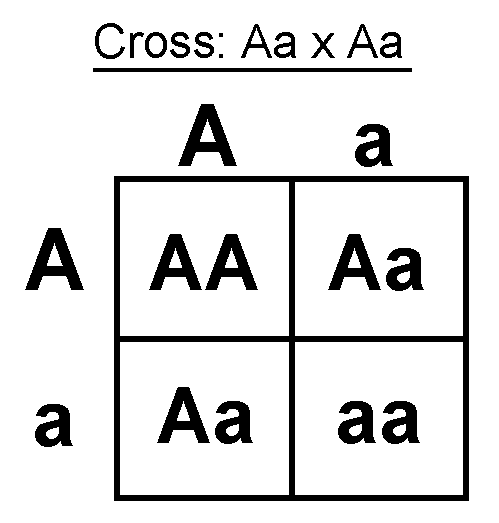
What is the phenotype of the offspring? (A-Brown hair; a-blond hair)
a)
50 % Brown Hair and 50% Blond Hair
b)
25 % Brown Hair and 75% Blond Hair
c)
75 % Brown Hair and 25% Blond Hair
d)
0% Brown Hair and 100% Blond Hair
30.
Aa, DD, bB, yy are all examples of
a)
genotypes
b)
phenotypes
31.
AA and Aa always show up as
a)
dominant
b)
recessive
32.
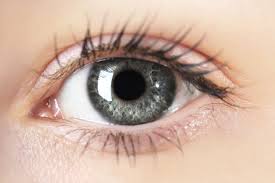
What you see, or the physical appearance.
a)
Genotype
b)
Phenotype
c)
Homozygous
d)
Heterozygous
33.

What is the probability of heterozygous offspring?
a)
25%
b)
50%
c)
0%
d)
100%
34.

What allele combination should go in the missing box?
a)
AA
b)
Aa
c)
aa
d)
none of these
35.
Which of the following genotypes is heterozygous?
a)
Bb
b)
BB
c)
bb
d)
B
36.
Which of the following genotypes is homozygous dominant?
a)
A
b)
Aa
c)
AA
d)
aa
37.
Which of the following is homozygous recessive?
a)
Tt
b)
tt
c)
TT
d)
T
38.
What kind of heat transfer happens when the sun is heating your body?
a)
Conduction
b)
Radiation
c)
Convection
d)
Density
39.
This system controls everything you do.
a)
Nervous system
b)
Olfactory system
c)
Respiratory system
d)
Endocrine system
40.
Without the nervous system, you couldn't
a)
walk
b)
breathe
c)
think
d)
all of the above
41.
What chemical reaction has almost the same products and reactants as cellular respiration but reversed?
a)
Rusting
b)
Photosynthesis
c)
Combustion
d)
Symphonies
42.
This process releases chemical energy from sugars and other carbon-based molecules to make ATP when oxygen is present.
a)
photosynthesis
b)
light-independent reaction
c)
cellular respiration
d)
light-dependent reaction
43.
Energy due to motion is ____________ energy.
a)
Potential
b)
Energy
c)
Kinetic
d)
Friction
44.
The faster an object moves, the ________ kinetic energy it has.
a)
more
b)
less
c)
none of the above
d)
all of the above
45.

What kind of energy is in a stretched rubber band?
a)
Potential
b)
Kinetic
Reset

