wayground logo

Free Printable Worksheets

NEW

Font size

S
M
L
XL
Worksheets

Heat and Temp: Topic 1 + 2 Review

Total questions: 40

Worksheet time: 36mins

Name
Class
Date
1.
When a substance changes from a liquid to a gas, energy is lost.
a)
True
b)
False
2.
When a particle changes from a solid to a liquid the process is called ..............
a)
condensation
b)
melting
c)
evaporation
d)
sublimation
3.
When particles lose energy and change from a gas to a liquid it is called ...........
a)
condensation
b)
melting
c)
evaporation
d)
dissolving
4.
Energy always travels from high to low.
a)
True
b)
False
5.
When a particle changes from a solid to a liquid to a gas it is _______________.
a)
gaining energy
b)
losing energy
c)
maintaining energy
d)
expressing no energy
6.
Bonds are the strongest within this phase.
a)
solid
b)
liquid
c)
gas
d)
polimers
7.
How are liquids and solids different than gasses?
a)
Gasses have space between their particles.
b)
Only solids and liquids can be compressed.
c)
Solids hold the shape of the container they are in.
d)
Solids and liquids cannot be contained.
8.
How are liquids and solids different than gasses?
a)
Solids and liquids cannot be contained.
b)
Solids hold the shape of the container they are in.
c)
Solids hold their own shape.
d)
Only solids and liquids can be compressed.
9.
How are liquids and solids different than gasses?
a)
Solids and liquids do not have space between their particles.
b)
Only solids and liquids can be compressed.
c)
Solids hold the shape of the container they are in.
d)
Solids and liquids cannot be contained.
10.
In what way are liquids different than solids?
a)
Solid particles move faster than liquid particles.
b)
Liquids have no defined shape but solids do.
c)
Solids have a greater mass than liquids.
d)
Liquid particles never touch but solid particles always do.
11.
At higher temperatures
a)
particles in an object have less energy
b)
particles in an object move faster
c)
a gas contracts
12.
What Is Volume?
a)
How heavy something is.
b)
The amount of space taken up by and object.
c)
How a liquid flows.
d)
The international unit of measurement.
13.
What is the definition of CONDUCTION?
a)
When heat is transferred from objects like rays of light or electromagnetically.
b)
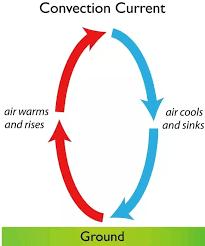
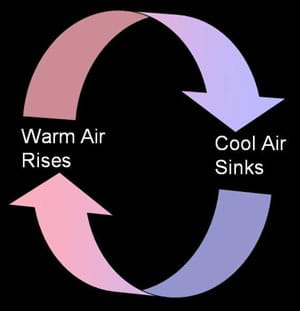
a  hot liquid or air that  expands, becomes less dense, and rises or becomes more dense, and sinks.
c)
When heat transfers from objects that are touching.
d)
When heat transfers through the heater or AC in your house.
14.

What type of heat transfer takes place when you touch a warm mug of hot chocolate?

a)

Radiation

b)

Convection

c)

Conduction

d)

None of the above

15.

Conduction requires

a)

Electricity

b)

the electromagnetic spectrum and particles

c)

air or water flow

d)

direct contact

16.

Heat transfer always moves ...

a)

cold to hot

b)

east to west

c)

hot to cold

d)

north to south

17.

If you walk barefoot on hot asphalt, energy is transferred by which process?

a)

Convection

b)

Radiation

c)

Conduction

d)

Reflection

18.
The more particles an object has at a given temperature, the more thermal energy it has.
a)
True
b)
False
19.
Object A is much larger than Object B, but both are made of the same material.  If both objects are at the same temperature, the thermal energy of Object A is THE SAME AS the thermal energy of Object B.
a)
True
b)
False
20.
When heat is absorbed by an object, the speed of the particles in the object IS UNCHANGED.
a)
True
b)
False
21.
The transfer of thermal energy from a warmer object to a cooler object is called ___________.
a)
Heat
b)
Temperature
22.
________________is a measure of the average kinetic energy of the individual particles in an object. 
a)
Temperature
b)
Heat
23.
Most of the world uses the ___________ temperature scale.
a)
Celisus
b)
Fahrenheit
24.

The total kinetic and potential energy of all the molecules in an object is called _______________.

a)

temperature

b)

thermal energy

c)

heat

d)

conduction

25.

Heat is thermal energy transferred from one object to another because of a difference in ___________________.

a)

volume

b)

mass

c)

energy

d)

temperature

26.

When temperature decreases, the molecules of a substance move slower and ___________ kinetic energy. This causes the object to __________________.

a)

gain, contract

b)

gain, expand

c)

lose, contract

d)

lose, expand

27.

Which statement about thermometers is false?

a)

When the red liquid heats up, it expands

b)

When the red liquid cools, it contracts

c)

When the red liquid expands, it gets higher

d)

When the red liquid expands, it gets lower

28.

What is the temperature in degrees Celsius?

a)

-26

b)

-24

c)

-18

d)

-16

29.


What happens to temperature when we add thermal energy?

a)

temperature increases

b)

temperature decreases

c)

temperature stays the same

d)

None of these answers

30.

Particles move faster when a substance:

a)

changes from a liquid to a solid

b)

changes from a gas to a solid

c)

changes from a solid to a liquid

d)

changes from a gas to a liquid

31.
What is the definition of CONDUCTION?
a)
When heat is transferred from objects like rays of light or electromagnetically.
b)
a  hot liquid or air that  expands, becomes less dense, and rises or becomes more dense, and sinks.
c)
When heat transfers from objects that are touching.
d)
When heat transfers through the heater or AC in your house.
32.
What is the definition of CONVECTION
a)
When heat transfers through waves.
b)
When heat transfers from objects that are touching.
c)
a  hot liquid or air that  expands, becomes less dense, and rises or becomes more dense, and sinks.
d)
Heat traveling from the sun
33.

Which of the following is an example of convection?

a)

A hair dryer is drying up your hair.

b)

When the AC or heater changes the temperature.

c)

When a car engine turns hot after being turned on.

d)

When you are making soup and the water is rising and lowering.

34.
The baby chickens are kept warm from the heat lamps demonstrates this type of heat transfer. 
a)
conduction
b)
convection
c)
radiation
35.
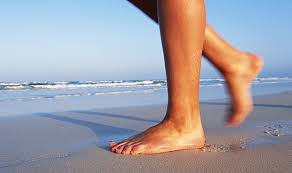
Walking on the warm sand sand with your bare feet demonstrates this type of heat transfer. 
a)
conduction
b)
convection
c)
radiation
36.
A group of friends gather around a fire to stay warm.
a)
conduction
b)
convection
c)
radiation
37.

You get sunburned due to __________ from the sun.

a)

conduction

b)

convection

c)

radiation

38.

A pot is placed directly on a stove. The pot gets hot due to

a)

conduction

b)

convection

c)

radiation

39.

In heat transfer, heat always flows from the _______________ substance to the _______________ substance.

a)

Hotter to colder

b)

Colder to hotter

c)

Hotter to hotter

d)

Colder to colder

40.

Near the ceiling of a room the air is warmer. The warm air rises because of

a)

conduction

b)

convection

c)

radiation