wayground logo

Free Printable Worksheets

Font size

S
M
L
XL
Worksheets

Finals

Total questions: 81

Worksheet time: 1hrs 4mins

Name
Class
Date
1.

what is a characteristic of the colonial era

a)

Feelings of religion

b)

Anger

c)

Motivated

d)

National government

2.

what is a characteristic of the revolution era

a)

Courage

b)

Salem Witch Trials

c)

Dividing of power

d)

Feelings of religion

3.

what is a characteristic of the Constitution era

a)

Rule of state

b)

Felt they needed a government

c)

Motivated

d)

Anger

4.

what motivated the Pilgrims to immigrate to America

a)

freedom of religion

b)

Great amount of Furs

c)

Religious prosecution

d)

Gold and wealth

5.

what motivated the Puritans to immigrate to America

a)

Freedom of religion

b)

Gold and wealth

c)

Great amount of furs

d)

religious prosecution

6.

what motivated the Catholics to immigrate to America

a)

Religious prosecution

b)

Freedom of religion

c)

Great amount of furs

d)

gold and wealth

7.

what motivated the french to immigrate to America

a)

Great amount of furs

b)

Freedom of religion

c)

Gold and wealth

d)

Religious prosicution

8.

what motivated the other European powers to immigrate to America

a)

Gold and wealth

b)

Freedom of religion

c)

religious prosecution

d)

great amount of furs

9.

what happened in 1607

a)

Jamestown

b)

Mayflower compact

c)

deceleration of independence

d)

Established US government

10.

what happened in 1620

a)

Mayflower compact

b)

Jamestown

c)

First american Colony

d)

turning point in the revolutionary war

11.

what happened in 1776

a)

Deceleration of Independence

b)

end of the revolutionary war

c)

Mayflower compact

d)

Jamestown Founded

12.

what happened in 1787

a)

Established U.S. Government

b)

Jamestown

c)

Mayflower Compact

d)

Decleration of independence

13.
In what year was Jamestown settled?
a)
1492
b)
1607
c)
1776
d)
2007
14.

Why was Valley Forge important

a)

Turning point in the revolutionary war

b)

First american colony

c)

End of revolutionary war

d)

America is independent

15.

Why was yorktown important

a)

it was the end of the revolutionary war

b)

it was the turning point of the revolutionary war

c)

America was independent

d)

it was the first american colony

16.

¿Cómo se llama tu profesora de biología?

a)

Señorita Pfifer

b)

Señorita Baxter

c)

Señorita Rooke

d)

Señorita Toalson

17.

¿cual es tu primer periodo?

a)

Humanidades

b)

Mates

c)

Ciencia

d)

Espanol

18.

what color is your hair

a)

de qué color es tu cabello

b)

de qué color es tu peil

c)

de qué color es tu ojos

d)

de qué color es tu pelo cabeza

19.

what is your name

a)

Como te llama

b)

porque es tu nombre

c)

cuando es tu nombre

d)

Es tu nombre

20.
The moon seems to change shape from day to day in a cycle that lasts about a month as it goes through _.
a)
revolutions
b)
phases
c)
rotations
d)
eclipses
21.
As the moon's shape appears to get smaller, we say that the moon is _.
a)
swelling
b)
waxing
c)
waning
d)
disappearing
22.
About how long does it take the moon to make one complete cycle around the earth?
a)
65 days
b)
8 days
c)
365 days
d)
28 days
23.
Which moon phase is when you can't see the moon at all?
a)
Waning crescent
b)
Full moon
c)
Waxing gibbous
d)
New moon
24.
What causes the phase of the Moon to change each night?
a)
The Moon changes its acutal shape throughout the course of the month.
b)
The alignment between the Earth, Moon, and Sun determines the amount of light reflected by the Moon.
c)
The season of the year determines the phase of the Moon.
d)
The closer the Moon is to Earth, the more light the Moon reflects.
25.
Phases of the moon in which the moon appears to be getting larger are referred to as _.
a)
waxing
b)
waning
c)
new
d)
eclipse
26.
The cycle of the moon lasts about a _.
a)
day
b)
year
c)
week
d)
month
27.
Which of the following words describe the phases of the moon?
a)
none, quarter, half, three quarters, full
b)
new, crescent, quarter, gibbous, full
c)
dark, light, half, quarter, blue
d)
first quarter, second quarter, third quarter, fourth quarter
28.
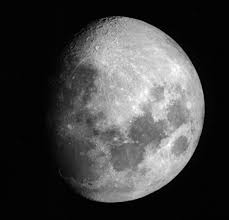
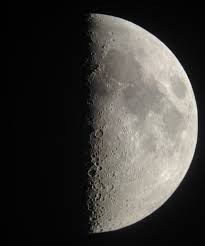
Name the moon phase
a)
waning crescent
b)
waxing crescent
c)
waning gibbous
d)
waxing gibbous
29.
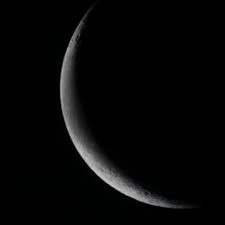
Name the moon phase
a)
waning crescent
b)
waxing crescent
c)
waning gibbous
d)
waxing gibbous
30.
Name the moon phase
a)
waning crescent
b)
waxing crescent
c)
waning gibbous
d)
waxing gibbous
31.
Name the moon phase
a)
waning crescent
b)
waxing crescent
c)
waning gibbous
d)
waxing gibbous
32.
Name the moon phase
a)
waning crescent
b)
waxing crescent
c)
waning gibbous
d)
waxing gibbous
33.
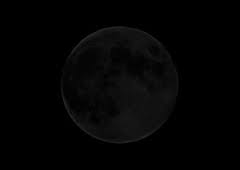
Name the moon phase
a)
First Quarter
b)
Last Quarter
c)
New Moon
d)
Full Moon
34.
Name the moon phase
a)
First Quarter
b)
Last Quarter
c)
New Moon
d)
Full Moon
35.
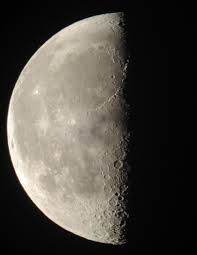
Name the moon phase
a)
First Quarter
b)
Last Quarter or (third quarter)
c)
New Moon
d)
Full Moon
36.
Name the moon phase
a)
First Quarter
b)
Last Quarter
c)
New Moon
d)
Full Moon
37.
Name the moon phase that would come AFTER this moon.
a)
waning crescent
b)
waxing crescent
c)
waning gibbous
d)
waxing gibbous
38.
How much of the moon is always lit?
a)
can't tell
b)
always changes
c)
half
d)
3/4
39.
What moon phase came right BEFORE this one?
a)
First Quarter
b)
Last Quarter
c)
New Moon
d)
Full Moon
40.
What is the difference between a gibbous moon and a crescent moon?
a)
The gibbous shows more than half of the bright side of the moon.
b)
The crescent shows more than half of the bright side of the moon.
c)
The gibbous shows less than half of the bright side of the moon. 
41.
How many phases does the moon go through?
a)
4
b)
8
c)
10
d)
16
42.
The Earth's axis is tilted _____ degrees.
a)
23.5
b)
25.3
c)
30.2
d)
24
43.
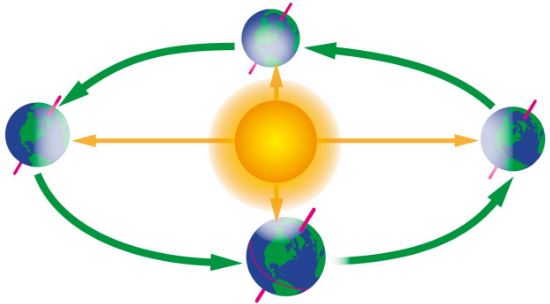
At position A, which hemisphere would have summer?
a)
Northern hemisphere
b)
Southern hemisphere
44.
What happens when the area in which you live tilts away from the sun?
a)
It is summer.
b)
It is spring.
c)
It is winter.
d)
It is fall.
45.
The term equinox means....
a)
equal amount of day light and equal amount of night
b)
Equal amount of winter and summer
c)
Equal amounts of hot dogs for everyone
d)
The longest day of the year
46.
What do June 21 and December 21 have in common?
a)
equinox dates
b)
the moon is full
c)
solstice dates
d)
the cold fronts blow in
47.
What is the longest day of the year?
a)
winter solstice
b)
summer solstice
c)
fall equinox
d)
spring equinox
48.
Why do we experience the changing of the season on the earth?
a)
distance from the sun
b)
rotation of the earth
c)
change in solar output
d)
tilt of the earth's axix
49.
Why is the Equator warmest?
a)
Because it is closest to the sun.
b)
Because it receives the most direct sunlight
c)
Because no clouds form here.
d)
Because it is far from the sun
50.
In spring/summer, the axis of the earth is pointed away or toward the sun?
a)
towards
b)
Neither away or toward
c)
away
51.
Which season is taking place in the Southern Hemisphere in Position 1?
a)
Winter
b)
Spring
c)
Summer
d)
Fall
52.
Which season is taking place in the Northern Hemisphere in Position 1?
a)
Winter
b)
Spring
c)
Summer
d)
Fall
53.
Which season is taking place in the Northern Hemisphere in Position 2?
a)
Winter
b)
Spring
c)
Summer
d)
Fall
54.
Which season is taking place in the Northern Hemisphere in Position 3?
a)
Winter
b)
Spring
c)
Summer
d)
Fall
55.
Which season is taking place in the Northern Hemisphere in Position 3?
a)
Winter
b)
Spring
c)
Summer
d)
Fall
56.
Which season is taking place in the Northern Hemisphere in Position 4?
a)
Winter
b)
Spring
c)
Summer
d)
Fall
57.
A[n] ______________ tide occurs when the sun is at right angles to the line between Earth and the moon. 
a)
high
b)
neap
c)
low
d)
spring
58.
Differences in the moon's and sun's pull on different sides of the Earth cause _________.
a)
gravity
b)
lunar phases
c)
tides
d)
dabbing
59.
The bulge of water on the side of the Earth closest to the moon produces ___________.
a)
high tide
b)
low tide
c)
neap tide
d)
spring tide
60.
Water flows toward the high tides, halfway between them causing ____________.
a)
neap tide
b)
high tide
c)
spring tide
d)
low tides
61.
Tides are the cycle of rising and falling ocean water that repeats automatically every
a)
24 hours
b)
12.5 hours
c)
25 hours
d)
6.25 hours
62.
A neap tide is a tide with the greatest difference between low and high tides
a)
true
b)
false
63.
Neap tides occur once a month. 
a)
True
b)
False
64.
Tides are caused mainly by the differences in how much gravity from the moon and the sun pulls on different parts of the Earth. 
a)
True
b)
False
65.
Changes in the positions of Earth, the moon, and the sun affect the height of high tides during a month. 
a)
True
b)
False
66.
What is a PUSH or PULL of an object?
a)
Motion
b)
Force
c)
Friction
d)
Gravity
67.
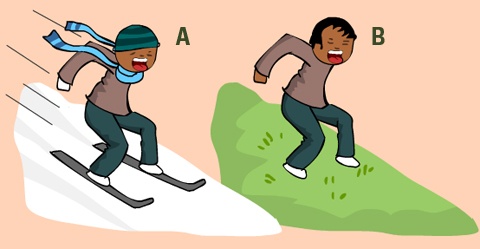
Why is it harder for the boy in Image B to get down the hill?
a)
Motion
b)
Friction
c)
Work
d)
Displacement
68.
Which force produces a change in motion?
a)
unbalanced force
b)
balanced force
c)
gravitational force
d)
frictional force
69.
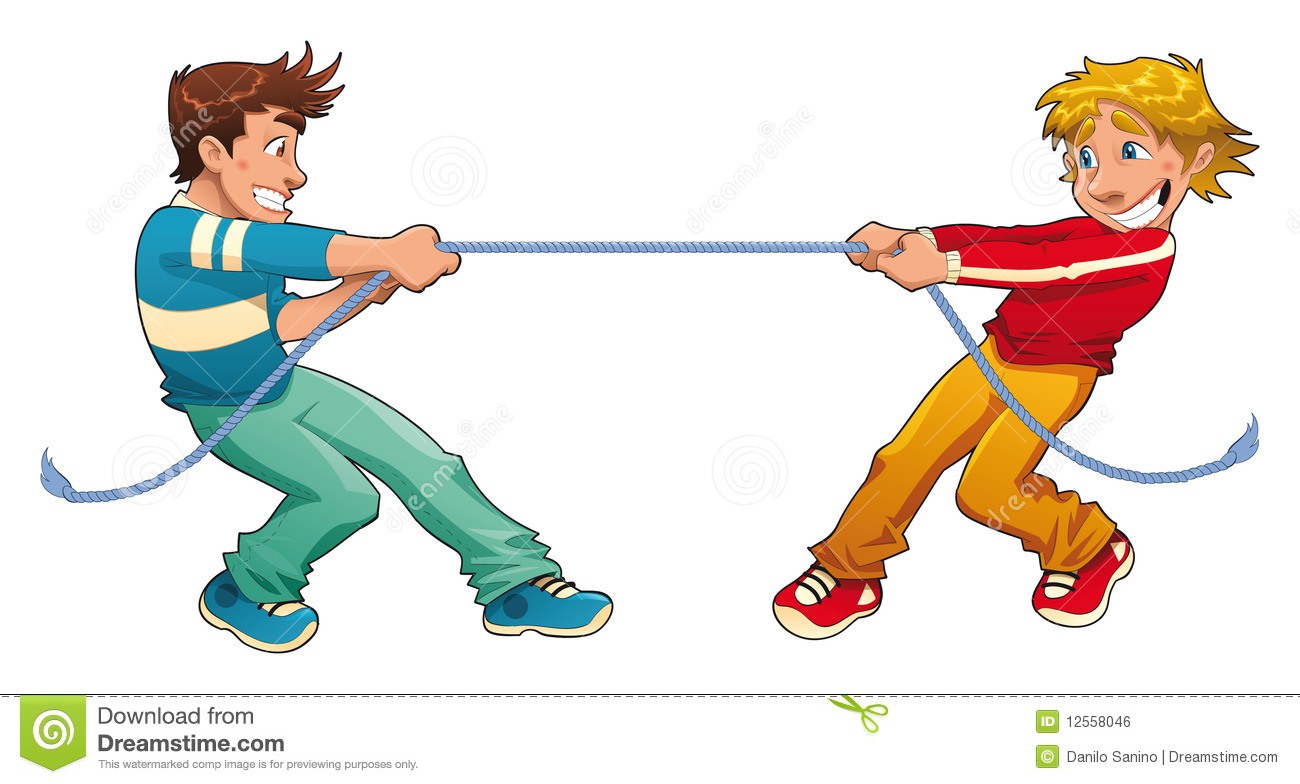
If these boys are pulling with the same amount of force.  What will happen?
a)
The boy in blue will win.
b)
They will not move at all.
c)
The boy in red will win.
d)
Both will fall down.
70.
_______________ is how fast an object changes over time. 
a)
speed
b)
velocity
c)
momentum
d)
acceleration
71.
What is the formula for force?
a)
F=M/A
b)
F=A/M
c)
F=M*A
d)
F=M*F
72.
What happens when two forces act in the same direction?
a)
They cancel each other out.
b)
The stronger one prevails.
c)
Their strengths are added.
d)
Their sum divided by the two is the total force.
73.
Any time the forces are unbalanced, an object will remain at rest. True or false?
a)
true
b)
false
74.
When you tell the direction and speed of an object, you give its
a)
motion
b)
velocity
c)
acceleration
d)
mass
75.
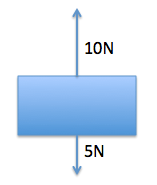
What is the net force on the block? (click on the words to view the picture)
a)
5 Newtons up
b)
5 Newtons down
c)
15 Newtons up
d)
15 Newtons down
76.
Which of the following statements is true? 
a)
Balanced forces cause a change in motion. 
b)
Unbalanced forces cause a change in motion. 
c)
Forces do not effect the change in motion. 
77.
The type of plate boundary where two plates come together is a .....
a)
Convergent Boundary
b)
Divergent Boundary
c)
Transform Boundary
d)
Plate Boundary
78.
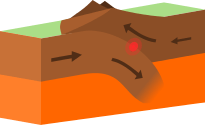
What type of plate boundary is this?
a)
Plate
b)
Divergent
c)
Convergent
d)
Transform
79.
Which of the following causes Earth's tectonic plates to move?
a)
Energy from the Sun
b)
Magnetic Pole Reversal
c)
Convection currents in the mantle
d)
Faults in Mountain Ranges
80.
What type of event will occur at this boundary?
a)
Earthquake
b)
Volcano Eruption
c)
Tornado
d)
Mountain Building
81.
A divergent boundary occurs when plates ....
a)
Pull apart
b)
Come together
c)
Slide past each other
d)
subducting