wayground logo

Free Printable Worksheets

Font size

S
M
L
XL
Worksheets

chem quarter 2 review

Total questions: 159

Worksheet time: 9hrs 51mins

Name
Class
Date
1.
Compounds made of metals and nonmetals are 
a)
ionic
b)
molecular
c)
covalent
d)
incomplete
2.
In a compound like Ca(OH)2 the OH is called a(n)
a)
indicator
b)
monatomic ion
c)
polyatomic ion
d)
quadratomic ion 
3.
for transition metals with more than 1 possible charge a _________ is used in the name to indicate which charge the cation has 
a)
Arabic numeral
b)
Latin numeral
c)
subscript
d)
Roman numeral 
4.
Tetra in the compound tetracarbon monoxide would tell you what 
a)
there are 4 carbons 
b)
there are 4 oxygens
c)
the compound is ionic
d)
the compound has a polyatomic ion 
5.
Iron(II) oxide would be written in formula form as 
a)
Fe2O3
b)
FeO
c)
Fe3O2
d)
cannot be determined 
6.
negative ions are called 
a)
cations
b)
anions
c)
negative nellies 
d)
negations 
7.
metals tend to become ____ when they form ions 
a)
positive 
b)
negative 
c)
neutral
d)
varies with every metal 
8.
MgF2
a)
magnesium fluoride
b)
manganese Phosphide
c)
magnesium(III) fluoride
d)
magnesium fluoride(II)
9.
When naming an ionic compound the anion
a)
keeps its original name
b)
adds a prefix to denote how many there are
c)
adds a suffix to denote how many there are
d)
drops its ending and adds -ide
10.
What is the name of the following compound? BaO
a)
Barium Oxygen
b)
Barium Monoxide
c)
Barium Oxide
d)
MonoBarium Monoxide
11.
What is the formula for magnesium chloride?
a)
MgCl
b)
Mg2Cl
c)
MgCl2
d)
Mg(ClO3)2
12.
Some Metal ions require roman numerals because
a)
They can have a variety of charges
b)
They have a variety of Isotopes
c)
The numerals tell how dangerous they are 
d)
They have a variety of protons
13.
Name this compound: 
CuS
a)
Copper (IV) sulfate
b)
Copper (II) sulfite
c)
Copper (III) sulfide
d)
Copper (II) sulfide
14.
Name this compound:
NiPO4
a)
Nickel (I) phosphate
b)
Nickel (II) phosphate
c)
Nickel (IV) phosphate
d)
Nickel (III) phosphate
15.
Write the formula for copper (I) phosphide
a)
Cu3P
b)
CuP
c)
Cu1P
d)
CuP3
16.
Polyatomic ions are 
a)
ions formed from one atom
b)
ions formed from more than one atom
c)
ions formed in compounds
17.
The formula for magnesium cyanide is...
a)
Mg(CN)2
b)
MgCN2
c)
MgCN
d)
(Mg)2CN
18.
copper (II) phosphate
a)
Cu(PO4)2
b)
Cu2PO4
c)
Cu3PO2
d)
Cu3(PO4)2
19.
Name the following ionic compound: Cr(NO2)3
a)
chromium nitrite
b)
chromium nitride
c)
chromium III nitride
d)
chromium III nitrite
20.
V(PO4)2 is _________ Phosphate
a)
Vanadium (III)
b)
Vanadium (VI)
c)
Vanadium (V)
d)
Vanadium (IIII)
21.
Covalent naming uses _____________ to denote the number of atoms
a)
suffixes
b)
prefixes
c)
Roman numerals
22.
In covalent naming the second atom drops its ending and takes the suffix 
a)
-ate
b)
-ide
c)
-ium
d)
-jr
23.
Disulfur trioxide
a)
S3O2
b)
SO
c)
S2O3
d)
S2O
24.
SeF4
a)
Tetraselenium fluoride
b)
Selenium Fluoride
c)
Selenium tetrafluoride
d)
Selenium (IV) Fluoride
25.
CO
a)
Carbon Oxide
b)
Carbon Oxygen
c)
Dicarbon dioxide
d)
Carbon Monoxide
26.
The covalent compound N2O5 would be named
a)
nitrogen oxide.
b)
dinitrogen oxide.
c)
nitrogen pentoxide.
d)
dinitrogen pentoxide.
27.
What is the mass in gram of 1 mole of O2?
a)
16 g/mol
b)
32 g/mol
c)
16 amu
d)
32 amu
28.
1 mole of Li has the same amount of molecules as 
a)
2 moles of Li
b)
1 mole of H2O
c)
3 moles of H2
d)
2 moles of H2O
29.
1 mole of Ohas 
a)
6.02 x 10²³ atoms
b)
12.04 x 10²³ atoms
c)
16.02 x 10²³ atoms
d)
32.02 x 10²³ atoms
30.
2 moles of H2O has how many molecules?
a)
6.02 x 10²³ molecules
b)
12.04 x 10²³ molecules
c)
16.02 x 10²³ molecules
d)
32.02 x 10²³ molecules
31.
2 moles of Li has how many molecules?
a)
6.02 x 10²³ atoms
b)
12.04 x 10²³ atoms
c)
16.02 x 10²³ atoms
d)
32.02 x 10²³ atoms
32.
The molar mass of 1 mole of NaCl is
a)
58.5 g/mol
b)
57.0 g/mol
c)
56.0 g/mol
d)
23.0 g/mol
33.
The molar mass of 2 mole of H2O is
a)
18 g/mol
b)
36 g/mol
c)
54 g/mol
d)
16 g/mol
34.
The molar mass of 1/2 mole of H2O is
a)
18 g/mol
b)
36 g/mol
c)
54 g/mol
d)
9 g/mol
35.
1 mole of O2 has the same molar mass as 
a)
1 mole of S
b)
2 moles of O2
c)
1 mole of Na
d)
16 moles of H
36.
What is not a "Mass of a mole"?
a)
the molar mass of a substance
b)
the gram-formula mass of a substance
c)
the molecular mass of a substance
d)
the volume of a mole
37.
What is the volume occupied by 1 mole of any gas at STP? 
a)
44.8 L
b)
22.4 L
c)
16.8 L 
d)
20.4 L 
38.
What is the volume of 5 moles of oxygen gas at STP? 
a)
112 L 
b)
22.4 L
c)
78.8 L 
d)
114.24 L
39.
How many moles are in a 18 L tank of nitrogen gas at STP? 
a)
0.9 moles
b)
1 mole
c)
0.8 moles
d)
0.75 moles 
40.
What is the volume of 3 moles of hydrogen gas at STP? 
a)
22.4 L 
b)
44.8 L 
c)
67.2 L
d)
89.6 L 
41.
What is Avagadro's number? 
a)
6.02 X 10 24
b)
6.02 X 10 23
c)
6.02 X 10 22
d)
6.02 X 10 21
42.
A mole of potassium chloride contains 6.02 x 10²³ _____.
a)
atoms
b)
formula units
c)
ions
d)
molecules
43.
Which conversion factor would you use to calculate correctly the mass of 2 moles of the element titanium?
a)
1 g Ti / 47.84 mol Ti
b)
1 mol Ti / 47.84 g Ti
c)
47.84 mol / 1 g Ti
d)
47.87 g Ti / 1 mol Ti
44.
Which compound has the smallest molar mass?
a)
CO
b)
CO2
c)
H2O
d)
H2O2
45.
What is the mass in grams of 6.25 mol of copper (II) nitrate?
a)
126 g
b)
785 g
c)
625 g
d)
1172 g
46.
Avogadro's number of representative particles is equal to one_____.
a)
kilogram
b)
gram
c)
kelvin
d)
mole
47.
What is the mass of 2.50 mol of oxygen gas O2?
a)
40 g
b)
80 g
c)
16 g
d)
32 g
48.
What is the molar mass of AuCl3?
a)
96 g
b)
130 g
c)
232.5 g
d)
303.3 g
49.
What is the molar mass of AuCl3?
a)
96 g
b)
130 g
c)
232.5 g
d)
303.3 g
50.
What is the difference between a formula unit and a molecule?
a)
formula unit - ionic bond
molecule - covalent bond
b)
formula unit - big
molecule - small
c)
formula unit - covalent bond
molecule - ionic bond
d)
formula unit - small
molecule - big
51.
Fluorine is diatomic.  What is the molar mass of fluorine gas?
a)
18.998 g/mol
b)
37.996 g/mol
c)
9 g/mol
d)
18 g/mol
52.
What is the molar mass of dihydrogen dioxide (H2O2)?
a)
48 g/mole
b)
34.02 g/mole
c)
36.5 g/mole
d)
35.5 g/mole
53.
What are the units for molar mass?
a)
grams
b)
amu
c)
grams/mole
d)
liters
54.
The best definition for a mole provided below is
a)
The SI unit for the mass of something
b)
The SI unit for the amount of a substance
c)
The SI unit for the volume of something
d)
The SI unit for the area of a substance
55.
The number 6.02 x 10²³, which is the number of particles found in a mole. 
a)
molar mass
b)
mole
c)
Avogadro's number
d)
hydrate
56.
How many moles are in 3.01 x 10²² atoms of magnesium?
a)
0.0500 moles
b)
1.81 x 1046 moles
c)
5.00 x 10²¹ moles
d)
5.00 moles
57.
How many formula units are there in 2.45 moles potassium chloride?
a)
4.07 x 10⁻²⁴ 
b)
1.47 x 1024 
c)
1.47
d)
4.07
58.
How many molecules are there in 31.8 moles of water?
a)
5.28 x 10⁻²³ molecules
b)
1.91 x 1025 molecules
c)
5.28x 10⁻²⁵
d)
1.91 x 10²²
59.
How many moles are 2.85 x 10¹⁸ atoms of iron?
a)
4.73 x 10⁻⁶ moles
b)
1.72 x 1042 moles
c)
1.72 x 10-42 moles
d)
4.73 x 10⁶ moles
60.
Avogadro's number of representative particles is equal to one_____.
a)
kilogram
b)
gram
c)
kelvin
d)
mole
61.
Determine the amount of moles in 1.50 x 10²³ atoms of fluorine.
a)
9.03 x 1046 moles
b)
0.249 moles
c)
4.73 moles
d)
0.0131 moles
62.
Determine the number of
atoms in
2.50 moles of zinc.
a)
1.51 x 1024 atoms
b)
4.15 x 10⁻²⁴ atoms
c)
2.71 x 10⁻²² atoms
d)
163 atoms
63.
Convert three moles of beryllium oxide to molecules
a)
25.01 molecules
b)
1.81 x 1024 molecules
c)
0.12 molecules
d)
1.80 x 1024 molecules
64.
Determine the amount of moles in 1.50 x 10²³ atoms of fluorine.
a)
9.03 x 1046 moles
b)
0.249 moles
c)
4.73 moles
d)
0.0131 moles
65.
Determine the amount of moles in 1.50 x 10²³ atoms of fluorine.
a)
9.03 x 1046 moles
b)
0.249 moles
c)
4.73 moles
d)
0.0131 moles
66.
Determine the number of
atoms in
2.50 moles of zinc.
a)
1.51 x 1024 atoms
b)
4.15 x 10⁻²⁴ atoms
c)
2.71 x 10⁻²² atoms
d)
163 atoms
67.
What is the mass of 3.01x1024atoms of Ca?
a)
200.g Ca
b)
40.1g Ca
c)
8.01g Ca
d)
20.0g Ca
68.

What is the mass in grams of 5.90 mol C8H18?

a)

.0512 g

b)

19.4 g

c)

673 g

d)

389 g

69.
The maximum number of electrons that can be placed in an p orbital.  
a)
2
b)
6
c)
10
d)
14
70.
Spherical orbital, also the lowest energy orbital. 
a)
s
b)
p
c)
d
d)
f
71.
Which element is pictured?
a)
neon
b)
fluorine
c)
magnesium
d)
argon
72.
Identify the following element:
1s22s22p63s23p64s23d10
a)
nickel
b)
copper
c)
zinc
d)
gallium
73.
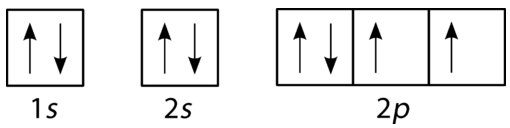
This orbital diagram represents:  
a)
C
b)
B
c)
N
d)
O
74.
What is this element? 
1s22s22p63s23p6
4s23d104p6
a)
Argon
b)
Krypton
c)
Selenium
d)
Bromide
75.
What atom matches this electron configuration?
1s22s22p63s2
a)
Neon
b)
Magnesium
c)
Aluminum
d)
Potassium
76.

Identify the Electron configuration for Barium (Ba)

CHECK CAREFULLY

a)

1s22s22p63s23p63d104s24p64d105s2

b)

1s22s22p63s23p63d104s24p64d105s25p66s2

c)

1s22s22p63s23p63d104s24p65s26s2

77.
What is the electron configuration for Bromine (Br)
a)
1s2, 2s2, 2p6, 3s2, 3p6, 4s2, 3d1
b)
1s2, 2s2, 2p4
c)
1s2, 2s2, 2p6, 3s2, 3p6, 4s2, 3d10, 4p5
d)
1s2, 2s2, 2p6
78.
What is the electron configuration for this atom?
a)
1s22s22p6
b)
1s22s22p5
c)
1s22s22p3
d)
2s22p3
79.

Which of the following is true?

a)

An atomic orbital can only hold a maximum of 2 electrons, each with opposite spins

b)

An atomic orbital can hold a minimum of 6 electrons, each with opposite spins

c)

An atomic orbital can hold a maximum of 6 electrons, each with the same spin

d)

An atomic orbital can hold a minimum of 2 electrons, each with opposite spins

80.
What orbital is shown in the picture?
a)
s
b)
p
c)
d
d)
f
81.
What is the electron configuration for iron?
a)
1s22s22p63s23p64s24d6
b)
1s22s22p63s23p64s24d10
c)
1s22s22p63s23p64s23d10
d)
1s22s22p63s23p64s23d6
82.
Which element is depicted from this orbital diagram
a)
Fluorine
b)
Neon
c)
Chlorine
d)
Argon
83.

Which orbital is displayed correctly?

a)

A

b)

B

c)

C

d)

D

84.

What type(s) of orbital(s) does the statement below describe?


Found in principle energy level 2 (N=2)

a)

S

b)

P

c)

D

d)

F

85.

What type(s) of orbital(s) does the statement below describe?


5 types of orbitals

a)

S

b)

P

c)

D

d)

F

86.

What type(s) of orbital(s) does the statement below describe?


Found in principle energy level 1 (N=1)

a)

S

b)

P

c)

D

d)

F

87.

What type(s) of orbital(s) does the statement below describe?


Can hold a total of 14 electrons

a)

S

b)

P

c)

D

d)

F

88.

What type(s) of orbital(s) does the statement below describe?


7 types of orbitals

a)

S

b)

P

c)

D

d)

F

89.

What type(s) of orbital(s) does the statement below describe?


3 types of orbitals

a)

S

b)

P

c)

D

d)

F

90.

What type(s) of orbital(s) does the statement below describe?


Has dumbbell shaped orbitals

a)

S

b)

P

c)

D

d)

F

91.
Which atom has the largest atomic radius?
a)
potassium
b)
rubidium 
c)
francium
d)
cesium
92.
As you move down the periodic table atoms get bigger.  This is because ____________.
a)
The atoms have more mass.
b)
The atoms have more protons.
c)
The atoms have more energy levels
d)
The atoms have more nuetrons
93.
The element with the largest electronegativity in the halogens is - 
a)
At
b)
F
c)
Cl
d)
Br
94.
The more protons there are, the  ____ .
a)
Weaker the pull
b)
Smaller the electrons
c)
Stronger the pull
d)
The bigger the electrons
95.
Which periodic group has the smallest atomic radius?
a)
Alkali metals
b)
Halogens
c)
Noble Gases
d)
Transition metals
96.
As we go from the left side to the right side on the periodic table, electronegativity...
a)
Increases
b)
Decreases
c)
Remains constant
97.
What's the difference between a Cation and a Anion?
a)
They are the same
b)
The net electrical charge of the ion
98.
An electron has what kind of charge?
a)
no charge
b)
positive 
c)
negative
d)
it depends
99.
a proton has what charge?
a)
positive
b)
negative
c)
no charge
d)
it depends
100.
When the number of electrons equals the number of protons the atom has what charge?
a)
sponge bob
b)
positive charge
c)
negative charge
d)
neutral charge
101.
Atoms that lose electrons become...
a)
negatively charged (cations)
b)
positively charged (anions)
c)
negatively charged (anions)
d)
positively charged (cations)
102.
Atoms that gain electrons become...
a)
negatively charged (anions)
b)
positively charged (cations)
c)
remain neutrally charged
d)
21
103.
METALS are more likely to LOSE electrons, so they tend to form ...
a)
anions
b)
cations
c)
neutral atoms
d)
negative ions
104.
If my charge becomes 2+ what does that say about me?
a)
I am stealing 2 electrons
b)
I am losing 2 electrons
c)
I am in period 2
d)
I have an atomic # of 2
105.
If I gain electrons I become
a)
Positive because I've added to my atom
b)
negative because I've added electrons
c)
same because i'm balanced
d)
equal because now I have electrons
106.
When metals bond with non-metals they form what type of bonds
a)
covalent
b)
ionic
c)
cooperative
d)
lewis
107.
When a metal loses electrons, it becomes this type of ion.
a)
anion
b)
cation
108.
Nonmetals form ____ by ____ electrons.
a)
Cations, gaining
b)
Cations, losing
c)
Anions, gaining
d)
Anions, losing
109.
 Which statement is an accurate comparison of solutions and homogeneous  mixtures?
a)
They are the same 
b)
They are opposite 
c)
Solutions are more evenly mixed than homogenous mixtures
d)
Homogeneous mixtures are more evenly mixed than solutions. 
110.
A beaker contains a mixture of a sand and small pebbles. What kind of mixture is this?
a)
Homogeneous  
b)
Solution
c)
Heterogeneous  
d)
Compound    
111.
Substances that are physically blended but not chemically bonded together are called ______. 
a)
compounds
b)
mixtures
c)
elements 
112.
Matter that is made up of chemically bonded atoms from two or more elements is called a 
a)
compound 
b)
solution 
113.
blood is a 
a)
compound
b)
element
c)
heterogeneous mixture
d)
solution
114.
air is a 
a)
compound
b)
element
c)
heterogeneous mixture
d)
solution
115.
granite is a 
a)
compound
b)
element
c)
heterogeneous mixture
d)
solution
116.
an atom of boron is a 
a)
compound
b)
element
c)
heterogeneous mixture
d)
solution
117.
a metal pipe made of only copper is a 
a)
compound
b)
element
c)
heterogeneous mixture
d)
solution
118.
vinegar and oil dressing 
a)
compound
b)
element
c)
heterogeneous mixture
d)
solution
119.
In which way do mixtures differ from compounds?
a)
A mixture is two or more solutions; a compound is one.
b)
A mixture cannot be physically separated; a compound can.
c)
A mixture requires a physical change; a compound requires a chemical one.
120.
Another name for a homogeneous mixture is 
a)
an element.
b)
a solution.
c)
a compound.
121.
A compound is the chemical bonding of 
a)
two or more elements.
b)
two or more mixtures.
c)
two or more solutions.
122.
A sample of matter that contains only one kind of atom would be classified as
a)
an element.
b)
a compound
c)
a homogeneous mixture
d)
a heterogeneous mixture.
123.
This particle is found in the nucleus and has no charge
a)
Neutron
b)
Proton
c)
Electron
124.
This contains most of the mass of an atom
a)
Electron Cloud
b)
Nucleus
c)
Electron
125.
This is the simplest of all atoms and contains only one proton and one electron
a)
Oxygen
b)
Hydrogen
c)
Water
126.
The first person to ever talk about an atom was
a)
Democritus
b)
Rutherford
c)
Dalton
127.
The atomic number for Oxygen is 8, so
a)
there are 8 protons in the atom
b)
the atomic mass is less than 8
c)
the mass of the atom is 8
d)
the atom is decaying
128.
A tiny but very dense, positively charged portion of the atom that holds most of the atomic mass
a)
Electron Shells
b)
Orbitals
c)
Electron Cloud
d)
Nucleus
129.
All matter is made of what?
a)
energy 
b)
atoms 
c)
electrons 
d)
compounds 
130.
Calculation used to find the number of neutrons in an atom
a)
Atomic Mass - Atomic Number
b)
Atomic Number - Atomic Mass
c)
Atomic Mass - Electrons
d)
none of these
131.
Which of the following tells you that a chemical change may have occurred?
a)
Change Shape
b)
Melting
c)
Vaporizing
d)
Change in color
132.
What happens in ALL chemical changes?
a)
Change in state of matter
b)
A new substance is formed
c)
Bubbles are produced
d)
An explosion
133.
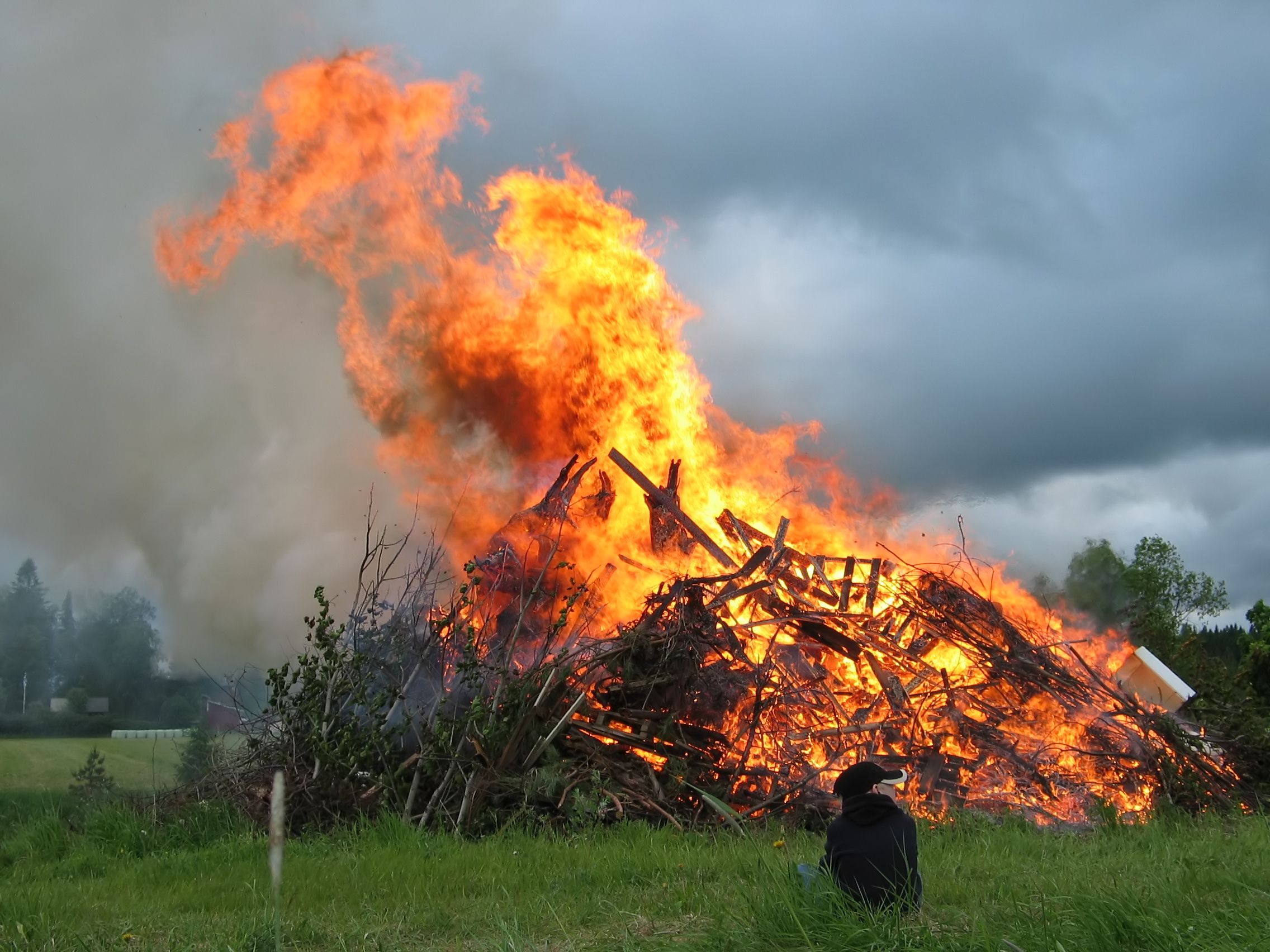
Is wood burning a physical or chemical change?
a)
Physical 
b)
Chemical
134.
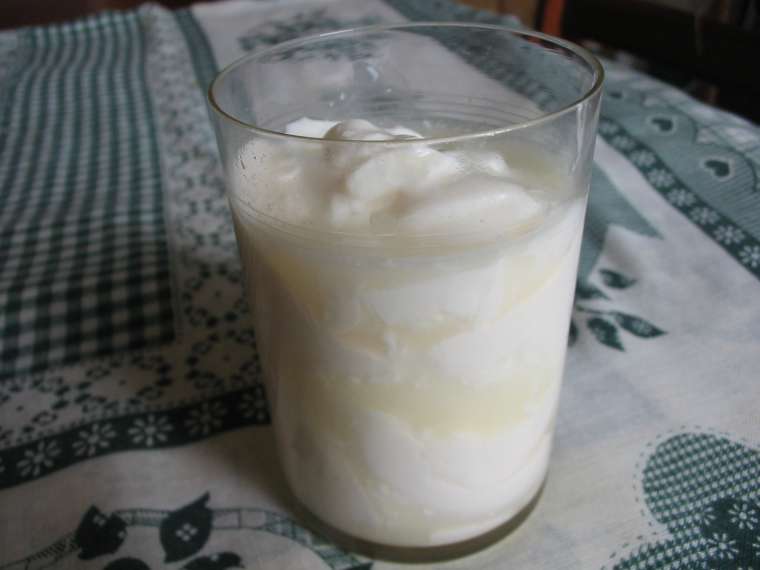
Is milk going sour a physical or chemical change?
a)
Physical 
b)
Chemical
135.
Is Gatorade powder dissolving in water physical or chemical change?
a)
Physical 
b)
Chemical
136.
Is mold growing on cheese a physical or chemical change?
a)
Physical 
b)
Chemical
137.
Is sharpening a pencil a physical or chemical change?
a)
Physical 
b)
Chemical
138.
Is making orange juice a physical or chemical change?
a)
Physical 
b)
Chemical
139.
Is copper tarnishing a physical or chemical change?
a)
Physical 
b)
Chemical
140.
What causes a chemical reaction when you prepare scrambled eggs?
a)
cracking the eggs in a pan
b)
heating the eggs in a pan
c)
putting pepper on the eggs
d)
putting the eggs on a plate
141.
Which of the following is not a clue that a chemical reaction has taken place?
a)
Changing size
b)
Changing color
c)
A gas being formed
d)
Formation of a precipitate
142.

New substance produced by a chemical reaction

a)

reactant

b)

product

143.

The starting substance(s) in a chemical reaction

a)

reactant

b)

product

144.

The ____________ states that the total mass of the reactants before a chemical reaction is the same as the total mass of the products after the chemical reaction

a)

law of conservation of chemical reactions

b)

law of conservation of mass

145.
The measuring system we use in science is:
a)
the SI system
b)
scientific system
c)
english system
d)
none of the above
146.
the measure of how much space an object takes up is called
a)
mass
b)
weight
c)
length
d)
volume
147.
the measure of a distance from point A to point B is called
a)
length
b)
weight
c)
mass
d)
volume
148.
the measure of the amount of matter in an object is called
a)
length
b)
height
c)
mass
d)
volume
149.
The unit "gram" measures what?
a)
volume
b)
mass
c)
length
d)
speed
150.
A graduated cylinder measures
a)
length
b)
height
c)
mass
d)
volume
151.
The base unit for length in SI units is the 
a)
gram
b)
liter
c)
meter
d)
milliliter
152.
Which unit is biggest?
a)
millimeter
b)
meter
c)
centimeter
d)
kilometer
153.
What unit would you use to measure the mass of a person?
a)
gram
b)
milligram
c)
kilogram
d)
centigram
154.
The prefixes on SI units do what to the unit?
a)
make it bigger
b)
make it smaller
c)
makes it bigger or smaller
d)
none of the above
155.
What is the name of this instrument?
a)
Graduated Cylinder
b)
Pipet
c)
Triple Beam Balance
d)
Beaker
156.
At which point should the reading on this instrument be taken?
a)
Highest
b)
Left Side
c)
Right Side
d)
Meniscus 
157.
Read this instrument to the nearest tenth
a)
613.37 g
b)
163.7 g
c)
163.5 g
d)
163 g
158.
seven units in the SI, each of which measures a basic dimension, from which all other metric dimensional units are derived 
a)
Calibrate
b)
SI
c)
Base Unit
d)
Instrument
159.
Any mathematical combination of the base units. 
a)
Derived unit
b)
Unit conversion
c)
Accuracy
d)
Conversion factor