
 Worksheets
(H) Semester 1 Final Exam Review
Total questions: 205
Worksheet time: 4hrs 6mins
How many significant figures? 0.00258
2
3
4
5
How many significant figures? 2510
2
3
4
5
How many significant figures? 0.08500
2
3
4
5
How many significant figures? 2.30x10⁵
2
3
4
5
How many significant figures? 4,000,000
1
2
3
4
How many significant figures? 0.000580
1
2
3
4
How many significant figures? 26
1
2
3
4
How many significant figures? 6.0x10⁻⁸
2
3
4
5
How many significant figures? 9.840x10⁻²⁰
1
2
3
4
How many significant figures? 0.0005
1
2
4
5
How many significant figures? 0.50
1
2
3
4
0.000480
56.2 x 9.2057 =
Matter looks different after a _______, but it is still made up of the same kind of matter.
Physical Change
Chemical Change
Evaporation
Water Vapor


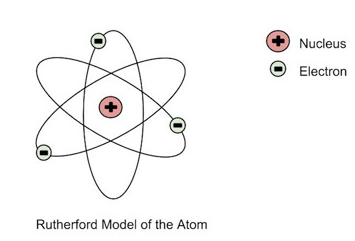
A) Ernest Rutherford
B) J.J. Thomson
C) John Dalton


X → 86Rn222 + 2He4
54Xe118 → X + 55Cs118


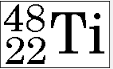


Magnesium exists as three isotopes shown above. What is the average atomic mass?
18.39 amu
20.74 amu
22.56 amu
24.31 amu
Atom 2 has Mass= 14 Electrons=6
Are these atoms isotopes of each other or different elements?

What is the average mass of this element?
What is the average mass of this element?
I. 7735X II. 7733X III. 8137X IV. 8135 X

Calcium has three different isotopes. One has a mass of 35.00 amu; another has a mass of 41.00 amu; and another has a mass of 40.00 amu. Which isotope is the most abundant of the three?
41 amu
40 amu
35 amu
Cannot be determined based on information given

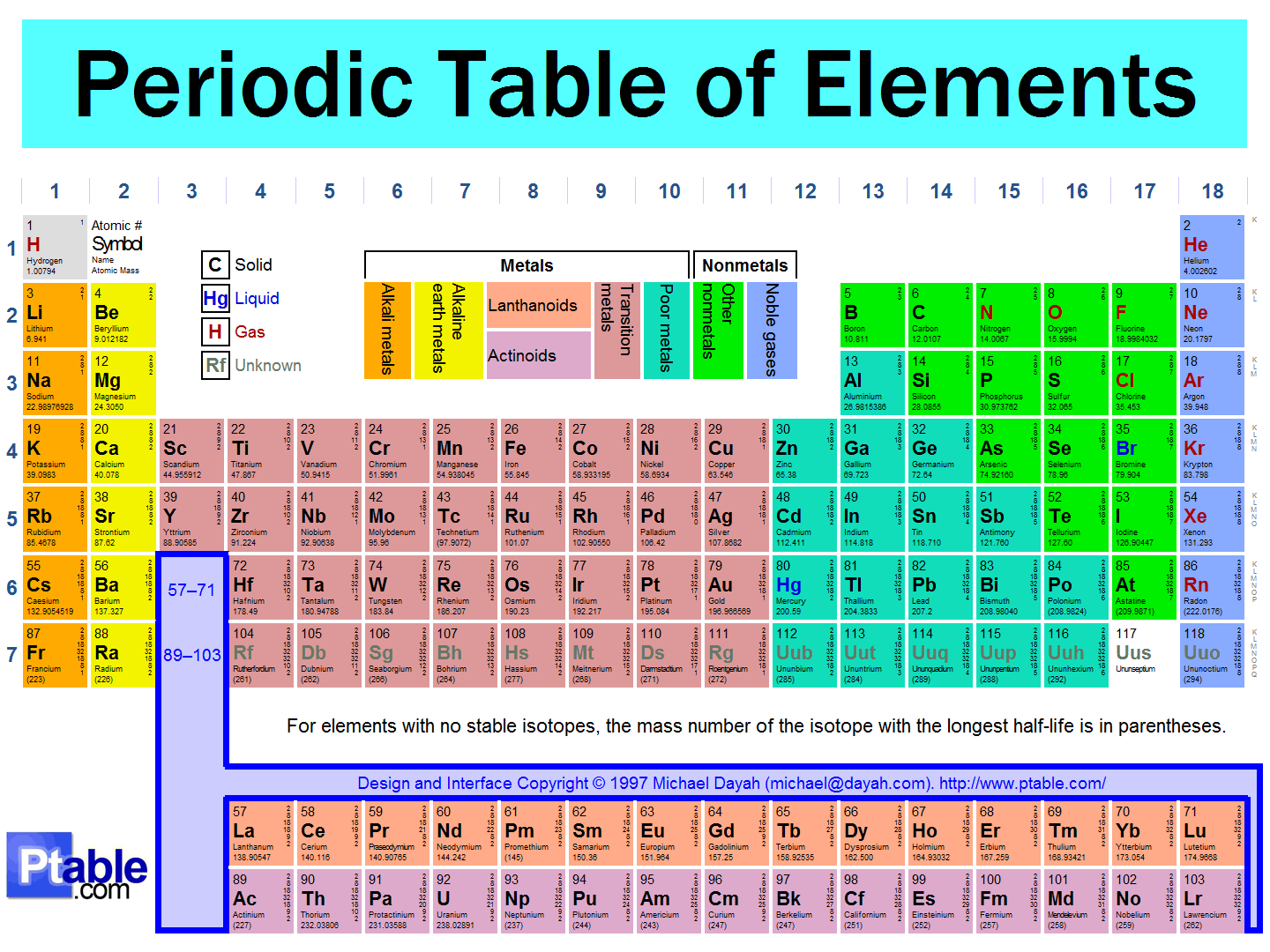



Vertical columns of elements (these are also known as a "family") - they also have the same number of valence electrons and are known as ________________.
groups
periods
quadrants
rows
Group 3 elements have ____ electrons in their outermost shell.
1
2
3
4
What is the oxidation number of Magnesium (Mg)?
+2
-2
+4
-4
Rank the following in order of increasing reactivity: Ge, K, Br, Ca (lowest to highest reactivity)
Ge, K, Br, Ca
K, Br, Ge, Ca
Br, Ge, Ca, K
Br, Ca, Ge, K
Which of the following is NOT a property of ionic compounds?
They conduct electricity when molten
They conduct electricity when in solution
They have high boiling points
They are insoluble in water
a three-dimensional geometric arrangement of particles in which each positive ion is surrounded by negative ions and each negative ion is surrounded by positive ions; vary in shape due to sizes and relative numbers of the ions bonded
crystal lattice
delocalized electrons
electrolyte
electron sea model
the electrons involved in metallic bonding that are free to move easily from one atom to the next throughout the metal and are not attached to a particular atom
electron sea model
delocalized electrons
lattice energy
oxyanion
proposes that all metal atoms in a metallic solid contribute their valence electrons to form a "sea" of electrons, and can explain properties of metallic solids such as malleability, conduction, and ductility
electrolyte
delocalized electrons
crystal lattice
electron sea model
the electrostatic force that holds oppositely charged particles together in an ionic compound
ionic compounds
ionic bond
metallic bond
chemical bond
FePO4
Calcium Nitrate
the energy required to separate one mole of the ions of an ionic compound, which is directly related to the size of the ions bonded and is also affected by the charge of the ions
oxyanion
formula unit
electrolyte
lattice energy
Which of the following is the best explanation for why MgS has a greater lattice energy than NaCl?
MgS involves greater magnitude of charges (+2 and -2)
NaCl involves lesser magnitude of charges (+1 and -1)
MgS involves smaller ions than NaCl
NaCl involves larger ions than MgS
Select two answers - which two factors influence lattice energy?
size of particle
charge of particle
position on the periodic table
Zeff
The portion of the electromagnetic spectrum that humans can see is called:
radio waves
visible light
gamma rays
x-rays
When wavelength increases...
energy decreases
energy increases
As wavelength decreases...
energy increases
energy decreases
the distance between peaks of electromagnetic waves is called:
wavelength
frequency
energy
Planck's Constant
Which type of electromagnetic energy carries the least energy?
X-Rays
Visible Light
Ultraviolet
Microwaves
1 MHz is equal to:
10 Hz
100 Hz
1,000 Hz
1,000,000 Hz
Which type photon carries the most energy?
Yellow Light
Red Light
Blue Light
Green Light
The formula for the radiative energy (E) carried by a photon of light is:
E = h x c
E = c/λ
E = h x f
E = mMG/d
The speed of electromagnetic radiation:
depends on the form of radiation
is always 3 x 10⁸ m/s, regardless of the type
decreases as distance increases
is 6.626 x 10⁻³⁴ J x s
What is the speed of light?
it depends on the type of electromagnetic radiation
3 x 10⁸ m/s
3 x 10-34 m/s
500 km/s
1 nanometer is equal to:
1 billionth of a meter
10 billionths of a meter
1,000 meters
1 million meters
Which of the following is a unit for frequency?
Joules
Hertz
meters per second
seconds
Light is:
a star and a galaxy
a wave and a particle
sound and energy
unable to be measured
A light particle is called a(n):
electromagnetic wave
photon
electron
atom
We see a "rainbow of colors" that when perceived together produce:
black light
white light
gamma rays
x-ray images
Which has a longer wavelength?
infrared
ultraviolet
Which is can be felt as "heat"?
gamma rays
infrared
x-ray
blue light
Potassium
red
orange
purple
green
Sodium
red
orange
yellow
green
When does a compounds name require the use of Roman Numerals and Parentheses to indicate charge?
All the time
Only when its a covalent compound
When there is a transition metal in the compound

Ni+2 and SO3-2 (NiSO3)
Nickel (II) Sulfite
Nickel Sulfate
Nickel (I) Sulfite

Actual Value: 6.02 m
How would you define her measurements?


