wayground logo

Free Printable Worksheets

Font size

S
M
L
XL
Worksheets

Midterm practice CP

Total questions: 201

Worksheet time: 50hrs 15mins

Name
Class
Date
1.
The central region of an atom where its neutrons and protons are is its 
a)
nucleus 
b)
electron cloud
c)
core 
d)
center 
2.
The positive particles of an atom are 
a)
electrons 
b)
positrons 
c)
neutrons 
d)
protons 
3.
all matter is made of what 
a)
energy 
b)
atoms 
c)
electrons 
d)
compounds 
4.
electrons have this type of charge?
a)
negative
b)
positive
c)
neutral
5.
Most of the mass in an atom is concentrated in the...
a)
electrons
b)
nucleus
c)
protons
d)
empty space
6.
What does the nucleus consist of?
a)
Protons + Electrons
b)
Neutrons + Electrons
c)
Atoms
d)
Protons + Neutrons
7.

What is the smallest unit of matter? It is composed of protons and neutrons, held together in the nucleus, and electrons around the nucleus in different electron orbitals, which form an electron cloud.

a)

cell

b)

nucleus

c)

atom

d)

electron

8.

What are any of the various self-contained units of matter or energy that are fundamental parts of all matter. These particles include electrons, protons, and neutrons.

a)

subatomic particles

b)

elements

c)

nucleus

d)

electron cloud

9.

What is the system of electrons surrounding the nucleus of an atom?

a)

valence electrons

b)

nucleus

c)

electrons

d)

electron cloud

10.

What is the combined mass of all the protons and neutrons of an atom and is approximately equal to the number of protons and neutrons?

a)

atomic mass

b)

atomic number

c)

subatomic particles

d)

nucleus weight

11.

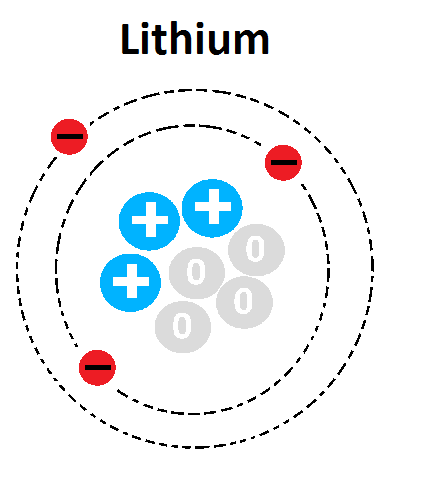
How many protons are in this atom?

a)

1

b)

3

c)

4

d)

7

12.
In order for an atom to be neutral what has to be true?
a)
The atom has more protons than neutrons
b)
The atom has more neutrons than protons
c)
The atom has the same number of protons and neutrons
d)
The atom has the same number of protons and electrons
13.
If an atom has 12 positively charged subatomic particles, which of the following must it also have to be considered a neutral atom?
a)
12 neutrons
b)
12 electrons
c)
12 protons
d)
24 protons and neutrons
14.

An atom has 10 protons, 15 neutrons and 10 electrons what is its mass number.

a)

20

b)

10

c)

35

d)

25

15.

What is the force that keeps the protons and neutrons together in the nucleus?

a)

Jedi Force

b)

electromagnetic force

c)

Strong force

d)

atomic force

16.

What force holds the electrons in orbit around the nucleus?

a)

The strong force

b)

The Jedi force

c)

atomic force

d)

The electromagnetic force

17.

When an electron gains or absorbs energy it.....

a)

drops down a shell

b)

jumps up a shell

c)

collides with the nucleus

d)

stops orbiting

18.
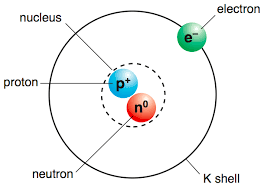
Which is a neutron?
a)
A
b)
B
c)
C
19.
Ernest Rutherford discovered that atoms were mostly:
a)
Negatively charged
b)
Positively charged
c)
Electrons
d)
Empty space
20.

What is the mass of a neutron?

a)

2 amu

b)

1 amu

c)

mass-less

21.

If an atom has 2 neutrons and 2 protons in its nucleus, what is the atomic mass?

a)

1 amu

b)

2 amu

c)

4 amu

d)

no mass

22.

Substances that have only one kind of atom are called:

a)

elements

b)

nitrogen

c)

electrons

d)

nucleus

23.

_____ is what scientists think atoms are like.

a)

Chemistry

b)

The box

c)

The atomic structure

d)

the nucleus

24.

Why do the electrons surround the nucleus?

a)

the negative electrons are attracted to the neutral neutrons

b)

the negative electrons are repelled by the neutral neutrons

c)

the negative electrons are attracted to the positive protons

d)

the negative electrons are repelled by the positive protons

25.

What instrument can be used to observe individual atoms?

a)

microscope

b)

telescope

c)

binoculars

d)

electron microscope

26.

Why do electrons never collide with the nucleus of an atom?

a)

They are oppositely charged

b)

The are too far away

c)

They never leave their shell

d)

They don't feel like it

27.
An atom's overall charge is ________.
a)
positive 
b)
depends
c)
neutral 
d)
negative 
28.

Electrons are not counted into the mass of an atom because:

a)

They are so small their mass is mass-less

b)

They're not in the nucleus

c)

They're too big

d)

They move so quickly their mass is zero

29.

Protons have a positive charge. If an atom has two protons, why do they not repel and tear apart the nucleus.

a)

because of the electrons

b)

because of the mass of the protons

c)

because of the neutrons- strong force

d)

because of the electromagnetic force

30.

The two main parts of an atom are its:

a)

protons and electrons

b)

nucleus and electron energy levels (the electron cloud)

c)

nucleons and protons

d)

The inside and the outside

31.
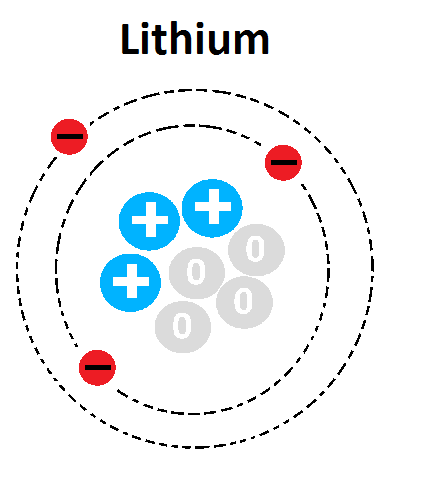
What is the atomic number of this atom?
a)
1
b)
3
c)
4
d)
7
32.

What is the mass number of this atom?

a)

1

b)

3

c)

4

d)

7

33.

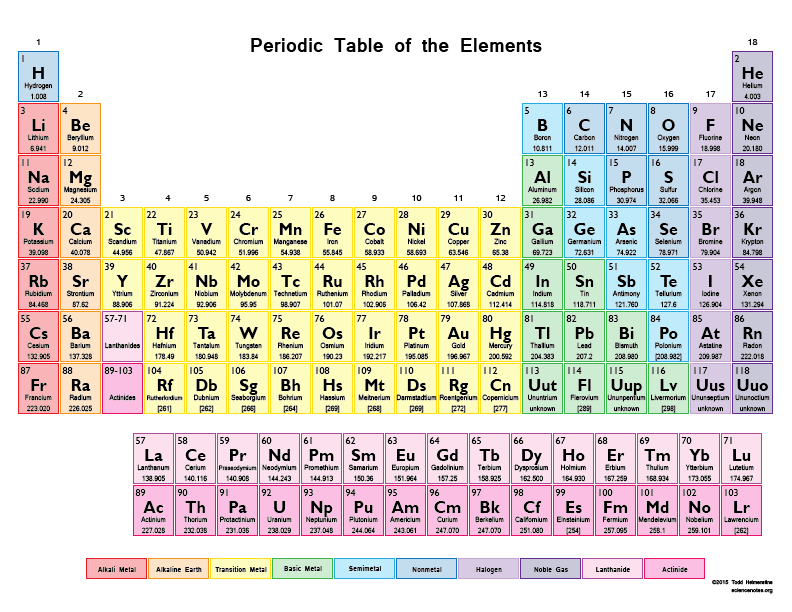
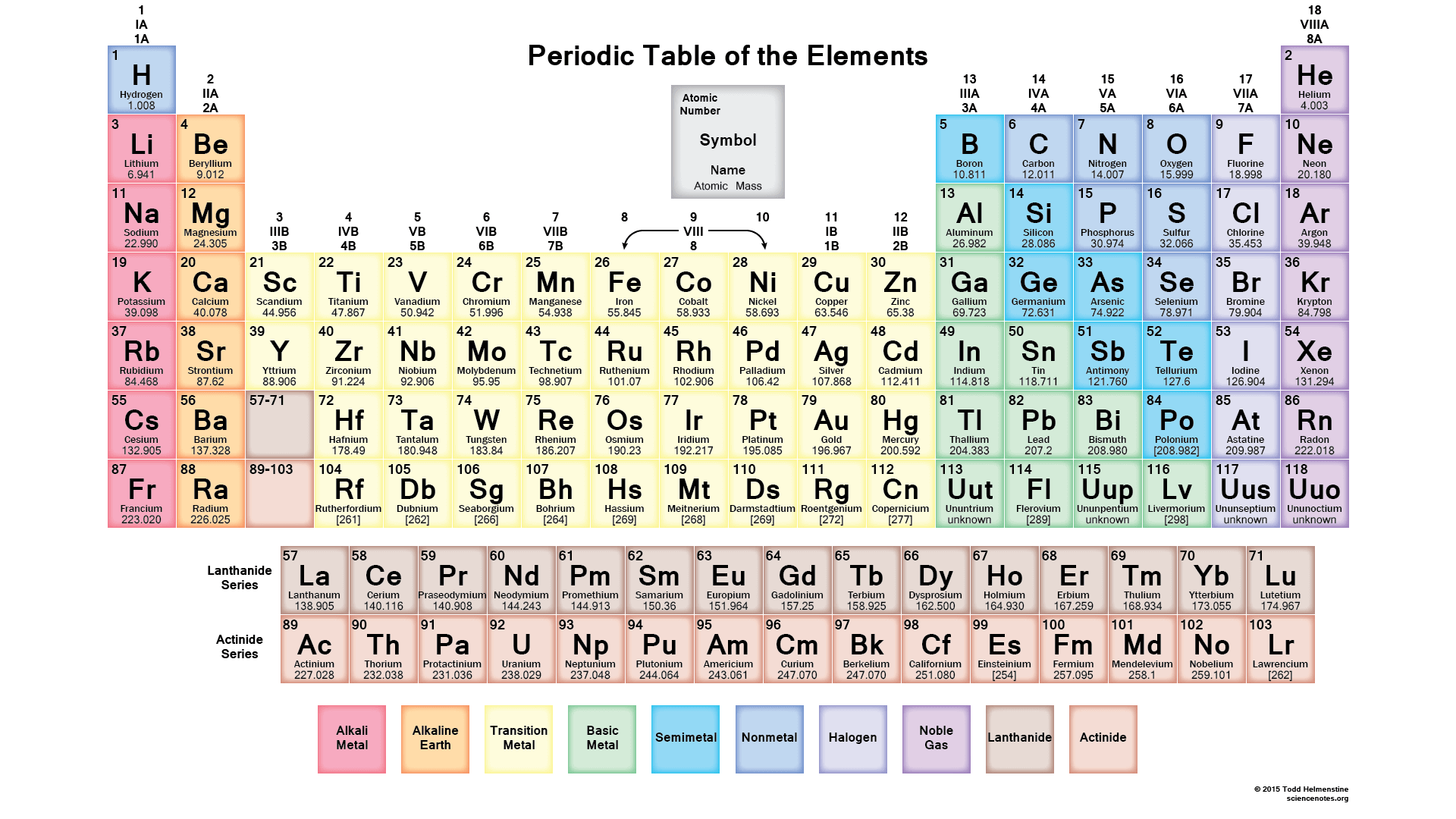
What is the atomic number of Barium, Ba? (enlarge the periodic table)

a)

20

b)

38

c)

56

d)

88

34.

Atoms of the same element which have a different number of neutrons are called _________________.

a)

ions

b)

isotopes

c)

quarks

d)

molecules

35.

ALL atoms of the same element have:

a)

same number of proton

b)

same number of nucleon

c)

different number of neutron

d)

different number of electron

36.
What quantities vary between isotopes of an element?
a)
protons, electrons, and atomic mass
b)
protons, electrons, and atomic number
c)
neutrons and electrons
d)
neutrons and atomic mass
37.
How many neutrons in C-14?
a)
6
b)
7
c)
14
d)
8
38.
Which subatomic particles contribute the most to the mass of an atom?
a)
Protons, Neutrons, Electrons
b)
Protons only
c)
Protons and Electrons
d)
Protons and Neutrons
39.
Which subatomic particles contribute the most to the mass of an atom?
a)
Protons, Neutrons, Electrons
b)
Protons only
c)
Protons and Electrons
d)
Protons and Neutrons
40.

Bromine-80 has how many neutrons?

a)

41

b)

42

c)

44

d)

45

41.
Different isotopes have...
a)
different masses
b)
different atomic numbers
c)
different electrons
d)
different protons
42.
If a sulfur atom has 16 protons, 16 electrons, and 16 neutrons, its atomic mass is:
a)
16
b)
32
c)
48
d)
64
43.
What do carbon-12 and carbon-14 have in common?
a)
they have same number of protons
b)
they have the same number of neutrons
c)
they have the same atomic mass
d)
they have the same atomic weight
44.
How is carbon-12 different from carbon-14?
a)
They have a different number of protons
b)
they have a different number of electrons
c)
they have a different number of neutrons
d)
they are different elements
45.
Isotopes are atoms of the same element with different #’s of __________ & therefore different __________.
a)
n0 ;  atomic #’s
b)
p+ ; atomic #’s
c)
e- ; atomic masses
d)
n0 ; atomic masses
46.
How many neutrons does an atom of the isotope Neon-22 have?
a)
12
b)
10
c)
22
d)
20
47.
What is the name of the pictured isotope?
a)
Copper-29
b)
Copper-63
c)
Copper-34
d)
CopperWopperHopperBopper
48.
How many neutrons would Fe-56 have?
a)
56
b)
26
c)
30
d)
33
49.
What element has 42 protons?
a)
Ca
b)
Mo
c)
Zr
d)
Po
50.
Found in the nucleus of the atom
a)
electrons only
b)
protons only
c)
neutrons and protons
d)
neutrons and electrons
51.
An element is defined by its number of 
a)
protons
b)
electrons
c)
neutrons
d)
protons + electrons
52.
Isotopes are atoms of the same element that have the same number of __________ but different number of __________ . Therefore, isotopes of the same element have different masses. 
a)
protons, neutrons
b)
protons, electrons
c)
neutrons, protons
d)
electrons, protons
53.

What is data?

a)

an answer

b)

an educated guess or prediction

c)

numbers only

d)

information

54.

What is a hypothesis

a)

A question

b)

An answer

c)

An educated guess or prediction

d)

An educated response

55.

You have made your educated guess, a hypothesis, now what do you do?

a)

Collect data

b)

Plan & perform your experiment

c)

Ask a question

d)

Analyze data

56.

While doing your experiment, you should be ....

a)

Analyzing data

b)

Making a hypothesis

c)

Collecting data

d)

Researching your question

57.

Once you are done with your experiment and have collected all of your data, you are ready to...

a)

Research your question

b)

Make a hypothesis

c)

Come to a conclusion & report your findings

d)

Analyze your data

58.

Data can be...

a)

Numbers & Measurements

b)

Times

c)

Pictures & Observations

d)

All of the above

59.
A scientist performs an experiment to see if acids have an effect on the health of a particular type of plant. Three sets of plants were treated with acidic solutions of known pH while the control set was treated with a solution of neutral pH 7.Which is the best conclusion for this experiment?
a)
Acid has no effect on the health of this type of plant.
b)
B. High acidity is helpful to this type of plant.
c)
C. Low acidity is harmful to this type of plant.
d)
High acidity is harmful to this type of plant.
60.
In order to be accepted, a scientific theory must be
a)
 widely tested and supported by extensive data
b)
 based on the results of a single experiment
c)
 controversial and cause debate
d)
 in line with all previous historical ideas
61.
In an appropriately designed experiment, a scientist is able to test the effect of
a)
 a single variable
b)
 multiple variables
c)
 the hypothesis
d)
 scientific observations
62.
Testing a hypothesis often involves a(n):
a)
answer
b)
experiment
c)
problem
d)
safety check
63.
This variable in an experiment is the one being changed by the scientist. 
a)
dependent variable
b)
independent variable
c)
data
d)
control group
64.
The summary at the end of an experiment that explains the results. 
a)
conclusion
b)
procedures
c)
materials
d)
responding variable
65.
An experiment is performed on plants to see how different liquids affect plant growth. Each plant in the experiment is given a different liquid; water, apple juice, or milk. Each plant has the same amount of soil, sunlight, and listens to the same music. In this investigation, the independent variable is ...
a)
The type of plant
b)
The amount of sunlight
c)
The type of music
d)
The type of liquid
66.
Dependent variable means
a)
the scientist controls what to test
b)
educated guess
c)
ask a question
d)
what is being measured
67.
If I ride my bike to school instead of walking, then I will get to school faster. What is the dependent variable?
a)
True
b)
How fast you get to school
c)
Riding a bike or walking
d)
False
68.
Will a construction paper air plane fly faster than an airplane made from notebook paper? Choose the best hypothesis.
a)
If I make a paper airplane from notebook paper, then it will fly faster than construction paper.
b)
Yes.
c)
No.
d)
I think the construction paper air plane will fly faster.
69.
This is the group that we will compare our experimental group to. This group stays "normal."
a)
Control Group
b)
Experimental Group
c)
 Normal Group
d)
Weird Group
70.
This is the group that is affected by the independent variable or the group that is changed.
a)
Control Group
b)
Experimental Group
c)
Changed Group
d)
Cool Group
71.
The easy way to pick out an experiments responding (DV) variable is to look for:
a)
What was purposefully changed
b)
Number of trials
c)
What's being measured
d)
The test group
72.
Which type of data involves numbers that are obtained by counting or measuring?
a)
quantitative
b)
qualitative
73.
Which type of data involves descriptions that cannot be counted or measured?
a)
qualitative
b)
quantitative
74.
For an electron to change from ground state to an excited stated it must...
a)
Absorb energy
b)
Release energy
75.
Line emission spectrum shown below happens when
a)
Electron transition from lower to higher energy level.
b)
Electron transition from higher to lower energy level.
c)
Electron exist in fixed energy states
d)
Electron transition between different energy levels.
76.

The unknown emissions spectra belongs to the element

a)

Hydrogen

b)

Mercury

c)

Neon

d)

Sodium

77.

Which element(s) is/are found in the star's spectra below?

a)

Hydrogen only

b)

Hydrogen & Helium

c)

Calcium only

d)

Hydrogen & Calcium

78.

If an electron moves from n=4 to n=2 it ____

a)

absorbs energy

b)

releases energy

79.

If an electron moves from n=4 to n=2 it ____

a)

absorbs energy

b)

releases energy

80.

Each element on the periodic table can be identified by its

a)

classification as a solid, liquid or gas.

b)

location on the table.

c)

ability to react to form compounds.

d)

unique spectral "fingerprint."

81.

What subatomic particle is responsible for the spectral lines seen in emission spectra diagrams?

a)

electrons

b)

protons

c)

neutrons

82.

When an electron returns to ground state from an excited state, the atom will

a)

emit energy

b)

absorb energy

c)

rotate

d)

wiggle

83.
Valence electrons are: 
a)
Electrons farthest away from the nucleus
b)
Electrons closest to the nucleus
c)
Electrons that just come and go - they don't stay with the atom
84.
Ions are: 
a)
atoms with a positive or negative charge
b)
atoms with no charge
c)
atoms with ONLY a positive charge
d)
atoms with ONLY a negative charge
85.
When an atom loses a valence electron, it becomes a(n) _____________ ion.
a)
positive
b)
negative
c)
neutral
d)
polyatomic
86.
An atom becomes _________ when it gains electrons.
a)
Positive
b)
Negative
c)
Neutral
d)
Invinsible
87.

What form of energy is emitted when an excited electron returns to the ground state?

a)

Photon (light)

b)

Heat

c)

Kinetic

d)

Potential

88.
If an element has 3 valence electrons, what charge will likely form on its ion ?  Hint:  It will lose those electrons.  What happens to the charge when it loses 3 electrons?
a)
+3
b)
+5
c)
-3
d)
-5
89.
When an atom loses a valence electron, it becomes a(n) _____________ ion.
a)
positive
b)
negative
c)
neutral
d)
polyatomic
90.

What is the light that you can see called?

a)

observatory light

b)

ultraviolet light

c)

visible light

d)

infrared light

91.

In order to go from ground state to an excited state, an electron must

a)

emit energy

b)

absorb energy

c)

wiggle

92.

When an electron returns to ground state from an excited state, the atom will

a)

emit energy

b)

absorb energy

c)

rotate

d)

wiggle

93.
How many electrons does Si contain? (click to see image)
a)
14
b)
28
c)
2
d)
4
94.

What are valence electrons?

a)

electrons on the first shell

b)

nucleus

c)

the outermost shell

d)

the electrons on the outermost shell (energy level)

95.
What is the mass number and name of an element with 8 protons and 8 neutrons?
a)
16 - Carbon
b)
16 - Oxygen
c)
24 - Oxygen
d)
8 - Neon
96.
How many electron shells/levels does this atom have?
a)
1
b)
2
c)
3
d)
4
97.

USE THE PERIODIC TABLE

How many valence electrons does Phosphorus have?

a)

31

b)

5

c)

15

d)

4

98.
Rows on the period table are called _____ while columns are called _____.
a)
groups, families
b)
groups, periods
c)
periods, groups
d)
families, groups
99.
How many valence electrons are found in atoms of group 1?
a)
7
b)
6
c)
4
d)
1
100.
How many valence electrons are found in atoms of group 1?
a)
7
b)
6
c)
4
d)
1
101.
Name group 2 on the periodic table.
a)
alkali metals
b)
alkaline earth metals
c)
noble gases
d)
transition metals
102.
Name group 17 on the periodic table.
a)
transition metals
b)
metalloids
c)
halogens
d)
alkali metals
103.
How did Mendeleev arrange the elements?
a)
alphabetical 
b)
density
c)
melting point
d)
atomic mass
104.
The horizontal row on the periodic table is called a
a)
group
b)
family
c)
period
d)
atomic number
105.
How many neutrons does the isotope of lithium have?
a)
8
b)
3
c)
4
d)
5
106.
How many neutrons does the isotope below have?     89 36Kr
a)
53
b)
36
c)
89
d)
125
107.

Why are ions formed?

a)

To make our lives difficult

b)

Because atoms want to be stable

c)

Because atoms have the same number of protons and electrons

d)

Because atoms gained neutrons

108.
What is the charge of an atom that has lost one electron?
a)
-1
b)
-2
c)
+1
d)
+2
109.

An atom with 10 protons, 8 neutrons, 8 electrons is a _______. (Choose all that apply)

a)

cation

b)

anion

c)

neutral atom

d)

ion

110.

An atom with 2 protons, 3 neutrons, and 4 electrons has a charge of ____.

a)

+2

b)

-2

c)

+3

d)

0

111.
How many electrons can the first energy level hold?
a)
2
b)
4
c)
6
d)
8
112.
How many energy levels are found in Period 2?
a)
1
b)
2
c)
3
d)
4
113.
Which element has the same number of electrons in the outermost energy level as lithium?
a)
Hydrogen
b)
Beryllium 
c)
Carbon
d)
Magnesium
114.
Which element has the same number of energy levels as nitrogen?
a)
Boron
b)
Chlorine
c)
Phosphorus
d)
Silicon
115.
Which element does this atom represent?
a)
Helium
b)
Boron
c)
Nitrogen
d)
Carbon
116.

Which group includes non-reactive gasses that have a full outer electron shell?

a)

Alkai Metals

b)

Alkaline Metals

c)

Halogens

d)

Noble Gases

117.

What is the maximum number of electrons that can be found in the second level of an atom Bohr model?

a)

2

b)

4

c)

8

d)

10

118.
Sodium (Na) is found in period 
a)
3
b)
2
c)
4
d)
1
119.
Sodium (Na) is found in group 
a)
1
b)
2
c)
3
d)
4
120.
An element has two naturally occurring isotopes. One is 10.013 amu and is 19.9% abundant. The other is 11.01 amu and is 80.1% abundant. What is the average atomic mass? What element is it?
a)
9.012, Beryllium
b)
12.011, Carbon
c)
6.941, Lithium
d)
10.812, Boron
121.
An isotope has three forms.  30% have a mass of 4 amu, 20% have a mass of 5 amu and 50% have a mass of 3 amu.  Average atomic mass will be closest to
a)
2 amu
b)
3 amu
c)
4 amu
d)
5 amu
122.
4.35% of all X atoms have a mass of 39.946 amu. 83.79% have a mass of 41.941 amu, 9.50% have a mass of 42.941 amu, and 2.36% have a mass of 43.939 amu. What is the average atomic mass of atom X?
a)
41.97 amu
b)
42.19 amu
c)
10.43 amu
d)
40.04 amu
123.

Naturally occurring chlorine that is put in pools is 75.53 percent 35Cl (mass = 34.969 amu) and 24.47 percent 37Cl (mass = 36.966 amu). Calculate the average atomic mass.

a)

35.46 amu

b)

35.00 amu

c)

37.00 amu

d)

17.00 amu

124.
He developed the planetary model of the atom.
a)
Rutherford
b)
Bohr
c)
Chadwick
d)
Dalton
125.
James Chadwick discovered the ________.
a)
proton
b)
neutron
c)
electron
d)
nucleus
126.
What did Thomson discover?
a)
electron
b)
proton
c)
neutron
d)
electron cloud
127.

Subatomic particles with a negative charge

a)

Electrons

b)

Neutrons

c)

Protons

d)

Quarks

128.

He claimed that matter was made of small, hard particles that he called “atomos.”

a)

Democritis

b)

Dalton

c)

Moseley

d)

Einstein

129.
The scientist responsible for "discovering" the nucleus is:
a)
Bohr
b)
Rutherford
c)
Schroedinger
d)
Einstein
130.
Electronegativity is...
a)
how good an atom is at attracting electrons
b)
the ability of an atom to lose electrons
c)
the energy required to remove an electron from a specific atom
d)
how easy it is to make friends. 
131.
Ionization energy is...
a)
the energy required to add an electron to a specific atom
b)
how much energy it takes to remove an electron from an atom
c)
the energy required to shield the outer electrons from the nucleus
d)
a measure of the ability of an atom to attract electrons
132.
Which atom has the largest atomic radius?
a)
potassium
b)
rubidium 
c)
francium
d)
cesium
133.

As you move from left to right on the periodic table, the number of valence electrons.......

a)

Increases

b)

Decreases

c)

Remains the same

134.

Ionization energy __________ as you do across a period

a)

has no pattern

b)

stays the same

c)

decreases

d)

increases

135.
How are covalent bonds formed?
a)
Sharing of electrons
b)
Transfer of electrons
136.

Why do all bonds form?

a)

to fill the outermost energy level

b)

so an atom can be unstable

c)

so the number of protons and electrons can equal.

d)

so they can gain neutrons.

137.

Ionization energy __________ as you do across a period

a)

has no pattern

b)

stays the same

c)

decreases

d)

increases

138.

What two types of atoms make a covalent bond?

a)

2 nonmetals

b)

2 metals

c)

1 metal and 1 nonmetal`

139.

Ionic bonds are between

a)

metals and nonmetals

b)

2 metals

c)

2 nonmetals

140.

How are ionic bonds formed?

a)

transfer of electrons

b)

sharing of electrons

141.
Chlorine and Fluorine are both very electronegative, as they are both missing a single electron from their valence energy level.  Why is Fluorine more electronegative than Chlorine? 
a)
Fluorine has less energy levels.
b)
Chlorine has more electrons in its outer shell
c)
Fluorine has more protons.
d)
None of these
142.
The element with the largest electronegativity in the halogens is - 
a)
At
b)
F
c)
Cl
d)
Br
143.
The element with the lowest electronegativity in Period 3 is - 
a)
Na
b)
Cl
c)
Ar
d)
Mg
144.
 Which of the following generally applies to the noble gases? 
a)
high ionization energy, low electronegativity, high reactivity
b)
high ionization energy, high electronegativity, high reactivity
c)
low ionization energy, low electronegativity, low reactivity
d)
high ionization energy, low electronegativity, low reactivity 
145.
Elements closer to the noble gases have stronger attraction for electrons.
a)
True
b)
False
146.
Chlorine and Fluorine are both very electronegative, as they are both missing a single electron from their valence energy level.  Why is Fluorine more electronegative than Chlorine? 
a)
Fluorine has less energy levels.
b)
Chlorine has more electrons in its outer shell
c)
Fluorine has more protons.
d)
None of these
147.
What elements have zero electronegativity?
a)
metals
b)
nonmetals
c)
metalloids
d)
noble gases
148.
What is ionization energy?
a)
Energy needed to destroy an atom
b)
Energy required to remove an electron
c)
Energy needed to split an electron
d)
Energy required to add an electron
149.

As you look down a group, ionization energy and electronegativity

a)

increases

b)

decreases

150.

As you look from left to right across a period, ionization energy and electronegativity both

a)

increase

b)

decrease

151.

Which element has the greater ionization energy?

a)

Magnesium (Mg)

b)

Phosphorus (P)

152.

Which element has the greater ionization energy?

a)

Iodine (I)

b)

Chlorine (Cl)

153.

Which atom has the largest atomic radius?

a)

potassium

b)

rubidium

c)

francium

d)

cesium

154.
As you move down the periodic table atoms get bigger.  This is because ____________.
a)
The atoms have more mass.
b)
The atoms have more protons.
c)
The atoms have more energy levels
d)
The atoms have more nuetrons
155.
As you move across the periodic table atoms tend to get smaller because, ______________.
a)
the atoms have more mass.
b)
the atoms have less mass
c)
the atoms have more protons.
d)
the atoms have less electrons.
156.
Metals are good conductors of heat and electricity.
a)
true
b)
false
157.
The atom with the largest atomic radius in Group 18 is - 
a)
Ar
b)
He
c)
Kr
d)
Rn
158.

Which statement correctly and completely identifies a trend?

a)

Atomic radius decreases across a period and increases down a group.

b)

Electronegativity decreases across a period and decreases down a group.

c)

Ionization energy increases across a period and increases down a group.

d)

Ionic radius increases across a period and increases down a group.

159.
Which of the following will have a larger radius than Zinc?
a)
Gallium
b)
Aluminum
c)
Magnesium
d)
Strontium
160.
Which periodic group has the smallest atomic radius?
a)
Alkali metals
b)
Halogens
c)
Noble Gases
d)
Transition metals
161.
Atomic radius generally increases as we move __________.  
a)
down a group and from right to left across a period 
b)
up a group and from left to right across a period 
c)
down a group and from left to right across a period 
d)
up a group and from right to left across a period 
162.
Which one has the largest radius?
a)
Lithium (Li, atomic #3)
b)
Boron (B, atomic #5)
c)
Neon (Ne, atomic #10)
d)
Nitrogen (N, atomic #7)
163.

Which element's atom is the smallest?

a)

Rhodium

b)

Silver

c)

Cadmium

d)

Tin

164.

Which species has the larger radius?

a)

Cl

b)

Cl-

165.
Which group of the periodic table is composed of inert (not reactive)  gases?
a)
alkali metals
b)
alkaline earth metals
c)
halogens
d)
noble gases
166.

Which elements are to the right of the zig zag?

a)

metals

b)

nonmetals

c)

metalloids

167.

ductile means...

a)

can be made into wire

b)

can be bent or hammered

c)

can light up a light bulb

d)

it's shiny

168.
Which of these is a property of metals?
a)
It's malleable
b)
It can't conduct electricity
c)
They are used in food
d)
It's very brittle
169.
Which of the following is a good conductor of heat?
a)
Metal
b)
Nonmetal
c)
Metalloid
170.
Iron is a good conductor, malleable and magnetic. What type of element is Iron? 
a)
Metal
b)
Nonmetal
c)
Metalloid
d)
Pretty
171.
Which elements are found on the left to middle of The Periodic Table? 
a)
Metals
b)
Nonmetals
c)
Metalloids
d)
Candles
172.
Silicon is a semiconductor and has properties of both metals and nonmetals. What type of element is Silicon? 
a)
Metal
b)
Nonmetal
c)
Metalloid
d)
Pretty
173.
Aluminum can be hammered into different shapes or rolled into flat sheets. This means Aluminum is 
a)
ductile
b)
malleable
c)
lustrous
d)
high density
174.

Why do metals conduct electricity so well?

a)

have a shared "sea of electrons" to carry the current.

b)

electrons are stuck in place so they can pass the current

c)

metals do not conduct electricity

d)

they transfer electrons from one atom to another

175.
A _______ is a charged particle because it has more or fewer electrons than protons.  When an atom _____ an electron, it becomes a positively charged ion.  When an atom ____an electron, it becomes a negatively charged ion.
a)
isotope, gains, loses
b)
isotope, loses, gains
c)
ion, loses, gains
d)
ion, gains, loses
176.
What two types of atoms make a covalent bond?
a)
2 Nonmetals
b)
1 Nonmetal and 1 Metal
c)
2 Metals
d)
2 Noble Gases
177.
How do covalent bonds form?
a)
Donating & receiving valence e- between atoms.
b)
Opposite slight charges attract each other between compounds.
c)
Scientists are still not sure how they form.
d)
Sharing valence e- between atoms.
178.

Ionic bonds are between

a)

metals and nonmetals

b)

2 metals

c)

2 nonmetals

179.

Metals make _____ ions.

a)

positive

b)

negative

c)

neutral

180.

When an ionic bond is formed, electrons are _____.

a)

gained

b)

lost

c)

shared

d)

gained or lost

181.
What type of bond is illustrated above?
a)
Covalent
b)
Metallic
c)
Ionic
d)
Oxygen
182.
A solid substance is an excellent conductor of electricity. The chemical bonds in this substance are most likely?
a)
ionic, because the valence electrons are shared between atoms
b)
covalent, because the valence electrons are mobile
c)
metallic, because the valence electrons are stationary
d)
metallic, because the valence electrons are mobile
183.
What is the basis of a metallic bond?
a)
the attraction of neutral metal atoms.
b)
the attraction between protons and neutrons.
c)
the attraction between positive metal ions and interlocking electrons.
d)
the attraction between positive metal ions and free floating electrons.
184.

Why do all bonds form?

a)

to fill the outermost energy level

b)

so an atom can be unstable

c)

so the number of protons and electrons can equal.

d)

so they can gain neutrons.

185.

An atom with 1 valence electron 'needs' a full shell, so it can either gain 7 electrons or lose 1. Which is more likely to occur?

a)

nothing

b)

gain 7

c)

lose 1

186.

Electrons are involved in chemical reactions, not protons or neutrons.

a)

true

b)

false

187.

Water is an example of what?

a)

molecular compound (covalent compound)

b)

ionic compound

188.

Salt is an example of what?

a)

ionic compound

b)

covalent compound

189.

Atoms involved in a covalent bond are not charged, while atoms involved in an ionic bond are charged (negative or positive)

a)

true

b)

false

190.
Is hydrogen considered a metal or a non-metal?
a)
A metal
b)
Nonmetal
c)
Metalloid
191.
What is the charge on a chloride ion?
a)
-1
b)
1
c)
+2
d)
+1
192.

If an atom has no charge, which of the following must be true?

a)

It has more neutrons than protons or electrons.

b)

There are only neutrons inside the atom.

c)

Its number of protons is equal to its number of electrons.

d)

The neutrons in the atom outnumber the electrons and protons.

193.

When two atoms of the same nonmetal element bond together, they form a(n)

a)

ionic bond.

b)

nonpolar covalent bond.

c)

polar covalent bond.

d)

James Bond.

194.

Polar molecules have

a)

no charges.

b)

slight positive and negative charges on opposite ends of the molecules.

c)

only positive charges.

d)

either positive or negative charges, but not both.

195.

What reaction has the following general formula:

AB --> A + B

a)

Synthesis

b)

Decomposition

c)

Single Replacement

d)

Double Replacement

e)

Combustion

196.

What reaction has the following general formula:

A + CD --> C + AD

a)

Synthesis

b)

Decomposition

c)

Single Replacement

d)

Double Replacement

e)

Combustion

197.

What reaction has the following general formula:

AB + CD --> CB + AD

a)

Synthesis

b)

Decomposition

c)

Single Replacement

d)

Double Replacement

e)

Combustion

198.

What reaction has the following general formula:

A + B --> AB

a)

Synthesis

b)

Decomposition

c)

Single Replacement

d)

Double Replacement

e)

Combustion

199.

What reaction has the following general formula:
 CxHy + O2 >CO2 + H2OC_xH_y\ +\ O_2\ ->CO_{2\ }+\ H_2O  

a)

Synthesis

b)

Decomposition

c)

Single Replacement

d)

Double Replacement

e)

Combustion

200.
Breaking down a substance into simpler substances
a)
Displacement
b)
Synthesis
c)
Decomposition
d)
Oxidation
201.

A substance that is formed as the result of a chemical reaction is a __________________

a)

Product

b)

Reactant

c)

Starters

d)

Enders