Wayground logo

Free Printable Worksheets

Font size

S
M
L
XL
Worksheets

Q2 Post Test Remediation Honors

Total questions: 51

Worksheet time: 35mins

Name
Class
Date
1.
The layer of the Sun where fusion happens
a)
Core
b)
Radiation Zone
c)
Convection Zone
d)
Fusion Zone
2.
This arc of plasma being emitted by the Sun is known as a(n) _____
a)
Prominence
b)
Solar Flare
c)
Coronal Mass Ejection
d)
Sun Spot
3.
These "cool" spots of increased magnetic activity on the surface of the Sun are known as _____
a)
Prominence
b)
Coronal Mass Ejection
c)
Solar Flare
d)
Sun Spots
4.
Explosions of radiation coming from sun spots on the Sun's surface are known as _____
a)
Solar Flares
b)
Convections
c)
Prominences (Promini?)
d)
Fusions
5.
Light from the Sun is created in the _____
a)
Photosphere
b)
Convection Zone
c)
Core
d)
Sun Spots
6.
During a solar eclipse, the _____ of the sun is visible
a)
Corona
b)
Core
c)
Radiation Zone
d)
Convection Zone
7.
Label part 1
a)
#1 Core
b)
#1 Radiation zone
c)
#1 Convection zone
d)
#1 Photosphere
8.
Label part 6
a)
#6 Prominences
b)
#6 Corona
c)
#6 Sunspots
d)
#6 Photosphere
9.
Label Part 3
a)
#3 Chromosphere
b)
#3 Radiation zone
c)
#3 Convection zone
d)
#3 Photosphere
10.
Label Part 2
a)
#2 Core
b)
#2 Radiation zone
c)
#2 Convection zone
d)
#2 Corona
11.
Nuclear fusion is when
a)
the nuclei of two atoms join to produce lots of energy
b)
the nuclus of a large atom splits to release lots of energy
12.
Nuclear fission is when
a)
the nuclei of two atoms join to produce lots of energy
b)
the nucleus of one large atom splits, releasing lots of energy
13.
Energy is created in the core when two _____________ atoms join together to form a ______________ atom.
a)
helium, hydrogen
b)
carbon, hydrogen
c)
nitrogen, helium
d)
hydrogen, helium
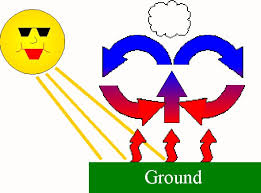
14.
What is the definition of CONVECTION
a)
When heat transfers through waves.
b)
When heat transfers from objects that are touching.
c)
a  hot liquid or air that  expands, becomes less dense, and rises or becomes more dense, and sinks.
d)
Heat traveling from the sun
15.
What kind of heat transfer happens when the sun is heating your body?
a)
Conduction
b)
Radiation
c)
Convection
d)
Density
16.
Warm air rises and the cool air sinks demonstrates this type of heat transfer. 
a)
conduction
b)
convection
c)
radiation
d)
Insolation 
17.
The Gulf Stream is a current that brings warm ocean water from the south to the north. What type of heat transfer is this?
a)
conduction
b)
convection
c)
radiation
d)
Insolation 
18.
A group of friends gather around a fire to stay warm.
a)
conduction
b)
convection
c)
radiation
19.
Transfer of thermal energy through "space"
a)
conduction
b)
convection
c)
radiation
20.
A huge rock at the state park gets so hot during the day because of
a)
conduction
b)
convection
c)
radiation
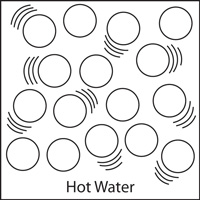
21.
At higher temperatures
a)
particles in an object have less energy
b)
particles in an object move faster
c)
a gas contracts
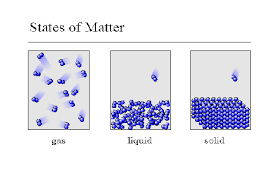
22.
A gas
a)
has a definite shape but no definite volume
b)
has a definite volume but no definite shape
c)
has fast-moving particles
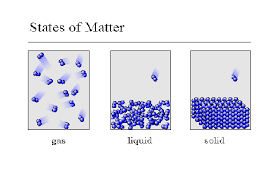
23.
Particles (molecules) in a ______________________ have more energy than the other states of matter.
a)
gas
b)
solid
c)
liquid
24.
The speed of the molecules determines the _____.
a)
volume
b)
density
c)
pressure
d)
temperature
25.
Thermal energy is...
a)
heat energy.
b)
the energy of motion
c)
energy of nuclear processes.
d)
an indication of physical change.
26.
Which sequence below is correct?
a)
Red Giant, Nebula, Main Sequence, Protostar
b)
Nebula, Protostar, Main Sequence, Red Giant
c)
Nebula, Main Sequence, Protostar, Red Giant
d)
Red Giant, Nebula, Protostar, Main Sequence
27.
At which stage does a star swell up many times larger than its normal size?
a)
Protostar
b)
Nebula
c)
Main Sequence
d)
Red Giant
28.
The eventual type of star death depends on
a)
Color
b)
Shape
c)
Mass
d)
Composition
29.

Less massive stars turn into ___ when they die

a)

Black Dwarf

b)

Black Hole

c)

Neutron Star

d)

Either a black hole or a neutron star

30.
More massive stars turn into ___ when they die
a)
White Dwarf
b)
Black Hole
c)
Neutron Star
d)
Either a black hole or a neutron star
31.
Which stage in a stars life is similar to "old age" in humans
a)
Nebula
b)
Main Sequence
c)
Red Giant
d)
White Dwarf
32.
Which stage in a stars life is similar to a humans 20's and 30's
a)
Nebula
b)
Protostar
c)
Main Sequence
d)
Red Giant
33.
The point in a star's evolution during which it maintains a stable nuclear reaction is
a)
Protostar
b)
Main Sequence
c)
White Dwarf
d)
Supernova
34.

What are stars classified by composition

a)

Mass

b)

Temperature

c)

Spectra

d)

Luminosity

35.
A giant cloud of gas and dust, it is made mostly of Hydrogen and Helium.
a)
Supernova 
b)
Nebula 
c)
Planetary Nebula 
d)
Gravity 
36.
A high mass star that eventually explodes.
a)
Nebula 
b)
Planetary Nebula 
c)
Supernova 
d)
Star 
37.
A process in stars where two Hydrogen atoms combine to form Helium and release energy.
a)
Nebula 
b)
Nuclear Fusion 
c)
Supernova 
d)
Gravity 
38.

All low/medium mass stars will eventually

a)

explode into a supernova

b)

become a black hole

c)

change into a white dwarf then black dwarf

d)

become a neutron star

39.

Which electromagnetic waves have the longest wavelengths and lowest frequencies?

a)

infrared waves

b)

radio waves

c)

gamma rays

d)

ultraviolet rays

40.
A wave with a large wavelength will have a ______ frequency and _____ energy
a)
high, low
b)
high, high
c)
low, high
d)
low, low
41.
Select the correct order of waves on the EMS 
a)
Radio, Micro, Infra, Visible, Ultra, X-ray, Gamma
b)
Gamma, X-ray, Ultra, Vis, Infra, Micro, Radio
c)
Vis, Micro, Infra, Ultra, X-ray, Gamma, Radio
d)
Micro, Radio, Vis, Infra, Ultra, X-ray, Gamma
42.
Which has the LONGEST wavelength and, therefore, the lowest frequency/energy
a)
Gamma Rays
b)
Radio Waves
c)
Visible Light
d)
Infrared rays
43.
Which has the SHORTEST wavelength and, therefore, the highest frequency/most energy
a)
Radio waves
b)
Ultraviolet Rays
c)
Gamma Rays
d)
X-rays
44.
The _______________ determines the color of visible light. 
a)
wavelength
b)
speed
c)
amplitude
d)
light
45.
Infrared waves are used in__________________.
a)
Bath tubs
b)
Microwaves
c)
Remote Controls
d)
Tanning
46.

What is the equivalent of latitude on the celestial sphere?

a)

Longitude

b)

Right Ascension

c)

Declination

d)

Greenwich Hour Angle

47.
The Celestial Sphere's coordinates are related to what Earth system of coordinates?
a)
Arctic & Antarctic Circles
b)
Longitude & Latitude
c)
Tropics of Capricorn and Cancer
d)
Sonar systems
48.
What the celestial equivalent of "latitude?" 
a)
Inclination
b)
Left Ascension
c)
Right Ascension
d)
Declination
49.
What the celestial equivalent of "longitude?" 
a)
Inclination
b)
Left Ascension
c)
Right Ascension
d)
Declination
50.

What is the equivalent of latitude on the celestial sphere?

a)

Longitude

b)

Right Ascension

c)

Declination

d)

Greenwich Hour Angle

51.

What kind of telescope uses visible light

a)

X ray

b)

Optical

c)

Gamma

d)

UV