wayground logo

Free Printable Worksheets

Font size

S
M
L
XL
Worksheets

Midterm Review 18-19

Total questions: 84

Worksheet time: 3hrs 51mins

Name
Class
Date
1.
Convert 273 K to oC
a)
0oC
b)
100oC
c)
-273oC
d)
50oC
2.
What is the volume of the water in this graduated cylinder?
a)
11.5 mL
b)
13 mL
c)
10.3 mL
d)
11 mL
3.
 27.06 m to cm__________ 
a)
.2706 cm
b)
.02706 cm
c)
2706 cm
d)
27060 cm
4.
1.33 cm +13.3 mm =  ____ mm
a)
14.63 mm
b)
13.433 mm
c)
146.3 mm
d)
26.6 mm
5.
15.53 g to mg ____________
a)
1553 mg
b)
.1553 mg
c)
15530 mg
d)
155.3 mg
6.
You know 16 cups = 1 gallon. Convert 3.5 gallons into cups.
a)
56 cups
b)
0.21875 cups
c)
19.5 cups
d)
48 cups
7.

Target on the right, how would it be described?

a)

Accurate

b)

Precise

c)

Accurate and Precise

d)

Neither Accurate or Precise

8.
How many Significant Figures in the number below?
4.56 x 10³
a)
5
b)
4
c)
6
d)
3
9.
This variable in an experiment is the one being deliberately changed by the scientist. 
a)
dependent variable
b)
independent variable
c)
data
d)
control group
10.
There are two types of data. Which type of data involves numbers that are obtained by counting or measuring?
a)
quantitative
b)
qualitative
11.
Mr. S. sets up an experiment to see how the mass of a ball affects the distance it rolls off a ramp.  Identify the independent variable.
a)
distance traveled by the ball
b)
height of the ramp
c)
mass of the ball
d)
weight of the ball
12.
An experiment is performed on plants to see how different liquids affect plant growth. Each plant in the experiment is given a different liquid; water, apple juice, or milk. Each plant has the same amount of soil, sunlight, and listens to the same music. In this investigation, what is the dependent variable?
a)
Type of plant
b)
Water, apple juice, milk
c)
Plant growth
d)
Color of the plant's leaves
13.
Round 1047.78 to three sig figs
a)
104
b)
105
c)
1050
d)
1050.00
14.
Round 0.010229 to four sig figs
a)
1022
b)
1023
c)
0.01023
d)
0.01022
15.
How would you write 0.0005 in scientific notation?
a)
50 x 105
b)
5 x 10⁴
c)
5 x 10³
d)
.5 x 103
16.

What atom matches this electron configuration?

1s22s22p63s23p64s23d10

a)

Zinc

b)

Copper

c)

Nickel

d)

Germanium

17.

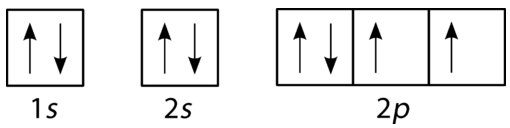
This orbital diagram represents:

a)

C

b)

B

c)

N

d)

O

18.
All orbitals of equal energy are occupied by one electron before any single orbital is occupied by a second electron.
a)
Aufbau principle
b)
Pauli exclusion principle
c)
Hund’s rule
d)
Core Notation
19.

What is the Electron Configuration of Helium?

a)

1s2

b)

1s1

c)

2s1

d)

1s22s1

20.
How many electrons can the d sublevel hold?
a)
14
b)
10
c)
2
d)
6
21.

What is the correct representation for an orbital which has an "n" value of 4 and an "L" value of 2?

a)

4d

b)

4s

c)

4f

d)

4p

22.
How many quantum numbers are needed to describe the energy state of an electron in an atom?
a)
1
b)
2
c)
3
d)
4
23.

Which of the following sets of quantum numbers (n, l, ml, and ms) describes the valence electron of Na?

a)

2, 1, 0, -½

b)

2, 0, 0, -½

c)

3, 1, 1, +½

d)

3, 0, 0, +½

24.

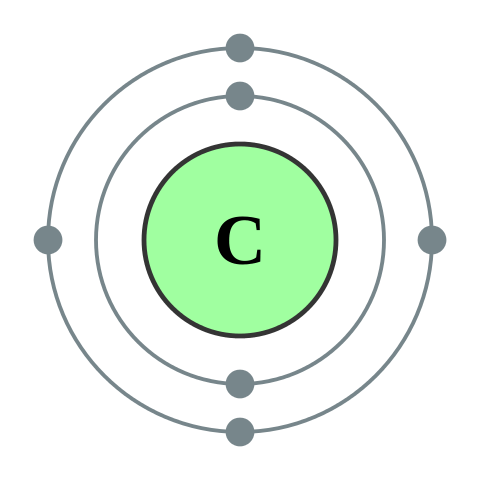
How many valence electrons does carbon have?

a)

4

b)

5

c)

6

d)

7

25.

What is the goal of the Lewis Dot Structure?

a)

To determine the electron position.

b)

To show the element's valence electrons & bonding capabilities.

c)

To find the atomic mass of an element.

d)

To search for the number of electrons in an individual atom.
26.
____________ is the branch of chemistry that would analyze new chemicals made from carbon-containing building blocks.
a)
Inorganic Chemistry
b)
Organic Chemistry
c)
Biochemistry
d)
Analytical Chemistry
27.
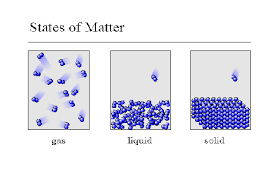
At higher temperatures
a)
particles in an object have less energy
b)
particles in an object move faster
c)
a gas contracts
28.
Define a liquid.
a)
Indefinite shape, indefinite volume
b)
Definite shape, definite volume
c)
Found in stars
d)
Definite volume, indefinite shape
29.
A chemical change
a)
doesn't really change much.
b)
creates a new substance
c)
is a change in the state of matter
30.
Is salt dissolving in water a physical or chemical change?
a)
Physical
b)
Chemical
31.
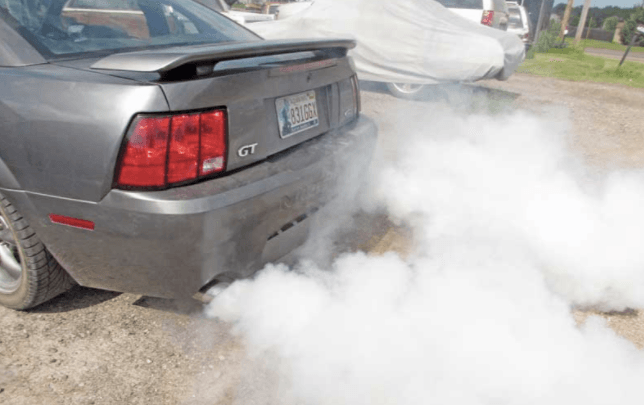
Is a car using fuel a physical or chemical change?
a)
Physical
b)
Chemical
32.
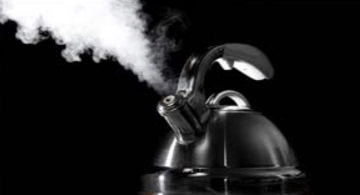
Is steam a physical or chemical change?
a)
Physical
b)
Chemical
33.
Classify the picture with the correct label.
a)
Element
b)
Compound
c)
Mixture of Elements
d)
Mixture of Compounds
34.
Classify the picture with the correct label.
a)
Compounds
b)
Mixture of Elements
c)
Mixture of Compounds
d)
Mixture of Elements & Compounds
35.
Classify the picture with the correct label.
a)
Element
b)
Compound
c)
Mixture of Elements & Compounds
d)
Mixture of Elements
36.
What is H2SO4 
 made up of?
a)
2 hydrogen, 1 sulfur, 4 oxygen
b)
1 hydrogen, 2 sulfur, 4 oxygen
c)
2 hydrogen & 4 sodium
d)
1 hydrogen & 6 sodium
37.
What cannot be broken down into other substances?
a)
Compound
b)
Mixture
c)
Solids
d)
Element
38.
Milk is a ________
a)
compound 
b)
mixture 
c)
element 
39.
A(n) __________ can be separated by filtration.
a)
suspension  
b)
element
c)
compound
40.
Type of mixture that has the SAME COMPOSITION in every part.
a)
Homogenous
b)
Heterogeneous
41.
Three examples of physical change are:
a)
Sawing of wood, crushing a can, and toasting a marshmallow
b)
Freezing of water, evaporation of gasoline, and rusting of a nail
c)
Burning of gasoline, rotting of an egg, and exploding fireworks
d)
Boiling of water, bursting a balloon, and melting a candle
42.
Pure substances that are made up of more than one element are called:
a)
Compounds
b)
Solutions
c)
Molecules
d)
Mixtures
43.

Salt dissolved in water.

What method would you use to separate this mixture?

a)

sorting by hand

b)

distillation

c)

chromatography

d)

Evaporation

44.

Mass cannot be created or__________ during a chemical reaction?

a)

Reacted

b)

Transferred

c)

Born

d)

Destroyed

45.

Which compounds are the PRODUCTS of this reaction?

a)

CO2 + H2O

b)

C6H12O6 + O2

c)

C6H12O6 + CO2

d)

H2O + O2

46.

How many atoms of O are in the REACTANTS of this balanced equation?

a)

6

b)

2

c)

3

d)

1

47.

Most elements are electronically stable in an octet, but Hydrogen is like Helium and only requires how many electrons?

a)

one

b)

two

c)

four

d)

eight

48.
How do covalent bonds form?
a)
Donating & receiving valence e- between atoms.
b)
Opposite slight charges attract each other between compounds.
c)
Scientists are still not sure how they form.
d)
Sharing valence e- between atoms.
49.
Oxygen has 6 valence electrons. How many electrons does each oxygen atom have to share to fill its valence shell?
a)
1
b)
2
c)
3
d)
4
50.
What molecule is this?
a)
CO
b)
CO2
c)
C2O
d)
C2O2
51.
What do we call a covalent bond where electrons are shared UNEVENLY or UNEQUALLY?
a)
Ionic
b)
Polar Covalent
c)
Nonpolar Covalent
d)
Van der Waals Force
52.
Does H2S have hydrogen bonding?
a)
yes
b)
no
53.
All molecules have London forces between them, but dipole-dipole and hydrogen bonding are so much stronger that when they are present we can ignore London forces.  Which of these has ONLY London forces?
a)
I2
b)
NH3
c)
OCl2
d)
SH2
54.
Type of intermolecular force present in HF.
a)
dipole dipole
b)
dispersion
c)
H-bond
d)
ionic
55.
Which of the following has the highest boiling point?
a)
H2
b)
NH3
c)
N2
d)
O2
56.
What molecular shape is the structure shown here? (NH4+)
a)
linear
b)
trigonal planar
c)
tetrahedral
d)
trigonal pyramidal
57.

Is this molecule polar or non-polar?

a)

Polar

b)

Non-polar

58.

Is this molecule polar or non-polar?

a)

Polar

b)

Non-polar

59.
Which of the following will have a larger radius than Zinc?
a)
Gallium
b)
Aluminum
c)
Magnesium
d)
Strontium
60.
Which of the following will have a lower ionization energy than Scandium (Sc)?
a)
Helium (He)
b)
Titanium (Ti)
c)
Calcium (Ca)
d)
Magnesium (Mg)
61.
As atoms of elements in group 16 are considered in order from top to bottom, the electronegativity of each successive element....
a)
decreases
b)
increases
c)
remains the same
d)
none of the above
62.
The element with the largest electronegativity in the halogens is - 
a)
At
b)
F
c)
Cl
d)
Br
63.
Which has the greater EN: 
Cl or Al?
a)
Cl
b)
Al
64.
Which has the greater EN: 
N or C?
a)
C
b)
N
65.
Metals have the largest - 
a)
atomic radius and electronegativity
b)
electronegativity and ionization energy
c)
atomic radius only
d)
ionization energy and atomic radius
66.
Which statement correctly and completely identifies a trend?
a)
Atomic radius decreases across a period and increases down a group.
b)
Electronegativity decreases across a period and decreases down a group.
c)
Ionization energy increases across a period and increases down a group.
d)
Ionic radius increases across a period and increases down a group.
67.
As you move across the periodic table atoms tend to get smaller because, ______________.
a)
the atoms have more mass.
b)
the atoms have less mass
c)
the atoms have more protons.
d)
the atoms have less electrons.
68.
Where are the non-metallic elements found in the periodic table?
a)
In the middle
b)
In the top rows
c)
On the left-hand side
d)
On the right-hand side
69.
What element in Group 1 is not a metal but a nonmetal?
a)
Helium
b)
Lithium
c)
Hydrogen
d)
Oxygen
70.
How many molecules are in 2.5 mol of NaCl?
a)
1.51x1024
b)
146
c)
4.15
d)
1.5x1024
71.
Determine the molar mass for carbon tetrachoride
a)
153.823 g/mol
b)
118.37 g/mol
c)
189.35 g/mol
d)
47.464  g/mol
72.

How many grams are in 3.3 mol of potassium sulfide, K2S?

a)

363.86 g

b)

364.00 g

c)

110.26 g

d)

1.99x1024 g

73.
Which conversion factor should be used to solve the following, "How many moles in 28 grams of CO2?"
a)
1 mol = 22.4 L 
b)
1 mol = 44.01 g
c)
1 mol = 6.02x10²³ atoms
d)
more than one
74.
How many molecules of sugar (C6H12O6) are in one mole?
a)
24 molecules
b)
180 molecules
c)
180 g
d)
6.02 x 10²³ molecules
75.
How many particles are in 13.5 grams of Beryllium?
a)
1.5 particles
b)
9 particles
c)
4.01x10²³ particles
d)
9.03x10²³ particles
76.
What type of particle is:  KCl
a)
Atom
b)
Molecule
c)
Formula Unit
d)
Ion
77.
What is the mass of 1.2 x 1024 atoms of C?
a)
23.9 grams
b)
24 grams
c)
6.02 grams
d)
1.2 grams
78.
An empirical formula:
a)
is a formula that calculates the coefficients of a compound in a balanced equation.
b)
is the simplest whole-number ratio of moles of elements in the compound.
79.
What do you do when you get a half in the ratio?
a)
add 2 to each element
add two to only the one with the half
b)
multiply the one with the half only by two
c)
multiply all of them by two
d)
add two to all of the ratios
80.
You are given the following percentages: 40.05% S and 59.95% O. Find the empirical formula for these elements. (keep two decimal places throughout calculations)
a)
SO
b)
SO2
c)
SO3
d)
SO4
81.
What is the empirical formula of the following molecular formula:  C3H6
a)
C3H6
b)
CH2
c)
C2H4
d)
CH3
82.
What are the units for molar mass?
a)
grams
b)
amu
c)
grams/mole
d)
liters
83.
How many moles are in 16.94g of water?
a)
16.94
b)
0.9403
c)
305.2
d)
1.063
84.
How many moles are in 3.01 x 10²² atoms of magnesium?
a)
0.050 moles
b)
1.81 x 1046 moles
c)
5.00 x 10²¹ moles
d)
5.00 moles