
NEW
Font size
 Worksheets
Narrative Text Quiz
Total questions: 20
Worksheet time: 3600secs
What is the purpose of the text above?
To tell us how to write a story
To inform what happened in the past
To give a description of a beautiful girl
To retell about Cindrella’s experience/memory
To entertain readers with an actual, or vicarious experience
What was there at the palace one day?
A game
A ball
A birthday party
Crown part
Glass slippers
Why did the king hold the event at his palace?
To celebrate his birthday
To celebrate his wedding
To find his crown prince a wife
To entertain his people
To show give amusement to his guests
How was the end of the story?
The prince married Cindrella
Cindrella was killed by her step mother
The prince turned into a horse forever
The king gave the kingdom to Cindrella
Cindrella was betrayed by the king
“She also gave Cindrella a lovely dress….” (Paragraph 4)
The underlined word has the same meaning with …..
Boring
Honest
Polite
Loyal
Pretty

The text tells the story of .....
A fox
A goat
A fox and a goat
An old man and the fox
The goat and an old man
What do we learn from the text?
The fox’s idea of how to get out of the well
How both the goat and the fox got out of the well
How the fox got out of the well
How the fox helped the goat
Why the fox got into the well
“The goat did as he was asked …..” (Paragraph 3)
What does the above sentence mean?
The goat drank enough and looked around
The goat came down to the well and drank
The goat called out loudly after the fox got out
The goat waited someone who might help him
The goat stood on his hint legs and put his forelegs against the side of the well
“Come down and try it yourself.” (Paragraph 1)
The underlined word refers to …..
A well
Water
A fox
A goat
Life
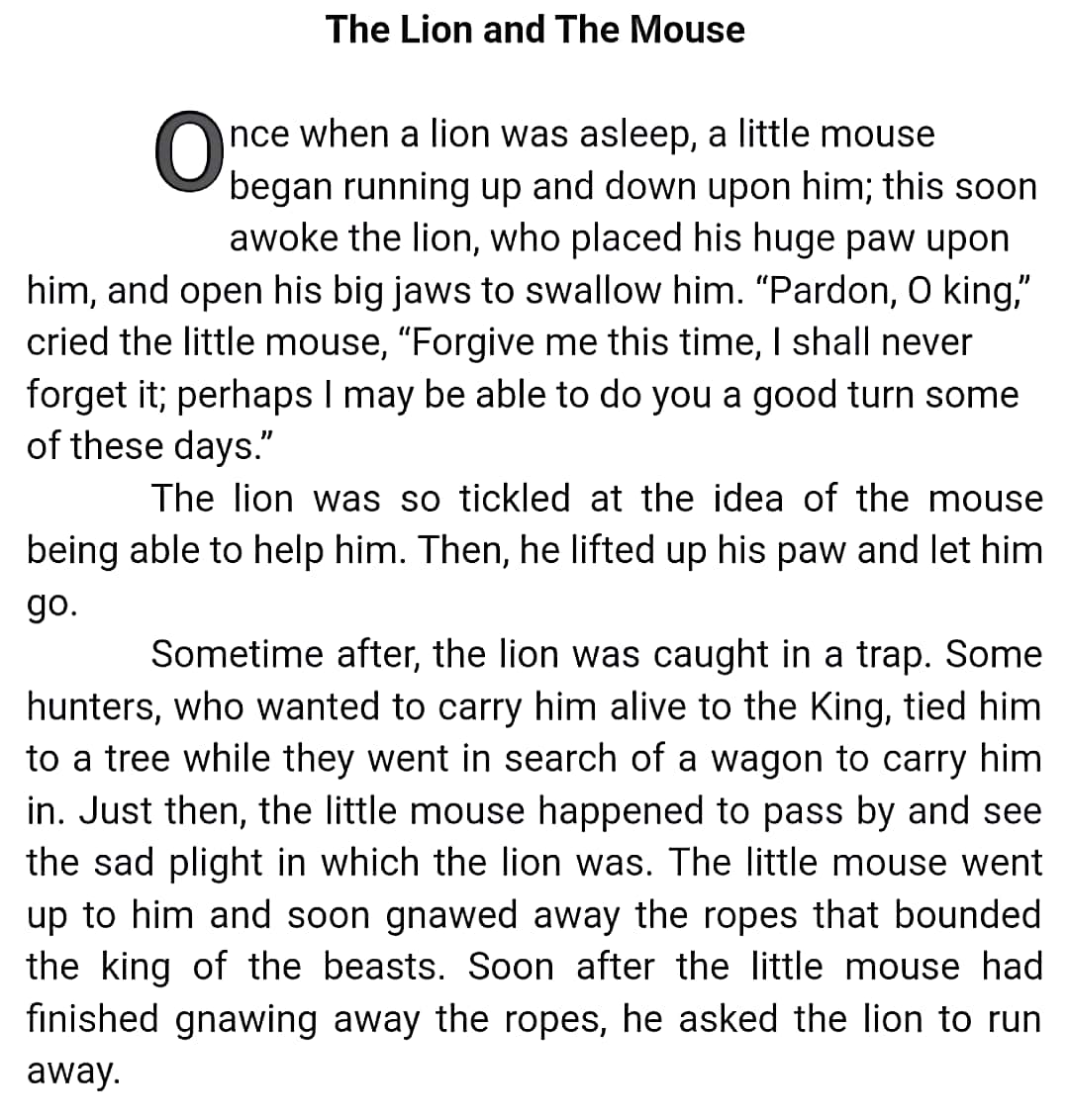
What is the purpose of the text?
To entertain the readers
To persuade the readers that something should or should not be the case
To inform the readers about the events of the day which are considered newsworthy
To explain something
To present at least two points of view about an issue
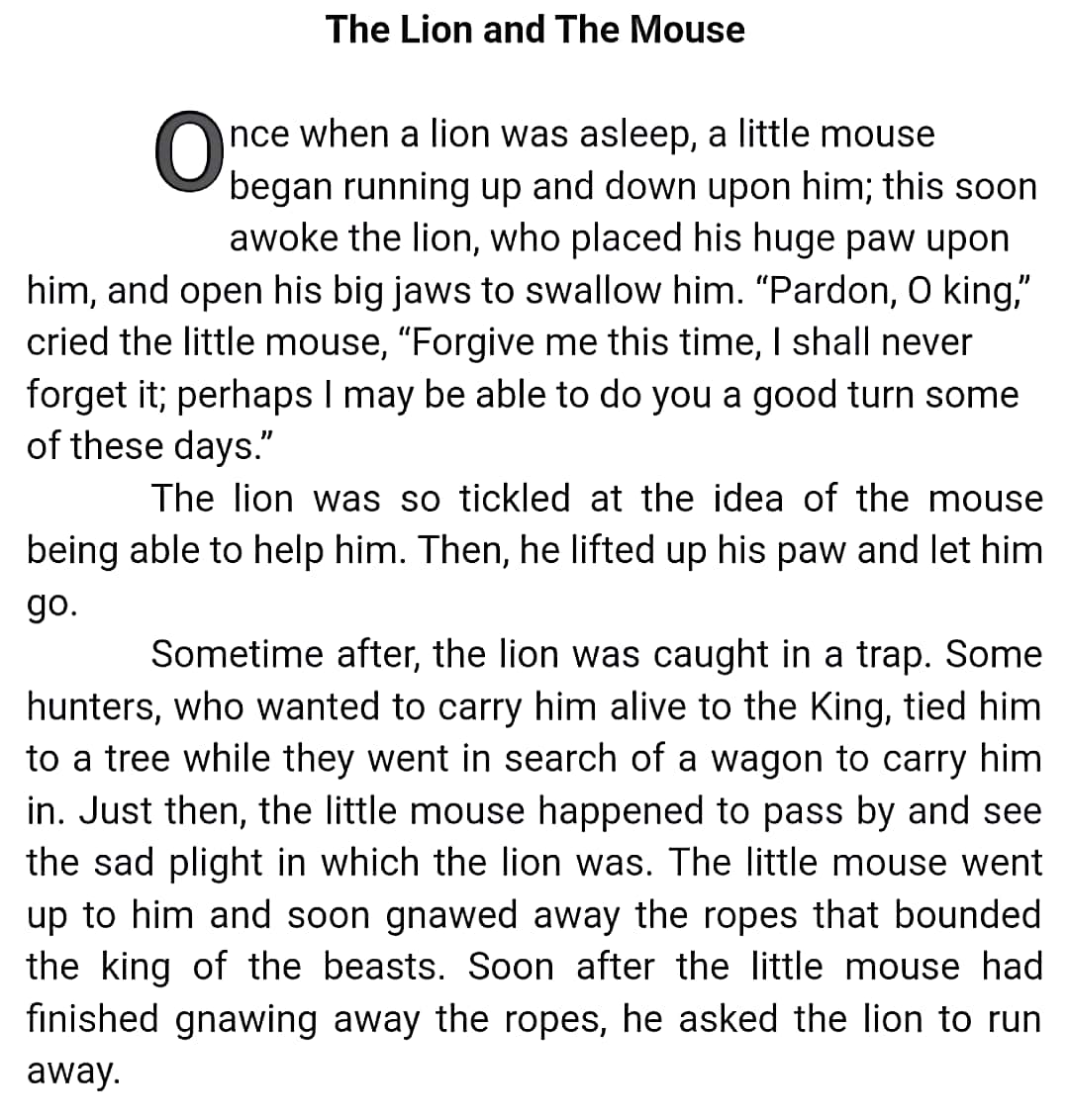
What is the moral value of the text?
Don’t look at someone because of his clothes
It is best for prepare for the days of necessity
Common people may prove great ones
United we stand, divided we fall
Honestly begins at home

Paragraph three mainly tells us that …..
The little mouse asked for forgiveness
The hunters carried the lion alive to the King
The lion was tied to a tree by the hunters
The little mouse could prove that he could help the lion
From the first, the lion believed in what the little mouse said

What did the little mouse do to prove his words?
He would never forget the lion
He tried hard to help the lion free
He ran up and down upon the lion
He asked for apology to the king of the beast
He tied the lion to the tree so that the hunters could carry him

What is the communicative purpose of the text?
To tell us how to write a story
To describe Sahala’s life
To retell the events happened in Sahala’s life
To explain how to break promise
To entertain the readers

Why couldn’t Sahala keep his promise? Because he …..
Was very angry
Was very hungry
Did not love his wife
Did not like his daughters
Did not get his meal

What moral lesson can we take from the story?
A husband should be loyal to his wife
Children should pay respect to their parent
A man should keep his promise well
A man should take care of his family well
A woman is sometimes too emotional

"THEY went home and asked their mother about it." (Paragraph 5)
What does the capslock word refer to?
The fish
Sahala and his wife
The parents
The daughters
The woman and the girl

What can we get from the story?
We have to be grateful
We have to save ourselves
We have to learn how to climb
Bear will not harm a dead man
True friend always stand by us in ups and downs

"He advised me not to believe a false friend." (Paragraph 3)
The underlined word refers to ....
The bear
The dead man
The strange man
The friend who cannot climb
The friend who climb the tree

Where do you think the story happened?
In the zoo
In the river
In the park
In the house
In the woods

