
 Worksheets
4.3 Covalent Bonds
Total questions: 26
Worksheet time: 2hrs 42mins
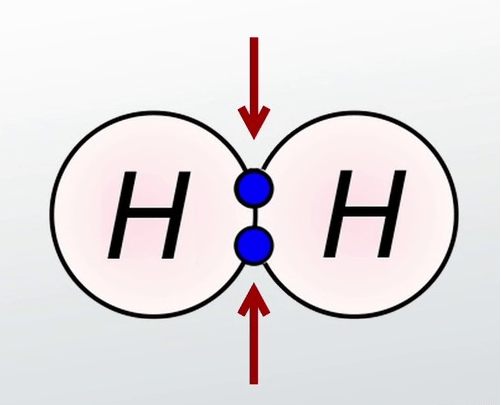
How many electrons are shared in a single covalent bond?
2 pairs
4
2
1
Which is stronger...
N − N
N = N
N ≡ N
Why do atoms bond?
to find a date
to become bigger
to go to dog jam
to become stable
Ionic Bonds ____________ valence electrons.
give
take
share
keep
Covalent Bonds ______________ valence electrons.
give
take
keep
share

What type of bond is this?
ionic
covalent

What type of bond is this?
ionic
covalent

What type of model is this?
lewis dot
bohr
An atom with 3 valence electrons "wants" a full shell, so it can either gain 5 or lose 3. Which is more likely to occur?
Gain 5
Lose 3
Nothing
Covalent compounds can have
Single Bonds
Double Bonds
Triple Bonds
Quadruple Bonds
When an atom loses an electron, it becomes a
positive ion
negative ion
neutral ion
neutral atom
The chemical bond formed when two atoms where electrons is called a(n) IONIC bond.
True
False
Covalent bonds usually form when a non metal combines with a(n) METAL.
True
False
A(n) ION is a neutral group of atoms joined by covalent bonds.
True
False
The forces between molecules are much STRONGER than the forces between ions.
True
False
In a(n) POLAR bond, one atom pulls on the shared electrons more than the other atom.
True
False
If a molecule contains polar bonds, the molecule MAY OR MAY NOT be polar overall.
True
False
In an electron dot diagram, two pairs of shared electrons represents a
single bond
triple bond
quadruple bond
double bond
A nitrogen molecule N2 has one triple bond. How many electrons do the nitrogen atoms share?5
1
2
4
6
Compared to ionic compounds, molecular compounds generally have
good conductivity
a low boiling point
greater densities
more chemical bonds
Compared to ionic compounds, molecular compounds generally have
stronger chemical bonds
poor conductivity
a high melting point
lower densities

