
NEW
Font size
S
M
L
XL
 Worksheets
CBA-4 Review (7.12CDEF)
Total questions: 25
Worksheet time: 17mins
Name
Class
Date
1.
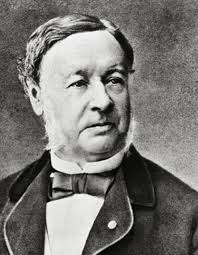
Which of the following scientists concluded that all animals are made of cells?
a)
Rudolf
Virchow
b)
Matthais
Schleiden
c)
Robert
Hooke
d)
Theodor
Schwann
2.
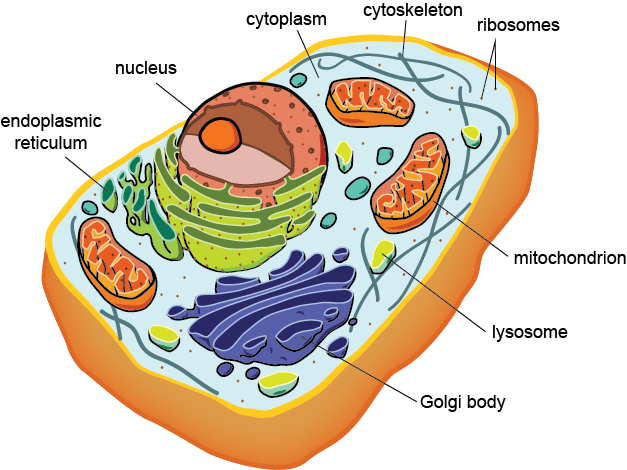
Which of the following statements is not part of the cell theory?
a)
Cells are the basic unit of structure and function in all living things.
b)
All cells are produced from other cells.
c)
Only animal cells are composed of cells.
d)
All living things are composed of cells.
3.

What is one way in which all living things on Earth are alike?
a)
All living things have hair.
b)
All living things are made of cells and come from other cells.
c)
The cells of all living things have chloroplast.
d)
All living things can move.
4.
He discovered cells while looking at a thin slice of cork.
a)
Jansen
b)
Leeuwenhoek
c)
Hooke
d)
Brown
5.
Organelle also known as the "powerhouse" of the cell
a)
cell membrane
b)
storage
c)
cytoskeleton
d)
mitochondria
6.
Organelle known as the control center or brain of the cell
a)
mitochondria
b)
DNA
c)
nucleus
d)
movement
7.

Robert Hooke, Anton van Leeuwenhoek, Theodor Schwann, Rudolf Virchow, and Matthias Schliden were all responsible for what theory?
a)
The Theory of Gravity
b)
The Theory of Relativity
c)
The Cell Theory
d)
The Theory of Continental Drift
8.

What would happen to the plant cell without the chloroplasts?
a)
There wouldn't be an organelle that performs photosynthesis
b)
There wouldn't be an organelle that serves as the resevoir for water and waste
c)
There wouldn't be an organelle that regulates what comes in and out of the cell
d)
They wouldn't be an organelle that makes necesary proteins
9.

What do all of these organisms have in common?
a)
They all have uniform offspring
b)
They are all made of cells
c)
They possess the same features
d)
They have the same internal and external structures
10.
Which of the following is NOT a cell theory.
a)
All non-living things are made of cells
b)
All cells come from pre-existing cells
c)
Cells are the basic unit of structure and function of all living things
11.
An organism made of one cell is called
a)
unicellular
b)
multicellular
12.
Controls what enters and leaves the cell
a)
Mitochondria
b)
Cell Membrane
c)
Cell Wall
d)
Nucleus
13.
Organelle that stores food and water for the cell.
a)
Cytoplasm
b)
Cell Wall
c)
Vacuole
d)
Nucleus
14.

What is the fluid inside a cell called?
a)
Endoplasimic Reticulum
b)
Orange Juice
c)
Water
d)
Cytoplasm
15.

This organelle helps plants keep their rigid structure.
a)
Cell wall
b)
Cell membrane
c)
Chloroplast
d)
Nucleus
16.
The _________ is the basic unit of structure and function of organisms
a)
atom
b)
cell
c)
matter
d)
all other answers are correct
17.
A group of similar cells working together.
a)
cells
b)
organism
c)
tissue
d)
organ
18.
Two or more tissues working together
a)
Cells
b)
Tissue
c)
Organ
d)
Organ system
19.
The heart, brain, and stomach are made of...
a)
Cells
b)
Tissue
c)
Organs
d)
Both Cells and Tissue
e)
Both Tissues and Organs
20.
Which of the following is the correct order of organization in living things from most basic (simple) to most complex?
a)
a. Organism, cell, tissue, organ, organ system
b)
a. Organ system, organ, tissue, cell, organism
c)
a. Cell, tissue, organ, organ system, organism
d)
a. Cell, organ, tissue, organ, organism, organ system
21.
Anything that can perform life processes by itself is a/an
a)
cell
b)
organ
c)
organism
d)
organ system
22.
When a group of organs work together to perform a particular function they create a/an
a)
organ system
b)
organism
c)
tissue
d)
organ
23.
Which is an example of an organism?
a)
a beetle
b)
a lake
c)
a rock
d)
a shell
24.
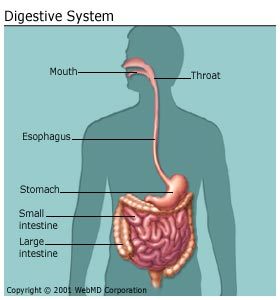
This is a example of........
a)
organ system
b)
cells
c)
organ
d)
tissue
25.
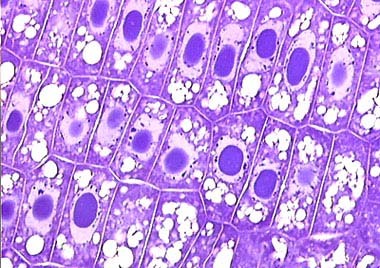
This is a example of ........
a)
cell
b)
tissue
c)
organ
d)
organ system
Reset

